



Page 127
Page 127

Earthquake Monitoring and Seismic Hazard Mitigation in Balkan Countries
this book including deployment of modern seismograph stations and arrays and these developments are detailed in the book. Station and network operations require near real time record analysis and topics dealt with here are 2-D signal detector, epicenter location and earthquake monitoring. Balkan is seismically the most active part of Europe due to multiple plate interactions in the Aegean Sea. The tectonic evolution and on-going geodynamic deformations are described in 2 articles. Earthquake hazard analysis and topographic site effects are discussed and likewise large earthquake hazards in the Aegean and the Marmara seas relate to practical applications of such procedures. Foremost; the book gives a good account of past, present and likely future seismological developments in Balkan countries and various kinds of network operations on local to global scales.

Earthquake Geotechnical Engineering ; 4th International Conference on Earthquake Geotechnical Engineering-Invited Lectures
This book contains the full papers on which the invited lectures of the 4th International Conference on Geotechnical Earthquake Engineering (4ICEGE) were based. It provides a comprehensive overview of the progress achieved to date in soil dynamics and geotechnical earthquake engineering, as well as in engineering seismology and seismic risk assessment and management. In situ and laboratory testing, theoretical issues and numerical modeling of soil dynamics, seismic hazard with emphasis on the long-period ground motion displacements, site effects and microzonation, liquefaction assessment and mitigation, soil-structure interaction, performance based design of geotechnical structures, earthquake resistant design and performance of shallow and deep foundations, retaining structures, embankments and dams, underground structures and lifelines, are all among the different topics covered in this book. Interdisciplinary subjects such as vulnerability assessment of, transportation networks and lifelines as well as of geotechnical structures are also discussed. Finally, the book provides a thorough presentation of the existing worldwide important large-scale testing facilities and geotechnical strong ground motion arrays.

Earthquake Early Warning System
The book provides information on the major EEW systems in operation and on the state of the art of the different blocks forming an EW system: the rapid detection and estimation of the earthquake’s focal parameters, the signal transmission, the engineering interface and the information reliability/false alarm problem.

Earthquake disaster simulation of civil infrastructures : From tall buildings to urban areas
Covers a range of numerical modeling approaches, higher performance computation methods, and high fidelity visualization techniques for earthquake disaster simulation of tall buildings and urban areas. It also demonstrates successful engineering applications of the proposed methodologies to typical landmark projects (e.g., Shanghai Tower and CITIC Tower, two of the world's tallest buildings; Beijing CBD and San Francisco Bay Area).

Earthquake alert with smartwatch = تنبيه الزلازل باستخدام الساعة الذكية
After the recent events and earthquakes that affected the region, resulting in the deaths of many individuals due to the lack of timely emergency response, the idea for this project emerged Earthquake Alert with Smartwatch. Initially, our application gathers information about the user, such as age, family members, and any existing medical conditions. In the event of an earthquake, the application sends an alert to the user. It receives earthquake information, such as ‘magnitude, time, location…’ from United States Geological Survey “USGS” through an API. If the user is within the geographical area affected by the earthquake, the application will assist the Smartwatch in calculating vital signs such as ‘heart rate and blood pressure’. Additionally, there is another artificial intelligence model that receives the user's audio recordings and converts them into written texts. All this information, along with the user's geographical location, will be sent to the nearest emergency point for the purpose of aiding those individuals trapped under the rubble.
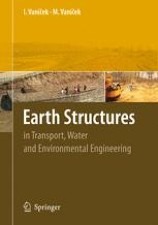
Earth Structures : In Transport, Water and Environmental Engineering
This book describes the principles of working with soil as a construction material, including two basic ways of treating it: geosynthetics and stabilization. The book discusses the design logic and ways to control Earth Structures, which differ significantly from other construction materials. Building with Earth involves greater uncertainty and risk, which means that there is a need for better design detailing and improvement in the quality of financial calculations. The general part of the book gives a detailed description of the principles of limit states according to Eurocode 7, after which geotechnical design is also described. Subsequent chapters concentrate on earth structures for transport, water, and environmental projects. The chapter on Earth Structures in transport engineering presents detailed coverage of limit states of stability and deformation. Earth Structures in water engineering prioritizes the limit state of internal erosion. Earth Structures in environmental engineering describes new designs, in which part of the structure is created from non-standard materials which are usually susceptible to internal collapse, double porosity, unsaturation, etc. It also focuses on protecting the surrounding environment from contamination.

Earth Sciences and Mathematics ; Vol.1
This volume contains papers addressing different topics as deformation modelling applied to natural hazards, inverse gravimetric problem to determine 3D density structure, advanced differential SAR interferometry, climate change, geomagnetic field, Earthquake statistics, meteorological studies using satellite images, climate energy balance models, study of soils properties, and multifractal data sets.

Earth science satellite remote sensing ; Vol.2 : Data, computational processing, and tools
Earth science satellite remote sensing has been rapidly expanding during the last decade. Volume 2 of this two volume monograph provides information on the Earth science remote sensing data information and data format such as HDF-EOS, and tools. It evaluates the current data processing approaches and introduces data searching and ordering from different public domains. Further it explores the remote sensing and GIS migration products and WebGIS applications. The core of this book arose from the workshop for Earth Science Satellite Remote Sensing held at George Mason University (GMU) in October 2002. Both volumes are designed to give scientists and graduate students with limited remote sensing background a thorough introduction to current and future NASA, NOAA and other Earth science remote sensing.
Earth observation science and applications for risk reduction and enhanced resilience in Hindu Kush Himalaya Region : A decade of experience from SERVIR
This book is a consolidation of lessons learnt and experiences gathered from our efforts to utilise Earth observation (EO) science and applications to address environmental challenges in the Hindu Kush Himalayan region.

Earth Observation Open Science and Innovation
The digital transformation is revolutionizing our ability to monitor our planet and transforming the way we access, process and exploit Earth Observation data from satellites.This book reviews these megatrends and their implications for the Earth Observation community as well as the wider data economy. It provides insight into new paradigms of Open Science and Innovation applied to space data, which are characterized by openness, access to large volume of complex data, wide availability of new community tools, new techniques for big data analytics such as Artificial Intelligence, unprecedented level of computing power, and new types of collaboration among researchers, innovators, entrepreneurs and citizen scientists. In addition, this book aims to provide readers with some reflections on the future of Earth Observation, highlighting through a series of use cases not just the new opportunities created by the New Space revolution, but also the new challenges that must be addressed in order to make the most of the large volume of complex and diverse data delivered by the new generation of satellites.

Earth Observation of Global Change : The Role of Satellite Remote Sensing in Monitoring the Global Environment
Global Change is increasingly considered a critical topic in environmental research. Remote sensing methods provide a relevant tool to monitor global variables, since they offer a systematic coverage of the Earth Surface, at different spatial, spectral and temporal resolutions. The data provided by Earth Observation Satellites are being operationally used for monitoring atmospheric conditions, ice sheets and glaciar movements, crop dynamism and land use changes, deforestation and desertification processes, as well as water conditions. The book includes an analysis of the leading missions in global Earth observation, and then reviews the main fields in which remote sensing methods are providing vital data for global change studies.

Earnings Management Practices and Its Impact on Companies Average Stock Prices
This study aimed to examine the relationship between Earning's Management and the Stock Price Liquidity for a selected sample of (31) Jordanian industrial Companies listed on Amman stock market for The period of (2017-2021), the importance of this study comes from The Obvious effect of Earning's Management on the Companies Performances by manipulating the Financial reports in Positive or Negative way, therefore this study attempted to examine such impact or Relationship between the dependent variable (Stock Liquidity) and The independent variable (Earning's Management) , using the modified Jonas model through the description analysis to find out the Earnings management practices and using the (SPSS) analysis System to prove the study assumption.

Early Public Libraries and Colonial Citizenship in the British Southern Hemisphere
This Pivot book is a comparative study of six early colonial public libraries in nineteenth-century Australia, South Africa, and Southeast Asia. Drawing on networked conceptualisations of empire, transnational frameworks, and ‘new imperial history’ paradigms that privilege imbricated colonial and metropolitan ‘intercultures’, it looks at the neglected role of public libraries in shaping a programme of Anglophone civic education, scientific knowledge creation, and modernisation in the British southern hemisphere. The book’s six chapters analyse institutional models and precedents, reading publics and types, book holdings and catalogues, and regional scientific networks in order to demonstrate the significance of these libraries for the construction of colonial identity, citizenship, and national self-government as well as charting their influence in shaping perceptions of social class, gender, and race. Using primary source material from the recently completed ‘Book Catalogues of the Colonial Southern Hemisphere’ digital archive, the book argues that public libraries played a formative role in colonial public discourse, contributing to broader debates on imperial citizenship and nation-statehood across different geographic, cultural, and linguistic borders.

Early Islamic Art, 650-1100 : Constructing the Study of Islamic Art ; Vol. I : Variorum Collected Studies
Represent major contributions to the understanding of the formative centuries of Islamic art, focusing on the Umayyad (661-750) and Fatimid (969-1171) dynasties in Greater Syria and in Egypt, and on the Mediterranean or Iranian antecedents of early Islamic art. Historical, cultural, and religious themes, including the role of court ceremonies, the growth of cities, and the importance of the Qur'an, are introduced to help explain how a new art was formed in the central lands of the Near East and how its language can be retrieved from visual or written sources.

EAES Guidelines for Endoscopic Surgery : Twelve Years Evidence-Based Surgery in Europe
This work allows readers to gain an overview of cutting edge surgical research. All recommendations describe exactly the proven benefit of each surgical procedure and technique. Most guidelines contain key statements. All chapters follow a structured format to allow quick identification of all recommendations. In summary, this work provides a perfect overview of the achievements in laparoscopic surgery throughout the last decade.

Dynamics of Long-Life Assets : From Technology Adaptation to Upgrading the Business Model
The book provides readers with a better understanding of the factors that influence decisions, and put forward solutions to facilitate the rapid adaptation to changes in the business environment and customer needs through intelligent upgrade interventions. Further, it examines a number of sample cases from various contexts including car manufacturing, utilities, shipping and the furniture industry. The book offers a valuable resource for both academics and practitioners interested in the upgrading of capital-intensive products and services.

Dynamics of Japan’s Trade and Industrial Policy in the Post Rapid Growth Era (1980–2000)
This book provides an in-depth examination of Japan's policy responses to the economic challenges of the 1980s and '90s. While MITI's earlier role in promoting rapid growth has been addressed in other studies, this volume, based on official records and exhaustive interviews, is the first to examine the aftermath of rapid growth and the evolution of MITI's interpretation of the economy's changing needs.

Dynamics of Flexible Multibody Systems : Rigid Finite Element Method
A new approach is presented for modelling multi-body systems, which constitutes a substantial enhancement of the Rigid Finite Element method. The new approach is based on homogeneous transformations and joint coordinates, and it yields the advantage that equations of motion are automatically generated for systems consisting of alternate rigid and flexible links. Apart from its simple physical interpretation and easy computer implementation, the method is also valuable for educational purposes since it impressively illustrates the impact of mechanical features on the mathematical model. This novel modelling approach is then applied to systems such as offshore-cranes and telescopic rapiers.

Dynamics of Fibre Formation and Processing : Modelling and Application in Fibre and Textile Industry
The book deals with the modelling of steady state and non-steady state basic processes of fibre formation and fibre processing. Focal points are melt spinning processes (polymers and glass, drawing, spunbonded nonwoven), spun yarn spinning processes (drafting, carding) and the description of the dynamics in different process steps during the fibre processing (fibre transport, fibre heating and cooling, false twist texturing). A special chapter deals with dynamics of tensile force (measuring and evaluation possibilities) and its importance for the process stability. All presented examples are based on industrial practice and give the reader a direct imagination of the discussed problems. The results are explained in a userfriendly way and give the practitioner the possibility to optimize his or her own processing.
Dynamics beyond uniform hyperbolicity : A global geometric and probabilistic perspective
In broad terms, the goal of dynamics is to describe the long-term evolution of systems for which an ""infinitesimal"" evolution rule, such as a differential equation or the iteration of a map, is known.This book aims to put such recent developments in a unified perspective, and to point out open problems and likely directions for further progress. It is aimed willing to get a quick, yet broad, view of this part of dynamics. Main ideas, methods, and results are discussed, at variable degrees of depth, with references to the original works for details and complementary information.
