



Page 126
Page 126

Autonomy oriented computing : From problem solving to complex systems modeling
Autonomy Oriented Computing explores the important theoretical and practical issues in AOC, by analyzing methodologies and presenting experimental case studies. The book serves as a comprehensive reference source for researchers, scientists, engineers, and professionals in all fields concerned with this promising new development in computer science. It can also be used as a main or supplementary text in graduate and undergraduate programs across a broad range of computer-related disciplines, including Robotics and Automation, Amorphous Computing, Image Processing and Computer Vision, Programming Paradigms, Computational Biology, and many others. The first part of the book, Fundamentals, describes the basic concepts and characteristics of an AOC system, and then it enumerates the critical design and engineering issues faced in AOC system development. The second part of the book, AOC in Depth, provides a detailed analysis of methodologies and case studies to evaluate the use of AOC in problem solving and complex system modeling. The final chapter reviews the essential features of the AOC paradigm and outlines a number of possibilities for future research and development.

Autonomy and human rights in health care : An international perspective
Autonomy and Human Rights in Healthcare: An International Perspective is a group of essays published in memory of David Thomasma, one of the leading humanists in the field of bioethics during the twentieth century. A pioneer in the field of multidisciplinary research, having integrated major theological and philosophical traditions in the west with modern science, Thomasma was a role model to the authors who have devoted essays to his major avenues of inquiry. The authors represent many different countries and disciplines throughout the globe. The volume deals with the pressing issue of how to ground a universal bioethics in the context of the conflicted world of combative cultures and perspectives.
Autonomy : In the Law
Autonomy in the Law considers one of the most important benefits of the rule of law. Juxtaposing European and American conceptions of autonomy in the law of families, capital punishment and, criminal trials reveals the common values that justify all legal systems. Law protects the autonomy of individuals and associations by defending the boundaries of their own self-rule. This book illuminates the fundamental purpose of law by examining how European and American lawyers, judges and citizens do and should apply legal autonomy to the practical circumstances of litigation, legislation and the law.
Autonomous Systems - Self-Organization, Management, and Contro ; Proceedings of the 8th International Workshop held at Shanghai Jiao Tong University, Shanghai, China, October 6–7, 2008
The International Workshop on "Autonomous Systems - Self-Organization, Management, and Control " is the eighth in a successful series of workshops that were established by Shanghai Jiao Tong University and Technische Universitat Berlin. The goal of these workshops is to bring together researchers from both universities in order to present research results to an international community.
Autonomous intelligent systems : Multi-agents and data mining ; 2nd International workshop, AIS-ADM 2007, St. Petersburg, Russia, June 3-5, 2007, Proceedings
MAS offiers powerful metaphors for information system conceptualization, a range of new techniques, and technologies specifically focused on the design and implementation of lar- scale open distributed intelligent systems. KDD also provides intelligent inf- mation technology with powerful ideas, algorithms, and software means to help cope with the main problem of artificial intelligence, formulated in the we- known question “Where does the knowledge come from?”, thus actually making modern applications intelligent and adaptive. The evident recent trend in both science and industry is to integrate and take advantage of both technologies. The existing experience with combined application of multi-agent technology to design architectures of distributed (- erarchical and peer-to-peer) data mining and KDD systems, as well as the u- lization of data mining and KDD achievements to provide enhanced intelligence of MAS, confirms the fact that both technologies are capable of mutual enri- ment and their integrateduse may result in intelligent information systems with new emergent properties.

Autonomic networking ; 1st International IFIP TC6 Conference, AN 2006, Paris, France, September 27-29, 2006, Proceedings
The autonomic communication paradigm has been defined mainly through the Autonomic Communications Forum (ACF) and particularly as follows: Autonomic communication is centered on selfware – an innovative approach to perform known and emerging tasks of a network control plane, both end-to-end and middle box communication-based. Selfware assures the capacity to evolve; however, it requires generic network instrumentation. Selfware principles and technologies borrow largely from well-established research on distributed systems, fault tolerance among others, from emerging research on non-conventional networking (multihop ad hoc, sensor, peer-to-peer, group communication, etc.

Autonomic communication ; Vol. 3854 : 2nd International IFIP Workshop, WAC 2005, Athens, Greece, October 2-5, 2005, Revised Selected Papers
The Second IFIP Workshop on Autonomic Communication (WAC 2005) took place on October 2–5, 2005, IFIP TC6 provided scientific sponsorship through Working Groups IFIP WG6. 6 (Management of Networks and Distributed Systems) and IFIP WG6. 3 (Performance of Communication Systems). The workshop was organized at a time when the – yet to be well defined – field of autonomic communication (AC) is attracting the interest of both the scientific community and the research funding organizations. The latter is manifested, on one hand, by the numerous recent relevant research exploratory forums, workshop panels, preliminary forward-looking position papers, research outlooks and frameworks and, on the other hand, by the commitment of the FET program of the European Commission in Europe to funding long-term research in this area for the next four years.

Autonomic communication ; Vol. 3457 ; 1st International IFIP Workshop, WAC 2004, Berlin, Germany, October 18-19, 2004, Revised Selected Papers
The ?rst IFIP Workshop on Autonomic Communication (WAC 2004) was held 2004 in Berlin, Germany. The purpose of this workshop was to discuss Autonomic Communication—a new communication paradigm to assist the design of the next-generation n- works. WAC 2004 was explicitly focused on the principles that help to achieve purposeful behavior on top of self-organization (self-management, self-healing, self-awareness, etc. ). The workshop intended to derive these common principles from submissions that study network element’s autonomic behavior exposed by innovative (cross-layer optimized, context-aware, and securely programmable) protocol stack (or its middleware emulations) in its interaction with numerous, often dynamic network groups and communities. The goals were to understand how autonomic behaviors are learned, in?uenced or changed, and how, in turn, these a?ect other elements, groups and the network. Panel reports were compiled by panel moderators and conclude this volume.
Autonomes fahren : Technische, rechtliche und gesellschaftliche aspekte = Autonomous driving : Technical, legal and social aspects
This book provides answers to a wide range of these and other questions. Experts from Germany and the USA describe central topics related to the automation of vehicles on public roads from an engineering and social science perspective. They show which "decisions" are required of an autonomous vehicle or which "ethics" must be programmed. The authors discuss expectations and concerns that characterize the individual and societal acceptance of autonomous driving. An increased safety potential through autonomous vehicles is compared to the challenges and solution approaches that play a role in securing the safety concept. In addition, they explain what possibilities for change and opportunities arise for our mobility and the reorganization of traffic, not least for freight traffic. The book thus offers an up-to-date, comprehensive and scientifically sound examination of the topic of "autonomous driving".
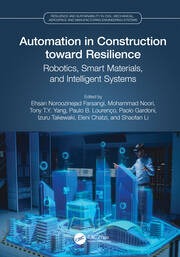
Automation in construction toward resilience : Robotics, smart materials and intelligent systems
Presents all aspects of automation in construction pertaining to the use of information technologies in design, engineering, construction technologies, and maintenance and management of constructed facilities. The broad scope encompasses all stages of the construction life cycle from initial planning and design, through the construction of the facility, its operation, and maintenance, to the eventual dismantling and recycling of buildings and engineering structures
Automatic Quantum Computer Programming : A Genetic Programming Approach
Computer science will be radically transformed if ongoing efforts to build large-scale quantum computers eventually succeed and if the properties of these computers meet optimistic expectations. Nevertheless, computer scientists still lack a thorough understanding of the power of quantum computing, and it is not always clear how best to utilize the power that it is understood. This dilemma exists because quantum algorithms are difficult to grasp and even more difficult to write. Despite large-scale international efforts, only a few important quantum algorithms are documented, leaving many essential questions about the potential of quantum algorithms unanswered.
Automated technology for verification and analysis ; 3rd International Symposium, ATVA 2005, Taipei, Taiwan, October 4-7, 2005, Proceedings
The Automated Technology for Veri?cation and Analysis (ATVA) international symposium series was initiated in 2003, responding to a growing interest in formal veri?cation spurred by the booming IT industry, particularly hardware design and manufacturing in East Asia. Its purpose is to promote research on automated veri?cation and analysis in the region by providing a forum for int- action between the regional and the international research/industrial commu- ties of the ?eld. ATVA 2005, the third of the ATVA series, was held in Taipei, Taiwan, 2005. The main theme of the symposium encompasses - sign, complexities, tools, and applications of automated methods for veri?cation and analysis. This book constitutes the refereed proceedings of the symposium .

Autoformation et aide au diagnostic en hématologie avec le logiciel ADH = Self-study and diagnostic aid in hematology with ADH software
The software includes a rich iconography on blood and marrow cells which will complement the knowledge in cytology of hematologists. Certain cytological abnormalities encountered in certain pathologies are also presented.
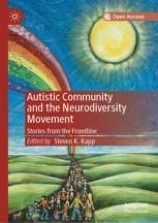
Autistic community and the neurodiversity movement : Stories from the frontline
This book marks the first historical overview of the autism rights branch of the neurodiversity movement, describing the activities and rationales of key leaders in their own words since it organized into a unique community in 1992. Sandwiched by editorial chapters that include critical analysis, the book contains 19 chapters by 21 authors about the forming of the autistic community and neurodiversity movement, progress in their influence on the broader autism community and field, and their possible threshold of the advocacy establishment
Authoritative communities : The scientific case for nurturing the whole child
Authoritative Communities: The Scientific Case for Nurturing the Whole Child introduces innovative solutions based firmly in the children’s mental health and resilience literature and in the hypothesis that humans are "hardwired to connect." These "authoritative communities" consist of such individuals and institutions as parents, teachers, coaches, elders, and a variety of organizations that are committed to each other’s well-being over the long-term and who instill children with prosocial values such as empathy and compassion. Living within these communities enables children and youth to develop a consistent sense of purpose and meaning, so that they, in turn, are able to grow up to be responsible, productive, and nurturing adults.

Austenitic TRIP/TWIP steels and steel-zirconia composites : Design of tough, transformation-strengthened composites and structures
This book presents a collection of the most up-to-date research results in the field of steel development with a focus on pioneering alloy concepts that result in previously unattainable materials properties.

Aurora : Observing and Recording Nature's Spectacular Light Show
The uniquely beautiful light display of an aurora is the result of charged particles colliding with tenuous atmospheric oxygen and nitrogen, more than 60 miles above the Earth, when the magnetosphere is disturbed by changes in the solar wind. Often - and incorrectly - regarded as being confined to high northern and southern latitudes, major auroral displays are visible from even the southern USA and the south of England, and occur perhaps twenty times in each eleven-year sunspot cycle. This book describes the aurora from the amateur observational viewpoint, discusses professional studies of auroral and geomagnetic phenomena to put amateur work in context, and explains how practical observers can go about observing and recording auroral displays.
Augmented Humanity : Being and Remaining Agentic in a Digitalized World
This book will examine the implications of digitalization for the understanding of humanity, conceived as a community of intelligent agency. It addresses important topics across a range of social and behavioral theories and identifies a range of novel mechanisms and their social behavioral effects. Across the book, the author highlights the expansion of intelligent processing capability brought about by digitalization and the challenges this exposes for integrating artificial and human capabilities

Auditory Trauma, Protection, and Repair
Protection and Repair presents recent developments in auditory research and their potential translation to the clinical setting. In particular the authors address the major entities of peripheral auditory trauma, discuss the underlying mechanisms, the central nervous system consequences, protective interventions and finally explore the possibilities to restore cochlear morphology and function.Two themes run through the chapters in this book: cellular homeostasis and cell death. In the broadest sense, all auditory pathologies are disorders of cellular homeostasis.
Audacious Education Purposes : How Governments Transform the Goals of Education Systems
This book offers a comparative study of eight ambitious national reforms that sought to create opportunities for students to gain the necessary breath of skills to thrive in a rapidly changing world.
