



Page 124
Page 124

AIU projects evaluation platform
The project is a cloud computing system constructed to provide the service of helping students run their practical projects and work together while keeping track of every change in it, and teachers running the projects online and evaluating them. The system provided help doing this mission in real-time dialogue without having any dependencies downloaded on the machine and running it over the internet. The development of the system used a full-stack web framework and a database processing technology. The system has accomplished such services as running the projects online. The tests of the system are running in good conditions. The use of this system will solve the problem of teacher’s project evaluation and running them online.
Airport Building Information Modelling
Details how Building Information Modelling is being successfully deployed in the planning, design, construction and future operation of the Istanbul New Airport, a mega-scale construction project incorporating a varying mix of infrastructures including terminals, runways, passenger gates, car parks, railways and roads. The book demonstrates how Airport Building Information Modelling (ABIM) is being used to: • facilitate collaboration, cooperation and integrated project delivery • manage subcontractors and eliminate cost over-runs • reduce waste on site and enhance overall quality • connect people in a virtual environment to encourage collaborative working • provide clients with an effective interface for lifecycle management including: design development, construction documentation, construction phases and BIM and Big Data Integration for future facilities management
AiREAS : Sustainocracy for a Healthy City : The Invisible made Visible ; Phase 1
Describes the coming about and first results of the AiREAS "healthy city" cooperative in the city of Eindhoven and Province of North Brabant in the Netherlands. AiREAS is an initiative focused on the multidisciplinary co-creation of healthy cities using the core human value of human health and air quality as guiding principle for profound regional innovation. The unique group process that followed uses the complexity of the city of Eindhoven as living lab. It is an anthropology based initiative that invites directly to the same table of core innovative responsibility the local government, innovative business partners, scientific insights and reseach, and civilian participation.
AiREAS : Sustainocracy for a healthy city : Phase 3 : Civilian participation – Including the global health deal proposition
This volume describes phase 3 of the AiREAS multidisciplinary cocreation effort to produce a Healthy City. Phase 1 referred to making visible the invisible from an air quality and human exposure perspective. Phase 2 studies air quality related to health and Phase 3 looks at air quality, health and lifestyle from the perspective of persuasion to innovative change. The three books together describe the coming about and first results of the AiREAS "healthy city" cooperative in the city of Eindhoven and Province of North Brabant in the Netherlands. AiREAS is an initiative focused on the multidisciplinary co-creation of healthy cities using the core human value of human health and air quality as guiding principle for profound regional innovation.
Air, Water and Soil Quality Modelling for Risk and Impact Assessment
This book is the result of the Proceedings of the NATO Advanced Research Workshop on Air, Water and Soil Quality Modelling for Risk and Impact Assessment,The aim of the NATO Advanced Research Workshop on was to further joint environmental compartment modelling and applications of control theory to environmental management. The articles of the proceedings provide an overview of ongoing research in this field regarding assessment of environmental risks and impacts. Besides selected issues of practical application they address questions of forward and inverse modelling, integrated treatment of environmental changes and economic impacts as well as aspects of future development of numerical environmental modelling.
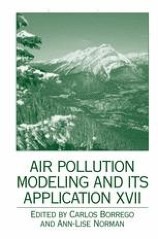
Air Pollution Modeling and its Application XVII
This volume contains the papers and posters presented at the 27 NATO/CCMS International Technical Meeting on Air Pollution Modeling and Its Application held in Banff, Canada, 24-29 October 2004. The key topics at this ITM included: Role of Atmospheric Models in Air Pollution Policy and Abatement Strategies; Integrated Regional Modeling; Effects of Climate Change on Air Quality; Aerosols as Atmospheric Contaminants; New Developments; and Model Assessment and Verification. 104 participants from North and South America, Europe, Africa and Asia attended th the 27 ITM.
Air Pollution Modeling and Its Application XIX
The book is aimed at researchers and government policy makers who wish to keep abreast of the most recent developments in air pollution modelling and air quality issues. The book emphasizes the following key topics: 1. Local and urban scale modelling; 2. Regional and intercontinental modelling; 3. Data assimilation and air quality forecast; 4. Model assessment and verification; 5. Aerosols in the atmosphere; 6. Interactions between air quality and climate change; 7. Air quality and human health.
AI-Enabled Threat Detection and Security Analysis for Industrial IoT
Provides the state-of-the-art development on security and privacy for cyber-physical systems (CPS) and industrial Internet of Things (IIoT). More specifically, this book discusses the security challenges in CPS and IIoT systems as well as how Artificial Intelligence (AI) and Machine Learning (ML) can be used to address these challenges. Furthermore, this book proposes various defence strategies, including intelligent cyber-attack and anomaly detection algorithms for different IIoT applications.

AI*IA 2005 : Advances in artificial intelligence ; 9th congress of the Italian Association for Artificial Intelligence Milan, Italy, September 21-23, 2005, Proceedings
This volume collects the papers selected for presentation at the IX Congress of the Italian Association for Arti?cial Intelligence (AI*IA), 2005 On the one hand this congress continues the tradition of AI*IA in organizing its biannual s- enti?c meeting from 1989; on the other hand, this edition is a landmark in the involvement of the international community of arti?cial intelligence (AI), directly involving a broad number of experts from several countries in the P- gramCommittee. Moreover,the peculiar nature of scienti?c researchin arti?cial intelligence (which is intrinsically international) and several consolidated int- national collaborations in projects and mobility programs allowed the collection and selection of papers from many di?erent countries, all around the world, enlarging the visibility of the Italian contribution within this research ?eld. Arti?cial intelligence is today a growing complex set of conceptual, theor- ical, methodological, and technological frameworks, o?ering innovative com- tational solutions in the design and development of computer-based systems. Within this perspective, researchers working in this area must tackle a broad range of knowledge about methods, results, and solutions coming from di?erent classical areas of this discipline. The congress was designed as a forum allowing researchers to present and discuss specialized results as general contributions to AI growth.

AI virtual mouse system
Even today, many people still find interacting with computers and hardware to be an unpleasant experience, despite the development of input devices over decades. Computers and hardware should be tailored to our natural modes of communication: Body language and speech. Intelligent machines that can work alongside computers are now being developed, allowing for friendlier Human-Computer Interaction (HCI). this project, intends a hand gesture-based system that allows users to control virtual keyboard, desktop mouse movements and connect it with mobile phone in order to monitor and control.
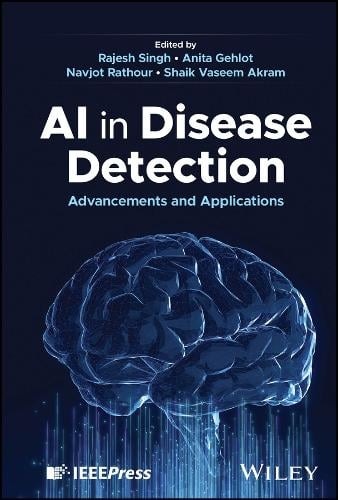
AI in disease detection : Advancements and applications
Discusses the integration of artificial intelligence to revolutionize disease detection approaches, with case studies of AI in disease detection as well as insight into the opportunities and challenges of AI in healthcare as a whole. The book explores a wide range of individual AI components such as computer vision, natural language processing, and machine learning as well as the development and implementation of AI systems for efficient practices in data collection, model training, and clinical validation.

AI home decorator
Presents the development of “DesignMate”, an innovative AI home decorator application designed to revolutionize interior design. With three main features powered by artificial intelligence, DesignMate simplifies and enhances the process of home decoration. The first feature leverages an Autoregressive transformer model trained on the extensive 3Dfront dataset to suggest room decor based on room layouts. The second feature employs Generative Adversarial Networks (GANs) to enhance the colors of specific room layouts. The third feature introduces an expert system that tailors decor options to user-entered conditions. DesignMate also introduces an integrated e-commerce platform dedicated to furniture, offering users a wide selection of high-quality items that perfectly complement their preferred room designs.
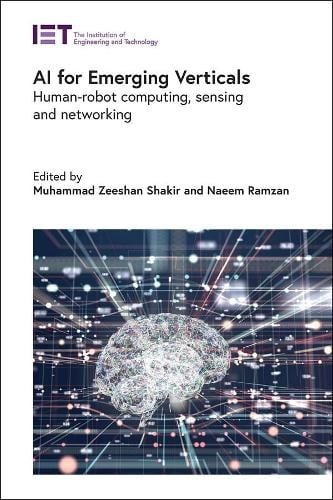
AI For Emerging Verticals : Human-robot computing, sensing and networking
Artificial intelligence (AI) and machine learning (ML) will play a major role. By adopting AI software and services, businesses can create predictive strategies, enhance their capabilities, better interact with customers, and streamline their business processes. Explores novel concepts and cutting-edge research and developments towards designing these fully automated advanced digital systems. Fostered by technological advances in artificial intelligence and machine learning, such systems potentially have a wide range of applications in robotics, human computing, sensing and networking. The chapters focus on models and theoretical approaches to guarantee automation in large multi-scale implementations of AI and ML systems; protocol designs to ensure AI systems meet key requirements for future services such as latency; and optimisation algorithms to leverage the trusted distributed and efficient complex architectures.
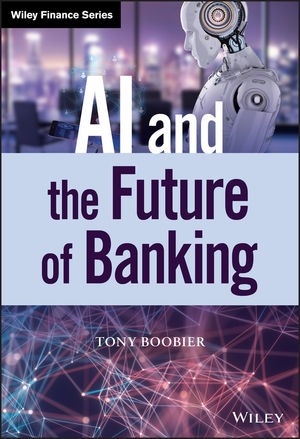
AI and the future of banking
Across its entire breadth and depth, the banking industry is at the forefront of investigating Advanced Analytics and AI technology for use in a broad range of applications, such as customer analytics and providing wealth advice for clients. AI and the Future of Banking provides new and established banking industry professionals with the essential information on the implications of data and analytics on their roles, responsibilities and personal career development.
AI and IoT for smart city applications
Provides a valuable combination of relevant research works on developing smart city ecosystem from the artificial intelligence (AI) and Internet of things (IoT) perspective. The technical research works presented here are focused on a number of aspects of smart cities: smart mobility, smart living, smart environment, smart citizens, smart government, and smart waste management systems as well as related technologies and concepts. This edited book offers critical insight to the key underlying research themes within smart cities, highlighting the limitations of current developments and potential future directions.
Agroecology now! : Transformations towards more just and sustainable food systems
Develops a framework for advancing agroecology transformations focusing on power, politics and governance. It explores the potential of agroecology as a sustainable and socially just alternative to today’s dominant food regime. Agroecology is an ecological approach to farming that addresses climate change and biodiversity loss while contributing to the Sustainable Development Goals
Agroecological transitions : From theory to practice in local participatory design
There is wide agreement on the need to change the prevalent agricultural models, given their negative impacts and their incompatibility with current societal issues. Agroecological transition has been promoted as a potential solution to the ecological, social and economic problems generated by these models. It however involves a systemic, multi-scale and transdisciplinary process. Due to this complexity, the overall picture of what farms and food systems “actually are” and “might be” may not be apparent at the individual level. Yet individuals’ knowledge and values provide complementary insights on how to proceed in deepening ecological modernisation. Expertise can also provide landmarks to be considered in that process. Because local stakeholders’ experience and skills are key resources in the adaptation and adoption of agroecological transition, new conceptual and methodological frameworks and tools have to be developed to support them in the design process of such a complex transition. This book presents feedback from the ‘Territorial Agroecological Transition in Action’- TATA-BOX research project, which was devoted to these specific issues.
Agriculture for Economic Development in Africa : Evidence from Ethiopia
This book explores the role of agriculture in long-term economic growth. With a particular focus on Ethiopia, the role of the state in igniting agricultural growth and in sustaining economic growth is highlighted as essential for low-income countries. Taking ideas from both economic history and development economics, the ability of Ethiopia and the rest of Africa to sustain recent rapid growth into something that can tackle the development agenda is discussed, alongside policy suggestions.
Agricultural value chains in India : Ensuring competitiveness, inclusiveness, sustainability, scalability, and improved finance
This book provides a clear holistic conceptual framework of CISS-F (competitiveness, inclusiveness, sustainability, scalability and access to finance) to analyse the efficiency of value chains of high value agricultural commodities in India. It is based on the understanding that agriculture is an integrated system that connects farming with logistics, processing and marketing. Farmer’s welfare being central to any agricultural policy makes it very pertinent to study how a value chain works and can be strengthened further to realize this policy goal.
Agricultural Biotechnology in China : Origins and Prospects
Building on a long tradition of agricultural advances, Chinese scientists have applied biotechnology techniques to develop hundreds of novel crop varieties suited to local farming conditions and challenges.Agricultural Biotechnology in China: Origins and Prospects is a comprehensive examination of how the origins of biotechnology research agendas, along with the effectiveness of the seed delivery system and biosafety oversight, help to explain current patterns of crop development and adoption in China. Based on firsthand insights from China’s laboratories and farms, Valerie Karplus and Dr. Xing Wang Deng explore the implications of China’s investment for the nation’s rural development, environmental footprint, as well as its global scientific and economic competitiveness.
