



Page 12
Page 12

Consumer and sensory evaluation techniques : How to sense successful products
Consumer and sensory evaluation techniques speaks to management and decision-makers within organizations and addresses the main questions (eg: "How much will it cost?" and "How quickly can it be achieved?") that are faced when developing and testing new products before a launch. Chapters cover: The pillars of good consumer and sensory studies; Sensory profile of a product: Mapping internal sensory properties; The foundations of consumer evaluation; Study plans and strategy sustainable short, mid and long-term vision; Real-life anticipation with market factors: Concept, price, brand, market channel; And internal studies versus sub-contracting. Also uses examples from multiple sectors to show how to build a sustainable product evaluation strategy analyses the critical milestones to follow and the pitfalls to avoid.

Collaborative Engineering: Theory and Practice
Collaborative Engineering: Theory and Practice offers insights into the methods and techniques involved in implementing a systematic approach to the integrated, concurrent design of products and related processes, including manufacturing, product service and support. The approach discussed here will help developers consider all elements of the product life cycle from conception through disposal, including quality, cost, schedule, and user requirements.

Co-enzyme Q10
Coenzyme Q10 is a vitamin like substance that has been found in both microorganisms and plants as well as in animals and humans. In this research we will talk about CoenzymeQ10, it’s biochemical functions and roles in health and diseases such as Parkinson, cardiovascular diseases, diabetes, male fertility, cancers , covid19 and immune functions. Some coQ10 determination methods in foods will be discussed. At the last can we use it as asupplement? Does it have an adverse effects and contraindications? and what are the factors that affect on it’s plasma concentrations ? .

Coal combustion byproducts and environmental issues
Coal Combustion Byproducts and Environmental Issues addresses the major implications and critical issues surrounding coal combustion products and their impact upon the environment. It provides essential information for scientists conducting research on coal and coal combustion products, but also serves as a valuable reference for a wide variety of researchers and other professionals in the energy industry and in the fields of public health, engineering, and environmental sciences. The ultimate goal of this volume is to benefit both our economy and our environment as humanity enters the second half of the fossil fuel era.

Clinical trial registries : A practical guide for sponsors and researchers of medicinal products
A necessary addition to the library of all researchers who plan to publish their results in top-tier, peer-reviewed journals. ICMJE editors and other journal editors require registration of clinical trial information on publicly available Web sites before enrollment of study subjects and some countries and regions also require this information, as well as timely publication of study results. Not only does this book discuss the genesis of these requirements, it also provides practical information for researchers and sponsors on how to establish a workflow for a clinical registry project, how to file to a registry, and how to post results. More than 25 current Web addresses for registries are provided as well as a comprehensive annotated bibliography of papers on the topic of clinical trial registries. This book is a valuable source of information for all sponsors of medicinal products.

Materials for medical applications : Principles and practices
Discusses advanced knowledge about the synthesis and application of materials in the medical field for diagnostic and therapeutic conditions. These materials have been extensively used in various biological and medical applications, especially in drug delivery, tumor screening, bioimaging, diagnosis, and therapies. Materials for Medical Applications provides comprehensive but concise information about materials and their medical applications. The readers will get information about the trends in materials and their medical applications, as well as current material-based products that are used in the medical field. The book also discusses how materials are tested in research laboratories, preclinical (animal) trials, and clinical (human) trials, and how material-based products go through various regulatory and safety phases before reaching patients. It also discusses topics such as materials delivery, imaging, and treatments for various diseases. It includes a chapter dedicated to regulatory guidelines and policies in the application of nanomaterials and will include current clinical trial information on the materials. Finally, the book has topics such as health safety, toxicity, dosages, and long-term implications of materials.
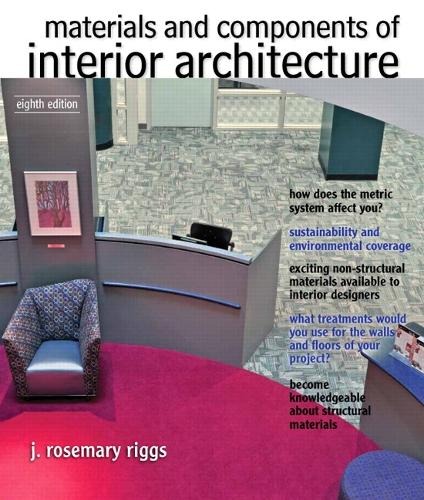
Materials and Components of Interior Architecture
Offers a unique look at interior design,fully covering the exciting breadth of nonstructural materials available to interior designers. With an eye on the environment, it instills a firm understanding of the products, properties, and uses of all materials—from floors, walls, and ceilings to installation and recycling. Going beyond paint and carpet, it explores over 27 different floorings and devotes separate chapters to kitchens and baths. Filled with the latest information from manufacturers, suppliers, and associations, it provides students with the knowledge to creatively engage the “nuts and bolts” of interior design—both in terms of structure and style.
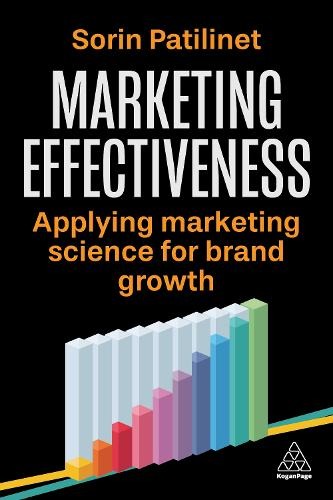
Marketing effectiveness : Applying marketing science for brand growth
Contrary to popular belief marketing effectiveness is not just about the measuring of ROI. The lens of effectiveness must be applied to all marketing mix elements, from strategy to pricing and product, to media and advertising. It's a strategic shift that demands robust evidence-based decisions and consistent application in order to grow. Written by leading marketing practitioner, Sorin Patilinet, this book enables mid-senior level marketers to integrate the scientific methods and advanced measurements required for true marketing effectiveness into their marketing strategies, in order to reap the benefits of strong customer understanding and developing decision-making processes for growth. Covering everything from neuroscience and its application to marketing to advanced analytics and machine learning models, this book provides a comprehensive practical guide for marketers.

Marine Natural Products
The search for marine natural products is well-known for colorful pictures of exotic creatures which, after having been found to contain the cure for cancer, disappear into the depths, never to be seen again, or for accounts of scuba-diving chemists in waters alive with poisonous sea snakes - in short, the sort of sensational stuff that even nonchemists find interesting. That sort of thing will not be found in this book.

Marine Biotechnology II
This volume of Advances in Biochemical Engineering/Biotechnology illustrates several topics in line with the following broad objectives: thinking of marine biotechnology as the controlled production and use of marine organisms and molecules for useful purposes, firstly by exploring aspects of marine biodiversity and exploitation of biomass, then considering the identification, production and processing of marine products.

Marine Biotechnology I
Oceans, which occupy up to two thirds of the surface of our planet, were not really approached from scientific point of view until the second half of the 19th century and even the 20th with regard to microbial and unicellular life. Today, the importance of marine biodiversity has been fully recognized. It is, indeed, one of the aspects which, over the two past decades, have made a major contribution to our knowledge and vision of the living planetThis volume of Advances in Biochemical Engineering/Biotechnology illustrates several topics in line with the following broad objectives: thinking ofmarine biotechnology as the controlled production and use of marine organisms and molecules for useful purposes, firstly by exploring aspects of marine biodiversity and exploitation of biomass, then considering the identification, production and processing of marine products.

Marine bioactive molecules for biomedical and pharmacotherapeutic application
Explores cutting-edge research on the discovery and application of marine bioactive molecules for biomedical and pharmacotherapeutic purposes. The book begins by delving into the bioprospection of marine sponge microbiomes for bioactive metabolites using advanced metagenomics tools. It then explores metagenome mining approaches for the discovery of marine microbial natural products. The use of marine-derived fungi as a source of anticancer secondary metabolites is also discussed. The book then turns to the biomedical applications of marine-derived biomaterials, including marine biopolymers in tissue engineering and regenerative medicine. Marine-derived pharmaceuticals and polymeric nanostructures for cancer treatment are also examined.
Manufacturing Execution Systems - MES
The production plants of today develop into modern service centers. Economic efficiency of modern added value is not a property of products alone but of the process. Decisive potential in business now is a question of process capability, rather than production capability. Process capability in business requires real-time systems for optimization. Business-IT needs to be developed from telecommunications and ERP to real time services, which are not offered by the prevailing ERP systems. Today, only modern Manufacturing Execution Systems (MES) offer real-time applications. They generate current as well as historic mappings of production facilities and thus they can be used as basis for optimizations. It is important to map the supply chain in real time. Increasing complexity in production requires an integrated view of the production and service facilities: detailed scheduling, status collection, quality, performance analysis, tracing of material and so on have to be recorded and displayed in an integrated way.
Managing logistics systems : Planning and analysis for a successful supply chain
Introduces logistics from a broad perspective to include all activities throughout the product and service life cycle pertaining to supply chain and logistics management, the physical supply and distribution of products, and the corresponding maintenance and support. It recognizes the mutual interdependence of the major functional areas of the organization including marketing, production, and finance. The emphasis throughout the text is on logistics in the context of a total business system design process. It views the business as a "system", managing logistics within that system, and thus transforming their Supply Chain. Pedagogy to aid learning is incorporated throughout every chapter, with chapter objectives, case studies, and concept checks. This text is intended for both upper-level undergraduate and lower-level graduate students in both Business and Engineering on logistics and supply chain tracks. It can also serve as a reference for practitioners actively engaged in day-to-day management of logistics and supply chain activities.

Managing innovative projects and programs : Using the ISO 56000 standards for guidance and implementation
Provides a step-by-step procedure on how to process a medium- or large-size project, program, or product using an already-established IMS that considers the guidance given in ISO 56002:2019 – Innovation Management Systems Standard. Often the most complicated, complex, difficult, and challenging system used in an organization is the IMS. At the same time, it usually is the most important system because it is the one that generates most of the value-adding products for the organization, and it involves most of the key functions within the organization.
Managing Information Quality : Increasing the Value of Information in Knowledge-intensive Products and Processes
It still holds true: information is not always the answer. Information is often part of the problem. While the main goal of information in the business place is to - able adequate decisions and actions, it can also lead to numerous negative effects: it can confuse, block creativity, or it can lead to hectic activism, stress and fatigue. Information can distract and divert attention, and it may even delay important - cisions – the paralysis by analysis. Strategies to avoid these dysfunctional effects of information can be divided into sender-based strategies and receiver-based strategies.

Managing Forest Ecosystems : The Challenge of Climate Change
With climate change now charging up the political agenda, there are three issues commonly making the headlines: carbon budgets, renewable energy, and the anticipated impacts of climate change. Equally important, though currently less well covered, is the issue how these effects might be mitigated. Given the significant role that forests play in the climate system – as sources, sinks, and through carbon trading – this book discusses the current scientific evidence on the relationships between climate, forest resources and forest management practices around the world. Drawing on expertise from forest scientists from several continents, the book presents both in depth analysis of the current knowledge, and a series of case studies which assess the biological and the economic impacts of climate change. It includes sections on forest responses to climate change, monitoring and modeling changes, economic and management implications, and carbon sequestration under specific management systems.
Managing Closed-Loop Supply Chains
Introduction Closing supply chains refers to taking care of items once they are no longer desired or can no longer be used by their user. Smart management of closed-loop supply chains means profitable recovery of value from these items (products, functional components, materials or packaging). The company closing the supply chain may be the original equipment manuf- turer (OEM), a distribution partner or a third party not involved in the f- ward distribution. In recent years, the management of closed-loop supply chains has gained importance because of increased legislation on producer respon- bility, requiring companies to take back products from customers and to organize for proper recovery and disposal. This legislation is partially due to increased awareness of environmental issues. However, smart com- nies have also understood that returned products often contain lots of value to be recovered. They manage closed-loop supply chains simply because it is a profitable business proposition.
Management Quality and Competitiveness : Lessons from the Industrial Excellence Award
This book showcases examples of excellent manufacturing companies who have succeeded in creating value and job growth in Western Europe. The examples show managers of industrial firms how a clearly articulated strategic position can be combined with excellent execution to achieve competitiveness in Europe, in spite of the usually cited disadvantage of high labor costs and rigidity. Not every company is alike — strategic positions differ, and the means of execution differ, but what is common is a clear plan together with mobilization of all employees to apply their abilities in supporting this common plan. The book is indispensable reading for all managers that are interested in improving competitiveness.
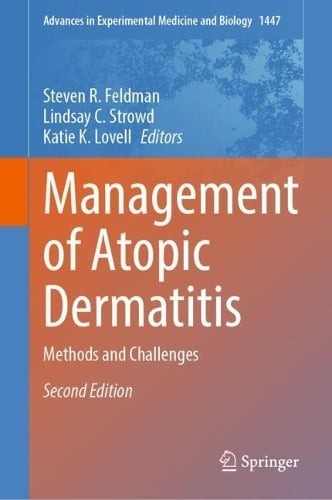
Management of atopic dermatitis : Methods and challenges
This new edition builds upon the foundational knowledge covered in the first edition, covering the epidemiology, pathogenesis, and clinical presentation of atopic dermatitis in both pediatric and adult patients. It provides an overview of the mechanism and presentation of atopic dermatitis and focuses on the management methods experienced dermatologists have used to successfully manage atopic dermatitis. The book includes new chapters describing the special considerations for atopic dermatitis in skin of color patients, dedicated chapters on topical and oral prescription management reflected the latest FDA-approved treatments, and also a chapter covering the updated guidelines from the American Academy of Dermatology. A final chapter includes updates on the future of atopic dermatitis treatment.
