



Page 12
Page 12

Biomimetics for architecture & design : Nature - analogies - technology
Provides the readers with a timely guide to the application of biomimetic principles in architecture and engineering design. As a result of a combined effort by two internationally recognized authorities, the biologist Werner Nachtigall and the architect Göran Pohl, the book describes the principles which can be used to compare nature and technology, and at the same time it presents detailed explanations and examples showing how biology can be used as a source of inspiration and “translated” in building and architectural solutions (biomimicry). Even though nature cannot be directly copied, the living world can provide architects and engineers with a wealth of analogues and inspirations for their own creative designs. But how can analysis of natural entities give rise to advanced and sustainable design? By reporting on the latest bionic design methods and using extensive artwork, the book guides readers through the field of nature-inspired architecture, offering an extraordinary resource for professional architects, engineers, designers and urban planners, as well as for university teachers, researchers and students.
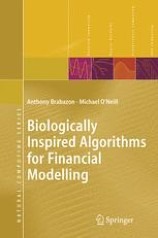
Biologically Inspired Algorithms for Financial Modelling
Then Part I provides a thorough guide to the various bioinspired methodologies – neural networks, evolutionary computing (particularly genetic algorithms and grammatical evolution), particle swarm and ant colony optimization, and immune systems. Part II brings the reader through the development of market trading systems. Finally, Part III examines real-world case studies where BIA methodologies are employed to construct trading systems in equity and foreign exchange markets, and for the prediction of corporate bond ratings and corporate failures.

Bioinspired optimization methods and their applications ; 9th International conference, BIOMA 2020, Brussels, Belgium, November 19–20, 2020, Proceedings
This book constitutes the refereed proceedings of the 9th International Conference on Bioinspired Optimization Methods and Their Applications, BIOMA 2020, held in Brussels, Belgium, in November 2020. The 24 full papers presented in this book were carefully reviewed and selected from 68 submissions. The papers in this BIOMA proceedings specialized in bioinspired algorithms as a means for solving the optimization problems and came in two categories: theoretical studies and methodology advancements on the one hand, and algorithm adjustments and their applications on the other.

Bio-inspired modeling of cognitive tasks ; 2nd International Work-conference on the interplay between natural and artificial computation, IWINAC 2007, La Manga del Mar Menor, Spain, June 18-21, 2007, Proceedings, Part I
This volume includes all the contributions mainly related with theoretical, conceptual and methodological aspects linking AI and knowledge engineering with neurophysiology, clinics and cognition.

Bio-inspired computational intelligence and applications ; International conference on life system modeling, and simulation, LSMS 2007, Shanghai, China, September 14-17, 2007. Proceedings
It covers both micro and macro c- ponents ranging from cells, tissues and organs across to organisms and ecologic niches. These interact and evolve to produce an overall complex system whose beh- ior is difficult to comprehend and predict.The arrival of the 21st century has been marked by a resurgence of research interest both in arriving at a systems-level und- standing of biology and in applying such knowledge in complex real-world appli- tions. Consequently, computational methods and intelligence in systems, biology, as well as bio-inspired computational intelligence, have emerged as key drivers for new computational methods. For this reason papers dealing with theory, techniques and real-world applications relating to these two themes were especially solicited.

Bioinformatics research and applications : 4th International Symposium, ISBRA 2008, Atlanta, GA, USA, May 6-9, 2008. Proceedings
This book constitutes the refereed proceedings of the Fourth International Symposium on Bioinformatics Research and Applications, ISBRA 2008, held in Atlanta, GA, USA in May 2008.
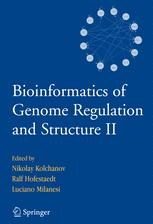
Bioinformatics of genome regulation and structure II
The conference was organized by the Laboratory of Theoretical Genetics, Institute of Cytology and Genetics, Siberian Branch of the Russian Academy of Sciences, Novosibirsk, Russia. The material covers the most recent topics in bioinformatics, including (i) regulatory genomic sequences: databases, knowledge bases, computer analysis, modeling, and recognition; (ii) large-scale genome analysis and functional annotation; (iii) gene structure detection and prediction; (iv) comparative and evolutionary genomics; (v) computer analysis of genome polymorphism and evolution; computer analysis and modeling of transcription, splicing, and translation; structural computational biology: structure- function organization of genomic DNA, RNA, and proteins; (vi) gene networks, signal transduction pathways, and genetically controlled metabolic pathways: databases, knowledge bases, computer analysis, and modeling; principles of organization, operation, and evolution; (vii) data warehousing, knowledge discovery and data mining; and (viii) analysis of basic patterns of genome operation, organization, and evolution.

Biodiversity Conservation and Phylogenetic Systematics : Preserving our evolutionary heritage in an extinction crisis
This book brings an updated state of the art of phylogenetic diversity in conservation biology. Nineteen chapters written by scientists from research institutions of fourteen countries demonstrate that approaches for preserving the evolutionary heritage are now very tuned into human impacts and sustainability issues. The questions, methods and applications around which it is organized show the importance of phylogenetic diversity in avoiding biodiversity losses in the present extinction crisis. They touch important points such as the way we value phylogenetic diversity, the importance of thinking at a much wider sample of the Tree of Life, the choice of adequate measures. In methods section, new solutions, such as dealing with abundances, sampling effort, or with information coming from conflicting phylogenetic trees are provided. Application section includes study cases of different groups of organi
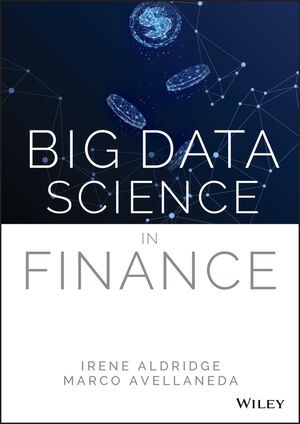
Big Data Science in Finance
Explains the mathematics, theory, and methods of Big Data as applied to finance and investing Examines the mathematics, theory, and practical use of the revolutionary techniques that are transforming the industry. Designed for mathematically-advanced students and discerning financial practitioners alike, this energizing book presents new, cutting-edge content based on world-class research taught in the leading Financial Mathematics and Engineering programs in the world. Marco Avellaneda, a leader in quantitative finance, and quantitative methodology author Irene Aldridge help readers harness the power of Big Data. Provides a complete account of Big Data that includes proofs, step-by-step applications, and code samples Explains the difference between Principal Component Analysis (PCA) and Singular Value Decomposition (SVD) Covers vital topics in the field in a clear, straightforward manner Compares, contrasts, and discusses Big Data and Small Data Includes Cornell University-tested educational materials such as lesson plans, end-of-chapter questions, and downloadable lecture slides

Bacterial Physiology : A Molecular Approach
The application of new molecular methodologies in the study of bacterial behaviour and cell architecture has enabled new revolutionary insights and discoveries in these areas. While this has also raised a number of scientific mysteries about bacteria, it certainly improved our understanding of these organisms as complex and adaptive entities rather than just simple tiny buckets of enzymes. The value of this recent knowledge in bacterial physiology is not only restricted to fundamental biology, but it also extends to biotechnology and drug-discovery disciplines where understanding cell behaviour and structure is essential for better exploitation of useful bacteria and effective eradication of harmful ones. This makes a new text accommodating recent developments in bacterial physiology highly relevant to a wide range of readership including those interested in basic and applied knowledge.

Atlas of complex orthodontics
A revolutionary new text with step-by-step instructions for treating today’s toughest orthodontic cases. Over 1,500 full-color clinical photographs, radiographs, and illustrations present each phase of treatment in this atlas-style guide, starting with the pre-treatment work-up, continuing through the treatment sequence, and ending with the final results. Drs. Ravindra Nanda and Flavio Uribe cover the latest techniques for managing moderate to severe orthodontic problems, including the use of temporary anchorage devices and the "surgery-first" orthognathic approach, to ensure you stay ahead of the curve in the ever-changing field of orthodontics.

Artificial neural networks : Biological Inspirations – ICANN 2005 ; 15th International Conference, Warsaw, Poland, September 11-15, 2005, Proceedings, Part I
The two volume set LNCS 3696 and LNCS 3697 constitutes the refereed proceedings of the 15th International Conference on Artificial Neural Networks, ICANN 2005, held in Warsaw, Poland in September 2005. The over 600 papers submitted to ICANN 2005 were thoroughly reviewed and carefully selected for presentation. The first volume includes 106 contributions related to Biological Inspirations; topics addressed are modeling the brain and cognitive functions, development of cognitive powers in embodied systems spiking neural networks, associative memory models, models of biological functions, projects in the area of neuroIT, evolutionary and other biological inspirations, self-organizing maps and their applications, computer vision, face recognition and detection, sound and speech recognition, bioinformatics, biomedical applications, and information- theoretic concepts in biomedical data analysis.

Artificial neural networks - ICANN 2008 ; 18th International Conference, Prague, Czech Republic, September 3-6, 2008, Proceedings, Part II
This two volume set LNCS 5163 and LNCS 5164 constitutes the refereed proceedings of the 18th International Conference on Artificial Neural Networks, ICANN 2008, held in Prague Czech Republic, in September 2008.

Artificial neural networks - ICANN 2008 ; 18th International Conference, Prague, Czech Republic, September 3-6, 2008, Proceedings, Part I
This two volume set LNCS 5163 and LNCS 5164 constitutes the refereed proceedings of the 18th International Conference on Artificial Neural Networks, ICANN 2008, held in Prague Czech Republic, in September 2008.

Artificial neural networks – ICANN 2007 ; 17th International Conference, Porto, Portugal, September 9-13, 2007, Proceedings, Part I
This book contains learning theory, advances in neural network learning methods, ensemble learning, spiking neural networks, advances in neural network architectures neural network technologies, neural dynamics and complex systems, data analysis, estimation, spatial and spatio-temporal learning, evolutionary computing, meta learning, agents learning, complex-valued neural networks, as well as temporal synchronization and nonlinear dynamics in neural networks.
Artificial life models in software
Artificial Life Models in Software presents software tools, environments and realities dealing with creation, imitation and analysis of artefactual, virtual and living forms, written by those who personally design and produce software, hardware and art installations in artificial life, simulated complex systems and virtual worlds. This timely volume offers a nearly exhaustive overview and original analysis of major non-profit artificial life software packages. The carefully selected topics include: · simulation of real and imaginary life forms and their evolution · self-organization · emergent behaviours · swarm intelligence · evolutionary robotics · agent-based simulations · adaptive, complex and biologically inspired ecosystems · creative computer art There has long been a need within the academic and research community for an informal introduction and guidance to modern software tools for modelling and simulation of life-like phenomena – Artificial Life Models in Software fills this gap and provides invaluable information to both professional and amateur readers, offering detailed reviews of contemporary software for artificial life.
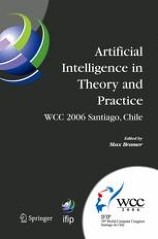
Artificial intelligence in theory and practice ; IFIP 19th World Computer Congress, TC 12: IFIP AI 2006 Stream, August 21-24, 2006, Santiago, Chile
The IFIP series publishes state-of-the-art results in the sciences and technologies of information and communication. The scope of the series includes: foundations of computer science; software theory and practice; education; computer applications in technology; communication systems; systems modeling and optimization; information systems; computers and society; computer systems technology; security and protection in information processing systems; artificial intelligence; and human-computer interaction. Proceedings and post-proceedings of referred international conferences in computer science and interdisciplinary fields are featured.

Artificial intelligence and soft computing ; 19th International conference, ICAISC 2020, Zakopane, Poland, October 12-14, 2020, Proceedings, Part II
The two-volume set LNCS 12415 and 12416 constitutes the refereed proceedings of of the 19th International Conference on Artificial Intelligence and Soft Computing, ICAISC 2020, held in Zakopane, Poland*, in October 2020. The 112 revised full papers presented were carefully reviewed and selected from 265 submissions. The papers included in the first volume are organized in the following six parts: neural networks and their applications; fuzzy systems and their applications; evolutionary algorithms and their applications; pattern classification; bioinformatics, biometrics and medical applications; artificial intelligence in modeling and simulation. The papers included in the second volume are organized in the following four parts: computer vision, image and speech analysis; data mining; various problems of artificial intelligence; agent systems, robotics and control.

Artificial intelligence and soft computing ; 19th International Conference, ICAISC 2020, Zakopane, Poland, October 12-14, 2020, Proceedings, Part I
The two-volume set LNCS 12415 and 12416 constitutes the refereed proceedings of of the 19th International Conference on Artificial Intelligence and Soft Computing, ICAISC 2020, held in Zakopane, Poland*, in October 2020. The 112 revised full papers presented were carefully reviewed and selected from 265 submissions. The papers included in the first volume are organized in the following six parts: neural networks and their applications; fuzzy systems and their applications; evolutionary algorithms and their applications; pattern classification; bioinformatics, biometrics and medical applications; artificial intelligence in modeling and simulation. The papers included in the second volume are organized in the following four parts: computer vision, image and speech analysis; data mining; various problems of artificial intelligence; agent systems, robotics and control.

Artificial intelligence and soft computing - ICAISC 2008 ; 9th International Conference Zakopane, Poland, June 22-26, 2008 Proceedings
This book constitutes the refereed proceedings of the 9th International Conference on Artificial Intelligence and Soft Computing, ICAISC 2008, held in Zakopane, Poland, in June 2008.
