



Page 12
Page 12

Biopharmaceutical drug design and development
Biopharmaceutical Drug Design and Development, Second Edition, updates the widely successful first edition, published in 1999. This new, expanded edition investigates the dozens of new biopharmaceutical drugs that have become available since the publication of the first edition. Among the drugs discussed are ones in the categories of monoclonal antibodies for in-vivo use, cytokines, growth factors, enzymes, immunomodulators, thrombolytics, and immonotherapies including vaccines. Additionally, the volume examines new and emerging technologies, such as bioinformatics, DNA microarrays, transgenics, therapeutic gene delivery, stem cells, nucleic acid-based therapeutics, and macromolecular drug delivery. Authors also study pharmacogenetics in the clinic and changes in biologic drug approval at the FDA. Biopharmaceutical Drug Design and Development, Second Edition, is a worthy sequel in the discussion on the dynamic, exciting field of biotechnology.
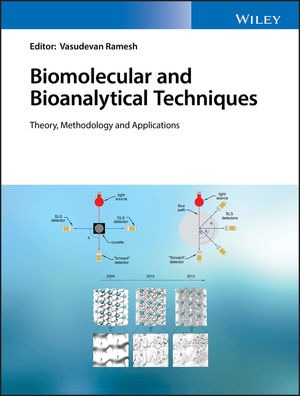
Biomolecular and bioanalytical techniques : Theory, methodology and applications
Offers an introduction to, and a basic understanding of, a wide range of biophysical techniques. The text takes an interdisciplinary approach with contributions from a panel of distinguished experts. With a focus on research, the text comprehensively covers a broad selection of topics drawn from contemporary research in the fields of chemistry and biology. Each of the internationally reputed authors has contributed a single chapter on a specific technique. The chapters cover the specific technique’s background, theory, principles, technique, methodology, protocol and applications.
Biometrics and Identity Management ; 1st European Workshop, BIOID 2008, Roskilde, Denmark, May 7-9, 2008. Revised Selected Papers
This volume constitutes the post-conference proceedings of the First European Workshop on Biometrics and Identity Management, BIOID 2008, held in Roskilde, Denmark, during May 7-9, 2008.
Biomedical Visualisation ; Vol.9
This edited book explores the use of technology to enable us to visualise the life sciences in a more meaningful and engaging way. It will enable those interested in visualisation techniques to gain a better understanding of the applications that can be used in visualisation, imaging and analysis, education, engagement and training. The reader will also be able to learn about the use of visualisation techniques and technologies for the historical and forensic settings.In this volume, there are chapters which examine forensic and historical visualisation techniques and digital reconstruction, ultrasound, virtual learning resources and patient utilised software and hardware. The use of HoloLens as a disruptive technology is discussed as well as historical items as a feature in a modern medical curriculum. It concludes with a fascinating chapter on pulse extraction from facial videos.
Biomedical Simulation; 4th International Symposium, ISBMS 2008, London, UK, July 7-8, 2008 Proceedings
This book constitutes the refereed proceedings of the 4th International Symposium on Biomedical Simulation, ISBMS 2008, held in London, UK, in July 2008.
Biomedical Simulation ; 3rd International Symposium, ISBMS 2006, Zurich, Switzerland, July 10-11, 2006, Proceedings
This book contains the written contributions to the Third International Sym- sium on Biomedical Simulation (ISBMS), which was held in Zurich, Switzerland, on July 10-11, 2006. The manuscripts are organized around three thematic sections which cover several of the major aspects of our rapidly growing ?eld: anatomical modeling and tissue properties, simulation of biophysical processes, as well as systems and applications. The symposium provided an international forum for researchers interested in using biomedical simulation technology for the improvement of patient care. It was held in the spirit and continuation of the symposia on Surgical Simulation and Soft Tissue Modeling (IS4TM) organized in 2003 by INRIA, and on Medical Simulation (ISMS) in 2004 by CIMIT.
Biomedical Informatics : Computer Applications in Health Care and Biomedicine
This series is directed to healthcare professionals who are leading the transformation of health care by using information and knowledge. Launched in 1988 as Computers in Health Care, the series offers a broad range of titles: some addressed to specific prof- sions such as nursing, medicine, and health administration; others to special areas of practice such as trauma and radiology.
Biomedical data mining for information retrieval : Methodologies, techniques, and applications
Discusses data mining, biomedical image processing, information retrieval with broad coverage of basic scientific applications. covers the topic of mining biomedical text, images and visual features towards information retrieval. Biomedical and health informatics is an emerging field of research at the intersection of information science, computer science, and healthcare and brings tremendous opportunities and challenges due to easily available and abundant biomedical data for further analysis. The aim of healthcare informatics is to ensure the high-quality, efficient healthcare, better treatment and quality of life by analyzing biomedical and healthcare data including patient’s data, electronic health records (EHRs) and lifestyle. Previously, it was a common requirement to have a domain expert to develop a model for biomedical or healthcare; however, recent advancements in representation learning algorithms allows us to automatically to develop the model. Biomedical image mining, a novel research area, due to the vast amount of available biomedical images, increasingly generates and stores digitally.
Biologically-Inspired Collaborative Computing ; IFIP 20th World Computer Congress, 2nd IFIP TC 10 International Conference on Biologically-Inspired Collaborative Computing, September 8–9, 2008, Milano, Italy
The IFIP series publishes state-of-the-art results in the sciences and technologies of information and communication. The principal aim of the IFIP series is to encourage education and the dissemination and exchange of information about all aspects of computing.
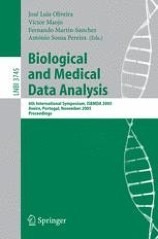
Biological and medical data analysis ; Vol. 3745 ; 6th International symposium, ISBMDA 2005, Aveiro, Portugal, November 10-11, 2005, Proceedings
The 6th International Symposium on Biological and Medical Data Analysisaimed to become a place where researchersinvolved in these diverse but increas-ingly complementary areas could meet topresent and discuss their scientificresults.The papers in this volume discuss issues from statistical models to archi-tectures and applications to bioinformatics and biomedicine. They cover bothpractical experience and novel research ideas and concepts.
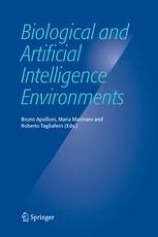
Biological and artificial intelligence environments
The book reports the proceedings of the 15th Italian workshop on neural networks issued by the Italian Society on Neural Networks SIREN. The longevity recipe of this conference stands in three main points that normally renders the reading of these proceedings so interesting as appealing. 1. The topics of the neural networks is considered an attraction pole for a set of researches centered on the inherent paradigm of the neural networks, rather than on a specific tool exclusively. Thus, the subsymbolic management of the data information content constitutes the key feature of papers in various fields such as Pattern Recognition, Stochastic Optimization, Learning, Granular Computing, and so on, with a special bias toward bioinformatics operational applications. An excerpt of all these matters may be found in the book. 2. Though managed at domestic level, the conference attracts contributions from foreign researchers as well, so that in the book the reader may capture the flavor of the state of the art in the international community. 3. The conference is a meeting of friends as well. Thus the papers generally reflect a relaxed atmosphere where researchers meet to generously exchange their thought and explain their actual results in view of a common cultural growing of the community.

Bio-inspired computing and communication ; 1st Workshop on Bio-inspired design of networks, BIOWIRE 2007 Cambridge, UK, April 2-5, 2007 Revised Selected Papers
The book constitutes the thoroughly refereed post-workshop proceedings of the First Workshop on Bio-Inspired Design of Networks, BIOWIRE 2007, held in Cambridge, UK, in April 2007.
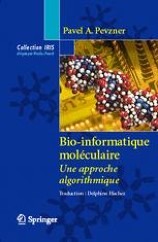
Bio-informatique moléculaire : Une approche algorithmique = Molecular bioinformatics : An algorithmic approach
Deals with genetic maps, from the problem of sequence comparison and alignment, including DNA chips and genomic rearrangement. It thus covers a wide variety of topics relating to algorithmic and combinatorial processing of questions arising from molecular bioinformatics and biotechnology.
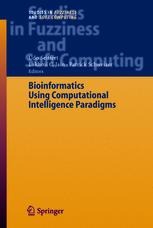
Bioinformatics Using Computational Intelligence Paradigms
Bioinformatics as well as Computational Intelligence are undoubtedly remarkably fast growing fields of research and real-world applications with enormous potential for current and future developments. "Bioinformatics using Computational Intelligence Paradigms" contains recent theoretical approaches and guiding applications of biologically inspired information processing systems(Computational Intelligence) against the background of bioinformatics. This carefully edited monograph combines the latest results of Bioinformatics and Computational Intelligence and offers a promising cross-fertilisation and interdisciplinary work between these growing fields.
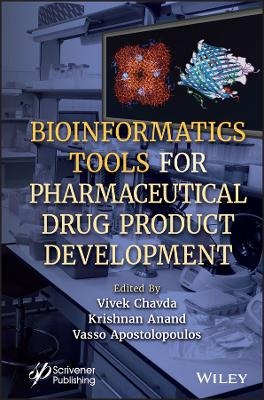
Bioinformatics tools for pharmaceutical drug product development
Presents the latest information on bioinformatics tools, artificial intelligence, machine learning, computational methods, protein interactions, peptide-based drug design, and omics technologies. And include bioinformatics tools for the pharmaceutical sector and the healthcare sector. Bioinformatics brings a new era in research to accelerate drug target and vaccine design development, improving validation approaches as well as facilitating and identifying side effects and predicting drug resistance. As such, this will aid in more successful drug candidates from discovery to clinical trials to the market, and most importantly make it a more cost-effective process overall.
Bioinformatics technologies
Solving modern biological problems requires advanced computational methods. Bioinformatics evolved from the active interaction of two fast-developing disciplines, biology and information technology. The central issue of this emerging field is the transformation of often distributed and unstructured biological data into meaningful information. This book describes the application of well-established concepts and techniques from areas like data mining, machine learning, database technologies, and visualization techniques to problems like protein data analysis, genome analysis and sequence databases. Chen has collected contributions from leading researchers in each area. The chapters can be read independently, as each offers a complete overview of its specific area, or, combined, this monograph is a comprehensive treatment that will appeal to students, researchers, and R&D professionals in industry who need a state-of-the-art introduction into this challenging and exciting young field.
Bioinformatics research and development ; 2nd International Conference, BIRD 2008 Vienna, Austria, July 7-9, 2008 Proceedings
This book constitutes the refereed proceedings of the Second International Bioinformatics Research and Development Conference, BIRD 2008, held in Vienna, Austria in July 2008.

Bioinformatics research and development ; 1st International Conference, BIRD 2007, Berlin, Germany, March 12-14, 2007, Proceedings
This volume covers a wide range of topics related to bioinformatics like microarray data, genomics, single nucleotide polymorphism, sequence analysis, systems biology, medical applications, proteomics, information systems.

Bioinformatics research and applications ; 3rd International Symposium,ISBRA 2007, Atlanta, GA, USA, May 7-10, 2007, Proceedings
This book including clustering and classification, gene expression analysis, gene networks, genome analysis, motif finding, pathways, protein structure prediction, protein domain interactions, phylogenetics, and software tools.

Bioinformatics research and applications : 4th International Symposium, ISBRA 2008, Atlanta, GA, USA, May 6-9, 2008. Proceedings
This book constitutes the refereed proceedings of the Fourth International Symposium on Bioinformatics Research and Applications, ISBRA 2008, held in Atlanta, GA, USA in May 2008.
