



Page 117
Page 117
Algae and Cyanobacteria in Extreme Environments
ALGAE AND CYANOBACTRIA IN EXTREME ENVIRONMENTS is a unique collection of essays, contributed by leading scientists from around the world, devoted to algae – and some related microbes – observed in unexpected harsh habits, which it seems are an oasis or Garden of Eden for these organisms. This timely book on Extremophilic alga, including its especially impressive micrographs, may provide clues about the edges of life on Earth and possibly elsewhere in the universe. This volume is a must for students of the field of biodiversity, as well as those in Phycology, ecology and general biological research.
Alcohol problems in adolescents and young adults : Epidemiology. neurobiology. prevention. and treatment
Alcohol continues to be the substance of choice for today’s youth, leading to serious physical, psychological, and social consequences. Alcohol Problems in Adolescents and Young Adults ably addresses this growing trend. The latest entry in the Recent Developments in Alcoholism series, it comprehensively presents a wide-ranging clinical picture of teen drinking - epidemiology, neurobiology, behavioral phenomena, diagnostic and assessment issues, prevention and treatment data - in a developmental context. Fifty expert contributors display the scientific rigor, practical wisdom, and nuanced analysis that readers have come to expect from previous volumes.

AJCC Cancer Staging Atlas : AJCC Cancer Staging Illustrations in PowerPoint® From the AJCC Cancer Staging Atlas
The AJCC Cancer Staging Atlas contains black-and-white illustrations, created exclusively for the book, depicting the anatomic extent of disease for tumor (T), regional lymph node (N), and distant metastasis (M). The images provide thorough anatomic depictions to clarify critical structures and allow the reader to instantly visualize the progressive extent of malignant disease. Numerous labels identify important anatomic structures.
AJCC Atlante per la stadiazione dei tumori maligni = Atlas for the Staging of Malignant Tumors
he atlas contains over 400 specially created black and white illustrations describing the anatomical extent of the malignant tumor in the primary site (T), regional lymph nodes (N) and distant metastases (M) for various sites, including the head and neck area, the digestive system, the thorax, the musculoskeletal system, the soft tissues, the breast, the urinary system and the genital system. Each illustration provides precise and detailed descriptions designed to clarify the crucial anatomical structures and to provide the reader with an immediate view of the progressive extension of the disease. The most important anatomical structures are identified by specific definitions.

AI*IA 2005 : Advances in artificial intelligence ; 9th congress of the Italian Association for Artificial Intelligence Milan, Italy, September 21-23, 2005, Proceedings
This volume collects the papers selected for presentation at the IX Congress of the Italian Association for Arti?cial Intelligence (AI*IA), 2005 On the one hand this congress continues the tradition of AI*IA in organizing its biannual s- enti?c meeting from 1989; on the other hand, this edition is a landmark in the involvement of the international community of arti?cial intelligence (AI), directly involving a broad number of experts from several countries in the P- gramCommittee. Moreover,the peculiar nature of scienti?c researchin arti?cial intelligence (which is intrinsically international) and several consolidated int- national collaborations in projects and mobility programs allowed the collection and selection of papers from many di?erent countries, all around the world, enlarging the visibility of the Italian contribution within this research ?eld. Arti?cial intelligence is today a growing complex set of conceptual, theor- ical, methodological, and technological frameworks, o?ering innovative com- tational solutions in the design and development of computer-based systems. Within this perspective, researchers working in this area must tackle a broad range of knowledge about methods, results, and solutions coming from di?erent classical areas of this discipline. The congress was designed as a forum allowing researchers to present and discuss specialized results as general contributions to AI growth.
AI Strategy for sales and marketing : Connecting marketing, sales and customer experience
AI Strategy for Sales and Marketing presents a framework for understanding how AI can boost customer-centricity and sales by creating a connected strategy that delivers value today and into the future. Supported by practical tips and advice throughout, it covers topics including personalization, upskilling, customer experience for both on and offline shopping channels and the importance of using AI responsibly to create consumer trust.
AI in marketing : Applications, insights, and analysis
AI in marketing equips students with the knowledge to understand the impact of artificial intelligence (AI) on marketing strategies, processes, and activities, empowering them to navigate the AI-driven marketing landscape confidently. divided into four parts, it provides a comprehensive exploration of AI's transformative role in marketing. the first part lays the groundwork, offering foundational insights into the intersection of AI and marketing. Part II explores the various applications of AI in marketing, and the tools marketers use to optimize their processes and deliver enhanced customer experiences. the third part focuses on leveraging AI for consumer insights, enabling marketers to craft data-driven strategies. the final part examines ethical considerations and the pedagogical integration of AI into marketing education.
AI in disease detection : Advancements and applications
Discusses the integration of artificial intelligence to revolutionize disease detection approaches, with case studies of AI in disease detection as well as insight into the opportunities and challenges of AI in healthcare as a whole. The book explores a wide range of individual AI components such as computer vision, natural language processing, and machine learning as well as the development and implementation of AI systems for efficient practices in data collection, model training, and clinical validation.
AI in banking : Practical applications and case studies
Delves into the application of AI from theory to practice, offering detailed insights into AI project design and code implementation across eleven business scenarios in four major sectors: retail banking, e-banking, bank credit, and tech operations. it provides hands-on examples of various technologies, including automatic machine learning, integrated learning, graph computation, recommendation systems, causal inference, generative adversarial networks, supervised learning, unsupervised learning, computer vision, reinforcement learning, fuzzy control, automatic control, speech recognition, semantic understanding, bayesian networks, edge computing, and more. this book stands as a rare and practical guide to AI projects in the banking industry.
AI For Emerging Verticals : Human-robot computing, sensing and networking
Artificial intelligence (AI) and machine learning (ML) will play a major role. By adopting AI software and services, businesses can create predictive strategies, enhance their capabilities, better interact with customers, and streamline their business processes. Explores novel concepts and cutting-edge research and developments towards designing these fully automated advanced digital systems. Fostered by technological advances in artificial intelligence and machine learning, such systems potentially have a wide range of applications in robotics, human computing, sensing and networking. The chapters focus on models and theoretical approaches to guarantee automation in large multi-scale implementations of AI and ML systems; protocol designs to ensure AI systems meet key requirements for future services such as latency; and optimisation algorithms to leverage the trusted distributed and efficient complex architectures.
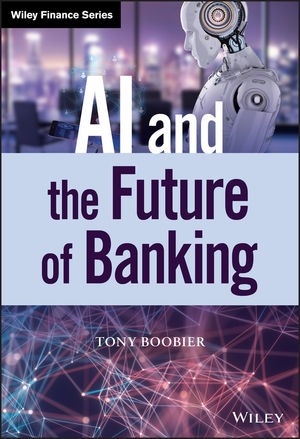
AI and the future of banking
Across its entire breadth and depth, the banking industry is at the forefront of investigating Advanced Analytics and AI technology for use in a broad range of applications, such as customer analytics and providing wealth advice for clients. AI and the Future of Banking provides new and established banking industry professionals with the essential information on the implications of data and analytics on their roles, responsibilities and personal career development.
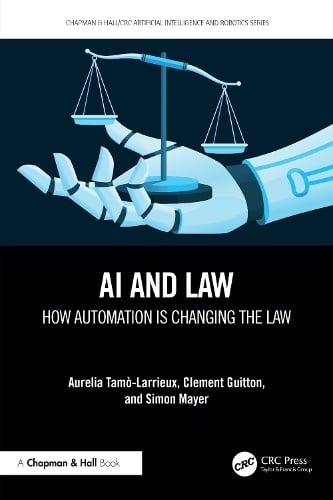
AI and law : How automation is changing the law
Provides insights into how AI is changing legal practice, government processes, and individuals’ access to those processes, encouraging each of us to consider how technological advances are changing the legal system. Particularly, and distinct from current debates on how to regulate AI, this books focuses on how the progressive merger between computational methods and legal rules changes the very structure and application of the law itself.

AI 2008 : Advances in artificial intelligence ; 21st Australasian Joint Conference on Artificial Intelligence Auckland, New Zealand, December 1-5, 2008. Proceedings
This book constitutes the refereed proceedings of the 21th Australasian Joint Conference on Artificial Intelligence, AI 2008, held in Auckland, New Zealand, in December 2008.
Agroecology now! : Transformations towards more just and sustainable food systems
Develops a framework for advancing agroecology transformations focusing on power, politics and governance. It explores the potential of agroecology as a sustainable and socially just alternative to today’s dominant food regime. Agroecology is an ecological approach to farming that addresses climate change and biodiversity loss while contributing to the Sustainable Development Goals
Agroecological transitions : From theory to practice in local participatory design
There is wide agreement on the need to change the prevalent agricultural models, given their negative impacts and their incompatibility with current societal issues. Agroecological transition has been promoted as a potential solution to the ecological, social and economic problems generated by these models. It however involves a systemic, multi-scale and transdisciplinary process. Due to this complexity, the overall picture of what farms and food systems “actually are” and “might be” may not be apparent at the individual level. Yet individuals’ knowledge and values provide complementary insights on how to proceed in deepening ecological modernisation. Expertise can also provide landmarks to be considered in that process. Because local stakeholders’ experience and skills are key resources in the adaptation and adoption of agroecological transition, new conceptual and methodological frameworks and tools have to be developed to support them in the design process of such a complex transition. This book presents feedback from the ‘Territorial Agroecological Transition in Action’- TATA-BOX research project, which was devoted to these specific issues.
Agricultural biodiversity and biotechnology in economic development
The topics addressed in this book are of vital importance to the survival of humankind. Agricultural biodiversity, encompassing genetic diversity as well as human knowledge, is the base upon which agricultural production has been built, and protecting this resource is critical to ensuring the capacity of current and future generations to adapt to unforeseen challenges. Agricultural biodiversity underpins the productivity of all agricultural systems and is particularly important for poor and food-insecure farmers, who maintain highly diverse production systems in response to the marginal and risky production conditions they operate under. Understanding the importance of agricultural biodiversity in the livelihoods of the food insecure and enhancing its performance through the use of a variety of tools, including biotechnology, is a critically important issue in the world today

Aging and Senescence
Aging is characterized by a progressive loss of physiological integrity, leading to impaired function and increased vulnerability to death. This deterioration is the primary risk factor for major human pathologies, including cancer, diabetes, cardiovascular disorders, and neurodegenerative diseases. Aging research has experienced an unprecedented advance over recent years, particularly with the discovery that the rate of aging is controlled, at least to some extent, by genetic pathways and biochemical processes conserved in evolution. Although recent developments in molecular biology are far from understanding the biological basis of aging, research suggests that targeting the aging process itself could ameliorate many age-related pathologies.
Aging and Chronic Disorders
Aging and Chronic Disorders brings the most up-to-date answers into clear, readable focus. Focusing on the most prevalent conditions affecting older adults (diabetes, cardiovascular disease, cancer, osteoporosis, osteoarthritis, rheumatoid arthritis, low back pain, and fibromyalgia), Morewitz and Goldstein analyze disabilities and risk factors, stressors and coping strategies, treatment and rehabilitation methods, and patient education and self-management. Separate chapters are devoted to cognitive changes, psychological problems, and trends in health care utilization among seniors, and all chapters are amplified by current research findings and instructive case studies. As in their recent work.
Agent-oriented software engineering VIII ; 8th International Workshop, AOSE 2007, Honolulu, HI, USA, May 14, 2007, Revised Selected Papers
This volume constitutes the thoroughly refereed proceedings of the 8th International Workshop on Agent-Oriented Software Engineering, AOSE 2007, held in Honolulu, Hawaii in May 2007 as part of AAMAS 2007.
Agent-Based Approaches in Economic and Social Complex Systems IV ; Post Proceedings of The AESCS International Workshop 2005
Agent-Based Modeling/Simulation (ABM/ABS) is an emerging field that enables bottom-up and experimental analysis in social sciences such as economics, management, sociology and politics. The chapters of this book are the selected papers from those presented the Third International Workshop on Agent-Based Approaches in Economic and Social Complex Systems held in Tokyo, Japan in 2005. Articles in this book covers methodological issues, computational model/software, combination with gaming simulation, and real-world applications to economic, management/organizational and social issues.
