



Page 11
Page 11

Increasing the security and reliability of e-health system using blockchain technology
The Blockchain technology is the buzzword of the year, and as this new technology slowly matured, it seems clear that from banking to supply chain logistics, it is ready for disruption. And in healthcare in particular, there is a massive opportunity for blockchain revolution to disrupt and lead the digital transformation. From medical records to pharmaceutical supply chains, to smart contracts for payment distribution, there are a plenty of methods to leverage this technology. Thus it has reached a great boom in the health sector, due to its importance to overcome interoperability and security challenges of health records systems in e-health.

Impacts and Risk Assessment of Technology for Internet Security : Enabled Information Small-Medium Enterprises (TEISMES)
This emerging economy is bringing with it new forms of TEI intermediation, online businesses, virtual supply chains, rapidly changing internet-electronic commerce technologies, increasing knowledge intensity, and unprecedented sensitivity of the time-to-market by customers. Impacts and Risk Assessment of Technology for Internet Security Enabled Information Small-Medium Enterprises (TEISMES) also identifies ways of minimizing risk liability of TEISME business operations as a result of their dependence on TEI (Internet-eC). The rapid evolution and spread of information technology (IT) during the last few years is challenging SMEs, governments and internet security professionals to rethink the very nature of risk exposure. Impacts and Risk Assessment of Technology for Internet Security Enabled Information Small-Medium Enterprises (TEISMES) is designed for a professional audience of researchers and practitioners in industry. This book is also suitable for graduate-level students in computer science.

Impact of Information Society Research in the Global South
This book addresses two aspects— Impact of research: How is the research on ICTs in the Global South playing a role in creating an information society? (e.g. policy formulation, media coverage, implementation in practice) and Research on impact: What is the evidence for the impact of ICTs on society? (i.e. the objectives of socio-economic development). This volume brings together a multiplicity of voices and approaches from social scientific research to produce an engaging volume for a variety of stakeholders including academics, researchers, practitioners, policy-makers and those in the business and civil sectors of society.

Image and video encryption : From digital rights management to secured personal communication
Image and Video Encryption provides a unified overview of techniques for encryption of images and video data. This ranges from commercial applications like DVD or DVB to more research oriented topics and recently published material. This volume introduces different techniques from unified viewpoint, then evaluates these techniques with respect to their respective properties (e.g., security, speed.....). Encryption of visual data is an important topic in the area of mutimedia security, applications range from digital rights management (DVD, DVB) ) to secure personal communications. Within this topic area, we face several aims which contradict each other. What we thrive on is good compression, fast compression, high security, fast encryption, bitstream compliance, little power consumption and little memory requirements. The authors experimentally compare different approaches proposed in the literature and include an extensive bibliography of corresponding published material. Image and Video Encryption is designed for a professional audience composed of researchers and practitioners in industry. The book is also suitable for graduate-level students in computer science and electrical engineering.

Image Analysis and Processing – ICIAP 2005 ; 13th International Conference, Cagliari, Italy, September 6-8, 2005, Proceedings
This volume contains the Proceedings of the 13th International Conference on Image Analysis and Processing (ICIAP 2005), held in Cagliari, Italy, at the conference centre “Centro della Cultura e dei Congressi”, on September 6–8, 2005. ICIAP 2005 was the thirteenth edition of a series of conferences organized every two years by the Italian group of researchersa?liated to the International Association for Pattern Recognition (GIRPR) with the aim to bring together researchers in image processing and pattern recognition from around the world. As for the previous editions, conference topics concerned the theory of image analysis and processing and its classical and Internet-driven applications. The central theme of ICIAP 2005 was “Pattern Recognition in the Internet and Mobile Communications Era”. The interest for such a theme was con?rmed by the large number of papers dealing with it, the special session devoted to pattern recognition for computer network security, and the emphasis of two invited talks on Internet and mobile communication issues. ICIAP 2005 received 217 paper submissions. Fifteen papers were collected into the two special sessions dealing with Pattern Recognition for Computer Network Security and Computer Vision for Augmented Reality and Augmented Environments.

Hydrogen Materials Science and Chemistry of Carbon Nanomaterials
The 2005 International Conference “Hydrogen Materials Science and Chemistry of Carbon Nanomaterials” (ICHMS’2005) was held in September 5-11, 2005 in the remarkable city Sevastopol (Crimea, Ukraine) known for its heroic and unusual th fate. In the tradition of the earlier ICHMS conferences, this 9 ICHMS’2005 meeting served as an multidisciplinary forum for the presentation and discussion of the most recent research on transition to hydrogen-based energy systems, technologies for hydrogen production, storage, utilization, materials processing and chemical behavior, energy and environmental problems. The aim of ICHMS’2005 was to provide the wide overview of the latest scientific results on basic research and technological applications of hydrogen interactions with metals and other materials.

Hydra = هايدرا
Forgery involves the use of advanced algorithms to replicate and distribute deceptive products across various categories, casting shadows of doubt on the authenticity of goods. Although counterfeit detection can be useful in identifying and mitigating fraudulent activities, the widespread presence of counterfeit goods poses significant dangers, undermining consumer confidence and brand reputation. To underscore the severity of this issue, consider instances such as fake luxury items flooding the market, counterfeit electronics compromising safety, or bogus pharmaceuticals endangering health. Addressing this issue is critical in maintaining the integrity of brands, safeguarding consumer well-being, and preserving trust in the marketplace. The ability to distinguish between authentic and counterfeit products is paramount in ensuring accurate decision-making and preventing the harmful consequences of fraudulent goods. This technological context underscores the urgency of developing and deploying cutting-edge solutions to combat the evolving landscape of product forgery. Hydra emerges as a robust solution, utilizing a comprehensive approach that includes extracting posts and images from search engine tools, and is integrated with AI models to detect forgery. The Hydra platform not only provides users with a powerful tool for detecting counterfeit products but also offers tangible benefits such as enhanced brand security, increased awareness about the prevalence of forgeries, and the opportunity to actively participate in a real-time community.
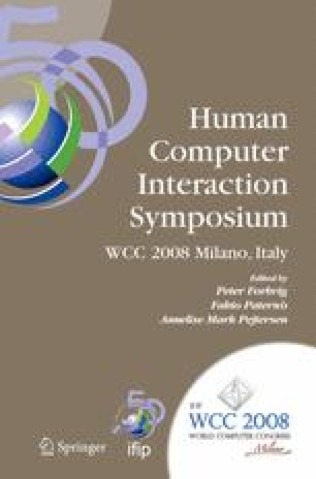
Human-computer interaction Symposium ; IFIP 20th World Computer Congress, Proceedings of the 1st TC 13 Human-Computer Interaction Symposium (HCIS 2008), September 7-10, 2008, Milano, Italy
The IFIP series publishes state-of-the-art results in the sciences and technologies of information and communication. The scope of the series includes: foundations of computer science; software theory and practice; education; computer applications in technology; communication systems; systems modeling and optimization; information systems; computers and society; computer systems technology; security and protection in information processing systems; artificial intelligence; and human-computer interaction. Proceedings and post-proceedings of refereed international conferences in computer science and interdisciplinary fields are featured.

Human-Computer Interaction and Cybersecurity Handbook - Human Factors and Ergonomics
Covers all areas of human–computer interaction and human factors in cybersecurity Includes information for IT specialists, who often desire more knowledge about the human side of cybersecurity Provides a reference for other disciplines such as psychology, behavioral science, software engineering, and security management Offers a source of information for cybersecurity practitioners in government agencies and private enterprises Presents new areas such as smart networking and devices

Human-computer interaction – INTERACT 2007 ; 11th IFIP TC 13 International Conference, Rio de Janeiro, Brazil, September 10-14, 2007, Proceedings, Part II
This book is part of a two-volume work that constitutes the refereed proceedings of the 11th IFIP TC13 International Conference on Human-Computer Interaction, INTERACT 2007, held in Rio de Janeiro, Brazil in September 2007. It covers tangible user interfaces and interaction; as well as software engineering and HCI.

Human work interaction design : Designing for human work ; The 1st IFIP TC 13.6 WG Conference: Designing for Human Work, February 13-15, 2006, Madeira, Portugal
International Federation for Information Processing The IFIP series publishes state-of-the-art results in the sciences and technologies of information and communication. The scope of the series includes: foundations of computer science; software theory and practice; education; computer applications in technology; communication systems; systems modeling and optimization; information systems; computers and society; computer systems technology; security and protection in information processing systems; artificial intelligence; and human-computer interaction. Proceedings and post-proceedings of referred international conferences in computer science and interdisciplinary fields are featured. These results often precede journal publication and represent the most current research. The principal aim of the IFIP series is to encourage education and the dissemination and exchange of information about all aspects of computing.

Human interactive proofs ; 2nd International workshop, HIP 2005, Bethlehem, PA, USA, May 19-20, 2005, Proceedings
Constitutes the refereed proceedings of the Second International Workshop on Human Interactive Proofs, HIP 2005, held in Bethlehem, PA, USA in May 2005. This book is devoted to the new class of security protocols called human interactive proofs. It includes sections such as: CAPTCHAs and performance analysis, and HIP architectures.
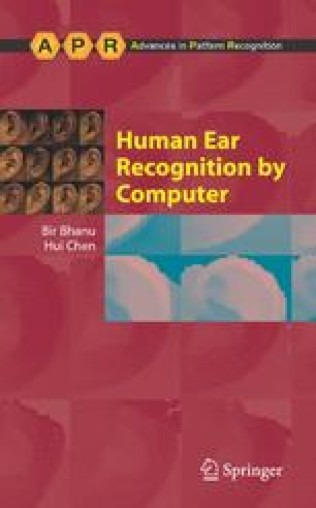
Human Ear Recognition by Computer
Human Ear Recognition by Computer is the first book on the automatic recognition of human ears. It presents an entire range of computational algorithms for recognition of humans by their ears. These algorithms have been tested and validated on the largest databases that are available today,This state-of-the-art research reference explores all aspects of 3D ear recognition, including representation, detection, recognition, indexing and performance prediction. It has been written for a professional audience of both researchers and practitioners within industry, and is also ideal as an informative text for graduate students in computer science and engineering.

Human Aspects of Information Security and Assurance ; 14th IFIP WG 11.12 International Symposium, HAISA 2020, Mytilene, Lesbos, Greece, July 8–10, 2020, Proceedings
This book constitutes the proceedings of the 14th IFIP WG 11.12 International Symposium on Human Aspects of Information Security and Assurance, HAISA 2020, held in Mytilene, Lesbos, Greece, in July 2020.* The 27 full papers presented in this volume were carefully reviewed and selected from 43 submissions. They are organized in the following topical sections: privacy and COVID-19; awareness and training; social engineering; security behavior; education; end-user security; usable security; security policy; and attitudes and perceptions.

How AI Impacts Urban Living and Public Health ; 17th International Conference, ICOST 2019, New York City, NY, USA, October 14-16, 2019, Proceedings
This book cover topics such as: e-health technology design; well-being technology; biomedical and health informatics; and smart environment technology.

Housing Market Dynamics in Africa
Utilizes new data to thoroughly analyze the main factors currently shaping the African housing market. Some of these factors include the supply and demand for housing finance, land tenure security issues, construction cost conundrum, infrastructure provision, and low-cost housing alternatives. Through detailed analysis, the authors investigate the political economy surrounding the continent’s housing market and the constraints that behind-the-scenes policy makers need to address in their attempts to provide affordable housing for the majority in need. With Africa’s urban population growing rapidly, this study highlights how broad demographic shifts and rapid urbanization are placing enormous pressure on the limited infrastructure in many cities and stretching the economic and social fabric of municipalities to their breaking point. But beyond providing a snapshot of the present conditions of the African housing market, the book offers recommendations and actionable measures for policy makers and other stakeholders on how best to provide affordable housing and alleviate Africa’s housing deficit.

Hosting server management
At a high level, this project involves building and configuring a hosting server to provide website, email, and FTP hosting services to customers. The project also includes building a website where customers can register an account, choose hosting packages, and manage their hosting plan by linking the website to the hosting server's control panel using APIs. To effectively manage the hosting server and provide reliable hosting services to customers, it is important to have a deep understanding of the technologies and protocols involved in web hosting. This includes knowledge of web server software, email protocols, FTP protocols, and security best practices.

Hop Integrity in the Internet
Hop Integrity in the Internet introduces a new security defense, hop integrity, that can be used against denial-of-service attacks in the Internet. A suite of protocols for providing hop integrity in the Internet is discussed in great detail. In particular, each protocol in this suite is specified and verified using an abstract and formal notation, called the Secure Protocol Notation. There are five protocols in this suite: - A secure address resolution protocol - A light-weight key update protocol - A protocol for computing and verifying message digests - An anti-replay protocol that uses soft sequence numbers - An anti-replay protocol that uses hard sequence numbers In addition, other benefits of hop integrity extend to secure routing, mobile IP, and IP multicast.

Honeypots for Windows
Installing a honeypot inside your network as an early warning system can significantly improve your security. Currently, almost every book and resource about honeypots comes from a Unix background, which leaves Windows administrators still grasping for help. But Honeypots for Windows is a forensic journeyhelping you set up the physical layer, design your honeypot, and perform malware code analysis. You'll discover which Windows ports need to be open on your honeypot to fool those malicious hackers, and you'll learn about numerous open source tools imported from the Unix world. Install a honeypot on your DMZ or at home and watch the exploits roll in! Your honeypot will capture waves of automated exploits, and youll learn how to defend the computer assets under your control.

Home-oriented informatics and telematics ; Proceedings of the IFIP WG 9.3 HOIT2005 Conference
The IFIP series publishes state-of-the-art results in the sciences and technologies of information and communication. The scope of the series includes: foundations of computer science; software theory and practice; education; computer applications in technology; communication systems; systems modeling and optimization; information systems; computers and society; computer systems technology; security and protection in information processing systems; artificial intelligence; and human-computer interaction. Proceedings and post-proceedings of referred international conferences in computer science and interdisciplinary fields are featured. These results often precede journal publication and represent the most current research. The principal aim of the IFIP series is to encourage education and the dissemination and exchange of information about all aspects of computing.
