



Page 11
Page 11

Integrated Management of Diseases Caused by Fungi, Phytoplasma and Bacteria
This book is about stone fruit and apple diseases, grapevine and fruit crops phytoplasma, Phytophthora on citrus, chestnut diseases, esca complex on grapevine and Rosellinia necatrix root rot. Includes models for potato late blight management and management of bacteria and DNA fingerprinting.

Integrated Management and Biocontrol of Vegetable and Grain Crops Nematodes
The second volume of the IMPD series describes aspects related to most important phytoparasitic nematodes, considering the integration of biological control methods with other management practices and technologies, including the use of predatory nematodes and microbial rhizosphere antagonists. Chapters cover topics like the mode of action and interactions of nematophagous fungi, the efficacy of controll and management of plant parasitic nematode communities through a soil conservation approach, and exploitation of nematodes-bacteria antagonistic relationships.

Integrated Biochips for DNA Analysis
The objective of this book is to provide up-to-date coverage of some of the emerging developments in the field of integrated DNA biochips. It will prove a useful source of information for researchers in the field and for those who are just entering the field of biochip research.

Insights into Receptor Function and New Drug Development Targets
G-Protein Coupled receptors (GPCRs) and other receptors are significant targets for drug discovery, due to their roles in fundamental physiological processes. Among these roles are: regulation of growth, food intake, reproduction, water balance, sensory perception, blood pressure and heart rate. GPCR-directed drugs account for approximately $40 billion in sales and, of drugs at market, approximately 70% target GPCR function. The availability of combinatorial chemistry coupled with high throughput screening techniques have facilitated discovery of peptidic and non-peptidic ligands of membrane receptors. Mutant receptor models have revealed their role in health and disease and provided insight to new therapeutic approaches, based on control of protein trafficking. Understanding receptor-receptor interactions has provided one mechanism for receptor cross-talk and revealed unexpected interactions.

Insects as natural enemies : A practical perspective
This book it is an account of major aspects of the biology of predators and parasitoids, punctuated with information and advice on which experiments or observations to conduct, and how to carry them out. Guidance is provided, where necessary, on the literature that may need to be consulted on particular topics.

Insects and Ecosystem Function
In the past two decades, an increasing number of ecologists have started to investigate the importance of biodiversity for ecological processes such as energy flow and nutrient cycling, often referred to as 'ecosystem functioning'. Insects are a dominant component of biodiversity in terrestrial ecosystems and play a key role in mediating the relationship between plants and ecosystem processes. This volume is the first to summarize their effects on ecosystem functioning, focusing mainly, but not exclusively, on herbivorous insects. Renowned authors with extensive experience in the field of plant-insect interactions, contribute to the volume using examples from their own work. In addition to providing concise reviews of the field, this volume discusses in detail the advantages and disadvantages of various techniques of manipulating insect herbivory. Thus, the text provides both a theoretical basis as well as practical advice for future manipulative studies of biodiversity-ecosystem functioning.

Insecticides Design Using Advanced Technologies
Among the highlights of this book are the use of nanotechnology to increase potency of available insecticides, the use of genetic engineering techniques for controlling insect pests, the development of novel insecticides that bind to unique biochemical receptors, the exploration of natural products as a source for environmentally acceptable insecticides, and the use of insect genomics and cell lines for determining biological and biochemical modes of action of new insecticides.

Insect Conservation and Islands
A series of original papers and reviews dealing with the peculiarities of island insects and their conservation in many parts of the world. Contributions to this special issue of Journal of Insect Conservation range from biogeographical analyses andecological features of island insects and their evolution to the variety of concerns for their wellbeing, and practical conservation through a variety of, sometimes novel, approaches. They provide a valuable and up-to-date resource for entomologists and conservation practitioners.

Innovative Medicine : Basic Research and Development
Devoted to innovative medicine, comprising the proceedings of the Uehara Memorial Foundation Symposium 2014. It remains extremely rare for the findings of basic research to be developed into clinical applications, and it takes a long time for the process to be achieved. The task of advancing the development of basic research into clinical reality lies with translational science, yet the field seems to struggle to find a way to move forward. To create innovative medical technology, many steps need to be taken: development and analysis of optimal animal models of human diseases, elucidation of genomic and epidemiological data, and establishment of “proof of concept”.

Innovative Endocrinology of Cancer
Deals with developments in such topics as mechanisms of hormonal carcinogenesis, epidemiology and risk factors, hormone production by tumor tissue and hormonal sensitivity of the latter, genesis, dichotomy and endocrinology of cancer in females, and pharmacogenomics and proteomics in oncoendocrinology.

Innervation of the Mammalian Esophagus
The esophagus is a relatively simple though vital organ. Beyond its role of propelling food from the pharynx to the stomach by a propulsive contraction wave representing the esophageal phase of deglutition, it is more recognized as a sensory organ from which a variety of respiratory and cardiovascular reflexes can be triggered.

Innate Immunity of Plants, Animals, and Humans
This book wants to give an overview of our current knowledge about the innate immune system of plants, animals and humans. It not only covers the innate immune mechanisms and responses of so diverse organisms such as plants, Cnidaria, Drosophila, urochordates and zebrafish, but also the major receptor systems in mammalians and humans as well as the central defense mechanisms, antimicrobial peptides and the complement system.

Innate and Adaptive Immunity in the Tumor Microenvironment
Recent studies, indicate that the tumor microenvironment is unique in providing both supportive and inhibitory factors that determine the fate of the tumor and its host. Accordingly, microenvironmental immunity that operates inside and around a tumor plays a crucial role in cancer development and progression. The aim of the present volume is to compile reviews on innate and adaptive immune responses at the tumor microenvironment with emphasis on positive and negative outcomes that affect the progression of the disease. These reviews have been solicited from experts in the field who published original research studies focusing on these issues.
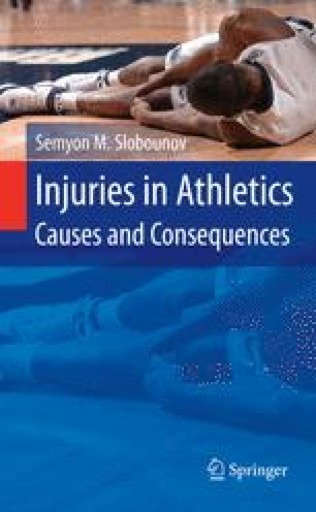
Injuries in Athletics : Causes and Consequences
This book focuses on both applied and conceptual issues regarding the classification of injuries, common coaches’ errors leading to injury, coaches and athletes’ viewpoints on injury, the development of psychological trauma in athletes, traumatic brain injuries and basic principles of rehabilitation. It is organized into five parts: - Foundations of injuries in athletics - Coaches and Athletes’ perspectives of injury - Psychological traumas in athletes - Concussion in athletics - Injury rehabilitation This reference book accumulates the latest developments in the science of athletes' training, from "injury-free" perspectives along with psychological analyses, evaluation, and management of sport-related injuries. It is an ideal resource for coaches, clinical practitioners, researchers and students interested in kinesiology, sport psychology and athletic training.

Inhibitory Regulation of Excitatory Neurotransmission
This book reviews aspects of GABAA receptor function, as well as the properties of a variety of other important inhibitory proteins, such as GABAC receptors, G-protein coupled receptors (specifically, GABAB receptors, metabotropic glutamate receptors and neuropeptide receptors), glycine receptors, GABA transporters and potassium channels. In addition, the consequences of mutations that disrupt the regulation of excitatory neurotransmission, and efforts to target the GABAergic system for therapeutic benefit, are discussed.

Inhibitors of protein kinases and protein phosphates
The aims of this volume are to highlight the tremendous pharmacological potential of protein kinase and protein phosphatase inhibitors, to provide a thorough overview of the most remarkable achievements in the field and to illustrate how beneficial these studies can be for the advancement of both basic knowledge on biological regulation and deregulation and for the clinical treatment of a wide spectrum of diseases.

Influenza Vaccines for the Future
The threat constituted by the multiple outbreaks of avian influenza during the last few years is urgently calling for the development of new influenza vaccines. Fortunately, a quantum leap in technology has revolutionized the study of influenza and the engineering of new vaccine strains by reverse genetics. This volume provides a historical background and state-of-the-art information about the recent advances in the biology of influenza and the design of new influenza vaccines.

Inflammation in the Pathogenesis of Chronic Diseases : The COX-2 Controversy
In this book, a worldwide panel of leading experts discuss the role of inflammation in the pathogenesis of major chronic diseases and the current controversy regarding risk versus benefit of selective cyclooxygenase-2 (COX-2) inhibitors.

Infectious diseases from nature : Mechanisms of viral emergence and persistence
many outstanding virologists and others presented papers under the broad theme of "emergence". The intent was to elucidate the diseases themselves, the mechanisms by which they have emerged, the publication perception and response to the diseases, and the possibility of prevention or prediction. The papers in this book summarize the talks of this meeting.

Infectious Diseases and Substance Abuse
The influence of many drugs of abuse - licit and illicit - on immune function has been examined extensively over the years. This volume, part of the "Infectious Agents and Pathogenesis" series, examines a variety of drugs of abuse and how they affect the immune system
