



Page 11
Page 11
Frontiers in Chemical Sensors : Novel Principles and Techniques
With their similarity to the organs of the most advanced creatures that inhabit the Earth, sensors are regarded as being the “senses of electronics”: arti?cial eyes and ears that are capable of seeing and hearing beyond the range of - man perception; electronic noses and tongues that can recognise odours and ?avours without a lifetime training; touch that is able not only to feel the texture and temperature of the materials but even to discern their chemical compo- tion. Among the world of chemical sensors, optical devices (sometimes termed “optodes”, from the Greek “the optical way”) have reached a prominent place in those areas where the features of light and of the light-matter interaction show their advantage: contactless or long-distance interrogation, detection sensitivity, analyte selectivity, absence of electrical interference or risks, and lack of analyte consumption,

From love to medicine : the applications of pheromones in health care
Explores the fascinating world of pheromones, chemical signals that trigger specific behavioral and physiological responses and social interactions in individuals of the same or different species, types, and importance of studying pheromones in a comprehensive manner. Firstly, it delves into the chemical nature of pheromones, including their structures, chemical properties, and the mechanism of action through the Jacobson's organ. Secondly, the project further investigates pheromones' role in communication, examining examples of pheromone-mediated communication and their effects on behavior...

Free-Radical-Induced DNA Damage and Its Repair : A Chemical Perspective
Understanding of the molecular basis of DNA damage and its repair has increased dramatically in recent years, and substantial knowledge now exists concerning the products arising from free-radical attack on DNA. Free-radical DNA damage may lead to mutations, cancer, and cell death. Free radicals have various sources, notably ionizing radiation and oxidative stress. In radiotherapy for cancer and with some anticancer drugs, use is made of cell death by excessive DNA damage. The mechanisms leading to products of free-radical attack which have been studied in models and with small double-stranded DNA fragments are discussed in detail, and the basics of the underlying free-radical chemistry are dealt with in separate chapters.

Free Energy Calculations : Theory and Applications in Chemistry and Biology
This volume sets out to present a coherent and comprehensive account of the concepts that underlie different approaches devised for the determination of free energies. The reader will gain the necessary insight into the theoretical and computational foundations of the subject and will be presented with relevant applications from molecular-level modelling and simulations of chemical and biological systems. Both formally accurate and approximate methods are covered using both classical and quantum mechanical descriptions. A central theme of the book is that the wide variety of free energy calculation techniques available today can be understood as different implementations of a few basic principles.

Free Energy and Self-Interacting Particles
This book examines a system of parabolic-elliptic partial differential eq- tions proposed in mathematical biology, statistical mechanics, and chemical kinetics. In the context of biology, this system of equations describes the chemotactic feature of cellular slime molds and also the capillary formation of blood vessels in angiogenesis. There are several methods to derive this system. One is the biased random walk of the individual, and another is the reinforced random walk of one particle modelled on the cellular automaton. In the context of statistical mechanics or chemical kinetics, this system of equations describes the motion of a mean field of many particles, interacting under the gravitational inner force or the chemical reaction

Fracture and Failure of Natural Building Stones : Applications in the Restoration of Ancient Monuments
The book consists of invited papers written by leading experts in the field. It contains original contributions concerning the latest developments in the fracture and failure of the natural building stones and their application in the restoration of ancient monuments. It covers a wide range of subjects - cluding purely mechanical aspects, physico-chemical approaches, appli- tions and case studies. The papers are arranged in two parts with a total of nine chapters. Part I is devoted to purely mechanical and structural aspects and applications, while Part II is devoted to the physico-chemical and environmental aspects including thermal effects.

Fractional-in-time semilinear parabolic equations and applications
This book provides a unified analysis and scheme for the existence and uniqueness of strong and mild solutions to certain fractional kinetic equations. This class of equations is characterized by the presence of a nonlinear time-dependent source, generally of arbitrary growth in the unknown function, a time derivative in the sense of Caputo and the presence of a large class of diffusion operators. The global regularity problem is then treated separately and the analysis is extended to some systems of fractional kinetic equations, including prey-predator models of Volterra–Lotka type and chemical reactions models, all of them possibly containing some fractional kinetics.

Fractals in Engineering : New Trends in Theory and Applications
The strong potential of this research can be seen in real industrial situations with recent progress being made in areas such as chemical engineering, internet traffic, physics and finance. Image processing continues to be a major field of application for fractal analysis and is well-represented here. Consisting of papers written by a world-wide pool of experts, the multidisciplinary approach of this third volume will be of particular interest to industrial researchers and practitioners as well as to academics from many backgrounds.

Fossil earthquakes : The formation and preservation of pseudotachylytes
This book encompass the principl results of field investigations, analyses of meso-scale and micro-scale textures and structures, laboratory experiments, chemical analyses, conceptual fault models, as well as the implications of fault related pseudotachylyte an its related fault rocks for our understanding of earthquakes. We hope that this book helps to bridge the gap between seismology and geology and that it encourages further studies of earthquake and seismic faulting processes.

Formulating poorly water soluble drugs
A pharmaceutical scientist’s approach toward solubility enhancement of a poorly water-soluble molecule typically includes detailed characterization of the compound’s physiochemical properties, solid-state modifications, advanced formulation design, non-conventional process technologies, advanced analytical characterization, and specialized product performance analysis techniques. The scientist must also be aware of the unique regulatory considerations pertaining to the non-conventional approaches often utilized for poorly water-soluble drugs. One faced with the challenge of developing a drug product from a poorly soluble compound must possess at a minimum a working knowledge of each of the above mentioned facets and detailed knowledge of most. In light of the magnitude of the growing solubility problem to drug development, this is a significant burden especially when considering that knowledge in most of these areas is relatively new and continues to develop.
Formal Methods in Systems Biology ; 1st International Workshop, FMSB 2008, Cambridge, UK, June 4-5, 2008. Proceedings
This book constitutes the refereed proceedings of the First International Workshop on Formal Methods in Systems Biology, FMSB 2008, held in Cambridge, UK, in June, 2008.The 9 revised full papers presented were carefully reviewed and selected from the workshop lectures that all were invited contributions. The purpose of this meeting was to identify techniques for the specification, development and verification of biological models. It also focused on the design of tools to execute and analyze biological models that can significantly advance our understanding of biological systems.
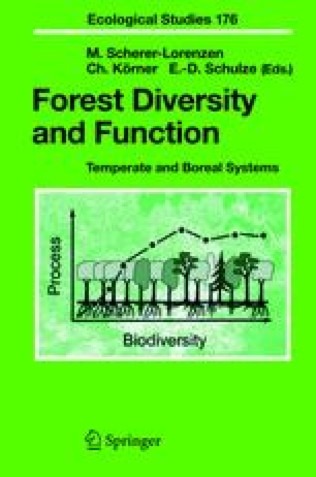
Forest Diversity and Function : Temperate and Boreal Systems
One of the central research themes in ecology is evaluating the extent to which biological richness is necessary to sustain the Earth's system and the functioning of individual ecosystems. In this volume, for the first time, the relationship between biodiversity and ecosystem processes in forests is thoroughly explored. The text examines the multiple effects of tree diversity on productivity and growth, biogeochemical cycles, animals, pests, and disturbances.

Food Safety and Ways to Prevent Life-Threatening Pollutants
The fears regarding food safety started long time ago, and till this very moment of ours, the international organizations and INGOs pay lots of hard work to minimize and achieve reduction in the effects and the suffering caused to people around the world by contaminated foods each year. This research talks about the main patterns of food contaminants, and they are chemical, physical, biological, and last but not least the contamination caused by radioactive substances. It is also important to talk about the methods of precaution and protection against the diseases and illnesses produced by contaminated foods, as well about the role of INGOs which are dedicated and specialized in law and regulations enactment for bounding the incidence of food contamination in the world, for raising the public awareness towards food safety, and to keep up with the latest updates of events. This research also contains vast Information about Covid-19 and its spreading process via contaminated food.

Food safety and toxicology : Present and future perspectives
Safety assurance of consumer goods has become a global challenge. The presence of natural and synthetic contaminants in food compromises food safety and poses a risk to public health. Discusses biological and chemical food contaminants, predictive and detection methods of food toxicants, survival mechanism of food pathogens, legislation on microbial contaminants to prevent public health risks and strategies to mitigate contamination.

Food nanotechnology
Nanotechnology is increasingly being utilized within the food industry to create innovative products with new or improved properties. This book introduces the history of nanotechnology applications in the food industry. It then discusses the key physicochemical and structural characteristics of the different kinds of nanoparticles found in foods, as well as showing how these characteristics lead to their unique functional attributes. Applications of nanotechnology in the food and agricultural industries are then covered, including the creation of nanopesticides, nanofertilizers, nutrient delivery systems, functional ingredients, smart packaging materials, nanofilters, and sensors, as well as for the conversion of waste materials into value-added products. Finally, the potential toxicity of both organic and inorganic nanoparticles found in foods is critically assessed. The author is a Distinguished Professor of food science who uses physics, chemistry, and biology to improve the quality, safety, and healthiness of foods. He has published over a thousand scientific articles and numerous books in this area and is currently the most highly cited food scientist in the world. He has won numerous awards for his scientific achievements.

Fluid Transport in Nanoporous Materials : Proceedings of the NATO Advanced Study Institute, held in La Colle sur Loup, France, 16-28 June 2003
The most promising include molecular sieves which are being developed as inorganic or polymeric systems with 0. 3-30nm in pore dimensions. These nanoporous solids have a broad spectrum of applications in chemical and biochemical processes. The unique applications of molecular sieves are based on their sorption and transport selectivity. Yet, the transport processes in nanoporous systems are not understood well. At the same time, the theoretical capabilities have increased exponentially catalyzed by increases in computational capabilities. The interactions between a diffusing species and the host solid are being studied with increasing details and realism. Further, in situ experimental techniques have been developed which give an understanding of the interactions between diffusing species and nanoporous solids that was not available even a few years ago. The time was ripe to bring together these areas of common interest and study to understand what is known and what has yet to be determined concerning transport in nanoporous solids. Molecular sieves are playing an increasing role in a broad range of industrial petrochemical and biological processes. These include shape-selective separations and catalysis as well as sensors and drug delivery. Molecular sieves are made from inorganic as well as organic solids, e. g. , polymers. They can be employed in packed beds, as membranes and as barrier materials. Initially, the applications of molecular sieves were dominated by the use of zeolites.

Flowing Matter
This book presents an introduction to selected research topics in the broad field of flowing matter, including the dynamics of fluids with a complex internal structure -from nematic fluids to soft glasses- as well as active matter and turbulent phenomena. Flowing matter is a subject at the crossroads between physics, mathematics, chemistry, engineering, biology and earth sciences, and relies on a multidisciplinary approach to describe the emergence of the macroscopic behaviours in a system from the coordinated dynamics of its microscopic constituents. Depending on the microscopic interactions, an assembly of molecules or of mesoscopic particles can flow like a simple Newtonian fluid, deform elastically like a solid or behave in a complex manner. When the internal constituents are active, as for biological entities, one generally observes complex large-scale collective motions. Phenomenology is further complicated by the invariable tendency of fluids to display chaos at the large scales or when stirred strongly enough. This volume presents several research topics that address these phenomena encompassing the traditional micro-, meso-, and macro-scales descriptions, and contributes to our understanding of the fundamentals of flowing matter.

Flow and transport in fractured porous media
This book addresses the characterization of flow and transport in porous fractured media from experimental and modeling perspectives. The volume explores porous media problems, from the origin of the present natural porous structures, to their characterization, and various flow and transport phenomena that exist within the porous media. Examples are miscible displacements in porous media and fractured rock and the physical and chemical interactions within porous fractured aquifers. The book is a comprehensive presentation of investigations performed and analysed on different scales, supporting the understanding and application of experimental studies and numerical simulations.

Flow and microreactor technology in medicinal chemistry
The ultimate dream for medicinal chemists is the ability to synthesize new drug-like compounds with the push of a button. The key to synthesizing chemical compounds more quickly and accurately lies in computer-controlled technologies that can be optimized by machine learning. Recent developments in computer-controlled automated syntheses that rely on miniature flow reactors—with integrated analysis of the resulting products—provide a workable technology for synthesizing new chemical substances very quickly and with minimal effort.

Flavours and Fragrances : Chemistry, Bioprocessing and Sustainability
This book is an introduction to the fascinating world of aroma chemicals, essential oils, fragrances and flavour compositions for the food, cosmetics and pharmaceutical industry. The present state-of-the-art technology, the future use of resources and biotechnological approaches for the production of the respective chemical compounds are described. A large section is devoted to the description of the renewable resources of flavours: spice plants, fruits from moderate to tropical climates, vegetables, fermented and heated plants. Analytical methods, such as gas chromatography coupled to human or electronic noses or to a mass spectrometer, are outlined and consumer trends, legal and safety aspects are described. Novel renewable resources come from biotechnology.
