



Page 11
Page 11
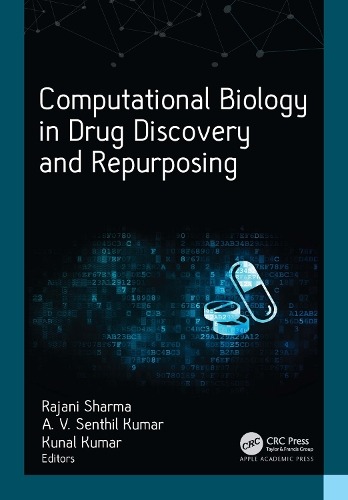
Computational biology in drug discovery and repurposing
Takes an in-depth look at the emerging and prospective field of computational biology and bioinformatics, which possesses the ability to analyze large accumulated biological data collected from sequence analysis of proteins and genes and cell population with an aim to make new predictions pertaining to drug discovery and new biology. The book explains the basic methodology associated with a bioinformatics and computational approach in drug designing. It then goes on to cover the implementation of computational programming, bioinformatics, pharmacophore modeling, biotechnological techniques, and pharmaceutical chemistry in designing drugs. The major advantage of intervention of computer language or programming is to cut down the number of steps and costs in the field of drug designing, reducing the repeating steps and saving time in screening the potent component for drug or vaccine designin

Computational and Information Science ; 1st International Symposium, CIS 2004, Shanghai, China, December 16-18, 2004, Proceedings
this book present the proceedings of The 2004 International Symposium on Computational and Information Sciences (CIS 2004) aimed at bringing researchers in the area of computational and - formation sciences together to exchange new ideas and to explore new ground. The goal of the conference was to push the application of modern computing technologies to science, engineering, and information technologies to a new level of sophistication and understanding.

Computation and Logic in the Real World ; 3rd Conference on Computability in Europe, CiE 2007, Siena, Italy, June 18-23, 2007, Proceedings
This volume, Computation and Logic in the Real World, is the proceedings of the third in a series of conferences of CiE Computability in Europe, (CiE) is an informal network working on computability theory including its foundations, technical development, and applications. It performed with discrete or continuous data by all kinds of algorithms, programs, and machines. The sources of new ideas and methods include practical developments in areas such as neural networks, quantum computation, natural computation, molecular computation, computational learning.
Complex Medical Engineering
In the twenty-first century, applications in medicine and engineering must acquire greater safety and flexibility if they are to yield better products at higher efficiency. To this end, complex science and technology must be integrated in medicine and engineering. Complex medical engineering (CME) is a new field that merges medical science and technology, and includes biomedical robotics and biomechatronics, complex virtual technology in medicine, information and communication technology in medicine, complex technology in rehabilitation, cognitive neuroscience and technology, and complex bioinformatics. Experts from academia, industry, and government research laboratories who have pioneered CME ideas and technologies describe its concept and research approach and discuss related hardware and software, science and technology, and medicine and engineering. This book will be invaluable to scientists, researchers, and graduates in the emerging field of CME.
Comparative genomics ; Vol.15 : Using Fungi as Models
Fungal comparative genomics started in 2000 by the genome sequencing of several yeast species other than the canonical Saccharomyces cerevisiae. Since then, over 30 fungal genome sequences have become available. This set represents a total evolutionary divergence comparable to that between vertebrates and arthropods, but also contains closely related genomes. This volume describes how we can use this set of genomes to trace large and small-scale events in genome evolution, to extract information about highly conserved and less conserved sequence elements, and to develop novel methods in genomics that will have an impact on genomics at large.
Comparative genomics ; International Workshop, RECOMB-CG 2008, Paris, France, October 13-15, 2008. Proceedings
This book constitutes the refereed proceedings of the 6th RECOMB Comparative Genomics Satellite Workshop, RECOMB-CG 2008, held in Paris, France, in October 2008.
Comparative genomics : Methods and protocols
Provides new and updated chapters covering computational and mathematical techniques and concepts related to the field of comparative genomics. The topics covered in the chapters range from those that address general techniques and concepts that apply to all organisms to others that are specialized and apply to specific biological systems such as viruses, bacteria, nematodes, and insects.

Clinical metabolomics applications in genetic diseases
Helps readers discover the forefront of personalized medicine on clinical metabolomics and its applications in genetic diseases. This comprehensive guide offers a functional relationship map between cell components and genetic variations in various diseases, providing insights that can be applied to personalized medicine. Covers the latest developments in metabolomics for health, with practical guidance for clinical experts looking to advance their laboratory techniques and career. The metabolomics profile is a powerful tool that has revolutionized our understanding of the relationship between genetics, clinical readouts, and disease outcomes. By integrating metabolomics with genomics and clinical phenotypes, the authors have developed diagnostic and prediction models that have vastly improved patient outcomes and deepened the understanding of disease mechanisms.
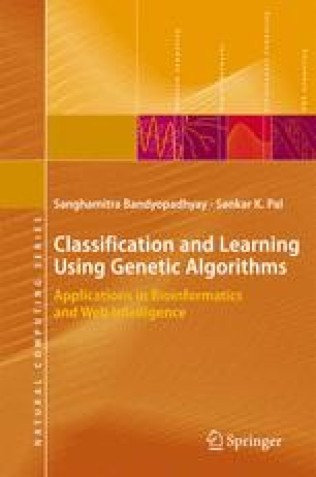
Classification and Learning Using Genetic Algorithms : Applications in Bioinformatics and Web Intelligence
This book provides a unified framework that describes how genetic learning can be used to design pattern recognition and learning systems. The book is unique in the sense of describing how a search technique, the genetic algorithm, can be used for pattern classification mainly through approximating decision boundaries, and it demonstrates the effectiveness of the genetic classifiers vis-à-vis several widely used classifiers, including neural networks. It provides a balanced mixture of theories, algorithms and applications, and in particular results from the bioinformatics and Web intelligence domains.

Circular RNAs
Guide readers through circular RNA purification, in silico characterization, circRNA detection, sequence validation, quantification , techniques related to gain- and loss-of-function approaches, circular RNA synthesis, split ligation, engineering, nanoparticle packaging, RNA modifications on circular RNA biogenesis, RNA translation potential, and vaccines based on circular RNAs.
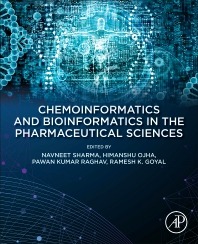
Chemoinformatics and Bioinformatics in the Pharmaceutical Sciences
Chemoinformatics and Bioinformatics in the Pharmaceutical Sciences brings together two very important fields in pharmaceutical sciences that have been mostly seen as diverging from each other: chemoinformatics and bioinformatics. As developing drugs is an expensive and lengthy process, technology can improve the cost, efficiency and speed at which new drugs can be discovered and tested. This book presents some of the growing advancements of technology in the field of drug development and how the computational approaches explained here can reduce the financial and experimental burden of the drug discovery process.
Charting a new course : Natural language processing and information retrieval : Essays in Honour of Karen Spärck Jones
This book celebrates the life and work of Karen Spärck Jones in her seventieth year. she is one of the major figures of 20th century and early 21st Century computing and information processing. It book consists of fifteen new and original chapters written by leading international authorities reviewing the state of the art and her influence in the areas in which Karen Spärck Jones has been active. Although she has a publication record which goes back over forty years, it is clear even the very early work reviewed in the book can be read with profit by those working on recent developments in information processing like bioinformatics and the semantic web.
Cereal genomics
Through these basic studies, it also became fairly apparent that the genomes of all cereals are related and were derived from the same lineage, million of years ago.
Cellular Genetic Algorithms
CELLULAR GENETIC ALGORITHMS defines a new class of optimization algorithms based on the concepts of structured populations and Genetic Algorithms (GAs). The authors explain and demonstrate the validity of these cellular genetic algorithms throughout the book. This class of genetic algorithms is shown to produce impressive results on a whole range of domains, including complex problems that are epistatic, multi-modal, deceptive, discrete, continuous, multi-objective, and random in nature. The focus of this book is twofold. On the one hand, the authors present new algorithmic models and extensions to the basic class of Cellular GAs in order to tackle complex problems more efficiently. On the other hand, practical real world tasks are successfully faced by applying Cellular GA methodologies to produce workable solutions of real-world applications.

Cellular automata ; 8th International conference on cellular automata for research and industry, ACRI 2008, Yokohama, Japan, September 23-26, 2008. Proceedings
This book constitutes the refereed proceedings of the 8th International Conference on Cellular Automata for Research and Industry, ACRI 2008, held in Yokohama, Japan, in September 2008.
Cancer Proteomics : From Bench to Bedside
the authors collectively provide the current status of proteomics in cancer therapy and offers the existing technologies used in proteomics that allow for protein profiling and for the identification of druggable targets in human samples. Mass spectrometry based protein characterization and protein microarrays hold great promise of predicting response to specific drugs in cancer therapy. Insightful to the reader with broad perspectives on topics related to the use of proteomic strategies in cancer therapy, Cancer Proteomics offers anticipated challenges that may arise from its application in daily practice.
CADD and informatics in drug discovery
Updates knowledge on recent advances in computational and bioinformatics tools/techniques and their practical applications in modern drug design and discovery programme. Also it encompasses fundamental principles, advanced methodologies and applications of various CADD approaches including several cutting-edge areas / presenting recent developments covering ongoing trends in the field of computer-aided drug discovery. Having contributions by a global team of experts, the book is expected to be an ideal resource for drug discovery scientists, medicinal chemists, pharmacologists, toxicologists, phytochemists, biochemists, biologists, RandD personnel, researchers, students, teachers and those working in the field of drug discovery. It will fill the knowledge gaps that exist in the current CADD approaches and methodologies/ protocols being widely used in both academic and research practices. Further, a special focus on current status of various computational drug design approaches (SBDD, LBDD, De-novo drug design, Pharmacophore-based search), bioinformatics tools and databases, computational screening and modeling of phytochemicals/natural products, artificial intelligence and machine learning, and network pharmacology and system biology would certainly guide researchers, students or readers to conduct their research in the emerging area(s) of interest. It is also expected to be highly beneficial to different stakeholders working in the pharmaceutical and biotechnology industries (RandD), the academic as well as research sectors. .
Brainlesion: Glioma, Multiple Sclerosis, Stroke and Traumatic Brain Injuries ; 7th International Workshop, BrainLes 2021, Held in Conjunction with MICCAI 2021, Virtual Event, September 27, 2021, Revised Selected Papers, Part I
The content of thebook covers the current state-of-the-art literature on federated learning applications for cancer research and Vclinical oncology analysis, as well as an overview of the deep learning approaches improving the current standard of care for brain lesions and current neuroimaging challenges. It is also focusing on the accepted BrainLes workshop submissions, is to provide an overview of new advances of medical image analysis in all the aforementioned brain pathologies. It brings together researchers from the medical image analysis domain, neurologists, and radiologists working on at least one of these diseases. The aim is to consider neuroimaging biomarkers used for one disease applied to the other diseases.
Biosurveillance and biosecurity ; International Workshop, BioSecure 2008, Raleigh, NC, USA, December 2, 2008. Proceedings
This book constitutes the refereed proceedings of the International Workshop on Biosurveillance and Biosecurity, BioSecure 2008, held in Raleigh, NC, USA, in December 2008.
Bioremediation of Soils Contaminated with Aromatic Compounds
Environmental biotechnology, which was in its infancy in the early 80's, has evolved thanks to the revolution brought about by molecular biology. Multiple successes in the biological cleanup of civil and industrial wastewater and of hydrocarbon soil pollution, demonstrate the vast power of clean technologies. In addition, the buildup of information on the activities of microorganisms as catalysts in all sorts of natural, industrial and animal environments has flourished. There is a continuing realization of the critical role of microbial processes in biological, industrial and geological systems. Since environmental biotechnology has matured, it is ready to tackle bigger challenges: the scaling up of many bioremediation systems still in progress, the search for novel biocatalysts for industrial applications, the continuing effort against common human life-threatening processes such as antibiotic resistance, the accumulation of hormone-mimicking substances (endocrine disrupters), the deposition of air-borne pesticides in the environment and, the degradation of recalcitrant contaminants. These endeavors will help prevent the contamination of food chains, protect human life and allow for human activity and economic development that do not compromise environmental sustainabijity.
