



Page 10
Page 10

Finding the limits of the limes : Modelling demography, economy and transport on the edge of the Roman Empire
This book demonstrates the application of simulation modelling and network analysis techniques. The book shows the added value of state-of-the-art computer modelling techniques and bridges computational and conventional approaches. Topics that will be of particular interest to archaeologists are the question of (forced) surplus production, the demographic and economic effects of the Roman occupation on the local population, and the structuring of transport networks and settlement patterns. For modellers, issues of sensitivity analysis and validation of modelling results are specifically addressed. This book will appeal to students and researchers working in the computational humanities and social sciences, in particular, archaeology and ancient history.

Financial Technology : Case Studies in Fintech Innovation
Combines theoretical and commercial perspectives informed by the author's professional experience and academic research Thoroughly explains key technologies and emerging business models in a clear and accessible manner for those with no technological background Includes a mix of international case studies from large financial services organizations and smaller start-ups, including Lloyds Bank, TransferWise, Generali, Starling and Stocktwits Covers the topics required for postgraduate and undergraduate Financial Technology courses and includes learning objectives and discussion questions based on case studies

Feminist reflections on the history of philosophy
Feminist work in the history of philosophy has come of age as an innovative field in the history of philosophy. This volume marks that accomplishment with original essays by leading feminist scholars who ask basic questions,This collection is a unique collaboration among philosophers from North America and the Nordic Countries, including papers written from both analytic and continental philosophical perspectives and discussing both ancient and modern philosophers. Feminist Reflections on the History of Philosophy will be of interest to historians of philosophy, feminist theorists, women's studies faculty and students, and humanists interested in canon formation and transformation.

Feminist Methodologies : Experiments, Collaborations and Reflections
This book gives insights into feminist methodologies in theory and practice. By foregrounding the experiential and embodied nature of doing feminist research, this book offers valuable tools for feminist research as a continuous praxis. Emerging from a rich collective learning process, the collection offers in-depth reflections on how feminists shape research questions, understand positionality, share research results beyond academe and produce feminist intersectional knowledges.

Fas Signaling
Fas Signaling is focused on the signaling mechanisms and biology of the prototypic death receptor Fas, also called CD95 or APO-1. The chapters of this book cover, besides the well recognized apoptosis-related functions of Fas, its emerging role as a proinflammatory cytokine and as an inducer of alternative forms of cell death. Fas Signaling aims to provide the reader with an up-to-date survey of the various aspects of Fas biology and the open questions of the field are addressed. This title is intended for Ph.D and post-doctoral students starting to work in the field, but is also useful for everyone with an interest in the biology of this exciting molecule.

Family-Oriented Primary Care
I was a Medical Student in 1966 when the Millis Report on the training of the generalist physician was published,de?ning the concept of primary care. According to the Report, the primary provider has four major responsib- ities or roles. The ?rst role is that of initial contact care of the undiffer- tiated patient. The second is to provide comprehensive care based on the belief that the primary provider should be able to manage the overwhe- ing majority of problems with which patients present. Equally important is the third role—continuity and coordination of care within the health care system. Finally,the primary provider is responsible for demonstrating le- ership in the community. This Report’s description of a primary provider seems as relevant today as it was when it was written. In 1994,the Institute of Medicine’s assessment of primary care added the responsibility of family and community integration of care to the Millis Report description. Without question there are many challenges to a contemporary imp- mentation of this comprehensive description of primary care, beginning with the level of individual patients who so often suffer from complex pr- lems, such as mental disorders and obesity. Treating these conditions in a brief primary care visit is dif?cult. At the level of the larger system, re- bursement is often inadequate and can represent policies that are uns- portive of primary care, such as those that compromise payment for preventive services that help patients to quit smoking or lose weight.

Fallsammlung zum Strafprozessrecht = Case collection on criminal procedure law
The collection of term papers and exams essentially covers the spectrum of questions of criminal procedure law. On the one hand, it enables an exemplary repetition and deepening of the basic knowledge of criminal procedure law, on the other hand, it clearly conveys the formal and content-related requirements to be placed on above-average term papers and exams. The case collection is intended as a supplement to the reading of a textbook aimed at acquiring the knowledge of criminal procedural law necessary for the examination and training in the criminal law trainee station.

Extremum Problems for Eigenvalues of Elliptic Operators
Problems linking the shape of a domain or the coefficients of an elliptic operator to the sequence of its eigenvalues are among the most fascinating of mathematical analysis. In this book, we focus on extremal problems. For instance, we look for a domain which minimizes or maximizes a given eigenvalue of the Laplace operator with various boundary conditions and various geometric constraints. We also consider the case of functions of eigenvalues. We investigate similar questions for other elliptic operators, such as the Schrödinger operator, non homogeneous membranes, or the bi-Laplacian, and we look at optimal composites and optimal insulation problems in terms of eigenvalues.

Exploratory Analysis of Spatial and Temporal Data : A Systematic Approach
Exploratory data analysis (EDA) is about detecting and describing patterns, trends, and relations in data, motivated by certain purposes of investigation. As something relevant is detected in data, new questions arise, causing specific parts to be viewed in more detail. So EDA has a significant appeal: it involves hypothesis generation rather than mere hypothesis testing.

Explaining Executive Pay : The roles of managerial power and complexity
The pay of corporate leaders has escalated in the last few decades. At the same time the number of research papers on this issue has soared. Despite an impressive research volume, however, many questions concerning executive compensation remain unsolved. The author shows that both firm complexity and managerial power are associated with higher pay levels. This suggests that top managers are paid for the complexity of their job and that more powerful top managers receive pay in excess of the level that would be optimal for shareholders.

Expanding Horizons in Bioethics
What are the resources and needs, the strengths and the vulnerabilities of patients, of society, or of nature? How do we evaluate the societal potential of scientific discovery? It is fairly well assured that we are influencing the terms of existence of many inhabitants of this planet, from flora to fauna to humans. Moreover, history has shown that while technologies can be used neutrally, they can be (and have been) used to the great benefit – or the great detriment – of human life and the fate of the world as a whole. How various types of knowledge and technological ability will be deployed is up to us, individually and collectively. How such information and ability should be deployed, and for what reasons, are questions at the core of bioethical inquiry. These are the "expanding horizons in bioethics" to which this volume refers. This volume is comprised of fourteen essays. It is a rare gathering of scholarly opinion, featuring well-known experts from a diversity of disciplines. The topics addressed are of immediate concern to the public. The essays ask questions about human nature, genetic technologies, reproductive rights, human subjects research, and environmental issues – all in provocative and challenging new ways. Yet the themes that emerge throughout the volume are of enduring interest to anyone concerned about the interactions of scientific development, ethics, and society. This volume is of interest to students and teachers of bioethics and related topics, as well as to professionals working in these disciplines.

Exit-architecture design between war and peace : With a foreword by Heiner Mühlmann and a project by Exit Ltd.
A oeFirst we shape things, then they shape usa, was Churchilla (TM)s view. What kind of architecture can be said to shape? Who does it shape? And by what means does it shape? The authora (TM)s answers to these questions are a surprise. Through war and proximity to stress. After a tour da (TM)horizon through Roman temples, Washingtona (TM)s corridors of power and Meccaa (TM)s anti-panic architecture it becomes clear that architecture is anything but in the background. Instead it is situated in the hot spot of transmission dynamics and is capable of altering cultures, empires and even religions.
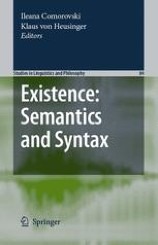
Existence: Semantics and Syntax
This collection is an important contribution to the semantic and syntactic analysis of the expression of existence. The volume focuses on the three main linguistic constructions expressing existence: copular clauses, existential sentences, and (in)definiteness. The papers analyze the interaction between the basic notion of existence and pervasive phenomena of natural language, such as quantification and presupposition. The contributions represent state of the art research on theoretical and comparative issues related to the expression of existence, and make extensive reference to the semantic and syntactic facts of English and of various other languages. The richness of new data and the juxtaposition of different theoretical stances bring a number of new questions into focus.

Examples & explanations for criminal law
Offers hypothetical questions complemented by detailed explanations that allow you to test your knowledge of the topics in your courses and compare your own analysis. Here's why you need an E & E to help you study throughout the semester: Clear explanations of each class topic.

Examples & explanations : criminal law
Combines textual material with well-written and comprehensive examples, explanations, and questions to test students' comprehension of the materials and to provide practice in applying information to fact patterns. The questions, which often raise a variety of issues in one fact situation, are similar to those on a law school or bar examination. New to the eighth edition: discussion of self-defense and police use of force issues; impact of #MeToo movement on rape law; interesting hypothetical situations based on real cases in the last few years

Evolving Connectionist Systems : The Knowledge Engineering Approach
Evolving Connectionist Systems is aimed at all those interested in developing and using intelligent computational models and systems to solve challenging real world problems in computer science, engineering, bioinformatics and neuroinformatics. The book challenges scientists and practitioners with open questions about future creation of new information models inspired by Nature. This edition includes new methods for adaptive, knowledge-based learning, such as online incremental feature selection, spiking neural networks, transductive neuro-fuzzy inference, adaptive data and model integration, cellular automata and artificial life systems, particle swarm optimisation, ensembles of evolving systems, and quantum inspired neural networks. New applications to gene and protein interaction modelling, brain data analysis and brain model creation, computational neuro-genetic modelling, adaptive speech, image and multimodal recognition, language modelling, adaptive robotics, modelling dynamic financial and socio-economic systems, and ecological modelling, are covered. An important new feature of the book is the attempt to connect different structural and functional levels of a complex, intelligent system, looking for inspiration from functional relationships in natural systems, such as the genetic and the brain activity.

Evolutionary Computation for Modeling and Optimization
Evolutionary Computation for Optimization and Modeling is an introduction to evolutionary computation, a field which includes genetic algorithms, evolutionary programming, evolution strategies, and genetic programming. The text is a survey of some application of evolutionary algorithms. It introduces mutation, crossover, design issues of selection and replacement methods, the issue of populations size, and the question of design of the fitness function. It also includes a methodological material on efficient implementation. Some of the other topics in this book include the design of simple evolutionary algorithms, applications to several types of optimization, evolutionary robotics, simple evolutionary neural computation, and several types of automatic programming including genetic programming. The book gives applications to biology and bioinformatics and introduces a number of tools that can be used in biological modeling, including evolutionary game theory. Advanced techniques such as cellular encoding, grammar based encoding, and graph based evolutionary algorithms are also covered.

Evaluation of Text and Speech Systems
Provides an overview of the state-of-the-art and best practice in several sub-fields of evaluation of text and speech systems and components. The evaluation aspects covered include speech and speaker recognition, speech synthesis, animated talking agents, part-of-speech tagging, parsing, and natural language software like machine translation, information retrieval, question answering, spoken dialogue systems, data resources, and annotation schemes. With its broad coverage and original contributions this book is unique in the field of evaluation of speech and language technology.

Evaluation of Multilingual and Multi-modal Information Retrieval ; 7th Workshop of the Cross-Language Evaluation Forum, CLEF 2006, Alicante, Spain, September 20-22, 2006, Revised Selected Papers
This book covers Multilingual Textual Document Retrieval, Domain-Specifig Information Retrieval, i-CLEF, QA@CLEF, ImageCLEF, CLSR, WebCLEF and GeoCLEF.
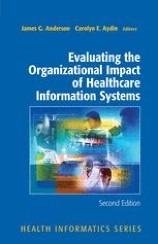
Evaluating the organizational impact of health care information systems
Evaluating the Organizational Impact of Health Care Information Systems, Second Edition, is heavily updated and revised from its First Edition, which is entitled Evaluating Health Care Information Systems: Methods and Applications. The much-needed Second Edition is a guide for evaluating the organizational impacts of computer systems in health care institutions. It provides a practical guide for determining the appropriate questions to ask based on underlying models of change and the most effective methods available. An introduction to various methods is provided, as well as appendices containing survey instruments usable in research and evaluation, computer programs for data analyses, and other evaluation resources. The book provides a critical overview of current research and evaluation to date with numerous bibliographic references from health care and other fields. The methods and instruments described are applicable to a wide variety of other organizations that utilize information technology and they emphasize the importance of clearly specifying the purpose of the evaluation, recognizing assumptions about organizational change and using a multi-method approach to system evaluation. The material presented is drawn from a variety of social and health science disciplines in order to integrate the study of information system with social science theory and methods. Chapter highlights include Cognitive Approaches to Evaluation, Computer Simulation as an Evaluation Tool, and Research and Evaluation: Future Directions.
