



Page 10
Page 10

Management of Convergence Networks and Services ; 9th Asia-Pacific Network Operations and Management Symposium, APNOMS 2006, Busan, Korea, September 27-29, 2006, Proceedings
Constitutes the refereed proceedings of the 9th Asia-Pacific Network Operations and Management Symposium, APNOMS 2006. This book presents 50 revised full papers and 25 revised short papers, organized in topical sections on management of ad hoc and sensor networks, network measurements and monitoring, mobility management, QoS management, and more
Managed Software Evolution
This book presents the outcomes of the “Design for Future – Managed Software Evolution” .The different lifecycles of software and hardware platforms lead to interoperability problems in such systems. Instead of separating the development, adaptation and evolution of software and its platforms, as well as aspects like operation, monitoring and maintenance, they should all be integrated into one overarching process. Accordingly, the book is split into three major parts, the first of which includes an introduction to the nature of software evolution, followed by an overview of the specific challenges and a general introduction to the case studies used in the project. The second part of the book consists of the main chapters on knowledge carrying software, and cover tacit knowledge in software evolution, continuous design decision support, model-based round-trip engineering for software product lines, performance analysis strategies, maintaining security in software evolution, learning from evolution for evolution, and formal verification of evolutionary changes. In turn, the last part of the book presents key findings and spin-offs. The individual chapters there describe various case studies, along with their benefits, deliverables and the respective lessons learned. An overview of future research topics rounds out the coverage.

Maintenance, safety, risk, management and life-cycle performance of bridges ; Proceedings of the ninth international conference on bridge maintenance, safety and management (IABMAS 2018), 9-13 July 2018, Melbourne, Australia
Provides both an up-to-date overview of the field of bridge engineering and significant contributions to the process of more rational decision-making on bridge maintenance, safety, risk, management and life-cycle performance of bridges for the purpose of enhancing the welfare of society. The Editors hope that these Proceedings will serve as a valuable reference to all concerned with bridge structure and infrastructure systems, including students, researchers and engineers from all areas of bridge engineering.

Maintenance of brick and stone masonry structures
Deals with all the tasks related to brick and stone masonry structures, from the initial identification of defects and their diagnosis to their treatment and monitoring of its cost-effectiveness.
Machine learning in healthcare : Fundamentals and recent applications
Discusses how to build various ML algorithms and how they can be applied to improve healthcare systems. Healthcare applications of AI are innumerable: medical data analysis, early detection and diagnosis of disease, providing objective-based evidence to reduce human errors, curtailing inter- and intra-observer errors, risk identification and interventions for healthcare management, real-time health monitoring, assisting clinicians and patients for selecting appropriate medications, and evaluating drug responses. Extensive demonstrations and discussion on the various principles of machine learning and its application in healthcare is provided, along with solved examples and exercises.
Machine learning for cyber-physical systems: selected papers from the international conference ML4CPS 2023
Contains selected papers from the international conference ML4CPS – Machine Learning for Cyber-Physical Systems, which was held in Hamburg (Germany), from 29 to 31 March 2023. Cyber-physical systems are adaptive and learning: they analyze their environment and, based on observations, learn patterns, associations and predictive models. Typical applications are condition monitoring, predictive maintenance, image processing and diagnostics. Machine learning is the key technology for these developments.

Machine Learning for Cyber Physical Systems : Selected papers from the International Conference ML4CPS 2018
Presents new approaches to Machine Learning for Cyber Physical Systems, experiences and visions. Cyber Physical Systems are characterized by their ability to adapt and to learn: They analyze their environment and, based on observations, they learn patterns, correlations and predictive models. Typical applications are condition monitoring, predictive maintenance, image processing and diagnosis. Machine Learning is the key technology for these developments.
Machine Learning Approaches in Cyber Security Analytics
Introduces various machine learning methods for cyber security analytics. With an overwhelming amount of data being generated and transferred over various networks, monitoring everything that is exchanged and identifying potential cyber threats and attacks poses a serious challenge for cyber experts. Further, as cyber attacks become more frequent and sophisticated, there is a requirement for machines to predict, detect, and identify them more rapidly. Machine learning offers various tools and techniques to automate and quickly predict, detect, and identify cyber attacks.
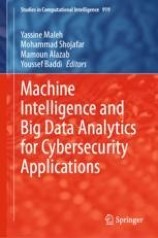
Machine Intelligence and Big Data Analytics for Cybersecurity Applications
Presents the latest advances in machine intelligence and big data analytics to improve early warning of cyber-attacks, for cybersecurity intrusion detection and monitoring, and malware analysis. Cyber-attacks have posed real and wide-ranging threats for the information society. Detecting cyber-attacks becomes a challenge, not only because of the sophistication of attacks but also because of the large scale and complex nature of today’s IT infrastructures. It discusses novel trends and achievements in machine intelligence and their role in the development of secure systems and identifies open and future research issues related to the application of machine intelligence in the cybersecurity field.

Long-term limnological research and monitoring at Crater Lake, Oregon : A benchmark study of a deep and exceptionally clear montane caldera lake
Crater Lake is located in the caldera of Mount Mazama in Crater Lake National Park, Oregon. The lake has a surface area of about 53 km2 at an elevation of 1882 m and a maximum depth of 594 m – seventh deepest in the world. This special volume represents our current state of knowledge of the status of this pristine ecosystem including its special optical properties, algal nutrient limitations, pelagic bacteria, and models of the inter-relationships of thermal properties, nutrients, phytoplankton, deep-water mixing, and water budgets.

Limnology and Aquatic Birds ; Proceedings of the Fourth Conference Working Group on Aquatic Birds of Societas Internationalis Limnologiae (SIL), Sackville, New Brunswick, Canada, August 3-7, 2003
The importance of habitat conservation for the protection of birds has become widely acknowledged and accepted by natural resource managers and the general public. Papers presented in this volume further our understanding of the important role that limnology has in determining habitat suitability for waterbirds. Long-term population monitoring of waterbirds is an important tool in our quest to understand the role waterbirds play in their environment. Continued population declines of many species of aquatic birds indicate the need for additional understanding of how human activities negatively impact water quality and bird populations and what mitigative actions can be taken. The main objective of the Working Group on Aquatic Birds of the International Limnological Society (SIL) is to integrate waterbirds into hydrobiology and treat waterbird studies in a limnological context. To achieve this goal, the Working Group organizes conferences to facilitate communications among limnologists interested in aquatic birds and ornithologists interested in the aquatic habitat. The efforts of the SIL Working Group on aquatic birds has resulted in a new emphasis on the links between aquatic birds and their environment
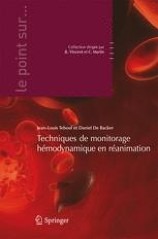
Les techniques de monitorage hémodynamique en réanimation = Hemodynamic monitoring techniques in intensive care
The hemodynamic monitoring of intensive care patients is undergoing major changes. Technological advances such as computerization and miniaturization have made it possible to considerably expand the range of assessment tools available at the bedside. Thus, the approach to cardiovascular monitoring - which was once readily "invasive" and global - is gradually becoming non-invasive and locoregional or even tissue. At the same time, the combined evolution of technology and physiological and pathophysiological concepts now provides the clinician with access to a variety of "functional hemodynamic monitoring". The aim of this book is to provide a better understanding of the interest and the limits of the hemodynamic parameters accessible by current hemodynamic monitoring techniques. It thus aims to ensure that the use of these techniques is perfectly mastered by resuscitators and anesthetists-resuscitators so that patient care is ultimately optimal.
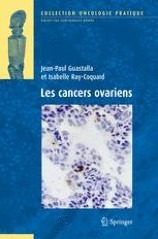
Les cancers ovariens = Ovarian cancers
Deals with ovarian cancers and their therapeutic management. Besides the epithelial tumors which are the most frequent, the rarer tumors, with attenuated malignancy, germ cells or of the ovarian stroma are also studied. Specialists from multiple backgrounds each deliver in their field the most recent knowledge on the fundamental aspects of the disease, its genetic, epidemiological and prognostic characteristics and its pathological peculiarities. Modern means of diagnosis are presented. The surgical technique, including laparoscopy, is detailed at the different stages of the disease. The therapeutic strategy aims to position the surgery and chemotherapy according to the stage. The current place of radiotherapy and isotopic therapies is indicated. Some more specific aspects are discussed, screening, lymph node dissection, the “second look”, intraperitoneal chemotherapy with or without hyperthermia, treatment of the elderly, monitoring after treatment… as well as the emergence of targeted therapies.

Lasers in the Conservation of Artworks ; LACONA VI Proceedings, Vienna, Austria, Sept. 21--25, 2005
In 1995 Professor Costas Fotakis brought together restorers and scientists to discuss the potential of lasers in art conservation. Since then the field of "Lasers in the Conservation of Artworks" has gained enormously in importance. Nowadays restorers and laser scientists work close together in order to develop new fields of applications during the last years.

Lasers in the Conservation of Artworks ; LACONA V Proceedings, Osnabrück, Germany, Sept. 15-18, 2003
Since 1995, when Costas Fotakis first brought together restorers and scientists to discuss the potential of lasers in art conservation, the field has grown enormously in importance, and today restorers and laser scientists work together to develop new applications. This book presents the more than six dozen research papers prepared for LACONA V (Lasers in Art Conservation), held in Osnabrueck/Germany in September 2003. The fifth congress once again gathers restorers, art historians, museum staff, laser scientists and laser manufacturers. The topics include, among others: laser cleaning of artworks (case studies and side effects), removal of former conservation layers, fundamentals of laser-artwork interaction, online monitoring and process control, laser diagnostics, spectroscopy for monitoring and identification, networks and co-operation projects.

Landslides in research, theory and practice ; Proceedings of the 8th International Symposium on Landslides held in Cardiff on 26–30 June 2000
Contains vital information from throughout the world on landslide and slope instability problems. Every four years the worlds leading scientists and engineers dealing with landslides, have the opportunity to meet up and engage in the exchange of ideas and experiences at a symposium run under the auspices of ISSMGE Technical Committee 11. These volumes, taken from the 8th symposium in the series, detail investigations into landslide causes, mechanisms and hazards, together with accounts of monitoring and mapping.
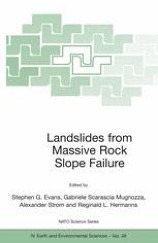
Landslides from Massive Rock Slope Failure
Amongst the thematic topics discussed are global frequency, impacts on society, analysis of initial rock slope failure, monitoring of rock slope movement, analysis and modeling of post-failure behaviour, volcanic landslides, and influences of massive rock slope failure on the geomorphological evolution of mountain regions. Regional contributions include reports on rockslides and rock avalanches in Norway, western Canada, the Andes of Argentina, the Karakoram Himalaya, the European Alps, the Appennines, and the mountains of Central Asia.

Land-Change Science in the Tropics : Changing Agricultural Landscapes
Land use and land-cover change research over the past decade has focused mainly on contemporary primary land-cover conversions in the tropics and sub-tropics, with considerable resources dedicated to the explanation and prediction of tropical deforestation and often ignoring the dynamism in the world’s agro-pastoral landscapes. This collection integrates cutting-edge research in the social, biogeophysical, and geographical information sciences to understand the human and environmental dynamics that change the type, magnitude and location of land uses and land covers in the changing countryside.This book describes the monitoring of land-cover changes, explains the processes through which land is altered, and describes the development of spatially-explicit models to predict land change. This book illustrates how practitioners have integrated knowledge from the three scientific realms - social, biophysical, and GIScience - that underpin land-change science.

Knowledge-Based Intelligent Information and Engineering Systems ; 12th International Conference, KES 2008, Zagreb, Croatia, September 3-5, 2008, Proceedings, Part II
The papers present a wealth of original research results from the field of intelligent information processing in the broadest sense; topics covered in the second volume are artificial intelligence driven engineering design optimization; biomedical informatics: intelligent information management from nanomedicine to public health; communicative intelligence; computational intelligence for image processing and pattern recognition; computational intelligence in human cancer research; computational intelligence techniques for Web personalization; computational intelligent techniques for bioprocess modelling, monitoring and control; intelligent computing for Grid.

Katzung's basic and clinical pharmacology
The most comprehensive and authoritative pharmacology text --updated with new content and USMLE-style questions Presented in full-color and packed with hundreds of illustrations, Basic and Clinical Pharmacology is the wide-ranging, engaging guide students have counted on for decades. To be as clinically relevant as possible, the book includes sections that specifically address the clinical choice and use of drugs in patients and the monitoring of their effects, along with case studies that introduce clinical problems. Each chapter opens with a case study, covers drug groups and prototypes, and closes with summary tables and diagrams that encapsulate important information. Updated to reflect the latest research, this sixteenth edition features a new chapter on cannabinoids, USMLE-style questions, new drug tables, and more. Basic and Clinical Pharmacology, Sixteenth Edition features: * 330 full-color illustrations * NEW: 100 drug tables * NEW: 50 USMLE-style questions * NEW: Chapter on cannabinoids * A strong emphasis on drug groups and prototypes * Case studies and chapter-ending summary tables * Organization that reflects the syllabi of pharmacology courses * Descriptions of important new drugs
