



Page 10
Page 10
Architectural graphics ; Vol.2 : Graphics for knowledge and production
Reports on several advances in architectural graphics, with a special emphasis on education, training and research. It gathers a selection of contributions to the 19th International Conference on Graphic Design in Architecture, EGA 2022, held on June 2–4, 2022, in Cartagena, Spain, with the motto: "Beyond drawings. The use of architectural graphics".
Architectural graphics ; Vol.1 : Graphics for analysis
Reports on several advances in architectural graphics, with a special emphasis on education, training, and research. It gathers a selection of contributions to the 19th International Conference on Graphic Design in Architecture, EGA 2022, held on June 2–4, 2022, in Cartagena, Spain, with the motto: "Beyond drawings. The use of architectural graphics".
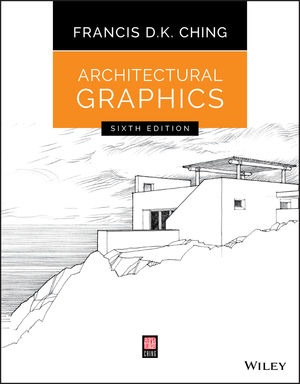
Architectural graphics ; 6th ed.
Offers a comprehensive introduction to using graphic tools and drafting conventions to translate architectural ideas into effective visual presentations, using hundreds of the author's distinctive drawings to illustrate the topic effectively. Includes new information on orthographic projection in relation to 3D models, and revised explanations of line weights, scale and dimensioning, and perspective drawing to clarify some of the most difficult concepts. New examples of modern furniture, APA facilities, and presentation layout provide more up-to-date visuals, and the Reference Center features all new animations, videos, and practice exercises. Architectural graphics are key tools for conveying design through representation on paper or on screen, and this book is the ultimate guide to mastering the skill, then applying your talent to create more effective design communication.

Arabic and Chinese Handwriting Recognition ; SACH 2006 Summit College Park, MD, USA, September 27-28, 2006 Selected Papers
Cheriet provides an overview of the problems of Arabic recognition and how systems can use natural language processing techniques to correct errors in lexicon-based systems.

Arabic AI-generated adverts = إعلانات عربية مولدة بالذكاء الاصطناعي
In the ever-evolving landscape of digital marketing, our groundbreaking platform emerges, harnessing the power of artificial intelligence to revolutionize the creation of marketing campaigns. This innovative solution seamlessly combines neural networks, natural language generation, and multimedia processing capabilities to generate comprehensive and personalized marketing assets from a single product image. At its core, the platform leverages deep learning models that analyze the visual characteristics of the uploaded product image and identifies key features and attributes to define the product category, this enables the generation of compelling and persuasive marketing content tailored to the specific product. The platform's multi-faceted approach encompasses three distinct components: text generation, poster creation, and video advertisement production. Utilizing advanced natural language generation techniques, it crafts engaging marketing text that captures the essence and unique selling points of the product. Simultaneously, its image processing capabilities produce visually stunning promotional posters that blend the product image with eye-catching graphics and typography. along with creating captivating video advertisements optimized for social media and online advertising campaigns.

Approximation and Online Algorithms ; 5th International Workshop, WAOA 2007, Eilat, Israel, October 11-12, 2007. Revised Papers
The Fifth Workshop on Approximation and Online Algorithms (WAOA 2007) focused on the design and analysis of algorithms for online and computationally hard problems.
Applied Geometry for Computer Graphics and CAD
Focusing on the manipulation and representation of geometrical objects, this book explores the application of geometry to computer graphics and computer-aided design (CAD). An introduction to transformations of the plane and three-dimensional space describes how objects can be constructed from geometric primitives and manipulated. This leads into a treatment of projections and the method of rendering objects on a computer screen by application of the complete viewing operation. Subsequently, the emphasis is on the two principal curve and surface representations, namely, Bézier and B-spline (including NURBS).
Applied Econometrics with R
This is the first book on applied econometrics using the R system for statistical computing and graphics. It presents hands-on examples for a wide range of econometric models, from classical linear regression models for cross-section, time series or panel data and the common non-linear models of microeconometrics such as logit, probit and tobit models, to recent semiparametric extensions. In addition, it provides a chapter on programming, including simulations, optimization, and an introduction to R tools enabling reproducible econometric research.

Applications of Membrane Computing
Membrane computing is a branch of natural computing which investigates computing models abstracted from the structure and functioning of living cells and from their interactions in tissues or higher-order biological structures. The models considered, called membrane systems (P systems), are parallel, distributed computing models, processing multisets of symbols in cell-like compartmental architectures. In many applications membrane systems have considerable advantages – among these are their inherently discrete nature, parallelism, transparency, scalability and nondeterminism.

Anisotropy Across Fields and Scales
This book focuses on processing, modeling, and visualization of anisotropy information…

Analisi matematica I : Teoria ed esercizi con complementi in rete = Mathematical analysis I : Theory and exercises with online complements
Intends to support a first teaching of Mathematical Analysis according to the principles of the new Didactic Regulations. It is especially designed for Engineering, Computer Science, Physics. The text has three different levels of reading. An essential level allows the student to grasp the essential concepts of the subject and to familiarize himself with the related calculation techniques. An intermediate level provides justifications for the main findings and enriches the presentation with useful observations and complements. A third level of reading, based on numerous references to a virtual text available online, allows the more motivated and interested student to deepen his or her preparation on the subject. Numerous examples and exercises with solutions complete the text. The captivating 2-color graphics make this text a fundamental point of reference for the study of the discipline.
Algorithms and data structures for massive datasets
Learn: Probabilistic sketching data structures for practical problems Choosing the right database engine for your application Evaluating and designing efficient on-disk data structures and algorithms Understanding the algorithmic trade-offs involved in massive-scale systems Deriving basic statistics from streaming data Correctly sampling streaming data Computing percentiles with limited space resources Algorithms and Data Structures for Massive Datasets reveals a toolbox of new methods that are perfect for handling modern big data applications. You'll explore the novel data structures and algorithms that underpin Google, Facebook, and other enterprise applications that work with truly massive amounts of data. These effective techniques can be applied to any discipline, from finance to text analysis. Graphics, illustrations, and hands-on industry examples make complex ideas practical to implement in your projects--and there's no mathematical proofs to puzzle over. Work through this one-of-a-kind guide, and you'll find the sweet spot of saving space without sacrificing your data's accuracy. About the Technology Standard algorithms and data structures may become slow--or fail altogether--when applied to large distributed datasets. Choosing algorithms designed for big data saves time, increases accuracy, and reduces processing cost.
Algorithms and data structures ; 9th international workshop, WADS 2005, Waterloo, Canada, August 15-17, 2005, Proceedings
The papers in this volume were presented at the 9th Workshop on Algorithmsand Data Structures (WADS 2005). at the University of Waterloo, Waterloo, Canada. The workshopalternates with the Scandinavian Workshop on Algorithm Theory (SWAT), con-tinuing the tradition of SWAT and WADS starting with SWAT 1988 and WADS1989. From 90 submissions, the Program Committee selected 37 papers for pre-sentation at the workshop. includ Algorithm Analysis and Problem Complexity Data Structures Discrete Mathematics in Computer Science Computer Graphics Numeric Computing

Algorithms and data structures ; 10th International Workshop, WADS 2007, Halifax, Canada, August 15-17, 2007, Proceedings
The book present research on the theory and application of algorithms and data structures in all areas, including combinatorics, computational geometry, databases, graphics, parallel and distributed computing.

Algorithm Theory - SWAT 2008 ; 11th Scandinavian Workshop on Algorithm Theory, Gothenburg, Sweden, July 2-4, 2008. Proceedings
his book constitutes the refereed proceedings of the 11th Scandinavian Workshop on Algorithm Theory, SWAT 2008, held in Gothenborg, Sweden, in July 2008.

Affect and Emotion in Human-Computer Interaction : From Theory to Applications
The present book provides an account of the latest work on a variety of aspects related to affect and emotion in human-technology interaction. It covers theoretical issues, user experience and design aspects as well as sensing issues, and reports on a number of affective applications that have been developed in recent years.

Advances in visual computing ; Vol. 4292 ; 2nd International symposium, ISVC 2006, Lake Tahoe, NV, USA, November 6-8, 2006, Proceedings, Part II
This year, the program consisted of 13 oral sessions, one poster session, ten special tracks, and six keynote presentations. The response to the call for - pers was very strong. We received more than twice the papers received last year. Specifcally, we received over 280 submissions for the main symposium from which we accepted 65 papers for oral presentation (23% acceptance) and 56 papers for poster presentation (20% acceptance). Special track papers were solicited separately through the Organizing and Program Committees of each track. A total of 57 papers were accepted for presentation in the special tracks. All papers were reviewed with an emphasis on potential to contribute to the state of the art in the ?eld. Selection criteria included accuracy and originality of ideas, clarity and signi?cance of results, and presentation quality. The review process was quite rigorous, involving two to three independent blind reviews followed by several days of discussion.

Advances in Visual Computing ; Vol. 4291 ; 2nd International Symposium, ISVC 2006, Lake Tahoe, NV, USA, November 6-8, 2006, Proceedings, Part I
This year, the program consisted of 13 oral sessions, one poster session, ten special tracks, and six keynote presentations. The response to the call for - pers was very strong. We received more than twice the papers received last year. Specifcally, we received over 280 submissions for the main symposium from which we accepted 65 papers for oral presentation (23% acceptance) and 56 papers for poster presentation (20% acceptance). Special track papers were solicited separately through the Organizing and Program Committees of each track. A total of 57 papers were accepted for presentation in the special tracks. All papers were reviewed with an emphasis on potential to contribute to the state of the art in the ?eld. Selection criteria included accuracy and originality of ideas, clarity and signi?cance of results, and presentation quality. The review process was quite rigorous, involving two to three independent blind reviews followed by several days of discussion. During the discussion period we tried to correct anomalies and errors that might have existed in the initial reviews.

Advances in visual computing ; Vol. 3804 ; 1st International symposium, ISVC 2005, Lake Tahoe, NV, USA, December 5-7, 2005, Proceedings
Constitutes the refereed proceedings of the introduce the papers of the proceedings of the for the 2005 Int- national Symposium on Visual Computing (ISVC). ISVC provides a common umbrella for the four main areas of visual computing: vision, graphics, visu- ization, and virtual reality.

Advances in visual computing ; 4th International Symposium, ISVC 2008, Las Vegas, NV, USA, December 1-3, 2008. Proceedings, Part I
The two volume set LNCS 5358 and LNCS 5359 constitutes the refereed proceedings of the 4th International Symposium on Visual Computing, ISVC 2008, held in Las Vegas, NV, USA, in December 2008.
