



Page 1
Page 1

One Hundred Years of Intuitionism (1907-2007) : The Cerisy Conference
With logicism and formalism, intuitionism is one of the main foundations for mathematics proposed in the twentieth century; and since the seventies, notably its views on logic have become important also outside foundational studies, with the development of theoretical computer science. The aim of the book is threefold: to review and complete the historical account of intuitionism; to present recent philosophical work on intuitionism; and to give examples of new technical advances and applications of intuitionism.

Numerical analysis
Introduces readers to the theory and application of modern numerical approximation techniques. Providing an accessible treatment that only requires a calculus prerequisite, the authors explain how, why, and when approximation techniques can be expected to work-and why, in some situations, they fail. A wealth of examples and exercises develop readers' intuition, and demonstrate the subject's practical applications to important everyday problems in math, computing, engineering, and physical science disciplines.

Nuel Belnap on Indeterminism and Free Action
Seeks to further the use of formal methods in clarifying one of the central problems of philosophy: that of our free human agency and its place in our indeterministic world. It celebrates the important contributions made in this area by Nuel Belnap, American logician and philosopher. Philosophically, indeterminism and free action can seem far apart, but in Belnap’s work, they are intimately linked. This book explores their philosophical interconnectedness through a selection of original research papers that build forth on Belnap’s logical and philosophical work. Some contributions take the form of critical discussions of Belnap's published work, some develop points made in his publications in new directions, and others provide additional insights on the topics of indeterminism and free action.

Nonlinear Continua
This book develops a modern presentation of Continuum Mechanics, oriented towards numerical applications in the fields of nonlinear analysis of solids, structures and fluid mechanics. though the mathematical presentation of the different topics is quite rigorous, an effort is made to link formal developments with engineering physical intuition.

Mathematics Education in Different Cultural Traditions- A Comparative Study of East Asia and the West : The 13th ICMI Study
The volume covers a very wide field including the contexts of mathematics education, the curriculum, teaching and learning, and teachers’ values and beliefs. Within these broad parameters some of the particular cross-cultural issues that are discussed include intuition and logical reasoning, influences of Confucianism and Ancient Greek traditions, basic skills and process abilities, learners’ perspectives, assessment practices, text books and ICT multimedia.

Intuition and the Axiomatic Method
All of Hilbert, Gödel, Poincaré, Weyl and Bohr thought that intuition was an indispensable element in describing the foundations of science. They had very different reasons for thinking this, and they had very different accounts of what they called intuition. But they had in common that their views of mathematics and physics were significantly influenced by their readings of Kant. In the present volume, various views of intuition and the axiomatic method are explored, beginning with Kant’s own approach. By way of these investigations, we hope to understand better the rationale behind Kant’s theory of intuition, as well as to grasp many facets of the relations between theories of intuition and the axiomatic method,

Geometric Methods in Algebra and Number Theory
The transparency and power of geometric constructions has been a source of inspiration to generations of mathematicians. The beauty and persuasion of pictures, communicated in words or drawings, continues to provide the intuition and arguments for working with complicated concepts and structures of modern mathematics. This volume contains a selection of articles exploring geometric approaches to problems in algebra, algebraic geometry and number theory.
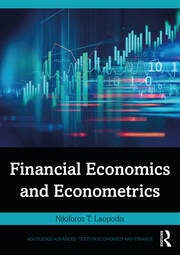
Financial economics and econometrics
Covers financial data and univariate models; asset returns; interest rates, yields and spreads; volatility and correlation; and corporate finance and policy. Each chapter begins with a theory in financial economics, followed by econometric methodologies which have been used to explore the theory. Next, the chapter presents empirical evidence and discusses seminal papers on the topic. Boxes offer insights on how an idea can be applied to other disciplines such as management, marketing and medicine, showing the relevance of the material beyond finance. Readers are supported with plenty of worked examples and intuitive explanations throughout the book, while key takeaways, ‘test your knowledge’ and ‘test your intuition’ features at the end of each chapter also aid student learning.

Fading Foundations : Probability and the Regress Problem
This book addresses the age-old problem of infinite regresses in epistemology. How can we ever come to know something if knowing requires having good reasons, and reasons can only be good if they are backed by good reasons in turn? The problem has puzzled philosophers ever since antiquity, giving rise to what is often called Agrippa's Trilemma. The current volume approaches the old problem in a provocative and thoroughly contemporary way. Taking seriously the idea that good reasons are typically probabilistic in character, it develops and defends a new solution that challenges venerable philosophical intuitions and explains why they were mistakenly held. Key to the new solution is the phenomenon of fading foundations, according to which distant reasons are less important than those that are nearby.

Essays in Honor of Edwin Mansfield: The Economics of R&D, Innovation, and Technological Change
As appreciation and remembrance for his scholarly contributions, eminent scholars have contributed original papers for this edited volume. The authors have followed the "Mansfieldian” approach of emphasizing economic insight and intuition over mathematical rigor and as a result are very accessable.

Diagrammatology : An investigation on the borderlines of phenomenology, ontology, and semiotics
Diagrammatology investigates the role of diagrams for thought and knowledge. Based on the general doctrine of diagrams in Charles Peirce's mature work, Diagrammatology claims diagrams to constitute a centerpiece of epistemology. The book reflects Peirce's work on the issue in Husserl's contemporanous doctrine of "categorial intuition" and charts the many unnoticed similarities between Peircean semiotics and early Husserlian phenomenology. Diagrams, on a Peircean account, allow for observation and experimentation with ideal structures and objects and thus furnish the access to the synthetic a priori of the regional and formal ontology of the Husserlian tradition.

Design and analysis of randomized algorithms : Introduction to design paradigms
Randomness is a powerful phenomenon that can be harnessed to solve various problems in all areas of computer science. Randomized algorithms are often more efficient, simpler and, surprisingly, also more reliable than their deterministic counterparts. Computing tasks exist that require billions of years of computer work when solved using the fastest known deterministic algorithms, but they can be solved using randomized algorithms in a few minutes with negligible error probabilities. Introducing the fascinating world of randomness, this book systematically teaches the main algorithm design paradigms – foiling an adversary, abundance of witnesses, fingerprinting, amplification, and random sampling, etc. – while also providing a deep insight into the nature of success in randomization. Taking sufficient time to present motivations and to develop the reader's intuition, while being rigorous throughout, this text is a very effective and efficient introduction to this exciting field.

Creative Model Construction in Scientists and Students : The Role of Imagery, Analogy, and Mental Simulation
How do scientists use analogies and other processes to break away from old theories and generate new ones? This book documents such methods through the analysis of video tapes of scientifically trained experts thinking aloud while working on unfamiliar problems. Some aspects of creative scientific thinking are difficult to explain, such as the power of analogies, the use of physical intuition, and the enigmatic ability to learn from thought experiments. The book examines the hypothesis that these processes are based on imagistic mental simulation as an underlying mechanism. This allows the analysis of insight ("Aha!") episodes of creative theory formation.

Conflicts Between Generalization, Rigor, and Intuition : Number Concepts Underlying the Development of Analysis in 17th-19th Century France and Germany
Conflicts Between Generalization, Rigor, and Intuition undertakes a historical analysis of the development of two mathematical concepts -negative numbers and infinitely small quantities, mainly in France and Germany, but also in Britain, and the different paths taken there.This book not only discusses the history of the two concepts, but it also introduces a wealth of new knowledge and insights regarding their interrelation as necessary foundations for the emergence of the 19th century concept of analysis. The historical investigation unravels several processes underlying and motivating conceptual change: generalization (in particular, algebraization as an agent for generalizing) and a continued effort of intuitive accessibility which often conflicted with likewise desired rigor. The study focuses on the 18th and the 19th centuries.The book provides a productive unity to a large number of historical sources.

Conceptual structural design : Bridging the gap between architects and engineers
Aims to 'bridge the gap' between engineers' and architects' understanding of structural form. It aims to inspire designers to develop innovative and viable structural forms. This book is presented in two parts. The first part is theoretical and investigates source of inspiration for developing structural form; learning from natural forms; applying our own intuition; seeking inspiration from precedents; applying understanding of structural principles; and developing design through physical models.
Computer Vision Metrics : Survey, Taxonomy, and Analysis
Computer Vision Metrics provides an extensive survey and analysis of over 100 current and historical feature description and machine vision methods, with a detailed taxonomy for local, regional and global features. This book provides necessary background to develop intuition about why interest point detectors and feature descriptors actually work, how they are designed, with observations about tuning the methods for achieving robustness and invariance targets for specific applications. The survey is broader than it is deep, with over 540 references provided to dig deeper. The taxonomy includes search methods, spectra components, descriptor representation, shape, distance functions, accuracy, efficiency, robustness and invariance attributes, and more.
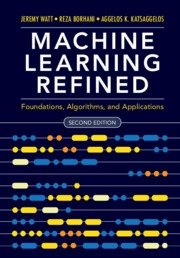
Machine Learning Refined : Foundations, Algorithms, and Applications
Provides students with the fundamental knowledge and practical tools needed to conduct research and build data-driven products. The authors prioritize geometric intuition and algorithmic thinking, and include detail on all the essential mathematical prerequisites, to offer a fresh and accessible way to learn. Practical applications are emphasized, with examples from disciplines including computer vision, natural language processing, economics, neuroscience, recommender systems, physics, and biology.

Machine learning refined : Foundations, algorithms, and applications
Providing a unique approach to machine learning, this text contains fresh and intuitive, yet rigorous, descriptions of all fundamental concepts necessary to conduct research, build products, tinker, and play. By prioritizing geometric intuition, algorithmic thinking, and practical real world applications in disciplines including computer vision, natural language processing, economics, neuroscience, recommender systems, physics, and biology, this text provides readers with both a lucid understanding of foundational material as well as the practical tools needed to solve real-world problems. With in-depth Python and MATLAB/OCTAVE-based computational exercises and a complete treatment of cutting edge numerical optimization techniques, this is an essential resource for students and an ideal reference for researchers and practitioners working in machine learning, computer science, electrical engineering, signal processing, and numerical optimization
Linear Systems Control : Deterministic and Stochastic Methods
Modern control theory and in particular state space or state variable methods can be adapted to the description of many different systems because it depends strongly on physical modeling and physical intuition. The laws of physics are in the form of differential equations and for this reason, this book concentrates on system descriptions in this form. This means coupled systems of linear or nonlinear differential equations. The physical approach is emphasized in this book because it is most natural for complex systems. It also makes what would ordinarily be a difficult mathematical subject into one which can straightforwardly be understood intuitively and which deals with concepts which engineering and science students are already familiar.
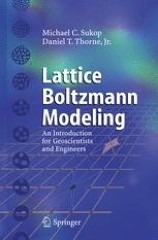
Lattice Boltzmann Modeling : An Introduction for Geoscientists and Engineers
Lattice Boltzmann models have a remarkable ability to simulate single- and multi-phase fluids and transport processes within them. A rich variety of behaviors, including higher Reynolds numbers flows, phase separation, evaporation, condensation, cavitation, buoyancy, and interactions with surfaces can readily be simulated. This book provides a basic introduction that emphasizes intuition and simplistic conceptualization of processes. It avoids the more difficult mathematics that underlies LB models. The model is viewed from a particle perspective where collisions, streaming, and particle-particle/particle-surface interactions constitute the entire conceptual framework. Beginners and those with more interest in model application than detailed mathematical foundations will find this a powerful "quick start" guide. Example simulations, exercises, and computer codes are included. Working code is provided on the Internet
