




Information and Communications Security ; Vol. 4307 ; 8th International Conference, ICICS 2006, Raleigh, NC, USA, December 4-7, 2006, Proceedings
It is our great pleasure to welcome you to the Eighth International Conference on Information and Communications Security (ICICS 2006), held in Raleigh, North Carolina, USA, December 4–7, 2006. The ICICS conference series is an established forum that brings together researchersand scholars involved in m- tiple disciplines of Information and Communications Security in order to foster exchangeof ideas. The past sevenICICS conferences wereheld in Beijing, China (ICICS 1997); Sydney, Australia (ICICS 1999); Xi’an China (ICICS 2001); S- gapore (ICICS 2002); Hohhot City, China (ICICS 2003); Malaga, Spain (ICICS 2004); and Beijing, China (ICICS 2005). The conference proceedings of the past seven events have been published by Springer in the Lecture Notes in Computer Science series, in LNCS1334,LNCS1726,LNCS2229,LNCS 2513,LNCS 2836, LNCS 3269, and LNCS 3783, respectively. This year we received a total of 119 submissions on various aspects of - hoc and sensor network security. The Program Committee selected 22 regular papers and 17 short papers that cover a variety of topics, including security protocols, applied cryptography and cryptanalysis, access control in distributed systems, privacy, malicious code, network and systems security, and security implementations. Putting together ICICS 2006 was a team e?ort. First of all, we would like to thank the authors of every paper, whether accepted or not, for submitting their papers to ICICS 2006. We would like to express our gratitude to the Program Committee members and the external reviewers, who worked very hard in - viewing the papers and providing suggestions for their improvements.
Related Books
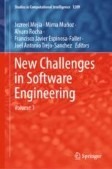
New challenges in software engineering ; Vol 1
Explores the key challenges shaping the future of software development, including automation, AI-driven development, security-focused engineering, resilient and autonomous architectures, business process optimization, cloud computing, microservices, high-performance distributed systems, and sustainable technologies. Software engineering is undergoing a constant transformation, driven by rapid technological advances and evolving market demands. additionally, it delves into the ethical considerations of AI, the evolution of intuitive user interfaces, and the importance of multidisciplinary collaboration.

Fundamentals of manufacturing engineering using digital visualization
Offers a guide to core principles and practices of manufacturing engineering. It covers the design of, together with technological and measurement issues for, technical systems. Locating charts and setup schemes describing different machining processes are included. Concepts of product quality, with a focus on accuracy indicators, machining accuracy, roughness, and the impact of surface quality on exploitation properties are also explained. Furthermore, key machining methods, including turning, milling, hole machining, grinding, and gear machining, are analyzed in depth, covering their principles, applications, and techniques. The book is enriched by QR codes, linking to a mobile application presenting additional information about the content, for an interactive and extended learning experience. It also uses illustrations visualized with digital tools to promote a better understanding of the concepts.
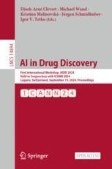
AI in drug discovery
Constitutes the refereed proceedings of the First international workshop on ai in Drug Discovery, AIDD 2024, held as a part of the 33rd International Conference on Artificial Neural Networks, ICANN 2024, in Lugano, Switzerland, on September 19, 2024. These papers focus on various aspects of the rapidly evolving field of Artificial Intelligence (AI)-driven drug discovery in chemistry, including Big Data and advanced Machine Learning, eXplainable AI (XAI), Chemoinformatics, Use of deep learning to predict molecular properties, Modeling and prediction of chemical reaction data and Generative models.
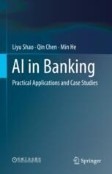
AI in banking : Practical applications and case studies
Delves into the application of AI from theory to practice, offering detailed insights into AI project design and code implementation across eleven business scenarios in four major sectors: retail banking, e-banking, bank credit, and tech operations. it provides hands-on examples of various technologies, including automatic machine learning, integrated learning, graph computation, recommendation systems, causal inference, generative adversarial networks, supervised learning, unsupervised learning, computer vision, reinforcement learning, fuzzy control, automatic control, speech recognition, semantic understanding, bayesian networks, edge computing, and more. this book stands as a rare and practical guide to AI projects in the banking industry.
