




First Light in the Universe : Saas-Fee Advanced Course 36. Swiss Society for Astrophysics and Astronomy
The exploration of the first billion years of the history of the Universe, from the so-called Dark Ages to cosmic reionisation, represents one of the great challenges of contemporary astrophysics and one of the main drivers for future observational facilities. The book contains the elaborated notes of lectures given at the 36th Saas-Fee Advanced Course "First Light in the Universe" by three eminent scientists in the field: Abraham Loeb, Andrea Ferrara, and Richard Ellis. The formation of the first stars and black holes, the initial mass function, feedback effects, early dust formation, the history of cosmic star formation, distant galaxies, cosmic reionisation and the cosmic infrared background are the main topics treated. This book provides an accessible and up-to-date review of the field and will be useful to graduate students of astronomy, cosmologists, physicists and researchers.
Related Books

Molecules in Superfluid Helium Nanodroplets : Spectroscopy, Structure, and Dynamics
This book covers recent advances in experiments using the ultra-cold, very weakly perturbing superfluid environment provided by helium nanodroplets for high resolution spectroscopic, structural and dynamic studies of molecules and synthetic clusters. The recent infra-red, UV-Vis studies of radicals, molecules, clusters, ions and biomolecules, as well as laser dynamical and laser orientational studies, are reviewed. The Coulomb explosion studies of the uniquely quantum structures of small helium clusters, X-ray imaging of large droplets and electron diffraction of embedded molecules are also described. Particular emphasis is given to the synthesis and detection of new species by mass spectrometry and deposition electron microscopy.
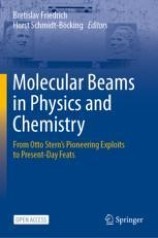
Molecular Beams in Physics and Chemistry : From Otto Stern's Pioneering Exploits to Present-Day Feats
This book gives a comprehensive account of both the history and current achievements of molecular beam research. In 1919, Otto Stern launched the revolutionary molecular beam technique. This technique made it possible to send atoms and molecules with well-defined momentum through vacuum and to measure with high accuracy the deflections they underwent when acted upon by transversal forces. These measurements revealed unforeseen quantum properties of nuclei, atoms, and molecules that became the basis for our current understanding of quantum matter. This volume shows that many key areas of modern physics and chemistry owe their beginnings to the seminal molecular beam work of Otto Stern and his school. Written by internationally recognized experts, the contributions in this volume will help experienced researchers and incoming graduate students alike to keep abreast of current developments in molecular beam research as well as to appreciate the history and evolution of this powerful method and the knowledge it reveals.
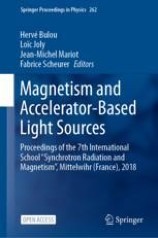
Magnetism and Accelerator-Based Light Sources : Proceedings of the 7th International School ‘‘Synchrotron Radiation and Magnetism’’, Mittelwihr (France), 2018
Collects the contributions of the seventh school on Magnetism and Synchrotron Radiation held in Mittelwihr, France, from 7 to 12 October 2018. It starts with an introduction to the physics of modern X-ray sources followed by a general overview of magnetism.
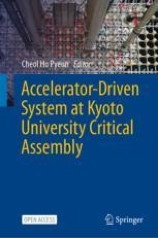
Accelerator-Driven System at Kyoto University Critical Assembly
This book is a unique compilation of experimental benchmark analyses of the accelerator-driven system (ADS) at the Kyoto University Critical Assembly (KUCA) on the most recent advances in the development of computational methods.
