



Page 1
Page 1

Multimedia Introduction to Programming Using Java
Although vital to modern software development, Java and object-oriented programming can pose significant challenges to newcomers. This text, unique in both scope and approach and accompanied by interactive content that you may find on extras.springer.com, addresses that learning curve by providing a careful, classroom-tested presentation of Java -- from the fundamentals of variables, types, and expressions to procedural concepts like loops and sophisticated object-oriented ideas. Additional key features of this work Introduces objects and classes early in the exposition, rendering object-oriented programming intuitive and natural. Develops programs, rather than simply showcasing them. Supports all concepts through complementary lectures on the zip-file featured on extras.springer.com. Contains numerous self-help exercises that encourage readers to practice programming. With its comprehensive appendices and bibliography, systematic approach, and helpful interactive programs on extras.springer.com, this exciting work provides the key tools they needed for successful object-oriented programming. It is ideal for use at the undergraduate and graduate beginning level, whether in the classroom or for distance learning; furthermore, the text will also be a valuable self-study resource or reference volume in any programmer’s library.

Microsoft Visual C# Step by Step
Guide to Microsoft Visual C# fundamentals with Visual Studio. Expand your expertiseand teach yourself the fundamentals of programming with the latest version of Visual C# with Visual Studio. If you are an experienced software developer, you'll get all the guidance, exercises, and code you need to start building responsive, scalable, cloud-connected applications that can run almost anywhere. Discover how to: Quickly start creating Visual C# code and projects with Visual Studio Work with variables, operators, expressions, methods, and program flow Build more robust apps with error, exception, and resource management Spot problems fast with the Visual Studio debugger Make the most of improvements to C# methods, parameters, and switch statements Master the C# object model, and create your own functional data structures Leverage advanced properties, indexers, generics, and collection classes Create Windows 10 apps that share data, collaborate, and use cloud services Integrate Cortana to voice-enable your applications Perform complex queries over object collections with LINQ
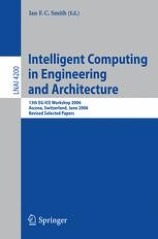
Intelligent Computing in Engineering and Architecture ; 13th EG-ICE Workshop 2006, Ascona, Switzerland, June 25-30, 2006, Revised Selected Papers
Providing computer support for tasks in civil engineering and architecture is hard. Projects can be complex, long and costly. Firms that contribute to design, construction and maintenance are often worth less than the value of their projects. Everyone in the field is justifiably risk adverse. Contextual variables have a strong influence making generalization difficult. The product life cycle may exceed one hundred years and functional requirements may evolve during the service life. It is therefore no wonder that practitioners in this area have been so reluctant to adopt advanced computing systems. After decades of research and industrial pilot projects, advanced computing s- tems are now being recognized by many leading practitioners to be strategically - portant for the future profitability of firms involved in engineering and architecture. Engineers and architects with advanced computing knowledge are hired quickly in the market place. Closer collaboration between research and practice is leading to more comprehensive validation processes for new research ideas. This is feeding devel- ment of more useful systems, thus accelerating progress. These are exciting times. th This volume contains papers that were presented at the 13 Workshop of the Eu- pean Group for Intelligent Computing in Engineering. Over five days, 70 participants from around the world listened to 59 paper presentations in a single session format.

Handbook of Fractional Calculus for Engineering and Science
Provides reliable methods for solving fractional-order models in science and engineering. Contains efficient numerical methods and algorithms for engineering-related equations. Contains comparison of various methods for accuracy and validity. Demonstrates the applicability of fractional calculus in science and engineering. Examines qualitative as well as quantitative properties of solutions of various types of science- and engineering-related equations.

Global optimization and constraint satisfaction ; 2nd International Workshop, COCOS 2003, Lausanne, Switzerland, Nevember 18-21, 2003, Revised Selected Papers
Theformulationofmanypracticalproblemsnaturallyinvolvesconstraintsonthe variables entering the mathematical model of a real-life situation to be analyzed. It is of great interest to ?nd the possible scenarios satisfying all constraints, and, iftherearemanyofthem,eitherto?ndthebestsolution,ortoobtainacompact, explicit representation of the whole feasible set. The 2nd Workshop on Global Constrained Optimization and Constraint S- isfaction, COCOS 2003, which took place during November 18–21, 2003 in L- sanne, Switzerland, was dedicated to theoretical, algorithmic, and application oriented advances in answering these questions. Here global optimization refers to ?nding the absolutely best feasible point, while constraint satisfaction refers to?ndingallpossiblefeasiblepoints.AsinCOCOS2002,the?rstsuchworkshop (see the proceeedings [1]), the emphasis was on complete solving techniques for problems involving continuous variables that provide all solutions with full rigor, and on applications which, however, were allowed to have relaxed standards of rigor.

Generator remote controlling using internet connection
The traditional technique of monitoring the electricity generated through regular checks on the alternator variables: oil, temperature, voltage and current on a daily basis. Therefore, maintaining a normal performance cycle requires hard work and is often imprecise. The idea is to create an application that monitors wireless generators using the popular smartphone Android operating system. Implemented sensors deliver analog signals that provide real-time data on the status of the generator. This data is converted and programmed through the Node MCU microcontroller, which reads the results from the sensors and then converts into a signal, which is transmitted to the android phone, through a router. Thus live feedback of the generator status is ensured. In addition, this project provides a control button that can actually turn this generator on and off. This project is the first step towards bringing systems and control together as it revolutionizes the ideology of monitoring and displaying real-time data that can be implemented in different fields according to different needs. These fields include electricity, mechanics, and communications.

Fuzzy probabilities : New approach and applications
In probability and statistics we often have to estimate probabilities and parameters in probability distributions using a random sample. Instead of using a point estimate calculated from the data we propose using fuzzy numbers which are constructed from a set of confidence intervals. In probability calculations we apply constrained fuzzy arithmetic because probabilities must add to one. Fuzzy random variables have fuzzy distributions. A fuzzy normal random variable has the normal distribution with fuzzy number mean and variance. Applications are to queuing theory, Markov chains, inventory control, decision theory and reliability theory.

EEG signal processing for biomedical applications
Focuses on electroencephalography (EEG) signal processing in biomedical engineering applications. EEG signals are used widely in clinical and research settings to provide cognitive and emotional state information. In addition to capturing complex neural patterns at high speeds, EEG signals are a reliable and non-invasive way of measuring the electrical activity in the brain. By examining various novel analysis and signal processing methods, this collection of papers provides a better understanding of cognitive states and brain activity.

Differential Evolution : A Practical Approach to Global Optimization
Problems demanding globally optimal solutions are ubiquitous, yet many are intractable when they involve constrained functions having many local optima and interacting, mixed-type variables. The differential evolution (DE) algorithm is a practical approach to global numerical optimization which is easy to understand, simple to implement, reliable, and fast. Packed with illustrations, computer code, new insights, and practical advice, this volume explores DE in both principle and practice. It is a valuable resource for professionals needing a proven optimizer and for students wanting an evolutionary perspective on global numerical optimization.

Data science for economics and finance : Methodologies and applications
The book starts with an introduction on the use of data science technologies in economics and finance and is followed by thirteen chapters showing success stories of the application of specific data science methodologies, touching on particular topics related to novel big data sources and technologies for economic analysis (e.g. social media and news); big data models leveraging on supervised/unsupervised (deep) machine learning; natural language processing to build economic and financial indicators; and forecasting and nowcasting of economic variables through time series analysis.
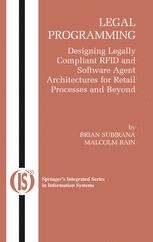
Legal Programming : Designing Legally Compliant RFID and Software Agent Architectures for Retail Processes and Beyond
LEGAL PROGRAMMING: Designing Legally Compliant RFID and Software Agent Architectures for Retail Processes and Beyond provides a process-oriented discussion of the legal concerns presented by agent-based technologies, processes and programming. It offers a general outline of the potential legal difficulties that could arise in relation to them, focusing on the programming of negotiation and contracting processes in a privacy, consumer and commercial context. The authors will elucidate how it is possible to create form of legal framework and design methodology for transaction agents, applicable in any environment and not just in a specific proprietary framework, that provides the right level of compliance and trust. Key elements considered include the design and programming of legally compliant methods, the determination of rights in respect of objects and variables, and ontologies and programming frameworks for agent interactions. Examples are used to illustrate the points made and provide a practical perspective.
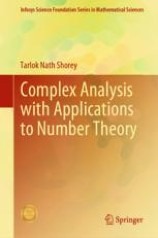
Complex Analysis with Applications to Number Theory
The book discusses major topics in complex analysis with applications to number theory.It 's including the theory of several finitely and infinitely complex variables, hyperbolic geometry, two- and three-manifolds, and number theory. In addition to solved examples and problems, the book covers most topics of current interest, such as Cauchy theorems, Picard’s theorems, Riemann–Zeta function, Dirichlet theorem, Gamma function, and harmonic functions.

Comparative genomics ; RECOMB 2007, International Workshop, RECOMB-CG 2007, San Diego, CA, USA, September 16-18, 2007, Proceedings
This book provides an evolutionary conceptual framework for comparative genomics, with the ultimate objective of understanding the loss and gain of genes during evolution, the interactions among gene products, and the relationship between genotype, phenotype and the environment. The many examples in the book have been carefully chosen from primary research literature based on two criteria: their biological insight and their pedagogical merit. The phylogeny-based comparative methods, involving both continuous and discrete variables, often represent a stumbling block for many students entering the field of comparative genomics. They are numerically illustrated and explained in great detail.

Calculus : One and several variables
Provides clear calculus content to help them master these concepts and understand its relevance to the real world. Throughout the pages, it offers a perfect balance of theory and applications to elevate their mathematical insights. Readers will also find that the book emphasizes both problem-solving skills and real-world applications.
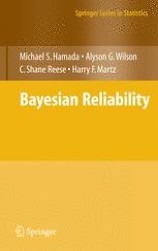
Bayesian reliability
Bayesian Reliability presents modern methods and techniques for analyzing reliability data from a Bayesian perspective. The adoption and application of Bayesian methods in virtually all branches of science and engineering have significantly increased over the past few decades. This increase is largely due to advances in simulation-based computational tools for implementing Bayesian methods. The authors extensively use such tools throughout this book, focusing on assessing the reliability of components and systems with particular attention to hierarchical models and models incorporating explanatory variables. Such models include failure time regression models, accelerated testing models, and degradation models. The authors pay special attention to Bayesian goodness-of-fit testing, model validation, reliability test design, and assurance test planning. Throughout the book, the authors use Markov chain Monte Carlo (MCMC) algorithms for implementing Bayesian analyses--algorithms that make the Bayesian approach to reliability computationally feasible and conceptually straightforward.
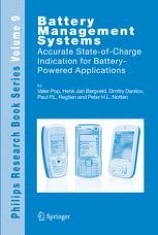
Battery management systems : Accurate state-of-charge indication for battery-powered applications
Builds further on the contents of the first volume in the Philips Research Book Series, Battery Management Systems - Design by Modelling. Since the subject of battery SoC indication requires a number of disciplines, this book covers all important disciplines starting from (electro)chemistry to understand battery behaviour, via mathematics to enable modelling of the observed battery behaviour and measurement science to enable accurate measurement of battery variables and assessment of the overall accuracy, to electrical engineering to enable an efficient implementation of the developed SoC indication system. It will therefore serve as an important source of information for any person working in engineering and involved in battery management.
Basic Python for Data Management, Finance, and Marketing : Advance Your Career by Learning the Most Powerful Analytical Tool
Learn how to gather, manipulate, and analyze data with Python. This book is a practical guide to help you get started with Python from ground zero and to the point where you can use coding for everyday tasks. Python is used in all aspects of financial industry, from algo trading, reporting and risk management to building valuations models and predictive machine learning programs. You will: Get started with Python from square one / Extend what's possible on excel with Python / Automate tasks with Python / Analyze data more precisely
Basic Probability Theory with Applications
This book presents elementary probability theory with interesting and well-chosen applications that illustrate the theory. An introductory chapter reviews the basic elements of differential calculus which are used in the material to follow. The theory is presented systematically, beginning with the main results in elementary probability theory. This is followed by material on random variables. Random vectors, including the all important central limit theorem, are treated next. The last three chapters concentrate on applications of this theory in the areas of reliability theory, basic queuing models, and time series. Examples are elegantly woven into the text and over 400 exercises reinforce the material and provide students with ample practice.
Abstract Computing Machines : A Lambda Calculus Perspective
The book addresses ways and means of organizing computations, highlighting the relationship between algorithms and the basic mechanisms and runtime structures necessary to execute them using machines. It completely abstracts from concrete programming languages and machine architectures, taking instead the lambda calculus as the basic programming and program execution model to design various abstract machines for its correct implementation. The emphasis is on fully normalizing machines based on full-fledged beta-reductions as essential prerequisites for symbolic computations that treat functions and variables truly as first-class objects. Their weakly normalizing counterparts are shown to be functional abstract machines that sacrifice the flavors of full beta-reductions for decidedly simpler runtime structures and improved runtime efficiency. Further downgrading of the lambda calculus leads to classical imperative machines that permit side-effecting operations on the runtime environment.
