



Page 1
Page 1

Multimedia big data computing for IoT applications : Concepts, paradigms and solutions
This book considers all aspects of managing the complexity of Multimedia Big Data Computing (MMBD) for IoT applications and develops a comprehensive taxonomy. It also discusses a process model that addresses a number of research challenges associated with MMBD, such as scalability, accessibility, reliability, heterogeneity, and Quality of Service (QoS) requirements, presenting case studies to demonstrate its application. Further, the book examines the layered architecture of MMBD computing and compares the life cycle of both big data and MMBD. Written by leading experts, it also includes numerous solved examples, technical descriptions, scenarios, procedures, and algorithms.

Multi-Agent and Multi-Agent-Based Simulation ; Joint Workshop MABS 2004
The aim of the workshop was to provide a forum for work in both appli- tions of multi-agent-based simulation and the technical challenges of simulating large multi-agent systems (MAS). There has been considerable recent progress in modelling and analyzing multi-agent systems, and in techniques that apply MAS models to complex real-world systems such as social systems and organi- tions. Simulation is an increasingly important strand that weaves together this work. In high-risk, high-cost situations, simulations provide critical cost/benefit leverage, and make possible explorations that cannot be carried out in situ: – Multi-agent approaches to simulating complex systems are keytools in interdisciplinary studies of social systems. Agent-based social simulation (ABSS) research simulates and synthesizes social behavior in order to understand real social systems with properties of self-organization, scalability, robustness, and openness. – In the MAS community, simulation has been applied to awide range of MAS research and design problems, from models of complex individual agents - ploying sophisticated internal mechanisms to models of large-scale societies of relatively simple agents which focus more on the interactions between agents.

Infrastructure for Agents, Multi-Agent Systems, and Scalable Multi-Agent Systems ; International Workshop on Infrastructure for Scalable Multi-Agent Systems, Barcelona, Spain, June 3-7, 2000 Revised Papers
Building research grade multi-agent systems usually involves a broad variety of software infrastructure ingredients like planning, scheduling, coordination, communication, transport, simulation, and module integration technologies and as such constitutes a great challenge to the individual researcher active in the area. The book presents a collection of papers on approaches that will help make deployed and large scale multi-agent systems a reality. The first part focuses on available infrastructure and requirements for constructing research-grade agents and multi-agent systems. The second part deals with support in infrastructure and software development methods for multi-agent systems that can directly support coordination and management of large multi-agent communities; performance analysis and scalability techniques are needed to promote deployment of multi-agent systems to professionals in software engineering and information technology.

How to engineer software : A model-based approach
The book promotes development scalability through domain partitioning and subdomain partitioning. It also explores software documentation that specifically and intentionally adds value for development and maintenance. Contains many illustrative examples of model-based software engineering, from semantic model all the way to executable code Explains how to derive verification (acceptance) test cases from a semantic model Describes project estimation, along with alternative software development and maintenance processes Shows how to develop and maintain cost-effective software that solves real-world problems

High performance computing - HiPC 2008 ; 15th International Conference, Bangalore, India, December 17-20, 2008. Proceedings
This book constitutes the refereed proceedings of the 15th International Conference on High-Performance Computing, HiPC 2008, held in Bangalore, India, in December 2008.The 46 revised full papers presented together with the abstracts of 5 keynote talks were carefully reviewed and selected from 317 submissions. The papers are organized in topical sections on applications performance optimizazion, parallel algorithms and applications, scheduling and resource management, sensor networks, energy-aware computing, distributed algorithms, communication networks as well as architecture.

Hierarchical Bayesian Optimization Algorithm : Toward a New Generation of Evolutionary Algorithms
This book provides a framework for the design of competent optimization techniques by combining advanced evolutionary algorithms with state-of-the-art machine learning techniques. The book focuses on two algorithms that replace traditional variation operators of evolutionary algorithms by learning and sampling Bayesian networks: the Bayesian optimization algorithm (BOA) and the hierarchical BOA (hBOA). BOA and hBOA are theoretically and empirically shown to provide robust and scalable solution for broad classes of nearly decomposable and hierarchical problems. A theoretical model is developed that estimates the scalability and adequate parameter settings for BOA and hBOA. The performance of BOA and hBOA is analyzed on a number of artificial problems of bounded difficulty designed to test BOA and hBOA on the boundary of their design envelope.

Guerrilla Capacity Planning : A Tactical Approach to Planning for Highly Scalable Applications and Services
Guerrilla Capacity Planning facilitates rapid forecasting of capacity requirements based on the opportunistic use of whatever performance data and tools are available in such a way that management insight is expanded but their schedules are not.

Formal Methods for Mobile Computing ; 5th International School on Formal Methods for the Design of Computer, Communication, and Software Systems, SFM-Moby 2005, Bertinoro, Italy, April 26-30, 2005, Advanced Lectures
This book presents 8 tutorial survey papers by leading researchers who lectured at the 5th International School on Formal Methods for the Design of Computer, Communication, and Software Systems, SFM 2005, held in Bertinoro, Italy in April 2005. SFM 2005 was devoted to formal methods and tools for the design of mobile systems and mobile communication infrastructures. The 8 lectures are organized into topical sections on models and languages, scalability and performance, dynamic power management, and middleware support.

Field-Based Coordination for Pervasive Multiagent Systems
Software systems involve autonomous and distributed software components that have to execute and interact in open and dynamic environments, such as in pervasive, autonomous, and mobile applications. The requirements with respect to dynamics, openness, scalability, and decentralization call for new approaches to software design and development, capable of supporting spontaneous configuration, tolerating partial failures, or arranging adaptive reorganization of the whole system.

Developing secure auto-scaling military postponement e-service in Syria
This study is about developing a secure, autoscaling military postponement e-service in Syria, that allows Syrian citizens to conveniently access services provided by the Syrian Recruitment Department conveniently through their smartphones. Currently, many Syrian citizens need to use the services offered by the Recruitment Department, resulting in overcrowding in a single location for similar purposes. This situation places a significant burden on both citizens and the government. The mobile application will facilitate various services such as enlistment and postponing military service by employing a well-designed software architecture that ensures scalability and efficient distribution of these services.
Database performance at scale: a practical guide
Optimizing database performance at the scale required for today’s data-intensive applications often requires more than performance tuning and scaling out. This book shares commonly overlooked considerations, pitfalls, and opportunities that have helped many teams break through database performance plateaus. It’s neither a definitive guide to distributed databases nor a beginner’s resource. Rather, it’s a look at the many different factors that impact performance, and our top field-tested recommendations for navigating them. Chapter 1 provides two (fun and fanciful) tales that surface some of the many roadblocks you might face and highlight the range of strategies for navigating around them.

Coordination, organizations, institutions, and norms in agent systems II ; AAMAS 2006 and ECAI 2006 International Workshops, COIN 2006 Hakodate, Japan, May 9, 2006 Riva del Garda, Italy, August 28, 2006, Revised Selected Papers
In recent years, social and organizational aspects of agency have become major research topics in MAS. Recent applications of MAS on Web services, grid c- puting and ubiquitous computing highlight the need for using these aspects in order to ensure social order within such environments. Openness, heterogeneity, and scalability of MAS, in turn, pose new demands on traditional MAS int- action models and bring forward the need to look into the environment where agents interact and at di?erent ways of constraining or regulating interactions.it provide theoretically demanding and interdisciplinary research questions at d- ferent levels of abstraction.
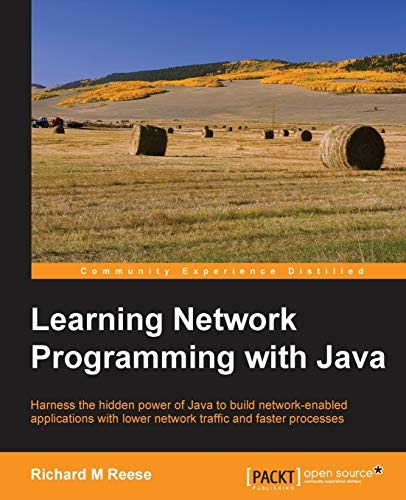
Learning network programming with Java
Learn to deliver superior server-to-server communication through the networking channels / Gain expertise of the networking features of your own applications to support various network architectures such as client/server and peer-to-peer Explore the issues that impact scalability, affect security, and allow applications to work in a heterogeneous environment

Biosurveillance and biosecurity ; International Workshop, BioSecure 2008, Raleigh, NC, USA, December 2, 2008. Proceedings
This book constitutes the refereed proceedings of the International Workshop on Biosurveillance and Biosecurity, BioSecure 2008, held in Raleigh, NC, USA, in December 2008.
Beginning ASP.NET 2.0 Databases : From novice to professional
Beginning ASP.NET 2.0 Databases: From Novice to Professional is a comprehensive introduction to connecting a website to many different data sourcesnot just databases. You'll learn how to build a relational database, use SQL to communicate with it, and leverage both in your web applications. You'll also learn about the new features of ADO.NET and ASP.NET in .NET 2.0. The authors cover mission-critical issues, such as design, transactions, error handling, optimization, and scalability. They examine SQL Server, Jet, and MySQL databases, and highlight the differences among them.
Applications of Membrane Computing
Membrane computing is a branch of natural computing which investigates computing models abstracted from the structure and functioning of living cells and from their interactions in tissues or higher-order biological structures. The models considered, called membrane systems (P systems), are parallel, distributed computing models, processing multisets of symbols in cell-like compartmental architectures. In many applications membrane systems have considerable advantages – among these are their inherently discrete nature, parallelism, transparency, scalability and nondeterminism.
Analyzing computer system performance with Perl::PDQ
Analyzing computer system performance is often regarded by most system administrators, IT professionals and software engineers as a black art that is too time consuming to learn and apply. Finally, this book by acclaimed performance analyst Dr. Neil Gunther makes this subject understandable and applicable through programmatic examples. The means to this end is the open-source performance analyzer Pretty Damn Quick (PDQ) written in Perl As the epigraph in this book points out, Common sense is the pitfall of performance analysis. The performance analysis framework that replaces common sense is revealed in the first few chapters of Part I. The important queueing concepts embedded in PDQ are explained in a very simple style that does not require any knowledge of formal probability theory. Part II begins with a full specification of how to set up and use PDQ replete with examples written in Perl. Subsequent chapters present applications of PDQ to the performance analysis of multicomputer architectures, benchmark results, client/server scalability, and Web-based applications.
A Theory of Distributed Objects : Asynchrony - Mobility - Groups - Components
Distributed and communicating objects are becoming ubiquitous. In global, Grid and Peer-to-Peer computing environments, extensive use is made of objects interacting through method calls. So far, no general formalism has been proposed for the foundation of such systems. Caromel and Henrio are the first to define a calculus for distributed objects interacting using asynchronous method calls with generalized futures, i.e., wait-by-necessity -- a must in large-scale systems, providing both high structuring and low coupling, and thus scalability. The authors provide very generic results on expressiveness and determinism, and the potential of their approach is further demonstrated by its capacity to cope with advanced issues such as mobility, groups, and components.
