



Page 1
Page 1

Object-Oriented Technology ; ECOOP 2001 Workshops, Panel, and Posters, Budapest, Hungary, June 18-22, 2001. Proceedings
For the ?fth time in its history, in cooperation with Springer-Verlag, the European C- ference on Object-Oriented Programming (ECOOP) conference series is glad to offer the object-oriented research community the ECOOP 2001 Workshop Reader, a c- pendium of workshop reports, panel transcripts, and poster abstracts pertaining to the ECOOP 2001 conference, held in Budapest from 18 to 22 June, 2001. ECOOP 2001 hosted 19 high-quality workshops covering a large spectrum of - search topics. The workshops attracted 460 participants on the ?rst two days of the conference. Originally 22 workshops were chosen from 26 proposals by a workshop selection committee, following a peer review process. Due to the overlaps in the areas of interest and the suggestions made by the committee six of the groups decided to merge their topicsintothreeworkshops.

Object-Oriented Software Engineering Using UML Patterns and Java
Shows students how to use both the principles of software engineering and the practices of various object-oriented tools, processes, and products. Using a step-by-step case study to illustrate the concepts and topics in each chapter, Bruegge and Dutoit emphasize learning object-oriented software engineer through practical experience: students can apply the techniques learned in class by implementing a real-world software project. The third edition addresses new trends, in particular agile project management (Chapter 14 Project Management) and agile methodologies (Chapter 16 Methodologies).

Object-Oriented Programming and Java
Object-Oriented Programming and Java presents two important topics in contemporary software development: object-oriented programming and Java. This book takes a different teaching approach from most available literature, it begins with the description of real-world object interaction scenarios and explains how they can be translated, represented and executed using object-oriented programming paradigm.

Object-Oriented Data Structures Using Java ; 4th ed.
an essential resource for students learning data structures using the Java programming language. It presents both the traditional and modern data structure topics with an emphasis on problem-solving and object-oriented software design. Beginning early and continuing throughout the text, it introduces and expands upon the use of many Java features such as classes, objects, generics, polymorphism, packages, interfaces, library classes, inheritance, exceptions, and threads.

Numerical Methods Using Java : For Data Science, Analysis, and Engineering
Covers a wide range of topics, including chapters on linear algebra, root finding, curve fitting, differentiation and integration, solving differential equations, random numbers and simulation, a whole suite of unconstrained and constrained optimization algorithms, statistics, regression and time series analysis. The mathematical concepts behind the algorithms are clearly explained, with plenty of code examples and illustrations to help even beginners get started. You will: Program in Java using a high-performance numerical library / Learn the mathematics for a wide range of numerical computing algorithms / Convert ideas and equations into code / Put together algorithms/ and classes to build your own engineering solution / Build solvers for industrial optimization problems / Do data analysis using basic and advanced statistics

Next generation information technologies and systems ; 6th International Conference, NGITS 2006, Kebbutz Sehfayim, Israel, July 4-6, 2006, Proceedings
The selected papers may be classified roughly in ten broad areas: ? Information systems development ? Distributed systems ? Semi-structured data ? Data mining and agent-oriented computing ? User-oriented design ? Frameworks, models and taxonomies ? Simulation and incremental computing ? Information integration ? Security and privacy ? Next-generation applications This event is the culmination of efforts by many talented and dedicated individuals.

Multimedia Introduction to Programming Using Java
Although vital to modern software development, Java and object-oriented programming can pose significant challenges to newcomers. This text, unique in both scope and approach and accompanied by interactive content that you may find on extras.springer.com, addresses that learning curve by providing a careful, classroom-tested presentation of Java -- from the fundamentals of variables, types, and expressions to procedural concepts like loops and sophisticated object-oriented ideas. Additional key features of this work Introduces objects and classes early in the exposition, rendering object-oriented programming intuitive and natural. Develops programs, rather than simply showcasing them. Supports all concepts through complementary lectures on the zip-file featured on extras.springer.com. Contains numerous self-help exercises that encourage readers to practice programming. With its comprehensive appendices and bibliography, systematic approach, and helpful interactive programs on extras.springer.com, this exciting work provides the key tools they needed for successful object-oriented programming. It is ideal for use at the undergraduate and graduate beginning level, whether in the classroom or for distance learning; furthermore, the text will also be a valuable self-study resource or reference volume in any programmer’s library.
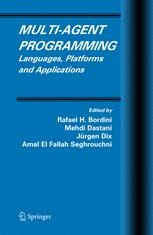
Multi-Agent Programming : Languages, Platforms and Applications
Part I describes four approaches that are based on computational logic or process algebra--Jason, 3APL, IMPACT, and CLAIM/SyMPA. These programming languages have formal semantics and use heavy machinery based on formal methods, but also provide working platforms for the development of multi-agent systems. Part II presents agent languages and platforms that extend or are based on Java--JADE, Jadex, and JACKTM. Although these have no formal semantics, the languages are well documented and the platforms provide a variety of tools that have been extensively used in practice. Part III provides two significant industry specific applications--The DEFACTO System for coordinating human-agent teams for the future of disaster response, and the ARTIMIS rational dialogue agent technology. The book also features seven appendices, summarising each of the agent programming languages, hence facilitating comparison of the approaches. In particular, Appendix A describes the criteria used for comparing the agent languages and platforms.

MooTools Essentials : The Official MooTools Reference for JavaScript™ and Ajax Development
Mootools is a light, modular JavaScript framework that makes adding Ajax, animations, and interactive elements to your site a breeze. But it's more than fancy effects and shortcuts; Mootools enhances the JavaScript language and makes writing clean, object–oriented code almost pleasant. Unlocking the power of Mootools, and therefore JavaScript, isn't that hard, but knowing where to start can be.

Modular Programming Languages ; 7th Joint Modular Languages Conference, JMLC 2006, Oxford, UK, September 13-15, 2006, Proceedings
On behalf of the Steering Committee we are pleased to present the proceedings of the 2006 Joint Modular Languages Conference (JMLC), organized by Oxford Brookes University, Oxford, UK and held at Jesus College, Oxford. The mission of JMLC is to explore the concepts of well-structured programming languages and software and those of teaching good design and programming style. JMLC 2006 was the seventh in a series of successful conferences with themes including the construction of large and distributed software systems, and software en- neering aspects in new and dynamic application areas.
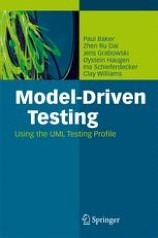
Model-Driven Testing : Using the UML Testing Profile
Written by the original members of this standardization group, this book shows you how to use UML to test complex software systems. The authors introduce UTP step-by-step, using a case study that illustrates how UTP can be used for test modeling and test specification. You’ll learn how UTP concepts can be used for functional and non-functional testing, with example applications and best practices for user-interfaces and service oriented architectures. In addition, the authors demonstrate how to apply UTP using frameworks like TTCN-3 and the JUnit test framework for Java.

Model Driven Engineering Languages and Systems ; Vol. 4199 ; 9th International Conference, MoDELS 2006, Genova, Italy, October 1-6, 2006, Proceedings
This book constitutes the refereed proceedings of the 9th International Conference on Model Driven Engineering Languages and Systems (formerly the UML series of conferences), MoDELS 2006, held in Genova, Italy, in October 2006. The 51 revised full papers and 2 invited papers presented were carefully reviewed and selected from 178 initial submissions. The papers are organized in topical sections on evaluating UML, MDA in software development, concrete syntax, applying UML to interaction and coordination, aspects, model integration, formal semantics of UML, security, model transformation tools and implementation, analyzing dynamic models, specifying transformations, MOF, bridging models, risk, trust and dependability, tool environments, OCL, roundtrip engineering, real time and embedded systems, as well as workshops, tutorials and panels.

Model Checking Software ; Vol. 3639 : 12th International SPIN Workshop, San Francisco, CA, USA, August 22-24, 2005, Proceedings
Constitutes the refereed proceedings of the 12th International SPIN workshop on Model Checking Software, SPIN 2005, held in San Francisco, USA in August 2005. The papers are organized in topical sections on state representation and abstraction, dealing with concurrency, dealing with complex data, checking temporal properties, and more.
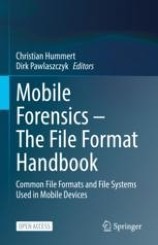
Mobile forensics : The file format handbook : Common file formats and file systems used in mobile devices
This book summarizes knowledge about several file systems and file formats commonly used in mobile devices. In addition to the fundamental description of the formats, there are hints about the forensic value of possible artefacts, along with an outline of tools that can decode the relevant data.

Mobile 3D Graphics
Historically, not enough was understood about how to deliver a high quality playing experience on handheld, small screen, small memory devices, plus there has been considerable confusion about the hardware’s abilities and restrictions. By addressing these issues this book provides: • A comprehensive explanation of 3D mobile graphics programming • Includes an extensive range of code samples in both C and Java • Combines 3D and 2D mobile graphics methods • Covers recent advances in mobile computer graphics techniques and applications. The book teaches fundamental 3D mobile graphics programming with standard APIs, and covers the basic and advanced application programme interfaces behind the major wireless and mobile devices supporting 3D graphics applications. Advanced undergraduates and postgraduates, as well as mobile application and games developers, will find this an excellent reference source.

Middleware 2007 ; ACM/IFIP/USENIX 8th International Middleware Conference, Newport Beach, CA, USA, November 26-30, 2007, Proceedings
This book constitutes the refereed proceedings of the ACM/IFIP/USENIX 8th International Middleware Conference 2007, held in Newport Beach, CA, USA, in November 2007.

Middleware 2006 ; ACM/IFIP/USENIX 7th International Middleware Conference, Melbourne, Australia, November 27 - December 1, 2006, Proceedings
This book constitutes the refereed proceedings of the ACM/IFIP/USENIX 7th International Middleware Conference 2006, held in Melbourne, Australia, in November/December 2006. The 21 revised full papers presented were carefully reviewed and selected from 122 submissions. The papers are organized in topical sections on performance, composition, management, publish/subscribe technology, databases, mobile and ubiquitous computing, security, and data mining techniques.
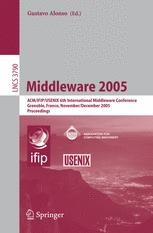
Middleware 2005 ; ACM/IFIP/USENIX 6th International Middleware Conference, Grenoble, France, November 28 - December 2, 2005, Proceedings
Today, middleware is a key part of almost any application. Gone are the days when middleware was only used in the IT industry for high-end applications. Rather than middleware being part of the IT world, today IT applications r- resent only one aspect of middleware. With the increase in distribution, network capacity, and widespread deployment of computing devices (in homes, auto- biles, mobile phones, etc.), middleware has surpassed the importance of operating systems as the platform where application development and deployment take place. This makes middleware very exciting as a research area but also a very challenging one since it encompasses many different concepts and techniques from a wide varietyof ?elds: networking, distributed systems, softwareengine- ing, performance analysis, computer architecture, and data management. Middleware 2005 in Grenoble, France, was the 6th edition of an increasingly successfulconference.The scope of the conference has been slowly widening with every edition to accommodate new ?elds and applications.

Introduction to software design with Java
Provides an in-depth introduction to software design, with a focus on object-oriented design, and using the Java programming language. Its goal is to help readers learn software design by discovering the experience of the design process. To this end, the text follows a continuous narrative that introduces each element of design know-how in context, and explores alternative solutions in that context. This narrative is complemented by hundreds of code fragments and design diagrams.

Introduction to Reliable Distributed Programming
Guerraoui and Rodrigues present an introductory description of fundamental reliable distributed programming abstractions as well as algorithms to implement these abstractions. The authors follow an incremental approach by first introducing basic abstractions in simple distributed environments, before moving to more sophisticated abstractions and more challenging environments. Each core chapter is devoted to one specific class of abstractions, covering reliable delivery, shared memory, consensus and various forms of agreement. This textbook comes with a companion set of running examples implemented in Java. These can be used by students to get a better understanding of how reliable distributed programming abstractions can be implemented and used in practice. Combined, the chapters deliver a full course on reliable distributed programming. The book can also be used as a complete reference on the basic elements required to build reliable distributed applications.
