



Page 9
Page 9

Computational linguistics and intelligent text processing ; 8th International Conference, CICLing 2007, Mexico City, Mexico, February 18-24, 2007, Proceedings
This book cover all current issues in computational linguistics research and present intelligent text processing applications. The papers are organized in topical sections on: lexical resources, corpus-based knowledge acquisition, morphology and part-of-speech tagging, named entity recognition, temporal expression treatment, word segmentation, sentence splitting, chunking, grammar formalisms and syntax, word sense disambiguation and discrimination and semantics.

Computational linguistics and intelligent text processing ; Vol. 3406 ; 6th International Conference, CICLing 2005, Mexico City, Mexico, February 13-19, 2005, Proceedings
This book constitutes the refereed proceedings of the 6th International Conference on Computational Linguistics and Intelligent Text Processing, CICLing 2005, held in Mexico City, Mexico in February 2005. An approach that involves natural language analysis techniques for the treatment of software system functional requirements is described in this book. This approach is used as the basis for a process developed to generate sequence diagrams automatically from the textual specification of use cases. This facility has been integrated in the Requirements Engineering Phase of OO-Method, an automatic production environment of software. For this purpose, a translator that is based on natural language parser is used. The translator provides grammatical information to each use case sentence and it identifies the corresponding interaction. The automatic transformation is conceived and specified following an orientation that is based on models and patterns. The results of the validation of the transformation patterns are presented.

Computational intelligence, cyber security and computational models. models and techniques for intelligent systems and automation ; 4th International Conference, ICC3 2019, Coimbatore, India, December 19–21, 2019, Revised Selected Papers
This book constitutes the proceedings of the 4th International Conference on Computational Intelligence, Cyber Security, and Computational Models, ICC3 2019, which was held in Coimbatore, India, in December 2019. The 9 papers presented in this volume were carefully reviewed and selected from 38 submissions. They were organized in topical sections named: computational intelligence; cyber security; and computational models.

Computational intelligence and security ; Vol.3802 ; International Conference, CIS 2005, Xi'an, China, December 15-19, 2005, Proceedings, Part II
The two volume set LNAI 3801 and LNAI 3802 constitute the refereed proceedings of the annual International Conference on Computational Intelligence and Security, CIS 2005, held in Xi'an, China, in December 2005. The 338 revised papers presented - 254 regular and 84 extended papers - were carefully reviewed and selected from over 1800 submissions. The second volume is subdivided in topical sections on cryptography and coding, cryptographic protocols, intrusion detection, security models and architecture, security management, watermarking and information hiding, web and network applications, image and signal processing, and applications.

Computational intelligence and security ; Vol. 3801 ; International Conference, CIS 2005, Xi'an, China, December 15-19, 2005, Proceedings, Part I
The two volume set LNAI 3801 and LNAI 3802 constitute the refereed proceedings of the annual International Conference on Computational Intelligence and Security, CIS 2005, held in Xi'an, China, in December 2005. The 338 revised papers presented - 254 regular and 84 extended papers - were carefully reviewed and selected from over 1800 submissions. The first volume is organized in topical sections on learning and fuzzy systems, evolutionary computation, intelligent agents and systems, intelligent information retrieval, support vector machines, swarm intelligence, data mining, pattern recognition, and applications.

Computational intelligence and bioinformatics ; International conference on intelligent computing, ICIC 2006, Kunming, China, August 16-19, 2006, Proceedings, Part III
The International Conference on Intelligent Computing (ICIC) was formed to provide an annual forum dedicated to the emerging and challenging topics in artificial intelligence, machine learning, bioinformatics, and computational biology, etc. It aims to bring together researchers and practitioners from both academia and industry to share ideas, problems and solutions related to the multifaceted aspects of intelligent computing.the theme for this conference was “Emerging Intelligent Computing Technology and Applications”. Papers related to this theme were especially solicited, including theories, methodologies, and applications in science and technology.

Computational intelligence ; Vol. 4114 ; International conference on intelligent computing, ICIC 2006, Kunming, China, August 16-19, 2006, Proceedings, Part II
The International Conference on Intelligent Computing (ICIC) was formed to provide an annual forum dedicated to the emerging and challenging topics in artificial intelligence, machine learning, bioinformatics, and computational biology, etc. It aims to bring together researchers and practitioners from both academia and industry to share ideas, problems and solutions related to the multifaceted aspects of intelligent computing.

Computational Collective Intelligence ; 12th International Conference, ICCCI 2020, Da Nang, Vietnam, November 30 – December 3, 2020, Proceedings
This volume constitutes the refereed proceedings of the 12th International Conference on Computational Collective Intelligence, ICCCI 2020, held in Da Nang, Vietnam, in November 2020.* The 70 full papers presented were carefully reviewed and selected from 314 submissions. The papers are grouped in topical sections on: knowledge engineering and semantic web; social networks and recommender systems; collective decision-making; applications of collective intelligence; data mining methods and applications; machine learning methods; deep learning and applications for industry 4.0; computer vision techniques; biosensors and biometric techniques; innovations in intelligent systems; natural language processing; low resource languages processing; computational collective intelligence and natural language processing; computational intelligence for multimedia understanding; and intelligent processing of multimedia in web systems.

Cognitive Systems ; Joint Chinese-German Workshop, Shanghai, China, March 7-11, 2005, Revised Selected Papers
This book organized in topical sections on multimodal human-computer interfaces, neuropsychology and neurocomputing, Chinese-German natural language processing and psycholinguistics, as well as information processing and retrieval from the semantic Web for intelligent applications.

Cognitive engineering : A distributed approach to machine intelligence
Cognitive Engineering: A Distributed Approach to Machine Intelligence explores the design issues of intelligent engineering systems. Beginning with the foundations of psychological modeling of the human mind, the main emphasis is given to parallel and distributed realization of intelligent models for application in reasoning, learning, planning and multi-agent co-ordination problems. The last two chapters provide case studies on human-mood detection and control, and behavioral co-operation of mobile robots. This is the first comprehensive text of its kind, bridging the gap between Cognitive Science and Cognitive Systems Engineering. Each chapter includes plenty of numerical examples and exercises with sufficient hints, so that the reader can solve the exercises on their own. Computer simulations are also included in most chapters to give a clear idea about the application of the algorithms undertaken in the book. In addition, mathematical analysis on convergence and stability of the neuro-fuzzy models will enable the reader to pursue their research career in cognitive engineering.

Cloud Computing Enabled Big-Data Analytics in Wireless Ad-hoc Networks
Discusses intelligent computing through the Internet of Things (IoT) and Big-Data in vehicular environments in a single volume. It covers important topics, such as topology-based routing protocols, heterogeneous wireless networks, security risks, software-defined vehicular ad-hoc networks, vehicular delay tolerant networks, and energy harvesting for WSNs using rectenna.

Management of Multimedia Networks and Services ; 8th International Conference on Management of Multimedia Networks and Services, MMNS 2005, Barcelona, Spain, October 24-26, 2005, Proceedings
We are delighted to present the proceedings of the 8th IFIP/IEEE International Conference on Management of Multimedia Networks and Services (MMNS 2005). The MMNS 2005 conference was held in Barcelona, Spain on October 24–26, 2005. As in previous years, the conference brought together an international audience of researchers and scientists from industry and academia who are researching and developing state-of-the-art management systems, while creating a public venue for results dissemination and intellectual collaboration. This year marked a challenging chapter in the advancement of management systems for the wider management research community, with the growing complexities of the “so-called” multimedia over Internet, the proliferation of alternative wireless networks (WLL, WiFi and WiMAX) and 3G mobile services, intelligent and high-speed networks scalable multimedia services and the convergence of computing and communications for data, voice and video delivery. Contributions from the research community met this challenge with 65 paper submissions; 33 high-quality papers were subsequently selected to form the MMNS 2005 technical program. The diverse topics in this year’s program included wireless networking technologies, wireless network applications, quality of services, multimedia, Web applications, overlay network management, and bandwidth management.
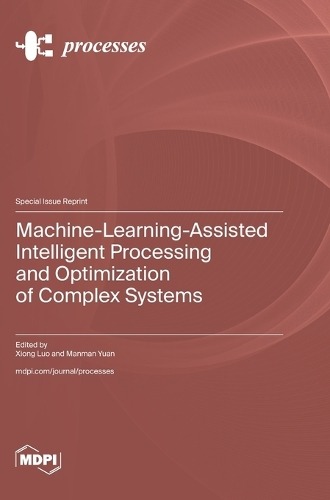
Machine-learning-assisted intelligent processing and optimization of complex systems
Focuses on the most recent developments in intelligent optimization methods and their applications in various test cases. The reprint covers various topics, including distributed multiagent modeling, metaheuristic algorithms, multisource data fusion, mobile computing and mobile sensing, machine learning-based intelligent processing for modeling complex manufacturing systems, and data-driven intelligent modeling

Machine Learning for Multimodal Interaction ; Vol.3361 : 1st International Workshop, MLMI 2004, Martigny, Switzerland, June 21-23, 2004, Revised Selected Papers
his book contains a selection of refereed papers presented at the 1st Wo- shop on Machine Learning for Multimodal Interaction (MLMI 2004), held at the “Centre du Parc,” Martigny, Switzerland, during June 21–23, 2004. The workshop was organized and sponsored jointly by three European projects, – AMI, Augmented Multiparty Interaction, http://www.amiproject.org – PASCAL, Pattern Analysis, Statistical Modeling and Computational Learning, http://www.pascal-network.org – M4, Multi-modal Meeting Manager, http://www.m4project.org as well as the Swiss National Centre of Competence in Research (NCCR): – IM2: Interactive Multimodal Information Management, http://www.im2.ch MLMI 2004 was thus sponsored by the European Commission and the Swiss National Science Foundation.

Machine Learning for Multimodal Interaction ; 4th International Workshop, MLMI 2007, Brno, Czech Republic, June 28-30, 2007, Revised Selected Papers
This book contains a selection of revised papers from the 4th Workshop on Machine Learning for Multimodal Interaction (MLMI 2007), which took place in Brno, Czech Republic, during June 28 30, 2007. As in the previous editions of the MLMI series, the 26 chapters of this book cover a large area of topics, from multimodal processing and human computer interaction to video, audio, speech and language processing. The application of machine learning techniques to problems arising in these felds and the design and analysis of software

Machine Learning for Cyber Physical Systems : Selected papers from the International Conference ML4CPS 2018
Presents new approaches to Machine Learning for Cyber Physical Systems, experiences and visions. Cyber Physical Systems are characterized by their ability to adapt and to learn: They analyze their environment and, based on observations, they learn patterns, correlations and predictive models. Typical applications are condition monitoring, predictive maintenance, image processing and diagnosis. Machine Learning is the key technology for these developments.
Machine Learning and Robot Perception
Presents some of the most recent research results in the area of machine learning and robot perception. The chapters represent new ways of solving real-world problems. This book will appeal to researchers, senior undergraduate/postgraduate students, application engineers and scientists.

Machine Ethics : From Machine Morals to the Machinery of Morality
Offers the first systematic guide to machine ethics, bridging between computer science, social sciences and philosophy. Based on a dialogue between an AI scientist and a novelist philosopher, the book discusses important findings on which moral values machines can be taught and how. In turn, it investigates what kind of artificial intelligence (AI) people do actually want.

Location- and Context-Awareness ; Vol. 3987 ; 2nd International Workshop, LoCA 2006, Dublin, Ireland, May 10-11, 2006, Proceedings
Contain the papers presented at the 2 International Workshop on Location- and Context-Awareness in May of 2006. As computing moves increasingly into the everyday world, the importance of location and context knowledge grows. The range of contexts encountered while sitting at a desk working on a computer is very limited compared to the large variety of situations experienced away from the desktop. For computing to be relevant and useful in these situations, the computers must have knowledge of the user’s activity, resources, state of mind, and goals, i.e., the user’s context, of which location is an important indicator. This workshop was intended to present research aimed at sensing, inferring, and using location and context data in ways that help the user.

Location- and context-awareness ; 3rd International Symposium, LoCA 2007, Oberpfaffenhofen, Germany, September 20-21, 2007, Proceedings
These proceedings contain the papers presented at the 3rd International S- posium on Location- and Context-Awareness in September of 2007. Computing has become mobile, wireless, and portable. The rangeof contexts encountered while sitting at a desk working on a computer is very limited c- pared to the large variety of situations experienced away from the desktop.
