



Page 7
Page 7

Computer vision - ECCV 2008 ; 10th European conference on computer vision, Marseille, France, October 12-18, 2008, Proceedings, Part IV
The four-volume set comprising LNCS volumes 5302/5303/5304/5305 constitutes the refereed proceedings of the 10th European Conference on Computer Vision, ECCV 2008, held in Marseille, France, in October 2008.

Computer vision - ECCV 2008 ; 10th European conference on computer vision, Marseille, France, October 12-18, 2008, Proceedings, Part III
The four-volume set comprising LNCS volumes 5302/5303/5304/5305 constitutes the refereed proceedings of the 10th European Conference on Computer Vision, ECCV 2008, held in Marseille, France, in October 2008.

Computer vision - ECCV 2008 ; 10th European conference on computer vision, Marseille, France, October 12-18, 2008, Proceedings, Part II
The four-volume set comprising LNCS volumes 5302/5303/5304/5305 constitutes the refereed proceedings of the 10th European Conference on Computer Vision, ECCV 2008, held in Marseille, France, in October 2008.

Computer Vision - ECCV 2008 ; 10th European conference on computer vision, Marseille, France, October 12-18, 2008, Proceedings, Part I
The four-volume set comprising LNCS volumes 5302/5303/5304/5305 constitutes the refereed proceedings of the 10th European Conference on Computer Vision, ECCV 2008, held in Marseille, France, in October 2008.

Computer Music Modeling and Retrieval ; Vol. 3310
This volume contains the final proceedings for the 2004 Computer Music Model-ing and Retrieval Symposium (CMMR 2004). CMMR is an annualevent focusing on important aspects of computer music. CMMR 2004 is the sec-ond event in this series. The use of computers in music is well established. CMMR 2004 provided aunique opportunity to meet and interact with peers concerned with the cross-influence of the technological and creative in computer music. The field of com-puter music is interdisciplinary by nature and closely related to a number of com-puter science and engineering areas such as information retrieval, programming,human computer interaction, digital libraries, hypermedia, artificial intelligence,acoustics, signal processing, etc. The event gathered many interesting people(researchers, educators, composers, performers, and others). There were manyhigh-quality keynote and paper presentations, that fostered inspiring discussions.

Computational Life Sciences ; Vol. 3695 ; 1st International Symposium, CompLife 2005, Konstanz, Germany, September 25-27, 2005, Proceedings
This book constitutes the refereed proceedings of the First International Symposium on Computational Life Sciences, CompLife 2005, held in Konstanz, Germany in September 2005. The integration of knowledge in the life sciences is continuing apace with ev- increasingimportancebeing placedoncomputer-basedmethodsofdata capture, analysis, and knowledge representation. Today, our many di?erent sciences are providing us with a sea of information: it is the handling of this in?ux that is becoming a key discovery and regulatory question. The solutions to these problems will result in advancements to all of the involved sciences and will be highly in?uential both in the selection of the areas scientists seek to investigate and also on their success. For this to happen, it is crucial to establish an open and lively exchange between computer scientists, biologists, and chemists. To encourage precisely this type of exchange, crossing the borders of the sciences, we organized the 1st Symposium on Computational Life Science in Konstanz, Germany(September 25 27,2005).

Computational intelligence and bioinformatics ; International conference on intelligent computing, ICIC 2006, Kunming, China, August 16-19, 2006, Proceedings, Part III
The International Conference on Intelligent Computing (ICIC) was formed to provide an annual forum dedicated to the emerging and challenging topics in artificial intelligence, machine learning, bioinformatics, and computational biology, etc. It aims to bring together researchers and practitioners from both academia and industry to share ideas, problems and solutions related to the multifaceted aspects of intelligent computing.the theme for this conference was “Emerging Intelligent Computing Technology and Applications”. Papers related to this theme were especially solicited, including theories, methodologies, and applications in science and technology.

Computational intelligence : Research Frontiers : IEEE World Congress on Computational Intelligence, WCCI 2008, Hong Kong, China, June 1-6, 2008, Plenary/Invited Lectures
The book presents the expertise and experiences of leading researchers spanning a diverse spectrum of computational intelligence in the areas of neurocomputing, fuzzy systems, evolutionary computation, and adjacent areas.

Computational Forensic ; 2nd International Workshop, IWCF 2008, Washington, DC, USA, August 7-8, 2008. Proceedings
This book constitutes the refereed proceedings of the Second International Workshop, IWCF 2008, held in Washington, DC, USA, August 2008. The papers are organized in topical sections on trends and challenges; scanner, printer, and prints; human identification; shoeprints; linguistics;decision making and search; speech analysis; signatures and handwriting.

Computational Discovery of Scientific Knowledge : Introduction, Techniques, and Applications in Environmental and Life Sciences
Advances in technology have enabled the collection of data from scientific observations, simulations, and experiments at an ever-increasing pace. For the scientist and engineer to benefit from these enhanced data collecting capabilities, it is becoming clear that semi-automated data analysis techniques must be applied to find the useful information in the data. Computational scientific discovery methods can be used to this end: they focus on applying computational methods to automate scientific activities, such as finding laws from observational data. In contrast to mining scientific data, which focuses on building highly predictive models, computational scientific discovery puts a strong emphasis on discovering knowledge represented in formalisms used by scientists and engineers, such as numeric equations and reaction pathways. This state-of-the-art survey provides an introduction to computational approaches to the discovery of scientific knowledge and gives an overview of recent advances in this area, including techniques and applications in environmental and life sciences.

Combinatorial pattern matching ; 19th Annual Symposium, CPM 2008, Pisa, Italy, June 18-20, 2008 Proceedings
This book constitutes the refereed proceedings of the 19th Annual Symposium on Combinatorial Pattern Matching, CPM 2008, held in Pisa, Italy, in June 2008.
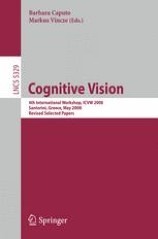
Cognitive Vision ; 4th International Workshop, ICVW 2008, Santorini, Greece, May 12, 2008, Revised Selected Papers
This volume constitutes the post-conference proceedings of the 4th International Cognitive Vision Workshop, ICVW 2008, held in Santorini, Greece, on May 12, 2008.

Machine Learning: ECML 2007 ; 18th European Conference on Machine Learning, Warsaw, Poland, September 17-21, 2007, Proceedings
The two premier annual European conferences in the areas of machine learning and data mining have been collocated ever since the ?rst joint conference in Freiburg, 2001. The European Conference on Machine Learning (ECML) traces its origins to 1986, when the ?rst European Working Session on Learning was held in Orsay, France. The European Conference on Principles and Practice of KnowledgeDiscoveryinDatabases(PKDD) was?rstheldin1997inTrondheim, Norway.

Machine Learning: ECML 2006 ; 17th European Conference on Machine Learning, Berlin, Germany, September 18-22, 2006, Proceedings
This book constitutes the refereed proceedings of the 17th European Conference on Machine Learning, ECML 2006, held in Berlin, Germany in September 2006, jointly with PKDD 2006. The 46 revised full papers and 36 revised short papers presented together with abstracts of 5 invited talks were carefully reviewed and selected from 564 papers submitted to both, ECML and PKDD. The papers present a wealth of new results in the area and address all current issues in machine learning.

Machine Learning Techniques for Multimedia : Case Studies on Organization and Retrieval
This book provides a comprehensive coverage of the most important machine learning techniques used and their application in this domain. Arising from the EU MUSCLE network, a program that drew together multidisciplinary teams with expertise in machine learning, pattern recognition, artificial intelligence, and image, video, text and crossmedia processing, the book first introduces the machine learning principles and techniques that are applied in multimedia data processing and analysis. The second part focuses on multimedia data processing applications, with chapters examining specific machine learning issues in domains .

Machine Learning for Cyber Physical Systems : Selected papers from the International Conference ML4CPS 2018
Presents new approaches to Machine Learning for Cyber Physical Systems, experiences and visions. Cyber Physical Systems are characterized by their ability to adapt and to learn: They analyze their environment and, based on observations, they learn patterns, correlations and predictive models. Typical applications are condition monitoring, predictive maintenance, image processing and diagnosis. Machine Learning is the key technology for these developments.

Machine learning approach for cloud data analytics in IoT
Covers the multidimensional perspective of machine learning through the perspective of cloud computing and Internet of Things ranging from fundamentals to advanced applications. Elucidates some of the best practices and their respective outcomes in cloud and fog computing environments. It focuses on all the various research issues related to big data storage and analysis, large-scale data processing, knowledge discovery and knowledge management, computational intelligence, data security and privacy, data representation and visualization, and data analytics. The featured technologies presented in the book optimizes various industry processes using business intelligence in engineering and technology. Light is also shed on cloud-based embedded software development practices to integrate complex machines so as to increase productivity and reduce operational costs. The various practices of data science and analytics which are used in all sectors to understand big data and analyze massive data patterns are also detailed in the book.

Machine Learning and Knowledge Discovery in Databases ; European Conference, ECML PKDD 2008, Antwerp, Belgium, September 15-19, 2008, Proceedings, Part II
Constitutes the refereed proceedings of the joint conference on Machine Learning and Knowledge Discovery in Databases: ECML PKDD 2008, held in Antwerp, Belgium, in September 2008.The 100 papers presented in two volumes, together with 5 invited talks, were carefully reviewed and selected from 521 submissions. In addition to the regular papers the volume contains 14 abstracts of papers appearing in full version in the Machine Learning Journal and the Knowledge Discovery and Databases Journal of Springer.

Machine Learning and Knowledge Discovery in Databases ; European Conference, ECML PKDD 2008, Antwerp, Belgium, September 15-19, 2008, Proceedings, Part I
Constitutes the refereed proceedings of the joint conference on Machine Learning and Knowledge Discovery in Databases: ECML PKDD 2008, held in Antwerp, Belgium, in September 2008.The 100 papers presented in two volumes, together with 5 invited talks, were carefully reviewed and selected from 521 submissions. In addition to the regular papers the volume contains 14 abstracts of papers appearing in full version in the Machine Learning Journal and the Knowledge Discovery and Databases Journal of Springer.
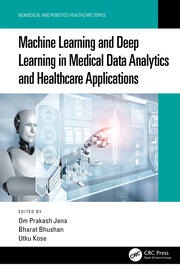
Machine learning and deep learning in medical data analytics and healthcare applications
Introduces and explores a variety of schemes designed to empower, enhance, and represent multi-institutional and multi-disciplinary machine learning (ML) and deep learning (DL) research in healthcare paradigms. Serving as a unique compendium of existing and emerging ML/DL paradigms for the healthcare sector, this book demonstrates the depth, breadth, complexity, and diversity of this multi-disciplinary area. It provides a comprehensive overview of ML/DL algorithms and explores the related use cases in enterprises such as computer-aided medical diagnostics, drug discovery and development, medical imaging, automation, robotic surgery, electronic smart records creation, outbreak prediction, medical image analysis, and radiation treatments.
