



Page 61
Page 61
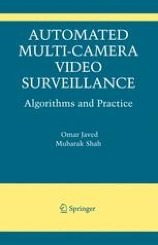
Automated multi-camera surveillance : Algorithms and practice
This book discusses and proposes techniques for development of an automated multi-camera surveillance system for outdoor environments, while identifying the important issues that a system needs to cope with in realistic surveillance scenarios. The goal of the research presented in this book is to build systems that can deal effectively with these realistic surveillance needs.

Automated deduction in Geometry ; 6th International Workshop, ADG 2006, Pontevedra, Spain, August 31-September 2, 2006, Revised Papers
The book show the lively variety of topics and methods and the current applicability of automated deduction in geometry to different branches of mathematics and to other sciences and technologies.

Automated deduction in Geometry ; 5th International Workshop, ADG 2004, Gainesville, FL, USA, September 16-18, 2004, Revised Papers
This book constitutes the thoroughly refereed post-proceedings of the 6th International Workshop on Automated Deduction in Geometry, ADG 2006, held at Pontevedra, Spain, in August/September 2006 as a satellite event of the International Congress of Mathematicians, ICM 2006. The 13 revised full papers presented were carefully selected from the submissions made due to a call for papers - within the scope of ADG - shortly after the meeting. The papers show the lively variety of topics and methods and the current applicability of automated deduction in geometry to different branches of mathematics and to other sciences and technologies.
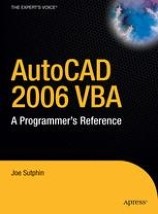
AutoCAD 2006 VBA : A programmer's reference
This book will help you take full advantage of the Visual Basic for Applications programming environment within AutoCAD 2006. Whether you want to automate routine tasks, or create sophisticated applications or design that can be generated programmatically, this book will empower you to make AutoCAD work for you. This book is also suitable if you're a power user who wants to make use of the advanced features of AutoCAD 2006 VBA, and you need a fast reference for the full AutoCAD object model. You'll learn to run Autodesk design tasks in the embedded VBA environment. This book is loaded with source code examples, and gives you no matter your skill level the necessary tools to accomplish your AutoCAD 2006 automation tasks.

Australias arc of Instability : The political and cultural dynamics of regional security
The idea for this book emerged from a conversation between Vivian Forbes and Charles Eaton following two seminars held in the Department of Geography at the University of Western Australia given by Trevor So?eld and Christopher Grif?n more than ?ve years ago. One seminar involved papers from Charles Eaton and Christopher Grif?n on the recent Speight coup in Fiji; the other, given by Trevor So?eld, was on the Solomon Islands. The seminars were attended by, among others, Dennis Rumley, who on getting involved in the conversation, suggested the idea of a book and then followed through on its scope, structure, planning, and possible contributors. Looking back now, we owe a special debt of gratitude to Charles Eaton both for his enthusiasm and his ideas then, and for his continued support throughout the whole project. Since that time ?ve years ago, many people have boarded and have left the Arc.

Augmented reality, virtual reality, and computer graphics ; 7th International Conference, AVR 2020, Lecce, Italy, September 7–10, 2020, Proceedings, Part II
The 2-volume set LNCS 12242 and 12243 constitutes the refereed proceedings of the 7th International Conference on Augmented Reality, Virtual Reality, and Computer Graphics, AVR 2020, held in Lecce, Italy, in September 2020.* The 45 full papers and 14 short papers presented were carefully reviewed and selected from 99 submissions. The papers discuss key issues, approaches, ideas, open problems, innovative applications and trends in virtual reality, augmented reality, mixed reality, 3D reconstruction visualization, and applications in the areas of cultural heritage, medicine, education, and industry.

Augmented reality, virtual reality, and computer graphics ; 7th International conference, AVR 2020, Lecce, Italy, September 7–10, 2020, Proceedings, Part I
he 2-volume set LNCS 12242 and 12243 constitutes the refereed proceedings of the 7th International Conference on Augmented Reality, Virtual Reality, and Computer Graphics, AVR 2020, held in Lecce, Italy, in September 2020.* The 45 full papers and 14 short papers presented were carefully reviewed and selected from 99 submissions. The papers discuss key issues, approaches, ideas, open problems, innovative applications and trends in virtual reality, augmented reality, mixed reality, 3D reconstruction visualization, and applications in the areas of cultural heritage, medicine, education, and industry.
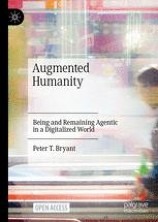
Augmented Humanity : Being and Remaining Agentic in a Digitalized World
This book will examine the implications of digitalization for the understanding of humanity, conceived as a community of intelligent agency. It addresses important topics across a range of social and behavioral theories and identifies a range of novel mechanisms and their social behavioral effects. Across the book, the author highlights the expansion of intelligent processing capability brought about by digitalization and the challenges this exposes for integrating artificial and human capabilities

Attitudes, beliefs, motivation and identity in mathematics education : An overview of the field and future directions
Records the state of the art in research on mathematics-related affect. It discusses the concepts and theories of mathematics-related affect along the lines of three dimensions. The first dimension identifies three broad categories of affect: motivation, emotions, and beliefs. The book contains one chapter on motivation, including discussions on how emotions and beliefs relate to motivation. There are two chapters that focus on beliefs and a chapter on attitude which cross-cuts through all these categories. The second dimension covers a rapidly fluctuating state to a more stable trait. All chapters in the book focus on trait-type affect and the chapter on motivation discusses both these dimensions. The third dimension regards the three main levels of theorizing: physiological (embodied), psychological (individual) and social. All chapters reflect that mathematics-related affect has mainly been studied using psychological

Attention in Cognitive Systems : Theories and Systems from an Interdisciplinary Viewpoint ; 4th International Workshop on Attention in Cognitive Systems, WAPCV 2007 Hyderabad, India, January 8, 2007 Revised Selected Papers
The embodied nature of sensory-motor intelligence requires a continuous and focused interplay between the control of motor activities and the interpretation of feedback from perceptual modalities. Decision making about the selection of information from the incoming sensory stream – in tune with contextual processing on a current task and an agent’s global objectives – becomes a further challenging issue in attentional control. Attention must operate at interfaces between bottom-up driven world int- pretation and top-down driven information selection, thus acting at the core of arti?cial cognitive systems. These insights have already induced changes in AI-related disciplines, such as the design of behavior-based robot control and the computational modeling of animats. Today, the development of enabling technologiessuch as autonomous robotic systems,miniaturizedmobile–evenwearable–sensors,andambientintelligence systems involves the real-time analysis of enormous quantities of data. These data have to be processed in an intelligent way to provide “on time delivery” of the required relevant information. Knowledge has to be applied about what needs to be attended to, and when, and what to do in a meaningful sequence, in correspondence with visual feedback.

Attention and Performance in Computational Vision ; 2nd International Workshop, WAPCV 2004, Prague, Czech Republic, May 15, 2004, Revised Selected Papers
This book constitutes the thoroughly refereed post-proceedings of the Second International Workshop on Attention and Performance in Computational Vision, WAPCV 2004, held in Prague, Czech Republic in May 2004. The goal of this workshop was to provide an interdisciplinary forum tocommunicatecomputationalmodelsofvisualattentionfromvariousviewpoints,such as from computer vision, psychology, robotics and neuroscience. The motivation for - terdisciplinarity was communication and inspiration beyond the individual community, to focus discussion on computational modelling, to outline relevant objectives for p- formance comparison, to explore promising application domains, and to discuss these with reference to all related aspects of cognitive vision.

Attendnce system during covid-19
Authentication system has become a hot topic in the field of security, one of the most interested methods of authentication systems is the radio frequency identity (RFID) which is used in this project to build a smart record attendance system that contains many features, one of it to determine whether the student is wearing a mask or not by using Deep Learning algorithms, another feature is the student's temperature measurement through an electronic sensor. The results obtained are processed and stored by the processing unit which is the Raspberry pi then display the data on a mobile application.
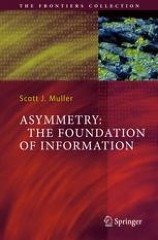
Asymmetry : The foundation of information
As individual needs have arisen in the fields of physics, electrical engineering and computational science, each has created its own theories of information to serve as conceptual instruments for advancing developments. This book provides a coherent consolidation of information theories from these different fields.It provides a versatile tool for quantifying complexity and information capacity in any physical system.
ASP.NET MVC Framework Preview
The ASP.NET MVC framework is the latest evolution of Microsoft's ASP.NET web platform. It introduces a radical high–productivity programming model, promotes cleaner code architecture, supports test–driven development, and provides powerful extensibility, combined with all the benefits of ASP.NET 3.5. ASP.NET MVC Framework Preview is a first look at this technology's main features, designed to give you a head start getting to grips with this powerful new technology.
ASP.NET 1.1 Solutions Toolkit
This collection of reusable ASP.NET components serves two purposes. First, the components are ready to use, so you may add exciting features to your own ASP.NET websites. Second, each component's design and implementation is discussed, and you'll discover tips and tricks applicable for developing your own controls. Controls can be cut and pasted or used as templates for you to build your own controls. And the 15 included controls (programs) cover a broad range of situations, providing you both working coded solutions to your problem and the rationalization behind those solutions. Overall, this highly anticipated book provides immediate solutions to range of common problems.
Artificial life models in software
Artificial Life Models in Software presents software tools, environments and realities dealing with creation, imitation and analysis of artefactual, virtual and living forms, written by those who personally design and produce software, hardware and art installations in artificial life, simulated complex systems and virtual worlds. This timely volume offers a nearly exhaustive overview and original analysis of major non-profit artificial life software packages. The carefully selected topics include: · simulation of real and imaginary life forms and their evolution · self-organization · emergent behaviours · swarm intelligence · evolutionary robotics · agent-based simulations · adaptive, complex and biologically inspired ecosystems · creative computer art There has long been a need within the academic and research community for an informal introduction and guidance to modern software tools for modelling and simulation of life-like phenomena – Artificial Life Models in Software fills this gap and provides invaluable information to both professional and amateur readers, offering detailed reviews of contemporary software for artificial life.

Artificial Intelligent Techniques for Wireless Communication and Networking
Wireless communication and networking based on AI concepts and techniques are explored in this book, specifically focusing on the current research in the field by highlighting empirical results along with theoretical concepts. The possibility of applying AI mechanisms towards security aspects in the communication domain is elaborated; also explored is the application side of integrated technologies that enhance AI-based innovations, insights, intelligent predictions, cost optimization, inventory management, identification processes, classification mechanisms, cooperative spectrum sensing techniques, ad-hoc network architecture, and protocol and simulation-based environments.
Artificial intelligence-based Internet of things systems
Discusses the evolution of future generation technologies through Internet of Things (IoT) in the scope of Artificial Intelligence (AI). The main focus of this volume is to bring all the related technologies in a single platform, so that undergraduate and postgraduate students, researchers, academicians, and industry people can easily understand the AI algorithms, machine learning algorithms, and learning analytics in IoT-enabled technologies. This book uses data and network engineering and intelligent decision support system-by-design principles to design a reliable AI-enabled IoT ecosystem and to implement cyber-physical pervasive infrastructure solutions. This book brings together some of the top IoT-enabled AI experts throughout the world who contribute their knowledge regarding different IoT-based technology aspects. Addresses the complete functional framework workflow in AI-enabled IoT ecosystem; Presents intelligent object identification and object discovery through the IoT ecosystem and its implications to the real world ;Explores security and privacy issues and trustworthy machine learning related to data-intensive technologies in AI-based IoT ecosystems.
Artificial Intelligence with Python
Introduces readers to various topics and examples of programming in Python, as well as key concepts in artificial intelligence. Python programming skills will be imparted as we go along. Concepts and code snippets will be covered in a step-by-step manner, to guide and instill confidence in beginners. Complex subjects in deep learning and machine learning will be broken down into easy-to-digest content and examples. Artificial intelligence implementations will also be shared, allowing beginners to generate their own artificial intelligence algorithms for reinforcement learning, style transfer, chatbots, speech, and natural language processing.
Artificial intelligence techniques for satellite image analysis
The main objective of this book is to provide a common platform for diverse concepts in satellite image processing. In particular it presents the state-of-the-art in Artificial Intelligence (AI) methodologies and shares findings that can be translated into real-time applications to benefit humankind. Interdisciplinary in its scope, the book will be of interest to both newcomers and experienced scientists working in the fields of satellite image processing, geo-engineering, remote sensing and Artificial Intelligence. It can be also used as a supplementary textbook for graduate students in various engineering branches related to image processing.
