



Page 6
Page 6

Intelligent Virtual Agents ; Vol.3661 : 5th International Working Conference, IVA 2005, Kos, Greece, September 12-14, 2005, Proceedings
The origin of the Intelligent Virtual Agents conference dates from a successful workshop on Intelligent Virtual Environments held in Brighton at the 13th European Conference on Artificial Intelligence (ECAI'98). This workshop was followed by a second one held in Salford in Manchester in 1999. Subsequent events took place in Madrid, Spain in 2001 and Irsee, Germany in 2003 and attracted participants from both sides of the Atlantic as well as Asia. th This volume contains the proceedings of the 5 International Working Conference on Intelligent Virtual Agents, IVA 2005, held on Kos Island, Greece, September 12–14, 2005, which highlighted once again the importance and vigor of the research field. A half-day workshop under the title “Socially Competent IVA’s: We are not alone in this (virtual) world!” also took place as part of this event. IVA 2005 received 69 submissions from Europe, North and South America, Africa and Asia. The papers published here are the 26 full papers and 14 short papers presented at the conference, as well as one-page descriptions of the 15 posters and the descriptions of the featured invited talks by Prof. Justine Cassell, of Northwestern University and Prof. Kerstin Dautenhahn, of the University of Hertfordshire. We would like to thank a number of people that have contributed to the success of this conference. First of all, we thank the authors for their high-quality work and their willingness to share their ideas.

Intelligent Virtual Agents ; 7th International Working Conference, IVA 2007, Paris, France, September 17-19, 2007, Proceedings
The 19 revised full papers and 12 revised short papers presented together with five invited talks and the abstracts of 32 poster papers are organized in topical sections on rendering and analysis, culture and identity, behavior models, feedback models, dialogues, applications, evaluation, gaze models and emotions.

Intelligent technologies for interactive entertainment ; 1st International Conference, INTETAIN 2005, Madonna di Campaglio, Italy, November 30 - December 2, 2005, Proceedings
Constitutes the proceedings of the First International Conference on Intelligent Technologies for Interactive Entertainment, 2005 held in Madonna di Campiglio, Italy. The papers included in this title cover topics such as intelligent interactive games, intelligent music, interactive cinema, edutainment, interactive art, and interactive real TV.

Intelligent system algorithms and applications in science and technology
Explores the application of intelligent techniques in various fields of engineering and technology. It addresses diverse topics in such areas as machine learning-based intelligent systems for healthcare, applications of artificial intelligence and the Internet of Things, intelligent data analytics techniques, intelligent network systems and applications, and inequalities and process control systems. The authors explore the full breadth of the field, which encompasses data analysis, image processing, speech processing and recognition, medical science and healthcare monitoring, smart irrigation systems, insurance and banking, robotics and process control, and more.

Intelligent robotics and applications ; 1st International Conference, ICIRA 2008, Wuhan, China, October 15-17, 2008, Proceedings, Part I
These two volumes constitute the refereed proceedings of the First International Conference on Intelligent Robotics and Applications, ICIRA 2008, held in Wuhan, China, in October 2008.The 265 revised full papers presented were thoroughly reviewed and selected from 552 submissions; they are devoted but not limited to robot motion planning and manipulation; robot control; cognitive robotics; rehabilitation robotics; health care and artificial limb; robot learning; robot vision; human-machine interaction & coordination; mobile robotics.

Intelligent robotics and applications ; 1st International Conference, ICIRA 2008 Wuhan, China, October 15-17, 2008 Proceedings, Part II
This two volumes constitute the refereed proceedings of the First International Conference on Intelligent Robotics and Applications, ICIRA 2008, held in Wuhan, China, in October 2008.The 265 revised full papers presented were thoroughly reviewed and selected from 552 submissions; they are devoted but not limited to robot motion planning and manipulation; robot control; cognitive robotics; rehabilitation robotics; health care and artificial limb; robot learning; robot vision; human-machine interaction & coordination; mobile robotics.

Intelligent Media Technology for Communicative Intelligence ; 2nd International Workshop, IMTCI 2004, Warsaw, Poland, September 13-14, 2004. Revised Selected Papers
The 2nd Workshop on Intelligent Media Technology for Communicative Intelligence commemorating the 10th anniversary of the Polish-Japanese Institute of Information Technology in Warsaw aimed to explore the current research topics in the ?eld of int- ligent media technologies for communicative intelligence. Communicative intelligence represents a new challenge towards building a sup- intelligence on the ubiquitous global network by accumulating a huge amount of - man andknowledgeresources.The term "communicativeintelligence"re?ects the view that communication is at the very core of intelligence and its creation. Communication permits novel ideas to emerge from intimate interactions by multiple agents, ranging from collaboration to competition. The recent advance of information and commu- cation technologies has established an information infrastructure that allows humans and artifacts to communicate with each other beyond space and time. It enables us to advance a step further to realize a communicative intelligence with many fruitful applications. Intelligentmediatechnologiesattempttocaptureandaugmentpeople’scommuni- tive activities by embedding computers into the environment to enhance interactions in an unobtrusive manner. The introduction of embodied conversational agents that might mediate conversations among people in a social context is the next step in the p- cess. The scope of intelligent media technologies includes design and development of intelligent supports for content production, distribution, and utilization, since rich c- tent is crucial for communication in many applications. The promising applications of intelligence media technologies include e-learning, knowledge management systems, e-democracy, and other communication-intensivesubject domains.

Intelligent Interactive multimedia systems for e-healthcare applications
It looks at how the latest technologies (artificial intelligence, deep learning, machine learning, big data, IoT, smart device, etc.) help to manage health data, diagnose health issues, monitor treatment, predict pandemic diseases, and more. It covers several important applications of multimedia in healthcare, including for data visualization purposes, for computer vision for elder healthcare monitoring, for detection of lung nodules, for health monitoring and management systems using machine learning techniques, and for fusion applications in medical image processing. The book goes into detail on the various methods and techniques for supporting multimedia systems for e-healthcare.

Intelligent Information Technology ; 7th International Conference on Information Technology, CIT 2004, Hyderabad, India, December 20-23, 2004, Proceedings
Focused on the latest research findings on all topics in the area of information technology. Although the natural focus was on computer science issues, research results contributed from management, business and other disciplines formed an integral part. We received more than 200 papers from over 27 countries in the areas of com- tational intelligence, neural networks, mobile and adhoc networks, security, databases, software engineering, signal and image processing, and Internet and WWW-based computing. The programme committee, consisting of eminent researchers, academicians and practitioners, finally selected 43 full papers on the basis of reviewer grades. This proceedings contains the research papers selected for presentation at the c- ference and this is the first time that the proceedings have been published in the Lecture Notes in Computer Science (LNCS) series. The poster papers are being printed as a separate conference proceedings.

Intelligent information processing III ; IFIP TC12 International Conference on Intelligent Information Processing (IIP 2006), September 20-23, Adelaide, Australia
The IFIP series publishes state-of-the-art results in the sciences and technologies of information and communication. The principal aim of the IFIP series is to encourage education and the dissemination and exchange of information about all aspects of computing.

Intelligent Computing Theories and Application ; 17th International Conference, ICIC 2021, Shenzhen, China, August 12–15, 2021, Proceedings, Part I
The ICIC theme unifies the picture of contemporary intelligent computing techniques as an integral concept that highlights the trends in advanced computational intelligence and bridges theoretical research with applications. The theme for this conference is “Advanced Intelligent Computing Methodologies and Applications.”

Intelligent Computing Theories and Application ; 16th International Conference, ICIC 2020, Bari, Italy, October 2–5, 2020, Proceedings, Part II
This two-volume set of LNCS 12463 and LNCS 12464 constitutes - in conjunction with the volume LNAI 12465 - the refereed proceedings of the 16th International Conference on Intelligent Computing, ICIC 2020, held in Bari, Italy, in October 2020. The 162 full papers of the three proceedings volumes were carefully reviewed and selected from 457 submissions. The ICIC theme unifies the picture of contemporary intelligent computing techniques as an integral concept that highlights the trends in advanced computational intelligence and bridges theoretical research with applications. The theme for this conference is “Advanced Intelligent Computing Methodologies and Applications.” Papers related to this theme are especially solicited, addressing theories, methodologies, and applications in science and technology.

Intelligent Computing in Engineering and Architecture ; 13th EG-ICE Workshop 2006, Ascona, Switzerland, June 25-30, 2006, Revised Selected Papers
Providing computer support for tasks in civil engineering and architecture is hard. Projects can be complex, long and costly. Firms that contribute to design, construction and maintenance are often worth less than the value of their projects. Everyone in the field is justifiably risk adverse. Contextual variables have a strong influence making generalization difficult. The product life cycle may exceed one hundred years and functional requirements may evolve during the service life. It is therefore no wonder that practitioners in this area have been so reluctant to adopt advanced computing systems. After decades of research and industrial pilot projects, advanced computing s- tems are now being recognized by many leading practitioners to be strategically - portant for the future profitability of firms involved in engineering and architecture. Engineers and architects with advanced computing knowledge are hired quickly in the market place. Closer collaboration between research and practice is leading to more comprehensive validation processes for new research ideas. This is feeding devel- ment of more useful systems, thus accelerating progress. These are exciting times. th This volume contains papers that were presented at the 13 Workshop of the Eu- pean Group for Intelligent Computing in Engineering. Over five days, 70 participants from around the world listened to 59 paper presentations in a single session format.
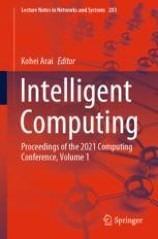
Intelligent Computing ; Proceedings of the 2021 Computing Conference ; Vol.1
This book is a comprehensive collection of chapters focusing on the core areas of computing and their further applications in the real world. Each chapter is a paper presented at the Computing Conference 2021 held on 15-16 July 2021. Computing 2021 attracted a total of 638 submissions which underwent a double-blind peer review process. Of those 638 submissions, 235 submissions have been selected to be included in this book. The goal of this conference is to give a platform to researchers with fundamental contributions and to be a premier venue for academic and industry practitioners to share new ideas and development experiences.

Intelligent Agents and Multi-Agent Systems ; 7th Pacific Rim International Workshop on Multi-Agents, PRIMA 2004, Auckland, New Zealand, August 8-13, 2004, Revised Selected Papers
A Combined System for Update Logic and Belief Revision.- Using Messaging Structure to Evolve Agents Roles in Electronic Markets.- Specifying DIMA Multi-agents Models Using Maude.- picoPlangent: An Intelligent Mobile Agent System for Ubiquitous Computing.- An Approach to Safe Continuous Planning.- Modeling e-Procurement as Co-adaptive Matchmaking with Mutual Relevance Feedback.- Price Determination and Profit Sharing for Bidding Groups in Agent-Mediated Auctions.- Agent Based Risk Management Methods for Speculative Actions.- Handling Emergent Resource Use Oscillations.- The Role of Agents in Intelligent Mobile Services.

Intelligent Agents and Multi-Agent Systems ; 11th Pacific Rim International Conference on Multi-Agents, PRIMA 2008, Hanoi, Vietnam, December 15-16, 2008. Proceedings
This book constitutes the proceedings of the the 11th Pacific Rim International Conference on Multi-Agents, PRIMA 2008, held in Hanoi, Vietnam, in December 2008.The 19 regular papers and 22 short papers presented together with 3 keynote speeches, were carefully reviewed and selected from 56 submissions. Many current subjects in multi-agent research and development are addressed, ranging from theoretical and methodological issues to various applications in different fields. There was a track on multi-issue negotiation and agents and HCI.

Intelligence and security informatics ; IEEE ISI 2008 International Workshops : PAISI, PACCF, and SOCO 2008, Taipei, Taiwan, June 17, 2008. Proceedings
This book constitutes the refereed proceedings of the three international workshops PAISI 2008, PACCF 2008, and SOCO 2008, held as satellite events of the IEEE International Conference on Intelligence and Security Informatics, ISI 2008, in Taipei, Taiwan, in June 2008.The 55 revised full papers presented were carefully reviewed and selected from the presentations at the workshops. The 21 papers of the Pacific Asia Workshop on Intelligence and Security Informatics (PAISI 2008) cover topics such as information retrieval and event detection, internet security and cybercrime, currency and data protection, cryptography, image and video analysis, privacy issues, social networks, modeling and visualization, and network intrusion detection.

Integration of AI and OR Techniques in Constraint Programming for Combinatorial Optimization Problems ; Vol.3524 : 2nd International Conference, CPAIOR 2005, Prague, Czech Republic, May 31 -- June 1, 2005
Intended primarily as a forum to focus on the integration and hybridization of the approaches of constraint programming (CP), arti?cial intelligence (AI), and operations research (OR) technologies for solving large-scale and complex real-life optimization problems. Therefore, CPAIOR is never far from industrial applications. The high number of submissions received this year, almost 100 papers, in witness to the interest of the research community in this conference. From these submissions, we chose 26 to be published in full in the proceedings. This volume includes summaries of the invited talks of CPAIOR: one from industry, one from the embedded system research community, and one from the operations research community.

Integrated Graphic and Computer Modelling
Full colour throughout, the book explores programming language developments from machine code to more natural language forms, and the basic display operations and commands needed to create effective computer graphic systems. As the visual presentation of real and virtual environments becomes more and more the norm in application systems, a clear understanding of the theory that underpins these techniques is required of all students and practitioners studying and working on large computer systems.

Integer programming and combinatorial optimization ; 9th International IPCO Conference, Cambridge, MA, USA, May 27-29, 2002. Proceedings
This volume contains the papers selected for presentation at IPCO 2002, the NinthInternationalConferenceonIntegerProgrammingandCombinatorial- timization, Cambridge, MA (USA), May 27–29, 2002. The IPCO series of c- ferences highlights recent developments in theory, computation, and application of integer programming and combinatorial optimization. IPCO was established in 1988 when the ?rst IPCO program committee was formed. IPCO is held every year in which no International Symposium on Ma- ematical Programming (ISMP) takes places. The ISMP is triennial, so IPCO conferences are held twice in every three-year period. The eight previous IPCO conferences were held in Waterloo (Canada) 1990, Pittsburgh (USA) 1992, Erice (Italy) 1993, Copenhagen (Denmark) 1995, Vancouver (Canada) 1996, Houston (USA) 1998, Graz (Austria) 1999, and Utrecht (The Netherlands) 2001. In response to the call for papers for IPCO 2002, the program committee received 110 submissions, a record number for IPCO. The program committee met on January 7 and 8, 2002, in Aussois (France), and selected 33 papers for inclusion in the scienti?c program of IPCO 2002. The selection was based on originality and quality, and re?ects many of the current directions in integer programming and combinatorial optimization research.
