



Page 58
Page 58
Beginning IntelliJ IDEA : Integrated development environment for Java programming
Shows you how to leverage IntelliJ’s tools to develop clean, efficient Java applications. The last portion of the book focuses on application testing and deployment, and language- and framework- specific guidelines. After reading this book and working through its freely available source code, you'll be up to speed with this powerful IDE for today's Java development. You will: Use IntelliJ IDEA to build Java applications / Set up your IDE and project / Work with source code / Extend your Java application to data science and other kinds of applications / Test and deploy your application and much more
Beginning Information Cards and Cardspace : From novice to professional
If you work at all with Internet-facing solutions, you know that the lack of an identity metasystem is a critical vulnerability in the design. Various consortiums have worked to define a system of identity—a platform-agnostic way of communicating and validating claims of identity. If you work with identity solutions or structures, you will find Beginning Information Cards and CardSpace: From Novice to Professional essential to understanding and successfully implementing CardSpace solutions.
Beginning Groovy and Grails : From novice to professional
Web frameworks are playing a major role in the creation of today's most compelling web applications, because they automate many of the tedious tasks, allowing developers to instead focus on providing users with creative and powerful features. Java developers have been particularly fortunate in this area, having been able to take advantage of Grails, an open source framework that supercharges productivity when building Java–driven web sites. Grails is based on Groovy, which is a very popular and growing dynamic scripting language for Java developers and was inspired by Python, Ruby, and Smalltalk.
Beginning Google Web Toolkit : From novice to professional
The open source, lightweight Google Web Toolkit (GWT) is a framework that allows Java developers to build rich Internet applications (RIAs), more recently called Ajax applications, in Java. Typically, writing these applications requires a lot of JavaScript development. However, Java and JavaScript are very distinctively different languages (although the name suggests otherwise), therefore requiring a different development process. In Beginning Google Web Toolkit: From Novice to Professional, you'll learn to build rich, user–friendly web applications using a popular Java–based Ajax web framework, the Google Web Toolkit.
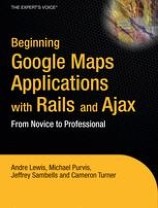
Beginning Google Maps Applications with Rails and Ajax : From novice to professional
Beginning Google Maps Applications with Rails and Ajax: From Novice to Professional is the first book to comprehensively introduce the service from a developer perspective, showing you how you can integrate mapping features into your Rails-driven web applications. Proceeding far beyond simplistic map display, youll learn how to draw from a variety of data sources.
Beginning Google Maps Applications with PHP and Ajax : From novice to professional
Until recently, building interactive web-based mapping applications has been a cumbersome affair. This changed when Google released its powerful Maps API. Beginning Google Maps Applications with PHP and Ajax was written to help you take advantage of this technology in your own endeavorswhether you're an enthusiast playing for fun or a professional building for profit. This book covers version 2 of the API, including Google's new Geocoding service. As well as providing hands-on examples of real mapping projects, this book supplies a complete reference for the Maps API, along with the relevant aspects of JavaScript, CSS, PHP, and SQL. Visit the authors' website for additional tips and advice.
Beginning GIMP : From novice to professional
Beginning GIMP: From Novice to Professional explains how to use the open source image manipulation program, GIMP version 2.4. You'll learn how to install GIMP on Windows, Linux, and MacOS X platforms. Once you've installed the application, you'll learn about the interface and configuration options, and then jump into a quick–and–simple project to familiarize yourself even further. With four–color graphics and screenshots throughout, you'll learn how to prepare camera images for display on web pagesincluding functions like rescaling, cropping, and balancing color. The book also explains with great detail how to utilize layers, paths, and masks. You'll also learn how to draw lines and shapes, use patterns and gradients, and even create your own brushes, patterns, and gradients.
Beginning deep learning with TensorFlow : Work with Keras, MNIST data sets, and advanced neural networks
Stats with an introduction to AI, where you’ll learn the history of neural networks and what sets deep learning apart from other varieties of machine learning. Discovery the variety of deep learning frameworks and set-up a deep learning development environment. Next, you’ll jump into simple classification programs for hand-writing analysis. Once you’ve tackled the basics of deep learning, you move on to TensorFlow 2 specifically. Find out what exactly a Tensor is and how to work with MNIST datasets. Finally, you’ll get into the heavy lifting of programming neural networks and working with a wide variety of neural network types such as GANs and RNNs. Deep Learning is a new area of Machine Learning research widely used in popular applications, such as voice assistant and self-driving cars. Work through the hands-on material in this book and become a TensorFlow programmer! You will: Develop using deep learning algorithms Build deep learning models using TensorFlow 2 Create classification systems and other, practical deep learning applications
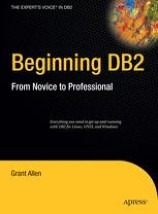
Beginning DB2 : From novice to professional
IBM’s DB2 Express Edition is one of the most capable of the free database platforms available in today’s marketplace. In Beginning DB2, author Grant Allen gets you started using DB2 Express Edition for web sites, desktop applications, and more. The author covers the basics of DB2 for developers and database administrators, shows you how to manage data in both XML and relational form, and includes numerous code examples so that you are never in doubt as to how things work.
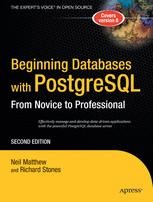
Beginning Databases with PostgreSQL : From novice to professional
The book continues with a complete tutorial on PostgreSQL features and functions and include information on database construction and administration. Key features such as transactions, stored procedures and triggers are covered, along with many of the capabilities new to version 8. To help you get started quickly, step-by-step instructions on installing PostgreSQL on Windows and Linux/UNIX systems are included. In the remainder of the book, we show you how to make the most of PostgreSQL features in your own applications using a wide range of programming languages, including C, Perl, PHP, Java and C#. Many example programs are presented in the book, and all are available for download from the Apress web site. By the end of the book you will be able to install, use, and effectively manage a PostgreSQL server, design and implement a database, and create and deploy your own database applications.
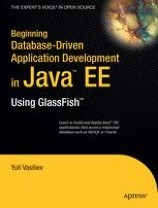
Beginning Database-Driven Application Development in Java EE : Using GlassFish™
The book explains in detail how you can organize your Java EE solution into a multilayer architecture, placing most emphasis on how to implement the persistence and database tiers of an application. Through many examples, this book shows how you can efficiently use the Java Persistence features available in the Java EE platform. Find out how you can greatly simplify the task of building the persistence layer of your Java EE application by moving some application logic into the underlying database, utilizing database views, stored programs, and triggers. The book also explains how to deploy Java EE applications to GlassFish, a free, open source Java EE 5–compliant application server.
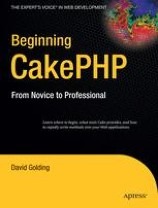
Beginning CakePHP : From novice to professional
CakePHP is a leading PHP–based web app development framework. When asking a question on forums or chat rooms, many CakePHP beginners get little help from the experts. Simple questions can get a response like, “Well, just read the online manual and API.” Unfortunately, the online manual is depreciated, and who wants to absorb a programming language or framework from an API? Beginning CakePHP will do the following: Lead you from a basic setup of CakePHP to building a couple applications that will highlight CakePHP’s functionality and capabilities without delving too deeply into the PHP language, but rather what the CakePHP framework can offer the developer. Teach you to use CakePHP by incorporating advanced features into your web development projects.
Beginning C# 2008 Databases : From novice to professional
Assuming only basic knowledge of C# 2008, Beginning C# 2008 Databases teaches all the fundamentals of database technology and database programming readers need to quickly become highly proficient database users and application developers. A comprehensive tutorial on both SQL Server 2005 and ADO.NET 3.0, Beginning C# 2008 Databases explains and demonstrates how to create database objects and program against them in both T–SQL and C#. Full of practical, detailed examples, it's been fully revised and updated for C# 2008 and offers the most complete, detailed, and gentle introduction to database technology for all C# programmers at any level of experience.
Beginning ASP.NET 2.0 Databases : From novice to professional
Beginning ASP.NET 2.0 Databases: From Novice to Professional is a comprehensive introduction to connecting a website to many different data sourcesnot just databases. You'll learn how to build a relational database, use SQL to communicate with it, and leverage both in your web applications. You'll also learn about the new features of ADO.NET and ASP.NET in .NET 2.0. The authors cover mission-critical issues, such as design, transactions, error handling, optimization, and scalability. They examine SQL Server, Jet, and MySQL databases, and highlight the differences among them.
Beginning Ajax with PHP : From novice to professional
Beginning Ajax with PHP: From Novice to Professional is the first book to introduce how these two popular technologies can work together to create next-generation applications. Author Lee Babin covers what you commonly encounter in daily web application development tasks.
Bayesian reliability
Bayesian Reliability presents modern methods and techniques for analyzing reliability data from a Bayesian perspective. The adoption and application of Bayesian methods in virtually all branches of science and engineering have significantly increased over the past few decades. This increase is largely due to advances in simulation-based computational tools for implementing Bayesian methods. The authors extensively use such tools throughout this book, focusing on assessing the reliability of components and systems with particular attention to hierarchical models and models incorporating explanatory variables. Such models include failure time regression models, accelerated testing models, and degradation models. The authors pay special attention to Bayesian goodness-of-fit testing, model validation, reliability test design, and assurance test planning. Throughout the book, the authors use Markov chain Monte Carlo (MCMC) algorithms for implementing Bayesian analyses--algorithms that make the Bayesian approach to reliability computationally feasible and conceptually straightforward.
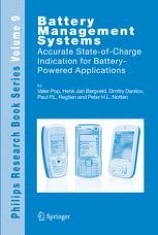
Battery management systems : Accurate state-of-charge indication for battery-powered applications
Builds further on the contents of the first volume in the Philips Research Book Series, Battery Management Systems - Design by Modelling. Since the subject of battery SoC indication requires a number of disciplines, this book covers all important disciplines starting from (electro)chemistry to understand battery behaviour, via mathematics to enable modelling of the observed battery behaviour and measurement science to enable accurate measurement of battery variables and assessment of the overall accuracy, to electrical engineering to enable an efficient implementation of the developed SoC indication system. It will therefore serve as an important source of information for any person working in engineering and involved in battery management.
Basic Probability Theory with Applications
This book presents elementary probability theory with interesting and well-chosen applications that illustrate the theory. An introductory chapter reviews the basic elements of differential calculus which are used in the material to follow. The theory is presented systematically, beginning with the main results in elementary probability theory. This is followed by material on random variables. Random vectors, including the all important central limit theorem, are treated next. The last three chapters concentrate on applications of this theory in the areas of reliability theory, basic queuing models, and time series. Examples are elegantly woven into the text and over 400 exercises reinforce the material and provide students with ample practice.
Basic principles and applications of probability theory
This introductory chapter discusses such notions as determinism, chaos and randomness, p- dictibility and unpredictibility, some initial approaches to formalizing r- domness and it surveys certain problems that can be solved by probability theory. This will perhaps give one an idea to what extent the theory can - swer questions arising in speci?c random occurrences and the character of the answers provided by the theory. 1. 1 The Nature of Randomness The phrase “by chance” has no single meaning in ordinary language. For instance, it may mean unpremeditated, nonobligatory, unexpected, and so on. Its opposite sense is simpler: “not by chance” signi?es obliged to or bound to (happen). In philosophy, necessity counteracts randomness. Necessity signi?es conforming to law – it can be expressed by an exact law. The basic laws of mechanics, physics and astronomy can be formulated in terms of precise quantitativerelationswhichmustholdwithironcladnecessity.
Basic Electromagnetism and Materials
This textbook can be used to teach electromagnetism to a wide range of undergraduate science majors in physics, electrical engineering or materials science. However, by making lesser demands on mathematical knowledge than competing texts, and by emphasizing electromagnetic properties of materials and their applications, this textbook is uniquely suited to students of materials science. Many competing texts focus on the study of propagation waves either in the microwave or optical domain, whereas Basic Electromagnetism and Materials covers the entire electromagnetic domain and the physical response of materials to these waves.
