



Page 52
Page 52

Ad-hoc Networks : Fundamental Properties and Network Topologies
This book clearly demonstrates how the Medium Access Control protocols impose a limit on the level of interference in ad-hoc networks. It has been shown that interference is upper bounded, and a new accurate method for the estimation of interference power statistics in ad-hoc and sensor networks is introduced here. Furthermore, this volume shows how multi-hop traffic affects the capacity of the network. In multi-hop and ad-hoc networks there is a trade-off between the network size and the maximum input bit rate possible per node. Large ad-hoc or sensor networks, consisting of thousands of nodes, can only support low bit-rate applications.

Ad-Hoc Networking ; IFIP 19th World Computer Congress, TC-6, IFIP Interactive Conference on Ad-Hoc Networking, August 20-25, 2006, Santiago, Chile
The IFIP series publishes state-of-the-art results in the sciences and technologies of information and communication. The scope of the series includes: foundations of computer science; software theory and practice; education; computer applications in technology; communication systems; systems modeling and optimization; information systems; computers and society; computer systems technology; security and protection in information processing systems; artificial intelligence; and human-computer interaction. Proceedings and post-proceedings of referred international conferences in computer science and interdisciplinary fields are featured. These results often precede journal publication and represent the most current research. The principal aim of the IFIP series is to encourage education and the dissemination and exchange of information about all aspects of computing.
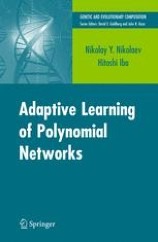
Adaptive Learning of Polynomial Networks : Genetic Programming, Backpropagation and Bayesian Methods
This book provides theoretical and practical knowledge for develop ment of algorithms that infer linear and nonlinear models. It offers a methodology for inductive learning of polynomial neural network mod els from data. The design of such tools contributes to better statistical data modelling when addressing tasks from various areas like system identification, chaotic time-series prediction, financial forecasting and data mining. The main claim is that the model identification process involves several equally important steps: finding the model structure, estimating the model weight parameters, and tuning these weights with respect to the adopted assumptions about the underlying data distrib ution. When the learning process is organized according to these steps, performed together one after the other or separately, one may expect to discover models that generalize well.

Adaptive Business Intelligence
In the modern information era, managers must recognize the competitive opportunities represented by decision-support tools. Adaptive business intelligence systems combine prediction and optimization techniques to assist decision makers in complex, rapidly changing environments. These systems address the fundamental questions: What is likely to happen in the future? And what is the best decision right now? Adaptive Business Intelligence includes elements of data mining, predictive modeling, forecasting, optimization, and adaptability.
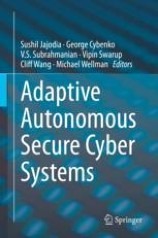
Adaptive Autonomous Secure Cyber Systems
Establishes scientific foundations for adaptive autonomous cyber systems and ultimately brings about a more secure and reliable Internet. The recent advances in adaptive cyber defense (ACD) have developed a range of new ACD techniques and methodologies for reasoning in an adaptive environment.

Adaptive and Natural Computing Algorithms ; 8th International Conference, ICANNGA 2007, Warsaw, Poland, April 11-14, 2007, Proceedings, Part II
The ICANNGA series of conferences has been organized since 1993 and has a long history of promoting the principles and understanding of computational intelligence paradigms within the scientifc community. the ICANNGA series has established itself as a reference for scientists and practitioners in this area. The series has also been of value to young researchers wishing both to extend their knowledge and experience and to meet experienced professionals in their ?elds. In a rapidly advancing world, where technology and engineering change d- matically, new challenges in computer science compel us to broaden the c- ference scope in order to take into account new developments.

Adaptive and Natural Computing Algorithms ; 8th International Conference, ICANNGA 2007, Warsaw, Poland, April 11-14, 2007, Proceedings, Part I
Constitutes the refereed proceedings of the 8th International Conference on Adaptive and Natural Computing Algorithms, ICANNGA 2007, held in Warsaw, Poland, in April 2007. The 178 revised full papers presented were carefully reviewed and selected from a total of 474 submissions. The 94 papers of the first volume are organized in topical sections on evolutionary computation, genetic algorithms, particle swarm optimization, learning, optimization and games, fuzzy and rough systems, just as classification and clustering. The second volume contains 84 contributions related to neural networks, support vector machines, biomedical signal and image processing, biometrics, computer vision, as well as to control and robotics.

Adaptive agents and multi-agent systems III : Adaptation and multi-Agent learning ; 5th, 6th, and 7th European Symposium, ALAMAS 2005-2007 on Adaptive and Learning Agents and Multi-Agent Systems, Revised Selected Papers
This book contains selected and revised papers of the European Symposium on Adaptive and Learning Agents and Multi-Agent Systems (ALAMAS).

Active Networks : IFIP TC6 6th International Working Conference, IWAN 2004, Lawrence, KS, USA, October 27-29, 2004, Revised Papers
The proceedings of the sixth Annual International Working Conference on Active Networks, which took place in October 2004 at The Information and Telecommunications Technology Center, The University of Kansas, USA. The proceedings of IWAN 2004 mark a transition between the funded active networking programs in Europe, Japan, and the United States and a strong, continued interest in the architectures of programmable networks.The papers are organized into sections on active network systems and architectures, security in active networking, active network applications, mobile active networks and active network management.

Achievements in European Research on Grid Systems ; CoreGRID Integration Workshop 2006 (Selected Papers)
Achievements in European Research on Grid Systems comprises the edited proceedings of the 2006 CoreGRID Integration Workshop (CGIW'2006), held October 2006 in Krakow, Poland.

Access Control Models and Architectures For IoT and Cyber Physical Systems
Presents cybersecurity aspects of ubiquitous and growing IoT and Cyber Physical Systems. It also introduces a range of conceptual, theoretical, and foundational access control solutions. This was developed by the authors to provide an overall broader perspective and grounded approach to solve access control problems in IoT and CPS.

A Practical Programming Model for the Multi-Core Era ; 3rd International Workshop on OpenMP, IWOMP 2007, Beijing, China, June 3-7, 2007 Proceedings
This book constitutes the thoroughly refereed post-workshop proceedings of the Third International Workshop on OpenMP, IWOMP 2007, held in Beijing, China, in June 2007.The 14 revised full papers and 8 revised short papers presented were carefully reviewed and selected from 28 submissions. The papers address all topics related to OpenMP, such as OpenMP performance analysis and modeling, OpenMP performance and correctness tools and proposed OpenMP extensions, as well as applications in various domains, e.g., scientific computation, video games, computer graphics, multimedia, information retrieval, optimization, text processing, data mining, finance, signal and image processing, and numerical solvers.

A Practical Guide for SystemVerilog Assertions
SystemVerilog language consists of three very specific areas of constructs - design, assertions and testbench. This guide shows how to use the language to solve real verification problems. It examines how to verify complex protocols and memories using SVA with seeral examples.

A Matrix Algebra Approach to Artificial Intelligence
The book consists of two parts: the first discusses the fundamentals of matrix algebra in detail, while the second focuses on the applications of matrix algebra approaches in AI. Highlighting matrix algebra in graph-based learning and embedding, network embedding, convolutional neural networks and Pareto optimization theory, and discussing recent topics and advances, the book offers a valuable resource for scientists, engineers, and graduate students in various disciplines

A High-Performance Logical Framework -- All About Maude : How to Specify, Program, and Verify Systems in Rewriting Logic
This book gives a comprehensive account of Maude, a language and system based on rewriting logic. Many examples are used throughout the book to illustrate the main ideas and features of Maude, and its many possible uses. Maude modules are rewrite theories. Computation with such modules is - cient deduction by rewriting. Because of its logical basis and its initial model semantics,aMaude module defines a precise mathematical model.This means that Maude and its formal tool environment can be used in three, mutually reinforcing ways: • as a declarative programming language; • as an executable formal specification language; and • as a formal verification system. Maude’s rewriting logic is simple, yet very expressive. This gives Maude good representational capabilities as a semantic framework to formally represent a wide range of systems, including models of concurrency, distributed al- rithms, network protocols, semantics of programming languages, and models of cell biology. Rewriting logic is also an expressive universal logic,making Maude a fiexible logical framework in which many difierent logics and - ference systems can be represented and mechanized. This makes Maude a useful metatool to build many other tools, including those in its own formal tool environment. Thanks to the logic’s simplicity and the use of advanced semi-compilation techniques, Maude has a high-performance implementation, making it competitive with other declarative programming languages.

A Guide to Graph Algorithms
Offers high-quality content in the research area of graph algorithms and explores the latest developments in graph algorithmics. The reader will gain a comprehensive understanding of how to use algorithms to explore graphs. It is a collection of texts that have proved to be trend setters and good examples of that. The book aims at providing the reader with a deep understanding of the structural properties of graphs that are useful for the design of efficient algorithms. These algorithms have applications in finite state machine modelling, social network theory, biology, and mathematics. The book contains many exercises, some up at present-day research-level. The exercises encourage the reader to discover new techniques by putting things in a clear perspective.
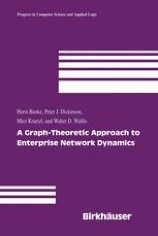
A Graph-Theoretic Approach to Enterprise Network Dynamics
This monograph treats the application of numerous graph-theoretic algorithms to a comprehensive analysis of dynamic enterprise networks. Network dynamics analysis yields valuable information about network performance, efficiency, fault prediction, cost optimization, indicators and warnings.

6G Mobile Wireless Networks
Specifically, this book covers the following topics: 6G Use Cases, Requirements, Metrics and Enabling Technologies, PHY Technologies for 6G Wireless, Reconfigurable Intelligent Surface for 6G Wireless Networks, Millimeter-wave and Terahertz Spectrum for 6G Wireless, Challenges in Transport Layer for Tbit/s Communications, High-capacity Backhaul Connectivity for 6G Wireless, Cloud Native Approach for 6G Wireless Networks, Machine Type Communications in 6G, Edge Intelligence and Pervasive AI in 6G, Blockchain: Foundations and Role in 6G, Role of Open-source Platforms in 6G, and Quantum Computing and 6G Wireless.
