



Page 5
Page 5

Information and Complexity in Statistical Modeling
The main theme in this book is to teach modeling based on the principle that the objective is to extract the information from data that can be learned with suggested classes of probability models. The intuitive and fundamental concepts of complexity, learnable information, and noise are formalized, which provides a firm information theoretic foundation for statistical modeling.

Informatics in Control, Automation and Robotics II
Informatics in Control, Automation and Robotics II is a collection of the best papers presented at the 2nd International Conference on Informatics in Control, Automation and Robotics (ICINCO). The purpose of ICINCO was to bring together researchers, engineers and practitioners interested in the application of informatics to Control, Automation and Robotics.

Inductive logic programming ; 17th International Conference, ILP 2007, Corvallis, OR, USA, June 19-21, 2007, Revised Selected Papers
The 18th International Conference on Inductive Logic Programming was held in Prague, September 10–12, 2008. ILP returned to Prague after 11 years, and it is tempting to look at how the topics of interest have evolved during that time. The ILP community clearly continues to cherish its beloved ?rst-order logic representation framework. This is legitimate, as the work presented at ILP 2008 demonstrated that there is still room for both extending established ILP approaches (such as inverse entailment) and exploring novel logic induction frameworks (such as brave induction). Besides the topics lending ILP research its unique focus.

Inductive logic programming ; 15th International Conference, ILP 2005, Bonn, Germany, August 10-13, 2005, Proceedings
“Change is inevitable.” Embracing this quote we have tried to carefully exp- iment with the format of this conference, the 15th International Conference on Inductive Logic Programming, hopefully making it even better than it already was. But it will be up to you, the inquisitive reader of this book, to judge our success. The major changes comprised broadening the scope of the conference to include more diverse forms of non-propositional learning, to once again have tutorials on exciting new areas, and, for the ?rst time, to also have a discovery challenge as a platform for collaborative work. This year the conference was co-located with ICML 2005, the 22nd Inter- tional Conference on Machine Learning, and also in close proximity to IJCAI 2005, the 19th International Joint Conference on Arti?cial Intelligence. - location can be tricky, but we greatly bene?ted from the local support provided by Codrina Lauth, Michael May, and others. We were also able to invite all ILP and ICML participants to shared events including a poster session, an invited talk, and a tutorial about the exciting new area of “statistical relational lea- ing”. Two more invited talks were exclusively given to ILP participants and were presented as a kind of stock-taking—?ttingly so for the 15th event in a series—but also tried to provide a recipe for future endeavours.

IMPROVE - Innovative modelling approaches for production systems to raise validatable efficiency : Intelligent methods for the factory of the future
This open access work presents selected results from the European research and innovation project IMPROVE which yielded novel data-based solutions to enhance machine reliability and efficiency in the fields of simulation and optimization, condition monitoring, alarm management, and quality prediction.

Implementing machine learning for finance : A systematic approach to predictive risk and performance analysis for investment portfolios
Introduces pattern recognition and future price forecasting that exerts effects on time series analysis models, such as the Autoregressive Integrated Moving Average (ARIMA) model, Seasonal ARIMA (SARIMA) model, and Additive model, and it covers the Least Squares model and the Long Short-Term Memory (LSTM) model. It presents hidden pattern recognition and market regime prediction applying the Gaussian Hidden Markov Model. The book covers the practical application of the K-Means model in stock clustering. It establishes the practical application of the Variance-Covariance method and Simulation method (using Monte Carlo Simulation) for value at risk estimation. It also includes market direction classification using both the Logistic classifier and the Multilayer Perceptron classifier. Finally, the book presents performance and risk analysis for investment portfolios. You will: Understand the fundamentals of the financial market and algorithmic trading, as well as supervised and unsupervised learning models that are appropriate for systematic investment portfolio management / Know the concepts of feature engineering, data visualization, and hyperparameter optimization / Design, build, and test supervised and unsupervised ML and DL models / Discover seasonality, trends, and market regimes, simulating a change in the market and investment strategy problems and predicting market direction and prices / Structure and optimize an investment portfolio with preeminent asset classes and measure the / underlying risk

Impact of artificial intelligence on organizational transformation
Covers the areas like artificial intelligence & its impact on professions, as well as machine learning algorithms and technologies. The context of applications of AI in business process innovation primarily includes new business models, AI readiness and maturity at the organizational, technological, financial, and cultural levels. The book has extensive details on machine learning and the applications such as robotics, blockchain, Internet of Things. Also discussed are the influence of AI on financial strategies and policies, human skills & values, procurement innovation, production innovation, AI in marketing & sales platforms.

Image Analysis and Recognition ; 17th International Conference, ICIAR 2020, Póvoa de Varzim, Portugal, June 24–26, 2020, Proceedings, Part II
This two-volume set LNCS 12131 and LNCS 12132 constitutes the refereed proceedings of the 17th International Conference on Image Analysis and Recognition, ICIAR 2020, held in Póvoa de Varzim, Portugal, in June 2020. The 54 full papers presented together with 15 short papers were carefully reviewed and selected from 123 submissions. The papers are organized in the following topical sections: image processing and analysis; video analysis; computer vision; 3D computer vision; machine learning; medical image and analysis; analysis of histopathology images; diagnosis and screening of ophthalmic diseases; and grand challenge on automatic lung cancer patient management.

Image Analysis and Recognition ; 17th International Conference, ICIAR 2020, Póvoa de Varzim, Portugal, June 24–26, 2020, Proceedings, Part I
This two-volume set LNCS 12131 and LNCS 12132 constitutes the refereed proceedings of the 17th International Conference on Image Analysis and Recognition, ICIAR 2020, held in Póvoa de Varzim, Portugal, in June 2020. The 54 full papers presented together with 15 short papers were carefully reviewed and selected from 123 submissions. The papers are organized in the following topical sections: image processing and analysis; video analysis; computer vision; 3D computer vision; machine learning; medical image and analysis; analysis of histopathology images; diagnosis and screening of ophthalmic diseases; and grand challenge on automatic lung cancer patient management.

Hyperparameter tuning for machine and deep learning with R : A practical guide
Equips readers with the ability to achieve better results with significantly less time, costs, effort and resources using the methods described here. The case studies presented in this book can be run on a regular desktop or notebook computer. The content focuses on the hyperparameter tuning of ML and DL algorithms, and is divided into two main parts: theory (Part I) and application (Part II). Essential topics covered include: a survey of important model parameters; four parameter tuning studies and one extensive global parameter tuning study; statistical analysis of the performance of ML and DL methods based on severity; and a new, consensus-ranking-based way to aggregate and analyze results from multiple algorithms.

Hybrid metaheuristics ; 4th International Workshop,HM 2007, Dortmund, Germany, October 8-9, 2007, Proceedings
This book constitutes the refereed proceedings of the 4th International Workshop on Hybrid Metaheuristics, HM 2007, held in Dortmund, Germany. The 14 revised full papers discuss specific aspects of hybridization of metaheuristics, hybrid metaheuristics design, development and testing.

Hybrid Artificial Intelligent Systems ; 15th International Conference, HAIS 2020, Gijón, Spain, November 11-13, 2020, Proceedings
This book constitutes the refereed proceedings of the 15th International Conference on Hybrid Artificial Intelligent Systems, HAIS 2020, held in Gijón, Spain, in November 2020. The 65 regular papers presented in this book were carefully reviewed and selected from 106 submissions. The papers are grouped into these topics: advanced data processing and visualization techniques; bio-inspired models and optimization; learning algorithms; data mining, knowledge discovery and big data; and hybrid artificial intelligence applications.

High accuracy detection of mobile malware using machine learning
As increasingly sophisticated and evasive malware attacks continue to emerge, more effective detection solutions to tackle the problem are being sought through the application of advanced machine learning techniques. This reprint presents several advances in the field including: a new method of generating adversarial samples through byte sequence feature extraction using deep learning; a state-of-the-art comparative evaluation of deep learning approaches for mobile botnet detection; a novel visualization-based approach that utilizes images for Android botnet detection; a study on the detection of drive-by exploits in images using deep learning; etc. Furthermore, this reprint presents state-of-the-art reviews about machine learning-based detection techniques that will increase researchers' knowledge in the field and enable them to identify future research and development directions.

Hierarchical Bayesian Optimization Algorithm : Toward a New Generation of Evolutionary Algorithms
This book provides a framework for the design of competent optimization techniques by combining advanced evolutionary algorithms with state-of-the-art machine learning techniques. The book focuses on two algorithms that replace traditional variation operators of evolutionary algorithms by learning and sampling Bayesian networks: the Bayesian optimization algorithm (BOA) and the hierarchical BOA (hBOA). BOA and hBOA are theoretically and empirically shown to provide robust and scalable solution for broad classes of nearly decomposable and hierarchical problems. A theoretical model is developed that estimates the scalability and adequate parameter settings for BOA and hBOA. The performance of BOA and hBOA is analyzed on a number of artificial problems of bounded difficulty designed to test BOA and hBOA on the boundary of their design envelope.

Hebbian Learning and Negative Feedback Networks
This book is the outcome of a decade’s research into a speci?c architecture and associated learning mechanism for an arti?cial neural network: the - chitecture involves negative feedback and the learning mechanism is simple Hebbian learning. The research began with my own thesis at the University of Strathclyde, Scotland, under Professor Douglas McGregor which culminated with me being awarded a PhD in 1995 [52], the title of which was “Negative Feedback as an Organising Principle for Arti?cial Neural Networks”. Naturally enough, having established this theme, when I began to sup- vise PhD students of my own, we continued to develop this concept and this book owes much to the research and theses of these students at the Applied Computational Intelligence Research Unit in the University of Paisley . All of Chapters 3 to 8 deal with single stream arti?cial neural networks.

Healthcare solutions using machine learning and informatics
Covers novel and innovative solutions for the healthcare that apply machine learning and biomedical informatics technology. The healthcare sector is one of the most critical in society. This book presents a series of artificial intelligence, machine learning, intelligent IoT-based solutions for medical image analysis, medical big data processing, disease predictions. Machine learning and artificial intelligence use cases in healthcare presented in the book give researchers, practitioners, and students a wide range of practical examples of cross-domain convergence. The wide variety of topics covered include: Artificial Intelligence in healthcare Machine learning solutions for such disease as diabetes, arthritis, cardiovascular disease, and COVID-19 Big data analytics solutions for healthcare data processing Reliable biomedical applications using AI models Intelligent IoT in healthcare. The book explains fundamental concepts as well as the advanced use cases illustrating how to apply emerging technologies such as machine learning, AI models, data informatics into practice to tackle challenges in the field of healthcare with real-world scenarios. Chapters contributed by noted academicians and professionals examine various solutions, frameworks, applications, case studies, and best practices in the healthcare domain

Health Information Science ; 9th International Conference, HIS 2020, Amsterdam, The Netherlands, October 20–23, 2020, Proceedings
This book constitutes the proceedings of the 9th International Conference on Health Information Science, HIS 2020, which took place in Amsterdam, The Netherlands, during October 20-23, 2020. The 11 full papers and 6 short papers presented in this volume were carefully reviewed and selected from 62 submissions. They were organized in topical sections named: mental health; medical record processing; medical information systems; medical diagnosis with machine learning; and health behavior and medication.

Hands-on question answering systems with BERT : Applications in neural networks and natural language processing
Begins with an overview of the technology landscape behind BERT. It takes you through the basics of NLP, including natural language understanding with tokenization, stemming, and lemmatization, and bag of words. Next, you’ll look at neural networks for NLP starting with its variants such as recurrent neural networks, encoders and decoders, bi-directional encoders and decoders, and transformer models. Along the way, you’ll cover word embedding and their types along with the basics of BERT. After this solid foundation, you’ll be ready to take a deep dive into BERT algorithms such as masked language models and next sentence prediction. You’ll see different BERT variations followed by a hands-on example of a question answering system. You will: Examine the fundamentals of word embeddings / Apply neural networks and BERT for various NLP tasks / Develop a question-answering system from scratch / Train question-answering systems for your own data

Handbook of Digital Face Manipulation and Detection: From DeepFakes to Morphing Attacks
Provides the first comprehensive collection of studies dealing with the hot topic of digital face manipulation such as DeepFakes, Face Morphing, or Reenactment. It combines the research fields of biometrics and media forensics including contributions from academia and industry. Appealing to a broad readership, introductory chapters provide a comprehensive overview of the topic, which address readers wishing to gain a brief overview of the state-of-the-art. Subsequent chapters, which delve deeper into various research challenges, are oriented towards advanced readers. Moreover, the book provides a good starting point for young researchers as well as a reference guide pointing at further literature. Hence, the primary readership is academic institutions and industry currently involved in digital face manipulation and detection. The book could easily be used as a recommended text for courses in image processing, machine learning, media forensics, biometrics, and the general security area.
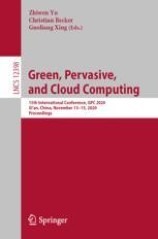
Green, pervasive, and cloud computing ; 15th International conference, GPC 2020, Xi'an, China, November 13–15, 2020, Proceedings
This book constitutes the refereed proceedings of the 15th International Conference on Green, Pervasive, and Cloud Computing, GPC 2020, held in Xi'an, China, in November 2020. The 30 full papers presented in this book together with 8 short papers were carefully reviewed and selected from 96 submissions. They cover the following topics: Device-free Sensing; Machine Learning; Recommendation Systems; Urban Computing; Human Computer Interaction; Internet of Things and Edge Computing; Positioning; Applications of Computer Vision; CrowdSensing; and Cloud and Related Technologies.
