



Page 41
Page 41
Accelerated VB 2008
Visual Basic 2008 offers powerful new features, and Accelerated VB 2008 is the fastest path to mastering them, and the rest of Visual Basic, for both experienced Visual Basic programmers moving to VB 2008 and programmers moving to Visual Basic from another object–oriented language. Many books introduce VB, but very few also explain how to use it optimally with the .NET common language runtime (CLR). This book teaches both core Visual Basic language concepts and how to wisely employ VB idioms and object–oriented design patterns to exploit the power of VB and the CLR.

Abstraction, Reformulation, and Approximation ; 7th International Symposium, SARA 2007, Whistler, Canada, July 18-21, 2007, Proceedings
This volume contains the proceedings of SARA 2007, the seventh symposium, held at Whistler Village, British Columbia, Canada, July 18-21. Three distinguished speakers were invited to give keynote presentations, and their abstracts are included herein,It has been recognized since the inception of artificial intelligence that abstractions, problem reformulations and approximations (AR&A) are central to human common-sense reasoning and problem solving and to the ability of systems to reason effectively in complex domains.AR&A techniques have been used in a variety of problem-solving settings, including automated reasoning, cognitive modelling.
Abstraction, reformulation and approximation ; 6th International symposium, SARA 2005, Airth Castle, Scotland, UK, July 26-29, 2005, proceedings
This volume contains the proceedings of the 6th Symposium on Abstraction, Reformulation and Approximation (SARA 2005). the proceedings have been published in the LNAI series of Springer. Abstractions, reformulations and approximations (AR&A) have found app- cationsin avarietyofdisciplines andproblems, including constraintsatisfaction, design, diagnosis, machine learning, planning, qualitative reasoning, scheduling, resource allocation and theorem proving, but are also deeply rooted in philo- phy and cognitive science. The papers in this volume capture a cross-section of the various facets of the ?eld and of its applications. One of the primary uses of AR&A is oriented to overcome computational intractability. AR&A techniques, however, have also proved useful for knowledge acquisition, explanation and other applications.

A vision-based system to early detection of drowning incidents in swimming pools
Being one of the leading causes of death; drowning has become a severe problem in the past few years. Our goal from this project is to focus on the comprehensive survey of drowning detection and prevention techniques. There are various methodologies put up in the domain of swimming pool safety using different intelligent control systems. Various methods have been adopted for drowning detection using the concepts of image processing, pressure and motion sensing. The main objectives of this work are to detect the drowning person in an indoor swimming pool and send an alarm to the lifeguard to rescue if the previously detected person is missing for a specific amount of time.
A software process model handbook for incorporating peoples capabilities
Offers the most advanced approach to date, empirically validated at software development organizations. This handbook adds a valuable contribution to the much-needed literature on people-related aspects in software engineering. The primary focus is on the particular challenge of extending software process definitions to more explicitly address people-related considerations. The capability concept is not present nor has it been considered in most software process models. The authors have developed a capabilities-oriented software process model, which has been formalized in UML and implemented as a tool. A Software Process Model Handbook for Incorporating People's Capabilities guides readers through the incorporation of the individual’s capabilities into the software process. Structured to meet the needs of research scientists and graduate-level students in computer science and engineering, A Software Process Model Handbook for Incorporating People's Capabilities is also suitable for practitioners in industry.

A Practical Programming Model for the Multi-Core Era ; 3rd International Workshop on OpenMP, IWOMP 2007, Beijing, China, June 3-7, 2007 Proceedings
This book constitutes the thoroughly refereed post-workshop proceedings of the Third International Workshop on OpenMP, IWOMP 2007, held in Beijing, China, in June 2007.The 14 revised full papers and 8 revised short papers presented were carefully reviewed and selected from 28 submissions. The papers address all topics related to OpenMP, such as OpenMP performance analysis and modeling, OpenMP performance and correctness tools and proposed OpenMP extensions, as well as applications in various domains, e.g., scientific computation, video games, computer graphics, multimedia, information retrieval, optimization, text processing, data mining, finance, signal and image processing, and numerical solvers.
A Modern Approach to Intelligent Animation : Theory and Practice
Part of the new series, Advanced Topics in Science and Technology in China, this book discusses concepts, theory, and core technologies of intelligent theory and human animation, including video based human animation, and intelligent technology of motion data management and reusing. It introduces systems developed to demonstrate the technologies of video based animation. Each chapter is independent. Lively pictures and demos will be presented to make the theory and technologies more understandable.
A First Course in Statistical Inference
Offers a modern and accessible introduction to Statistical Inference, the science of inferring key information from data. Aimed at beginning undergraduate students in mathematics, it presents the concepts underpinning frequentist statistical theory. Written in a conversational and informal style, this concise text concentrates on ideas and concepts, with key theorems stated and proved. Detailed worked examples are included and each chapter ends with a set of exercises, with full solutions given at the back of the book. Examples using R are provided throughout the book, with a brief guide to the software included. Topics covered in the book include: sampling distributions, properties of estimators, confidence intervals, hypothesis testing, ANOVA, and fitting a straight line to paired data.
A Concise Introduction to Data Compression
Compressing data is an option naturally selected when faced with problems of high costs or restricted space. Written by a renowned expert in the field, this book offers readers a succinct, reader-friendly foundation to the chief approaches, methods and techniques currently employed in the field of data compression.
501 Math Word Problems
Contains only word problems - the kinds you encounter at school and on high stakes tests. Gaining familiarity with this specific question type is a proven technique for increasing test scores. The Skill Builder in Focus method provides the targeted practice on these questions necessary to attain higher scores. Questions are divided into six chapters: algebra, geometry, fractions, percents, decimals, and miscellaneous math. Within each chapter, questions move from easy to advanced, giving test-takers the opportunity to gain confidence in each math area. Each chapter contains questions, answers, and detailed explanations to reinforce learning and understanding. Diagrams and useful terminology help clarify math rules for effective studying and retention.
3-D Shape Estimation and Image Restoration : Exploiting Defocus and Motion-Blur
Images contain information about the spatial properties of the scene they depict. When coupled with suitable assumptions, images can be used to infer three-dimensional information. This useful volume concentrates on motion blur and defocus, which can be exploited to infer the 3-D structure of a scene—as well as its radiance properties—and which in turn can be used to generate novel images with better quality. 3-D Shape Estimation and Image Restoration presents a coherent framework for the analysis and design of algorithms to estimate 3-D shape from defocused and motion blurred images, and to eliminate defocus and motion blur to yield "restored" images. It provides a collection of algorithms that are optimal with respect to the chosen model and estimation criterion.

3D Segmentation for medical images (OsteoVision) = التقطيع ثلاثي الأبعاد للصور الطبية
With the increasing integration of AI across various sectors, artificial intelligence (AI) is already playing a significant role in the healthcare industry, and its use is expected to grow further. AI systems used in image processing and computer vision algorithms have shown a significant ability to perform many operations such as segmentation, classification, and detection. This project presents the application of computer vision algorithms in the field of medical imaging for diagnostic, therapeutic, and interventional purposes. This thesis explores the use of several computer vision algorithms to address different pathologies, specifically brain tumors (glioma) (see Appendix A) and knee osteoarthritis (OA), as well as tracking the progression of knee osteoarthritis using the Kellgren and Lawrence (KL) grading system, a common method for classifying the severity of OA into five grades. To achieve the desired impact, the project employs various techniques, including 3D segmentation for brain tumors, 2D segmentation for knee joints, and multinomial classification for determining the severity of knee OA injuries. The primary aims of the project are to enhance diagnostic accuracy, assist in creating treatment plans, provide an assistive tool for healthcare providers to make more informed decisions, leverage AI's capabilities to detect abnormalities that might escape the human eye, and streamline workflow. To facilitate these goals, the project incorporates a user-friendly UI, a website, and a Flutter-based mobile application, enabling healthcare providers to efficiently integrate these tools into their practice and improve patient care.
3D Mesh processing and character animation : with examples using OpenGL, OpenMesh and Assimp
Focusses specifically on topics that are important in three-dimensional modelling, surface design and real-time character animation. It provides an in-depth coverage of data structures and popular methods used in geometry processing, keyframe and inverse kinematics animations and shader based processing of mesh objects. It also introduces two powerful and versatile libraries, OpenMesh and Assimp, and demonstrates their usefulness through implementations of a wide range of algorithms in mesh processing and character animation respectively. This Textbook is written for students at an advanced undergraduate or postgraduate level who are interested in the study and development of graphics algorithms for three-dimensional mesh modeling and analysis, and animations of rigged character models.
3D Imaging, Analysis and Applications
This textbook is designed for postgraduate studies in the field of 3D Computer Vision. It also provides a useful reference for industrial practitioners; for example, in the areas of 3D data capture, computer-aided geometric modelling and industrial quality assurance. This second edition is a significant upgrade of existing topics with novel findings. Additionally, it has new material covering consumer-grade RGB-D cameras, 3D morphable models, deep learning on 3D datasets, as well as new applications in the 3D digitization of cultural heritage and the 3D phenotyping of crops.
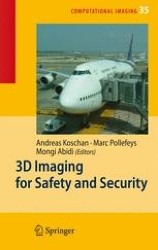
3D Imaging for Safety and Security
This book is so far the first that covers the current state of the art in 3D imaging for safety and security. Special attention was given to advanced 3D imaging technologies in the context of safety and security applications. Comparative evaluation studies showing advantages of 3D imaging over traditional 2D imaging for a given computer vision or pattern recognition task were emphasized. Moreover, additional experts in the field of 3D imaging for safety and security were invited by the editors for a contribution to this book.

3D design reconstruction
This report will talk about a way to design and rebuild a cheap, true-to-the-truth 3D system using reverse engineering. The system provides the service of reconstructing objects into 3D models by placing the object in a predetermined place facing a set of sensors and cameras at a certain distance and at precise angles, using the angle of rotation for each image and combining the points of triangulation we can build a form of 3D modeling types. These models can be used in digital animation or printed with 3D printers for a wide variety of applications.
3-D Computer vision : Principles, algorithms and applications
Offers advanced content on computer vision (basic content can be found in its prerequisite textbook, “2D Computer Vision: Principles, Algorithms and Applications”), including the basic principles, typical methods and practical techniques. It is intended for graduate courses on related topics, e.g. Computer Vision, 3-D Computer Vision, Graphics, Artificial Intelligence, etc. The book is mainly based on my lecture notes for several undergraduate and graduate classes I have offered over the past several years, while a number of topics stem from my research publications co-authored with my students. This book takes into account the needs of learners with various professional backgrounds, as well as those of self-learners. Furthermore, it can be used as a reference guide for practitioners and professionals in related fields.
