



Page 40
Page 40

Approximation and Online Algorithms ; Vol.3879 : 3rd International Workshop, WAOA 2005, Palma de Mallorca, Spain, October 6-7, 2005, Revised Selected Papers
The third Workshop on Approximation and Online Algorithms (WAOA 2005) focused on the design and analysis of algorithms for online and computationally hard problems. Both kinds of problems have a large number of applications from a variety of ?elds. WAOA 2005 took place in Palma de Mallorca, Spain, on 6–7 October 2005. The workshop was part of the ALGO 2005 event that also hosted ESA, WABI, and ATMOS. The two previous WAOA workshops were held in Budapest (2003) and Rome (2004).

Approximation and online algorithms ; Vol.3351 ; 2nd international workshop, WAOA 2004, Bergen, Norway, September 14-16, 2004, Revised Selected Papers
The 2nd Workshop on Approximation and Online Algorithms (WAOA 2004) focused on the design and analysis of algorithms for online and computationally hard problems. Both kinds of problems have a large number of applications arising from a variety of fields. The workshop was part of the ALGO 2004 event which also hosted ESA, WABI, IWPEC, and ATMOS. Topics of interests for WAOA2004 were : applications to game theory, appr- imation classes, coloring and partitioning, competitive analysis, computational finance, cuts and connectivity, geometric problems, in approximability results, mechanism design, network design, routing, packing and covering, paradigms, randomization techniques, and scheduling problems. on the reviews, This volume contains the 21 selected papers

Approximation and Online Algorithms ; 5th International Workshop, WAOA 2007, Eilat, Israel, October 11-12, 2007. Revised Papers
The Fifth Workshop on Approximation and Online Algorithms (WAOA 2007) focused on the design and analysis of algorithms for online and computationally hard problems.

Approximation and Online Algorithms ; 4th International Workshop, WAOA 2006, Zurich, Switzerland, September 14-15, 2006, Revised Papers
It focuses on the design and analysis of algorithms for online and computationally hard problems. Both kinds of problems have a large number of applications
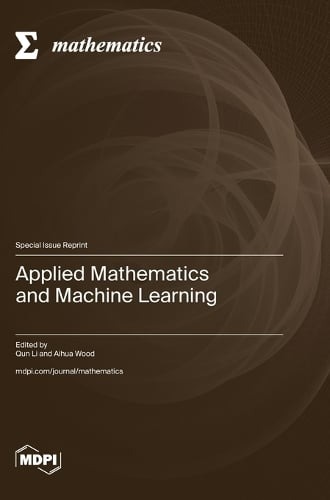
Applied mathematics and machine learning
The simultaneous availability of large datasets and high-performance computing capability in recent years has enabled the rapid development of powerful machine learning algorithms. On the one hand, state-of-the-art machine learning techniques have transformed many areas of science and engineering; on the other hand, theoretical discoveries in mathematical algorithms, differential equations, and statistical inferences, to name a few, have provided the foundation for the exploration of new multidisciplinary models for solving practical problems. This Special Issue endeavors to continue the journey that started in our previous Special Issue (Applied Mathematics and Computational Physics) by providing a platform for researchers from both academia and industry, as well as government, to present their new computational methods that have engineering and physics applications.

Applied Informatics; Third International Conference, ICAI 2020, Ota, Nigeria, October 29–31, 2020, Proceedings
This book constitutes the thoroughly refereed papers of the Second International Conference on Applied Informatics, ICAI 2020, held in Ota, Nigeria, in October 2020. The 35 full papers were carefully reviewed and selected from 101 submissions. The papers are organized in topical sections on artificial intelligence; business process management; cloud computing; data analysis; decision systems; health care information systems; human-computer interaction; image processing; learning management systems; software design engineering.
Applied Deep Learning with TensorFlow 2 : Learn to Implement Advanced Deep Learning Techniques with Python
Focuses on the fundamental concepts and at the same time on practical aspects of implementing neural networks and deep learning for your research projects. This book is designed so that you can focus on the parts you are interested in. You will explore topics as regularization, optimizers, optimization, metric analysis, and hyper-parameter tuning. In addition, you will learn the fundamentals ideas behind autoencoders and generative adversarial networks. All the code presented in the book will be available in the form of Jupyter notebooks which would allow you to try out all examples and extend them in interesting ways. A companion online book is available with the complete code for all examples discussed in the book and additional material more related to TensorFlow and Keras. All the code will be available in Jupyter notebook format and can be opened directly in Google Colab (no need to install anything locally) or downloaded on your own machine and tested locally. You will: Understand the fundamental concepts of how neural networks work / Learn the fundamental ideas behind autoencoders and generative adversarial networks / Be able to try all the examples with complete code examples that you can expand for your own projects / Have available a complete online companion book with examples and tutorials.

Applied cryptography and network security ; Vol. 3989 : 4th International Conference, ACNS 2006, Singapore, June 6-9, 2006, Proceedings
The 4th International Conference on Applied Cryptography and Network Security(ACNS 2006)washeldin Singapore,during June6-9,2006.ACNS 2006 brought together individuals from academia and industry involved in multiple research disciplines of cryptography and security to foster exchange of ideas. This volume (LNCS 3989) contains papers presented in the academic track. ACNS was set a high standard when it was initiated in 2003. There has been a steady improvement in the quality of its program in the past 4 years: ACNS 2003 (Kunming, China), ACNS 2004 (Yellow Mountain, China), ACNS 2005 (New York, USA), ACNS 2006 (Singapore). The average acc- tance rate is kept at around 16%. We wish to receive the continued support from the community of cryptographyand security worldwide to further improve its quality and make ACNS one of the leading conferences.

Applied cryptography and network security ; 6th International Conference, ACNS 2008, New York, NY, USA, June 3-6, 2008. Proceedings
This book constitutes the refereed proceedings of the 6th International Conference on Applied Cryptography and Network Security, ACNS 2008, held in New York, NY, USA, in June 2008.

Applied cryptography and network security ; 5th International Conference, ACNS 2007, Zhuhai, China, June 5-8, 2007, Proceedings
The book is organized in topical sections on signature schemes, computer and network security, cryptanalysis, group-oriented security, cryptographic protocols, anonymous authentication, identity-based cryptography, security in wireless, ad-hoc, and peer-to-peer networks, as well as efficient implementation.

Applied cryptography and network security ; 19th International Conference, ACNS 2021, Kamakura, Japan, June 21–24, 2021, Proceedings, Part I
The two-volume set LNCS 12726 + 12727 constitutes the proceedings of the 19th International Conference on Applied Cryptography and Network Security, ACNS 2021, which took place virtually during June 21-24, 2021. The 37 full papers presented in the proceedings were carefully reviewed and selected from a total of 186 submissions. They were organized in topical sections as follows: Part I: Cryptographic protocols; secure and fair protocols; cryptocurrency and smart contracts; digital signatures; embedded system security; lattice cryptography; Part II: Analysis of applied systems; secure computations; cryptanalysis; system security; and cryptography and its applications.
Applied and computational mathematics for digital environments
Contains the 11 papers that were accepted and published in the Special Issue “Applied and Computational Mathematics for Digital Environments” of the MDPI Mathematics journal. The topics of interest include, among others, scientific research, applied tasks, and problems in the following areas: The construction of mathematical and information models of intelligent computer systems for monitoring and controlling the parameters of digital environments; The development of intelligent optimization algorithms that search for optimal parameter values of mathematical and information models in digital environments; Software and mathematical technologies in the implementation of intelligent monitoring and computer control of the parameters of digital environments; The development and application of mathematical and information models, machine learning methods, and artificial intelligence for the analysis and processing of big data in digital environments.

Applied algebra, algebraic algorithms and error-correcting codes ; 17th International Symposium, AAECC-17, Bangalore, India, December 16-20, 2007, Proceedings
Among the subjects addressed are block codes, including list-decoding algorithms; algebra and codes: rings, fields, algebraic geometry codes; algebra: rings and fields, polynomials, permutations, lattices; cryptography: cryptanalysis and complexity; computational algebra: algebraic algorithms and transforms; sequences and boolean functions.
Applications of Graph Transformations with Industrial Relevance ; 3rd International Symposium, AGTIVE 2007, Kassel, Germany, October 10-12, 2007, Revised Selected and Invited Papers
This book constitutes the thoroughly refereed post-conference proceedings of the Third International Symposium on Applications of Graph Transformations, AGTIVE 2007, held in Kassel, Germany, in October 2007.

Applications of evolutionary computing ; Vol. 3907 : EvoWorkshops 2006: EvoBIO, EvoCOMNET, EvoHOT, EvoIASP, EvoINTERACTION, EvoMUSART, and EvoSTOC, Budapest, Hungary, April 10-12, 2006, Proceedings
This book constitutes the refereed joint proceedings of seven workshops on evolutionary computing, EvoWorkshops 2006, held in Budapest, Hungary, in April 2006. The 65 revised full papers and 13 revised short papers presented were carefully reviewed and selected from a total of 149 submissions. In accordance with the seven workshops covered, the papers are organized in topical sections on evolutionary bioinformatics, evolutionary computation in communications, networks, and connected systems, evolutionary computation in hardware optimization, evolutionary computation in image analysis and signal processing, interactive evolution and humanized computational intelligence, evolutionary music and art, and evolutionary algorithms in stochastic and dynamic environments.

Applications of evolutionary computing ; Vol. 3449 ; Evoworkshops : EvoBIO, EvoCOMNET, EvoHot, EvoIASP, EvoMUSART, and EvoSTOC
Evolutionary computation (EC) techniques are e?cient nature-inspired pl- ning and optimization methods based on the principles of natural evolution and genetics. Due to their e?ciency and the simple underlying principles, these methods can be used for a large number of problems in the context of problem solving,optimization,andmachinelearning. Alargeandcontinuouslyincreasing number of researchers and practitioners make use of EC techniques in many - plication domains. The book at hand presents a careful selection of relevant EC applications combined with thorough examinations of techniques for a successful application of EC. The presented papers illustrate the current state of the art in the application of EC and should help and inspire researchers and practitioners to develop e?cient EC methods for design and problem solving.

Applications of evolutionary computing ; EvoWorkshops 2008 : EvoCOMNET, EvoFIN, EvoHOT, EvoIASP, EvoMUSART, EvoNUM, EvoSTOC, and EvoTransLog, Naples, Italy, March 26-28, 2008. Proceedings
This volume presents a careful selection of relevant EC examples combined with a thorough examination of the techniques used in EC. The papers in the volume illustrate the current state of the art in the application of EC and should help and - spire researchers and professionals to develop e?cient EC methods for design and problem solving.

Applications of evolutionary computing ; EvoWorkshops 2007 : EvoCOMNET, EvoFIN, EvoIASP, EvoINTERACTION, EvoMUSART, EvoSTOC, and EvoTransLog, Valencia, Spain, April 11-13, 2007, Proceedings
This volume contains contributions for EvoCOMNET, EvoFIN, EvoIHOT, EvoMUSART, EvoSTIM, and EvoTRANSLOC. The 51 revised full papers presented were carefully reviewed and selected from numerous submissions. This volume presents an overview about the latest research in EC. Areas where evolutionary computation techniques have been applied range from telecommunication networks to complex systems, finance and economics, games, image analysis, evolutionary music and art, parameter optimization, scheduling, and logistics. These papers may provide guidelines to help new researchers tackling their own problem using EC.
Applications and innovations in intelligent systems XII ; Proceedings of AI-2004, the Twenty-fourth SGAI International Conference on Innhovative Techniques and Applications of Artificial Intelligence
The papers in this volume are the refereed application papers presented at AI-2004, the Twenty-fourth SGAI International Conference on Innovative Techniques and Applications of Artificial Intelligence, held in Cambridge 2004. The papers present new and innovative developments in the field, divided into sections on Synthesis and Prediction, Scheduling and Search, Diagnosis and Monitoring, Classification and Design, and Analysis and Evaluation. This is the twelth volume in the Applications and Innovations series. The series serves as a key reference on the use of AI Technology to enable organisations to solve complex problems and gain significant business benefits. The Technical Stream papers are published as a companion volume under the title Research and Development in Intelligent Systems XXI.
Application of computational electromagnetics techniques and artificial intelligence in the engineering
Introduces the latest developments in electromagnetic computing and artificial intelligence technology. Artificial intelligence technology can be applied to the modeling, analysis, and optimization design of microwave equipment, solving the routing problem of self-organizing networks in small unmanned aerial vehicle systems, calculating the radiation characteristics of antenna arrays on large electrical platforms, analyzing the impact of electromagnetic wave coupling on electronic devices, simulating the field distribution characteristics of electronic devices, and so on. With the help of artificial intelligence, designers can more conveniently, quickly, and accurately solve engineering problems.
