



Page 34
Page 34
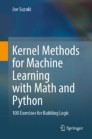
Kernel Methods for Machine Learning with Math and Python: 100 Exercises for Building Logic
Addresses the fundamentals of kernel methods for machine learning by considering relevant math problems and building Python programs. The book’s main features are as follows: Includes 100 exercises, which have been carefully selected and refined. As their solutions are provided in the main text, readers can solve all of the exercises by reading the book. / The mathematical premises of kernels are proven and the correct conclusions are provided, helping readers to understand the nature of kernels. / Source programs and running examples are presented to help readers acquire a deeper understanding of the mathematics used. / Once readers have a basic understanding of the functional analysis topics covered in Chapter 2, the applications are discussed in the subsequent chapters. Here, no prior knowledge of mathematics is assumed. / Considers both the kernel for reproducing kernel Hilbert space (RKHS) and the kernel for the Gaussian process; a clear distinction is made between the two.

Job Scheduling Strategies for Parallel Processing ; 13th International Workshop, JSSPP 2007, Seattle, WA, USA, June 17, 2007. Revised Papers
Constitutes the thoroughly refereed post-workshop proceedings of the 13th International Workshop on Job Scheduling Strategies for Parallel Processing, JSSPP 2007, held in Seattle, WA, USA, in June 2007, in conjunction with the 21st ACM International Conference on Supercomputing, ICS 2007.The 10 revised full research papers presented went through the process of strict reviewing and subsequent improvement. The papers cover all current issues of job scheduling strategies for parallel processing from the supercomputer-centric viewpoint but also address many nontraditional high-performance computing and parallel environments that cannot or need not access a traditional supercomputer.

Job Scheduling Strategies for Parallel Processing ; 12th International Workshop, JSSPP 2006, Saint-Malo, France, June 26, 2006, Revised Selected Papers
Constitutes the thoroughly refereed post-proceedings of the 12th International Workshop on Job Scheduling Strategies for Parallel Processing, JSSPP 2006, held in Saint-Malo, France in June 2006 in conjunction with the Joint International Conference on Measurement and Modeling of Computer Systems SIGMETRICS/Performance 2006.
JavaScript data structures and algorithms : An Introduction to understanding and implementing core data structure and algorithm fundamentals
Combines clear explanations of data structure and algorithm theory with practical code samples, examples and exercises, all specifically relevant to JavaScript Provides background information on object-oriented programming and native JavaScript concepts to help understand how everything fits together Illustrates how these theoretical computer science concepts ties back to practical applications in software engineering
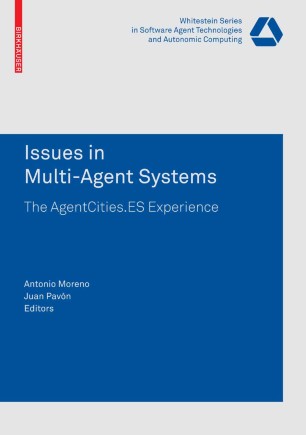
Issues in Multi-Agent Systems : The AgentCities.ES Experience
The purpose of this book is to present current status of this technology by looking at its application in different domains, such as electronic markets, e-tourism, ambience intelligence, and complex system analysis.It starts by discussing software engineering issues for the development of multi-agent systems, how much it costs to build a multi-agent system, and which methods and tools are currently available. Next chapters present some of the most relevant aspects that are considered for the development of multi-agent systems.
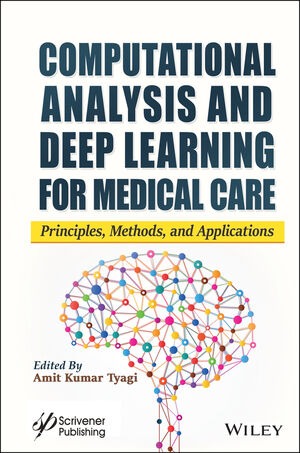
Computational analysis and deep learning for medical care : Principles, methods, and applications
Focuses on the sophisticated methods for improving dye extraction and dyeing properties which will minimize the use of bioresource products. This book also brings out the innovative ways of wet chemical processing to alleviate the environmental impacts arising from this sector.

Computation and Logic in the Real World ; 3rd Conference on Computability in Europe, CiE 2007, Siena, Italy, June 18-23, 2007, Proceedings
This volume, Computation and Logic in the Real World, is the proceedings of the third in a series of conferences of CiE Computability in Europe, (CiE) is an informal network working on computability theory including its foundations, technical development, and applications. It performed with discrete or continuous data by all kinds of algorithms, programs, and machines. The sources of new ideas and methods include practical developments in areas such as neural networks, quantum computation, natural computation, molecular computation, computational learning.
Component-based software engineering ; 10th International Symposium, CBSE 2007, Medford, MA, USA, July 9-11, 2007, Proceedings
Providing all the latest on a topic of extreme commercial relevance, this book contains new trends in global software services and distributed systems architectures to push the limits of established and tested component-based methods, tools and platforms.
Complexity of Constraints : An Overview of Current Research Themes
This state-of-the-art survey contains the papers that were invited by the organizers after conclusion of an International Dagstuhl-Seminar on Complexity of Constraints, held in Dagstuhl Castle, Germany, in October 2006.

Complex Motion ; 1st International Workshop, IWCM 2004, Günzburg, Germany, October 12-14, 2004, Revised Papers
The world we live in is a dynamic one: we explore it by moving through it, and many of the objects which we are interested in are also moving. Trafic, for instance, is an example of a domain where detecting and processing visual motion is of vital interest, both in a metaphoric as well as in a purely literal sense. Visual communication is another important example of an area of science which is dominated by the need to measure, understand, and represent visual motion in an eficient way. Visual motion is a subject of research which forces the investigator to deal with complexity; complexity in the sense of facing efiects of motion in a very large diversity of forms, starting from analyzing simple motion in a changing envir- ment (illumination, shadows, . . . ), under adverse observation conditions, such as bad signal-to-noiseratio (low illumination, small-scaleprocesses, low-dosex-ray, etc. ), covering also multiple motions of independent objects, occlusions, and - ing as far as dealing with objects which are complex in themselves (articulated objects such as bodies of living beings). The spectrum of problems includes, but does not end at, objects which are not ‘bodies’ at all, e. g. , when anal- ing fiuid motion, cloud motion, and so on. Analyzing the motion of a crowd in a shopping mall or in an airport is a further example that implies the need to struggle against the problems induced by complexity.
Complex Analysis with Applications to Number Theory
The book discusses major topics in complex analysis with applications to number theory.It 's including the theory of several finitely and infinitely complex variables, hyperbolic geometry, two- and three-manifolds, and number theory. In addition to solved examples and problems, the book covers most topics of current interest, such as Cauchy theorems, Picard’s theorems, Riemann–Zeta function, Dirichlet theorem, Gamma function, and harmonic functions.

Compiler construction ; Vol. 3923 : 15th International Conference, CC 2006, Held as Part of the Joint European Conferences on Theory and Practice of Software, ETAPS 2006, Vienna, Austria, March 30-31, 2006, Proceedings
ETAPS 2006 was the ninth instance of the European Joint Conferences on Theory and Practice of Software. ETAPS is an annual federated conference that was established in 1998 by combining a number of existing and new conferences. The events that comprise ETAPS address various aspects of the system devel- ment process, including speci?cation, design, implementation, analysis and impro- ment. The languages, methodologies and tools which support these activities are all well within its scope. Di?erent blends of theory and practice are represented, with an inclination towards theory with a practical motivation on the one hand and soundly based practice on the other.

Compiler construction ; Vol. 3443 : 14th International Conference, CC 2005, Held as Part of the Joint European Conferences on Theory and Practice of Software, ETAPS 2005, Edinburgh, UK, April 4-8, 2005. Proceedings
"This book constitutes the refereed proceedings of 14th International Conference, CC 2005, Held as Part of the Joint European Conferences on Theory and Practice of Software, ETAPS 2005, including Topics Programming Languages, Compilers, Interpreters Logics and Meanings of Programs / Mathematical Logic and Formal Languages / Software Engineering / Artificial Intelligence"

Compiler construction ; 17th International Conference, CC 2008, Held as Part of the Joint European Conferences on Theory and Practice of Software, ETAPS 2008, Budapest, Hungary, March 29 - April 6, 2008. Proceedings
This book constitutes the proceedings of the 17th International Conference on Compiler Construction, CC 2008. It covers analysis and transformations, compiling for parallel architectures, runtime techniques and tools, analyses, and atomicity and transactions.

Compiler construction ; 16th International Conference, CC 2007, Held as Part of the Joint European Conferences on Theory and Practice of Software, ETAPS 2007, Braga, Portugal, March 26-30, 2007, Proceedings
This book covered Theory and Practice of Software. The sections includes architecture, garbage collection and program analysis, register allocation, and program analysis.

Comparative genomics ; Vol.4205 ; RECOMB 2006 International Workshop, RECOMB-CG 2006, Montreal, Canada, September 24-26, 2006, Proceedings
The papers address a broad variety of aspects and components of the field of comparative genomics, ranging from new quantitative discoveries about genome structure and process to theorems on the complexity of computational problems inspired by genome comparison.

Comparative genomics ; RECOMB 2007, International Workshop, RECOMB-CG 2007, San Diego, CA, USA, September 16-18, 2007, Proceedings
This book provides an evolutionary conceptual framework for comparative genomics, with the ultimate objective of understanding the loss and gain of genes during evolution, the interactions among gene products, and the relationship between genotype, phenotype and the environment. The many examples in the book have been carefully chosen from primary research literature based on two criteria: their biological insight and their pedagogical merit. The phylogeny-based comparative methods, involving both continuous and discrete variables, often represent a stumbling block for many students entering the field of comparative genomics. They are numerically illustrated and explained in great detail.

Communications and Multimedia Security ; Vol. 175 ; 8th IFIP TC-6 TC-11 Conference on Communications and Multimedia Security, Sept. 15-18, 2004, Windermere, The Lake District, United Kingdom
Communications and Multimedia Security is an essential reference for both academic and professional researchers in the fields of Communications and Multimedia Security. This state-of-the-art volume presents the proceedings of the Eighth Annual IFIP TC-6 TC-11 Conference on Communications and Multimedia Security, September 2004, in Windermere, UK. The papers presented here represent the very latest developments in security research from leading people in the field. The papers explore a wide variety of subjects including privacy protection and trust negotiation, mobile security, applied cryptography, and security of communication protocols. Of special interest are several papers which addressed security in the Microsoft .Net architecture, and the threats that builders of web service applications need to be aware of. The papers were a result of research sponsored by Microsoft at five European University research centers. This collection will be important not only for multimedia security experts and researchers, but also for all teachers and administrators interested in communications security.

Classification - the ubiquitous challenge ; Proceedings of the 28th annual conference of the Gesellschaft für Klassifikation e.V., University of Dortmund, March 9-11, 2004
This volume contains revised versions of selected papers presented duringthe 28th Annual Conference of the Gesellschaft f ̈ur Klassifikation (GfKl), theGerman Classification Society. contributed papers by authors from 18countries were presented at the conference in 52 parallel sessions representingthe whole field addressed by the title of the conference “Classification: TheUbiquitous Challenge”. Among these 52 sessions the VOC organized sessionson Mixture Modelling, Optimal Scaling, Multiway Methods, and Psychomet-rics with 18 papers. Overall, presentation of the papers in this volume is arranged in the fol-lowing parts:I. (Semi-)Plenary PresentationsII. Classification and Data AnalysisIII. Applications, andIV. Contest: Social Milieus in Dortmund

Citation Analysis in Research Evaluation
This book is written for members of the scholarly research community, and for persons involved in research evaluation and research policy. More specifically, it is directed towards the following four main groups of readers: – All scientists and scholars who have been or will be subjected to a quantitative assessment of research performance using citation analysis. – Research policy makers and managers who wish to become conversant with the basic features of citation analysis, and about its potentialities and limitations. – Members of peer review committees and other evaluators, who consider the use of citation analysis as a tool in their assessments. – Practitioners and students in the field of quantitative science and technology studies, informetrics, and library and information science. Citation analysis involves the construction and application of a series of indicators of the ‘impact’, ‘influence’ or ‘quality’ of scholarly work, derived from citation data, i.e. data on references cited in footnotes or bibliographies of scholarly research publications. Such indicators are applied both in the study of scholarly communication and in the assessment of research performance. The term ‘scholarly’ comprises all domains of science and scholarship, including not only those fields that are normally denoted as science – the natural and life sciences, mathematical and technical sciences – but also social sciences and humanities.
