



Page 3
Page 3

Declarative programming for knowledge management ; 16th International conference on applications of declarative programming and knowledge management, INAP 2005, Fukuoka, Japan, October 22-24, 2005. Revised Selected Papers
Presents a selection of papers presented at the 16th Inter- tional Conference on Applications of Declarative Programming and Knowledge Management, INAP 2005,held in October 2005 at Waseda University, Fukuoka, Japan. These papers re?ect a snapshot of ongoing research and current app- cations in knowledge management and declarative programming.

Decision Procedures : An Algorithmic Point of View
Concentrates on decision procedures for first-order theories that are commonly used in automated verification and reasoning, theorem-proving, compiler optimization and operations research.

Data science on the Google cloud platform : Implementing end-to-end real-time data pipelines : From ingest to machine learning
Learn how easy it is to apply sophisticated statistical and machine learning methods to real-world problems when you build using Google Cloud Platform (GCP). This hands-on guide shows data engineers and data scientists how to implement an end-to-end data pipeline with cloud native tools on GCP. You'll work through a sample business decision by employing a variety of data science approaches. Follow along by building a data pipeline in your own project on GCP, and discover how to solve data science problems in a transformative and more collaborative way. Employ best practices in building highly scalable data and ML pipelines on Google Cloud Automate and schedule data ingest using Cloud Run Create and populate a dashboard in Data Studio Build a real-time analytics pipeline using Pub/Sub, Dataflow, and BigQuery Conduct interactive data exploration with BigQuery Create a Bayesian model with Spark on Cloud Dataproc Forecast time series and do anomaly detection with BigQuery ML Aggregate within time windows with Dataflow Train explainable machine learning models with Vertex AI Operationalize ML with Vertex AI Pipelines

Constraint satisfaction techniques for agent-based reasoning
Constraint satisfaction problems are significant in the domain of automated reasoning for artificial intelligence. They can be applied to the modeling and solving of a wide range of combinatorial applications such as planning, scheduling and resource sharing in a variety of practical domains such as transportation, production, supply-chains, network management and human resource management. In this book we study new techniques for solving constraint satisfaction problems, with a special focus on solution adaptation applied to agent reasoning.

Computer Supported Cooperative Work in Design III ; 10th International Conference, CSCWD 2006, Nanjing, China, May 3-5, 2006, Revised Selected Papers
The design of complex artifacts and systems requires the cooperation of multidiscip- nary design teams using multiple commercial and proprietary engineering software tools (e.g., CAD, modeling, simulation, visualization, and optimization), engineering databases, and knowledge-based systems. Individuals or individual groups of mult- isciplinary design teams usually work in parallel and separately with various en- neering software tools which are located at different sites. In addition, individual members may be working on different versions of a design or viewing the design from different perspectives, at different levels of detail. In order to accomplish the work, it is necessary to have effective and efficient c- laborative design environments. Such environments should not only automate in- vidual tasks, in the manner of traditional computer-aided engineering tools, but also enable individual members to share information, collaborate, and coordinate their activities within the context of a design project. CSCW (computer-supported coope- tive work) in design is concerned with the development of such environments.

Computer Supported Cooperative Work in Design I
The design of complex artifacts and systems requires the cooperation of multidisciplinary design teams using multiple commercial and non-commercial engineering tools such as CAD tools, modeling, simulation and optimization software, engineering databases, and knowledge-based systems. Individuals or individual groups of multidisciplinary design teams usually work in parallel and separately with various engineering tools, which are located on different sites, often for quite a long time. At any moment, individual members may be working on different versions of a design or viewing the design from various perspectives, at different levels of detail. In order to meet these requirements, it is necessary to have effective and efficient collaborative design environments. These environments should not only automate individual tasks, in the manner of traditional computer-aided engineering tools, but also enable individual members to share information, collaborate and coordinate their activities within the context of a design project. CSCW (computer-supported cooperative work) in design is concerned with the development of such environments.

Computer science logic ; Vol. 4207 ; 20th International Workshop, CSL 2006, 15th Annual Conference of the EACSL, Szeged, Hungary, September 25-29, 2006, Proceedings
Coverage includes automated deduction and interactive theorem proving, constructive mathematics and type theory, equational logic and term rewriting, automata and formal logics, modal and temporal logic, model checking, finite model theory, and more.

Computer Mathematics ; 8th Asian Symposium, ASCM 2007, Singapore, December 15-17, 2007. Revised and Invited Papers
This book constitutes thoroughly refereed post-conference proceedings of the 8th Asian Symposium on Computer Mathematics, ASCM 2007, held in Singapore in December 2007.

Computer algebra and geometric algebra with applications ; 6th International Workshop, IWMM 2004, Shanghai, China, May 19-21, 2004 and International Workshop, GIAE 2004, Xian, China, May 24-28, 2004.Revised Selected Papers
MathematicsMechanization consistsoftheory,softwareandapplicationofc- puterized mathematical activities such as computing, reasoning and discovering. ItsuniquefeaturecanbesuccinctlydescribedasAAA(Algebraization,Algori- mization, Application). The name “Mathematics Mechanization” has its origin in the work of Hao Wang (1960s), one of the pioneers in using computers to do research in mathematics, particularly in automated theorem proving. Since the 1970s, this research direction has been actively pursued and extensively dev- oped by Prof. Wen-tsun Wu and his followers. It di?ers from the closely related disciplines like Computer Mathematics, Symbolic Computation and Automated Reasoning in that its goal is to make algorithmic studies and applications of mathematics the major trend of mathematics development in the information age.

Computer Aided Verification ; Vol. 3576 ; 17th International Conference, CAV 2005, Edinburgh, Scotland, UK, July 6-10, 2005, Proceedings
This volume contains the proceedings of the International Conference on Computer Aided Veri?cation (CAV), held in Edinburgh, Scotland, 2005. CAV 2005 was the seventeenth in a series of conferences dedicated to the advancement of the theory and practice of computer-assisted formal an- ysis methods for software and hardware systems. The conference covered the spectrum from theoretical results to concrete applications, with an emphasis on practical veri?cation tools and the algorithms and techniques that are needed for their implementation.

Computer Aided Verification ; 20th International Conference, CAV 2008 Princeton, NJ, USA, July 7-14, 2008 Proceedings
This book constitutes the refereed proceedings of the 20th International Conference on Computer Aided Verification, CAV 2008, held in Princeton, NJ, USA, in July 2008.

Computer Aided Verification ; 19th International Conference, CAV 2007, Berlin, Germany, July 3-7, 2007, Proceedings
This volume contains advancement of the theory and practice of computer-assisted formal analysis methods for software and hardware systems. covers the spectrum from theoretical - sults to concrete applications, with an emphasis on practical verification tools and the algorithms and techniques that are needed for their implementation.

Computer Aided Systems Theory – EUROCAST 2005 ; 10th International Conference on Computer Aided Systems Theory, Las Palmas de Gran Canaria, Spain, February 7-11, 2005, Revised Selected Papers
The concept of CAST, computer aided systems Theory, was introduced by F. Pichler of Linz in the late 1980s to include those computer theoretical and practical developments used as tools to solve problems in system science. It was considered as the third component (the other two being CAD and CAM) that would provide for a complete picture of the path from computer and systems sciences to practical developments in science and engineering. Selected papers were published as Springer Lecture Notes in Computer Science vols. 410, 585, 763, 1030, 1333, 1728, 2178 and 2809 and in several special issues of Cybernetics and Systems: an lnternational

Computational Discovery of Scientific Knowledge : Introduction, Techniques, and Applications in Environmental and Life Sciences
Advances in technology have enabled the collection of data from scientific observations, simulations, and experiments at an ever-increasing pace. For the scientist and engineer to benefit from these enhanced data collecting capabilities, it is becoming clear that semi-automated data analysis techniques must be applied to find the useful information in the data. Computational scientific discovery methods can be used to this end: they focus on applying computational methods to automate scientific activities, such as finding laws from observational data. In contrast to mining scientific data, which focuses on building highly predictive models, computational scientific discovery puts a strong emphasis on discovering knowledge represented in formalisms used by scientists and engineers, such as numeric equations and reaction pathways. This state-of-the-art survey provides an introduction to computational approaches to the discovery of scientific knowledge and gives an overview of recent advances in this area, including techniques and applications in environmental and life sciences.

Cloud Native Architecture and Design : A Handbook for Modern Day Architecture and Design with Enterprise-Grade Examples
Explains the fundamentals of cloud-native architecture and services, what cloud principles and patterns to use, and details of designing a cloud-native element. And Progresses to cover the details of how IT systems can modernize to embrace cloud-native architecture, and also provides details of various enterprise assessment techniques to decide what systems can move and cannot move into the cloud. Architecting and designing a cloud-native system isn’t possible without modernized software engineering principles, the culture of automation, and the culture of innovation. As such, this book covers the details of cloud-native software engineering methodologies, and process, and how to adopt an automated governance approach across enterprises with the adoption of artificial intelligence. You will: Discover cloud-native principles and patterns, and how you can leverage them to solve your business problems ; Gain the techniques and concepts you need to adapt to design a cloud-native application ; Use assessment techniques and tools for IT modernization ; Apply cloud-native engineering principles to the culture of automation and culture of innovation ; Harness the techniques and tools to run your cloud-native applications and automate infrastructure ; Operate your cloud-native applications by using AI techniques and zero operation techniques

Mathematical Knowledge Management ; Vol. 3863 ; 4th International Conference, MKM 2005, Bremen, Germany, July 15-17, 2005, Revised Selected Papers
This volume contains the proceedings of the Fourth International Conference on Mathematical Knowledge Management MKM 2005 held July 15–17, 2005 at - ternational University Bremen, Germany.
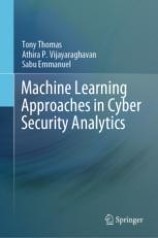
Machine Learning Approaches in Cyber Security Analytics
Introduces various machine learning methods for cyber security analytics. With an overwhelming amount of data being generated and transferred over various networks, monitoring everything that is exchanged and identifying potential cyber threats and attacks poses a serious challenge for cyber experts. Further, as cyber attacks become more frequent and sophisticated, there is a requirement for machines to predict, detect, and identify them more rapidly. Machine learning offers various tools and techniques to automate and quickly predict, detect, and identify cyber attacks.
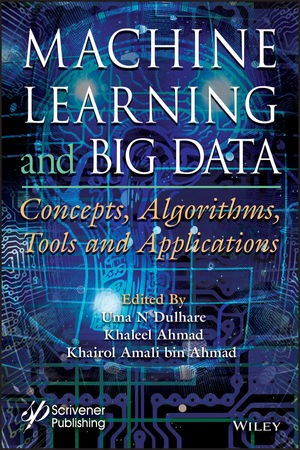
Machine learning and big data : Concepts, algorithms, tools and applications
Showcase novel use-cases and applications, present empirical research results from user-centered qualitative and quantitative experiments of these new applications, and facilitate a discussion forum to explore the latest trends in big data and machine learning by providing algorithms which can be trained to perform interdisciplinary techniques such as statistics, linear algebra, and optimization and also create automated systems that can sift through large volumes of data at high speed to make predictions or decisions without human intervention

Logics in artificial intelligence ; 10th European Conference, JELIA 2006, Liverpool, UK, September 13-15, 2006, Proceedings
Constitutes the refereed proceedings of the 10th European Conference on Logics in Artificial Intelligence, JELIA 2006. The 34 revised full papers and 12 revised tool description papers presented together with 3 invited talks were carefully reviewed and selected from 96 submissions. The papers cover a range of topics within the remit of the Conference, such as logic programming, description logics, non-monotonic reasoning, agent theories, automated reasoning, and machine learning.

Logical foundations of computer science ; International Symposium, LFCS 2007, New York, NY, USA, June 4-7, 2007, Proceedings
Constitutes the refereed proceedings of the International Symposium on Logical Foundations of Computer Science, LFCS 2007, held in New York, NY, USA in June 2007. The volume presents 36 revised refereed papers that address all current aspects of logic in computer science.
