



Page 27
Page 27
Biologically-Inspired Collaborative Computing ; IFIP 20th World Computer Congress, 2nd IFIP TC 10 International Conference on Biologically-Inspired Collaborative Computing, September 8–9, 2008, Milano, Italy
The IFIP series publishes state-of-the-art results in the sciences and technologies of information and communication. The principal aim of the IFIP series is to encourage education and the dissemination and exchange of information about all aspects of computing.
Biologically inspired cooperative computing ; IFIP 19th World Computer Congress, TC 10: 1st IFIP International Conference on biologically inspired cooperative computing, August 21-24, 2006, Santiago, Chile
The IFIP series publishes state-of-the-art results in the sciences and technologies of information and communication. The scope of the series includes: foundations of computer science; software theory and practice; education; computer applications in technology; communication systems; systems modeling and optimization; information systems; computers and society; computer systems technology; security and protection in information processing systems; artificial intelligence; and human-computer interaction.
Biological and artificial intelligence environments
The book reports the proceedings of the 15th Italian workshop on neural networks issued by the Italian Society on Neural Networks SIREN. The longevity recipe of this conference stands in three main points that normally renders the reading of these proceedings so interesting as appealing. 1. The topics of the neural networks is considered an attraction pole for a set of researches centered on the inherent paradigm of the neural networks, rather than on a specific tool exclusively. Thus, the subsymbolic management of the data information content constitutes the key feature of papers in various fields such as Pattern Recognition, Stochastic Optimization, Learning, Granular Computing, and so on, with a special bias toward bioinformatics operational applications. An excerpt of all these matters may be found in the book. 2. Though managed at domestic level, the conference attracts contributions from foreign researchers as well, so that in the book the reader may capture the flavor of the state of the art in the international community. 3. The conference is a meeting of friends as well. Thus the papers generally reflect a relaxed atmosphere where researchers meet to generously exchange their thought and explain their actual results in view of a common cultural growing of the community.
Bioinspired optimization methods and their applications ; 9th International conference, BIOMA 2020, Brussels, Belgium, November 19–20, 2020, Proceedings
This book constitutes the refereed proceedings of the 9th International Conference on Bioinspired Optimization Methods and Their Applications, BIOMA 2020, held in Brussels, Belgium, in November 2020. The 24 full papers presented in this book were carefully reviewed and selected from 68 submissions. The papers in this BIOMA proceedings specialized in bioinspired algorithms as a means for solving the optimization problems and came in two categories: theoretical studies and methodology advancements on the one hand, and algorithm adjustments and their applications on the other.
Bio-inspired information and communication technologies ; 12th EAI International Conference, BICT 2020, Shanghai, China, July 7-8, 2020, Proceedings
This book constitutes the refereed conference proceedings of the 12th International Conference on Bio-inspired Information and Communications Technologies, held in Shanghai, China, in July 2020. Due to the safety concerns and travel restrictions caused by COVID-19, BICT 2020 took place online in a live stream. BICT 2020 aims to provide a world-leading and multidisciplinary venue for researchers and practitioners in diverse disciplines that seek the understanding of key principles, processes and mechanisms in biological systems and leverage those understandings to develop novel information and communications technologies (ICT).
Big Data Intelligence for Smart Applications
Presents the latest discoveries in the field of machine intelligence and big data Proposes many case studies and applications of computational and Big data Combines theory and practice so that readers of the few books (beginners or experts)
Big Data in Bioeconomy : Results from the European DataBio Project
This book presents the comprehensive outcome of The European DataBio Project, which examined new data-driven methods to shape a bioeconomy. These methods are used to develop new and sustainable ways to use forest, farm and fishery resources.
Big data and artificial intelligence in digital finance : Increasing personalization and trust in digital finance using big data and AI
This book presents how cutting-edge digital technologies like Machine Learning, Artificial Intelligence (AI), and Blockchain are set to disrupt the financial sector. The book illustrates how recent advances in these technologies facilitate banks, FinTechs, and financial institutions to collect, process, analyze, and fully leverage the very large amounts of data that are nowadays produced and exchanged in the sector. To this end, the book also introduces some of the most popular Big Data, AI and Blockchain applications in the sector, including novel applications in the areas of Know Your Customer (KYC), Personalized Wealth Management and Asset Management, Portfolio Risk Assessment, as well as variety of novel Usage-based Insurance applications based on Internet-of-Things data.
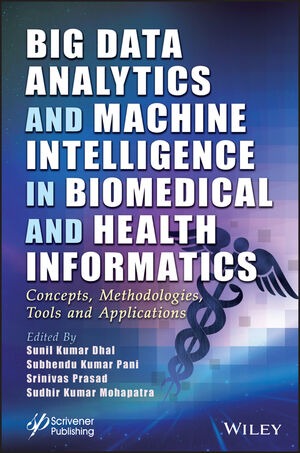
Big data analytics and machine intelligence in biomedical and health informatics : Concepts, methodologies, tools and applications
Provides coverage of developments and state-of-the-art methods in the broad and diversified data analytics field and applicable areas such as big data analytics, data mining, and machine intelligence in biomedical and health informatics. Covers the latest advances and developments in health informatics, data mining, machine learning, and artificial intelligence. They have been organized with respect to the similarity of topics addressed, ranging from issues pertaining to the Internet of Things (IoT) for biomedical engineering and health informatics, computational intelligence for medical data processing, and Internet of Medical Things??(IoMT).

Big Data – BigData 2020; 9th International Conference, Held as Part of the Services Conference Federation, SCF 2020, Honolulu, HI, USA, September 18-20, 2020, Proceedings
Constitutes the proceedings of the 9th International Conference on Big Data, BigData 2020, held as part of SCF 2020, during September 18-20, 2020. The conference was planned to take place in Honolulu, HI, USA and was changed to a virtual format due to the COVID-19 pandemic. The 16 full and 3 short papers presented were carefully reviewed and selected from 52 submissions. The topics covered are Big Data Architecture, Big Data Modeling, Big Data As A Service, Big Data for Vertical Industries (Government, Healthcare, etc.), Big Data Analytics, Big Data Toolkits, Big Data Open Platforms, Economic Analysis, Big Data for Enterprise Transformation, Big Data in Business Performance Management, Big Data for Business Model Innovations and Analytics, Big Data in Enterprise Management Models and Practices, Big Data in Government Management Models and Practices, and Big Data in Smart Planet Solutions.
Bayesian networks and Influence diagrams : A guide to construction and analysis
Probabilistic networks, also known as Bayesian networks and influence diagrams, have become one of the most promising technologies in the area of applied artificial intelligence, offering intuitive, efficient, and reliable methods for diagnosis, prediction, decision making, classification, troubleshooting, and data mining under uncertainty. Bayesian Networks and Influence Diagrams: A Guide to Construction and Analysis provides a comprehensive guide for practitioners who wish to understand, construct, and analyze intelligent systems for decision support based on probabilistic networks. Intended primarily for practitioners, this book does not require sophisticated mathematical skills or deep understanding of the underlying theory and methods nor does it discuss alternative technologies for reasoning under uncertainty.
Bayesian Networks and Decision Graphs
Probabilistic graphical models and decision graphs are powerful modeling tools for reasoning and decision making under uncertainty. As modeling languages they allow a natural specification of problem domains with inherent uncertainty, and from a computational perspective they support efficient algorithms for automatic construction and query answering. This includes belief updating, finding the most probable explanation for the observed evidence, detecting conflicts in the evidence entered into the network, determining optimal strategies, analyzing for relevance, and performing sensitivity analysis. The book introduces probabilistic graphical models and decision graphs, including Bayesian networks and influence diagrams.It contians two parts. The first part focuses on probabilistic graphical models. Compared with the previous book, the new edition also includes a thorough description of recent extensions to the Bayesian network modeling language, advances in exact and approximate belief updating algorithms, and methods for learning both the structure and the parameters of a Bayesian network. The second part deals with decision graphs, and in addition to the frameworks described in the previous edition, it also introduces Markov decision processes and partially ordered decision problems.

Autonomous intelligent systems : Multi-agents and data mining ; 2nd International workshop, AIS-ADM 2007, St. Petersburg, Russia, June 3-5, 2007, Proceedings
MAS offiers powerful metaphors for information system conceptualization, a range of new techniques, and technologies specifically focused on the design and implementation of lar- scale open distributed intelligent systems. KDD also provides intelligent inf- mation technology with powerful ideas, algorithms, and software means to help cope with the main problem of artificial intelligence, formulated in the we- known question “Where does the knowledge come from?”, thus actually making modern applications intelligent and adaptive. The evident recent trend in both science and industry is to integrate and take advantage of both technologies. The existing experience with combined application of multi-agent technology to design architectures of distributed (- erarchical and peer-to-peer) data mining and KDD systems, as well as the u- lization of data mining and KDD achievements to provide enhanced intelligence of MAS, confirms the fact that both technologies are capable of mutual enri- ment and their integrateduse may result in intelligent information systems with new emergent properties.

Automating business modelling : A guide to using logic to represent Informal methods and support reasoning
Enterprise Modelling (EM) methods are frequently used by entrepreneurs as an analysis tool for describing and redesigning their businesses. The resulting product, an enterprise model, is commonly used as a blueprint for reconstructing organizations and such effort is often a part of business process re-engineering and improvement initiatives. Automating Business Modelling describes different techniques of providing automated support for enterprise modelling methods and introduces universally used approaches. A running example of a business modelling method is included; providing a framework and detailed explanation as to how to construct automated support for modelling, allowing readers to follow the method to create similar support. Suitable for senior undergraduates and postgraduates of Business Studies, Computer Science and Artificial Intelligence, practitioners in the fields of Knowledge Management, Enterprise Modelling and Software Engineering, this book offers insight and know-how to both student and professional.

Automatic video editor
Searching in a large database of videos is one of the challenges faced by the user today as most of the results are inaccurate or correct. In our project, we worked on developing a system that receives the search word from the user and searches for it among a large number of videos using MSR-VTT dataset and COCO data set based on the elements that we see inside the video. Entered by the user. We have also worked on adding other options that the user can benefit from in modifying the videos, such as entering a black and white video clip and returning the result in color. The user can also enter a low-resolution video clip, and the system improves the accuracy of the video and sends it.

Automatic Quantum Computer Programming : A Genetic Programming Approach
Computer science will be radically transformed if ongoing efforts to build large-scale quantum computers eventually succeed and if the properties of these computers meet optimistic expectations. Nevertheless, computer scientists still lack a thorough understanding of the power of quantum computing, and it is not always clear how best to utilize the power that it is understood. This dilemma exists because quantum algorithms are difficult to grasp and even more difficult to write. Despite large-scale international efforts, only a few important quantum algorithms are documented, leaving many essential questions about the potential of quantum algorithms unanswered.

Automated technology for verification and analysis ; 18th International Symposium, ATVA 2020, Hanoi, Vietnam, October 19–23, 2020, Proceedings
This book constitutes the refereed proceedings of the 18th International Symposium on Automated Technology for Verification and Analysis, ATVA 2020, held in Hanoi, Vietnam, in October 2020. The 27 regular papers presented together with 5 tool papers and 2 invited papers were carefully reviewed and selected from 75 submissions.
Automated machine learning : Methods, systems, challenges
This book presents the first comprehensive overview of general methods in Automated Machine Learning (AutoML), collects descriptions of existing systems based on these methods, and discusses the first series of international challenges of AutoML systems. The recent success of commercial ML applications and the rapid growth of the field has created a high demand for off-the-shelf ML methods that can be used easily and without expert knowledge. However, many of the recent machine learning successes crucially rely on human experts, who manually select appropriate ML architectures (deep learning architectures or more traditional ML workflows) and their hyperparameters. To overcome this problem, the field of AutoML targets a progressive automation of machine learning, based on principles from optimization and machine learning itself.

Automated deduction – CADE 28 ; 28th International Conference on automated deduction, Virtual Event, July 12–15, 2021, Proceedings
This book constitutes the proceeding of the 28th International Conference on Automated Deduction, CADE 28, held virtually in July 2021. The 29 full papers and 7 system descriptions presented together with 2 invited papers were carefully reviewed and selected from 76 submissions. CADE is the major forum for the presentation of research in all aspects of automated deduction, including foundations, applications, implementations, and practical experience. The papers are organized in the following topics: Logical foundations; theory and principles; implementation and application; ATP and AI; and system descriptions.

Augmented reality, virtual reality, and computer graphics ; 7th International Conference, AVR 2020, Lecce, Italy, September 7–10, 2020, Proceedings, Part II
The 2-volume set LNCS 12242 and 12243 constitutes the refereed proceedings of the 7th International Conference on Augmented Reality, Virtual Reality, and Computer Graphics, AVR 2020, held in Lecce, Italy, in September 2020.* The 45 full papers and 14 short papers presented were carefully reviewed and selected from 99 submissions. The papers discuss key issues, approaches, ideas, open problems, innovative applications and trends in virtual reality, augmented reality, mixed reality, 3D reconstruction visualization, and applications in the areas of cultural heritage, medicine, education, and industry.
