



Page 2
Page 2

Deep learning architecture and application
As one of the fastest-growing topics in machine learning, deep learning algorithms have achieved unprecedented success in recent years. Novel paradigms (such as contrastive learning and few-shot learning) in deep learning and rising neural network architectures (e.g., transformer and masked autoencoder) are dramatically changing the field of data-driven algorithms. More importantly, deep learning models are redefining the next generation of industrial applications spanning image recognition, speech processing, language translation, healthcare, and other sciences. For example, recent advances in deep representation learning are allowing us to learn about protein 3D structures, which sheds new light on fundamental medicine and biology along with potentially bringing in billions of dollars (e.g., in the pharmaceutical market).

Crime detection camera
This paper presents a comprehensive crime detection system that uses a combination of hardware and software to monitor homes and communities in real time. The system consists of a Raspberry Pi 4B, a Raspberry Pi Camera V2, a flame sensor, an MQ-6 gas sensor, and a microphone, which are all connected to a database management system powered by MySQL. The data collected from these devices is analyzed by machine learning algorithms to detect crimes, such as theft or robbery, as well as fires and gas leaks. The system also includes a mobile app, ‘Safe Home’ which provides live video monitoring and real-time notifications to users, and an employee dashboard to monitor all statistics and manage all implemented systems.

Computer aided verification ; 30th International Conference, CAV 2018, Held as Part of the Federated Logic Conference, FloC 2018, Oxford, UK, July 14-17, 2018, Proceedings, Part II
Constitutes the refereed proceedings of the 30th International Conference on Computer Aided Verification, CAV 2018, held in Oxford, UK, in July 2018.The 52 full and 13 tool papers presented together with 3 invited papers and 2 tutorials were carefully reviewed and selected from 215 submissions. The papers cover a wide range of topics and techniques, from algorithmic and logical foundations of verication to practical applications in distributed, networked, cyber-physical, and autonomous systems. They are organized in topical sections on model checking, program analysis using polyhedra, synthesis, learning, runtime verification, hybrid and timed systems, tools, probabilistic systems, static analysis, theory and security, SAT, SMT and decisions procedures, concurrency, and CPS, hardware, industrial applications.

Computer Aided Verification ; 30th International Conference, CAV 2018, Held as Part of the Federated Logic Conference, FloC 2018, Oxford, UK, July 14-17, 2018, Proceedings, Part I
This open access two-volume set LNCS 10980 and 10981 constitutes the refereed proceedings of the 30th International Conference on Computer Aided Verification, CAV 2018, held in Oxford, UK, in July 2018. The papers cover a wide range of topics and techniques, from algorithmic and logical foundations of verication to practical applications in distributed, networked, cyber-physical, and autonomous systems. They are organized in topical sections on model checking, program analysis using polyhedra, synthesis, learning, runtime verification, hybrid and timed systems, tools, probabilistic systems, static analysis, theory and security, SAT, SMT and decisions procedures, concurrency, and CPS, hardware, industrial applications.

Machine Learning for Multimodal Interaction ; Vol.4299 ; 3rd International Workshop, MLMI 2006, Bethesda, MD, USA, May 1-4, 2006, Revised Selected Papers
This book contains a selection of refereed papers presented at the 3rd Workshop on Machine Learning for Multimodal Interaction (MLMI 2006), held in Bethesda MD, USA during May 1–4, 2006.

Machine Learning for Multimodal Interaction ; Vol.3869 ; 2nd International Workshop, MLMI 2005, Edinburgh, UK, July 11-13, 2005, Revised Selected Papers
The papers are organized in topical sections on multimodal processing, HCI and applications, discourse and dialogue, emotion, visual processing, speech and audio processing, and NIST meeting recognition evaluation

Machine Learning for Multimodal Interaction ; 4th International Workshop, MLMI 2007, Brno, Czech Republic, June 28-30, 2007, Revised Selected Papers
This book contains a selection of revised papers from the 4th Workshop on Machine Learning for Multimodal Interaction (MLMI 2007), which took place in Brno, Czech Republic, during June 28 30, 2007. As in the previous editions of the MLMI series, the 26 chapters of this book cover a large area of topics, from multimodal processing and human computer interaction to video, audio, speech and language processing. The application of machine learning techniques to problems arising in these felds and the design and analysis of software
Machine Learning for Computer Scientists and Data Analysts: From an Applied Perspective
Describes traditional as well as advanced machine learning algorithms / Enables students to learn which algorithm is most appropriate for the data being handled / Includes numerous, practical case-studies; implementation codes in Python available for readers
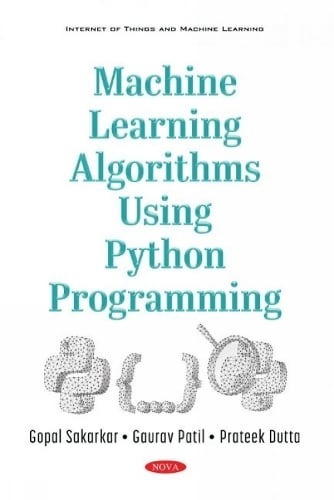
Machine Learning Algorithms Using Python Programming
Presents the key concepts of Machine Learning which includes Python concepts and Interpreter, Foundation of Machine Learning, Data Pre-processing, Supervised Machine Learning, Unsupervised Machine Learning, Reinforcement Learning, Kernel Machine, Design and analysis of Machine Learning experiment and Data visualization. The theoretical concepts along with coding implementation are covered. This book aims to pursue a middle ground between a theoretical textbook and one that focuses on applications. The book concentrates on the important ideas in machine learning.
Machine Learning : Modeling Data Locally and Globally
Machine Learning - Modeling Data Locally and Globally presents a novel and unified theory that tries to seamlessly integrate different algorithms. Specifically, the book distinguishes the inner nature of machine learning algorithms as either "local learning"or "global learning."This theory not only connects previous machine learning methods, or serves as roadmap in various models, but – more importantly – it also motivates a theory that can learn from data both locally and globally. This would help the researchers gain a deeper insight and comprehensive understanding of the techniques in this field. The book reviews current topics,new theories and applications.

Learning Theory ; Vol. 4005 ; 19th Annual Conference on Learning Theory, COLT 2006, Pittsburgh, PA, USA, June 22-25, 2006, Proceedings
Constitutes the refereed proceedings of the 19th Annual Conference on Learning Theory, COLT 2006, held in Pittsburgh, Pennsylvania, USA in June 2006. The 43 revised full papers presented together with 2 articles on open problems and 3 invited lectures were carefully reviewed and selected from a total of 102 submissions. The papers cover a wide range of topics including clustering, un- and semisupervised learning, statistical learning theory, regularized learning and kernel methods, query learning and teaching, inductive inference, learning algorithms and limitations on learning, online aggregation, online prediction and reinforcement learning.

Learning theory ; 20th Annual Conference on Learning theory, COLT 2007, San Diego, CA, USA, June 13-15, 2007, Proceedings
It covers unsupervised, semisupervised and active learning, statistical learning theory, inductive inference, regularized learning, kernel methods, SVM, online and reinforcement learning, learning algorithms and limitations on learning, dimensionality reduction, as well as open problems.
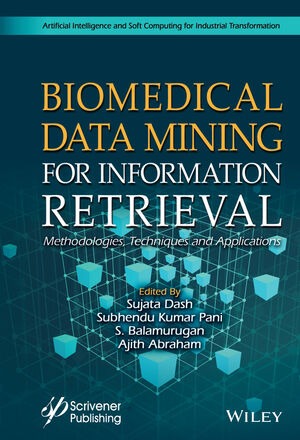
Biomedical data mining for information retrieval : Methodologies, techniques, and applications
Discusses data mining, biomedical image processing, information retrieval with broad coverage of basic scientific applications. covers the topic of mining biomedical text, images and visual features towards information retrieval. Biomedical and health informatics is an emerging field of research at the intersection of information science, computer science, and healthcare and brings tremendous opportunities and challenges due to easily available and abundant biomedical data for further analysis. The aim of healthcare informatics is to ensure the high-quality, efficient healthcare, better treatment and quality of life by analyzing biomedical and healthcare data including patient’s data, electronic health records (EHRs) and lifestyle. Previously, it was a common requirement to have a domain expert to develop a model for biomedical or healthcare; however, recent advancements in representation learning algorithms allows us to automatically to develop the model. Biomedical image mining, a novel research area, due to the vast amount of available biomedical images, increasingly generates and stores digitally.
Beginning deep learning with TensorFlow : Work with Keras, MNIST data sets, and advanced neural networks
Stats with an introduction to AI, where you’ll learn the history of neural networks and what sets deep learning apart from other varieties of machine learning. Discovery the variety of deep learning frameworks and set-up a deep learning development environment. Next, you’ll jump into simple classification programs for hand-writing analysis. Once you’ve tackled the basics of deep learning, you move on to TensorFlow 2 specifically. Find out what exactly a Tensor is and how to work with MNIST datasets. Finally, you’ll get into the heavy lifting of programming neural networks and working with a wide variety of neural network types such as GANs and RNNs. Deep Learning is a new area of Machine Learning research widely used in popular applications, such as voice assistant and self-driving cars. Work through the hands-on material in this book and become a TensorFlow programmer! You will: Develop using deep learning algorithms Build deep learning models using TensorFlow 2 Create classification systems and other, practical deep learning applications

Attendnce system during covid-19
Authentication system has become a hot topic in the field of security, one of the most interested methods of authentication systems is the radio frequency identity (RFID) which is used in this project to build a smart record attendance system that contains many features, one of it to determine whether the student is wearing a mask or not by using Deep Learning algorithms, another feature is the student's temperature measurement through an electronic sensor. The results obtained are processed and stored by the processing unit which is the Raspberry pi then display the data on a mobile application.

Artificial neural networks in Pattern Recognition ; 9th IAPR TC3 Workshop, ANNPR 2020, Winterthur, Switzerland, September 2–4, 2020, Proceedings
This book constitutes the refereed proceedings of the 9th IAPR TC3 International Workshop on Artificial Neural Networks in Pattern Recognition, ANNPR 2020, held in Winterthur, Switzerland, in September 2020. The conference was held virtually due to the COVID-19 pandemic. The 22 revised full papers presented were carefully reviewed and selected from 34 submissions. The papers present and discuss the latest research in all areas of neural network-and machine learning-based pattern recognition. They are organized in two sections: learning algorithms and architectures, and applications.

Artificial neural networks : Formal Models and Their Applications – ICANN 2005 ; 15th International Conference, Warsaw, Poland, September 11-15, 2005, Proceedings, Part II
The second volume contains 162 contributions related to Formal Models and their Applications and deals with new neural network models, supervised learning algorithms, ensemble-based learning, unsupervised learning, recurent neural networks, reinforcement learning, bayesian approaches to learning, learning theory, artificial neural networks for system modeling, decision making, optimalization and control, knowledge extraction from neural networks, temporal data analysis, prediction and forecasting, support vector machines and kernel-based methods, soft computing methods for data representation, analysis and processing, data fusion for industrial, medical and environmental applications, non-linear predictive models for speech processing, intelligent multimedia and semantics, applications to natural language processing, various applications, computational intelligence in games, and issues in hardware implementation.

Artificial intelligence-based Internet of things systems
Discusses the evolution of future generation technologies through Internet of Things (IoT) in the scope of Artificial Intelligence (AI). The main focus of this volume is to bring all the related technologies in a single platform, so that undergraduate and postgraduate students, researchers, academicians, and industry people can easily understand the AI algorithms, machine learning algorithms, and learning analytics in IoT-enabled technologies. This book uses data and network engineering and intelligent decision support system-by-design principles to design a reliable AI-enabled IoT ecosystem and to implement cyber-physical pervasive infrastructure solutions. This book brings together some of the top IoT-enabled AI experts throughout the world who contribute their knowledge regarding different IoT-based technology aspects. Addresses the complete functional framework workflow in AI-enabled IoT ecosystem; Presents intelligent object identification and object discovery through the IoT ecosystem and its implications to the real world ;Explores security and privacy issues and trustworthy machine learning related to data-intensive technologies in AI-based IoT ecosystems.
Applied mathematics and machine learning
The simultaneous availability of large datasets and high-performance computing capability in recent years has enabled the rapid development of powerful machine learning algorithms. On the one hand, state-of-the-art machine learning techniques have transformed many areas of science and engineering; on the other hand, theoretical discoveries in mathematical algorithms, differential equations, and statistical inferences, to name a few, have provided the foundation for the exploration of new multidisciplinary models for solving practical problems. This Special Issue endeavors to continue the journey that started in our previous Special Issue (Applied Mathematics and Computational Physics) by providing a platform for researchers from both academia and industry, as well as government, to present their new computational methods that have engineering and physics applications.
Advances in artificial intelligence: models, optimization, and machine learning
Contains all the articles accepted and published in the Special Issue “Advances in Artificial Intelligence: Models, Optimization, and Machine Learning” of the MDPI Mathematics journal, which covers a wide range of topics connected to the theory and applications of artificial intelligence and its subfields. These topics include, among others, deep learning and classic machine learning algorithms, neural modelling, architectures and learning algorithms, biologically inspired optimization algorithms, algorithms for autonomous driving, probabilistic models and Bayesian reasoning, intelligent agents and multiagent systems.
