



Page 17
Page 17

Mathematical Morphology : 40 Years On ; Proceedings of the 7th International Symposium on Mathematical Morphology, April 18-20, 2005
Mathematical Morphology is a speciality in Image Processing and Analysis, which considers images as geometrical objects, to be analyzed through their interactions with other geometrical objects. It relies on several branches of mathematics, such as discrete geometry, topology, lattice theory, partial differential equations, integral geometry and geometrical probability. It has produced fast and efficient algorithms for computer analysis of images, and has found applications in bio-medical imaging, materials science, geoscience, remote sensing, quality control, document processing and data analysis. This book contains the 43 papers presented at the 7th International Symposium on Mathematical Morphology, held in Paris on April 18-20, 2005. It gives a lively state of the art of current research topics in this field. It also marks a milestone, the 40 years of uninterrupted development of this ever-expanding domain.
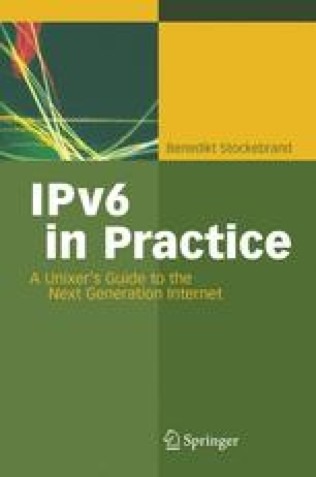
IPv6 in Practice: A Unixer's Guide to the Next Generation Internet
This book is a practical guide to IPv6 addressing Unix and network administrators with experience in TCP/IP(v4) but not necessarily any IPv6 knowledge. It focuses on reliable and efficient operation of IPv6 implementations available today rather than on protocol specifications. Consequently, it covers the essential concepts - using instructive and thoroughly tested examples - on how to configure, to administrate, and to debug IPv6 setups.

IP operations and management ; 8th IEEE International workshop, IPOM 2008, Samos Island, Greece, September 22-26, 2008. Proceedings
Constitutes the refereed proceedings of the 8th IEEE Workshop on IP Operations and Management, IPOM 2008, held on Samos Island, Greece, on September 22-26, 2008, as part of the 4th International Week on Management of Networks and Services, Manweek 2008. The 12 revised full papers presented in this volume were carefully reviewed and selected from 30 submissions. The papers are organized in topical sections on network anomaly detection; traffic engineering, protection, and recovery; network measurements and applications; and network management and security.

IP operations and management ; 7th IEEE International workshop, IPOM 2007 San José, USA, October 31 - November 2, 2007 Proceedings
This book constitutes the refereed proceedings of the 7th IEEE International Workshop on IP Operations and Management, IPOM 2007, held in the course of the 3rd International Week on Management of Networks and Services, Manweek 2007.

IP Networking over Next-Generation Satellite Systems ; International Workshop, Budapest, July 2007
Highlights the very latest research output of several EU satellite-related projects and addresses many unresolved issues in next-generation satellite systems, such as efficient deployment of IPv6 over satellites, working with WLAN and WiMax, QoS provisioning over multi-segment networks (including satellite networks), multicast networks and security.

IOT glass tempering controller
The Internet of things (IoT) subject speaks to a thought for the electronic-mechanical arrangement of devices to detect and gather data from the encompassing environmental factors and a short time later share that data over the Internet where it will, in general, be arranged and utilized for various purposes. This project will show the use of Iot in the process of Harding glass to accomplish a well-tempered glass and solving the problem of arching glass which is caused because of the difference of the temperature in the upper and lower heat, Iot will help in monitoring and controlling the temperature through blynk program.

IOT control and surveillance system
An automated system is a combination of both software and hardware which is designed and programmed to work automatically without the need of any human operator to provide inputs and instructions for each operation. The Internet of Things (IoT) is a network of connected things. These ‘things’ (devices) communicate with each other using machine to machine communication (M2M). Information is traversed between devices so that processes can be automated, without the need for human intervention. By reducing the number of people involved in a business process, several advantages arise, including improved accuracy and up-time. We will build an IoT automated system to control access of humans and vehicles to a warehouse based on biometrics and image recognition techniques.

Inventive communication and computational technologies ; Proceedings of ICICCT 2020
This book gathers selected papers presented at the 4th International Conference on Inventive Communication and Computational Technologies (ICICCT 2020), held on 28–29 May 2020 at Gnanamani College of Technology, Tamil Nadu, India. The respective contributions highlight recent research efforts and advances in a new paradigm called ISMAC (IoT in Social, Mobile, Analytics and Cloud contexts). The topics covered include the Internet of Things, Social Networks, Mobile Communications, Big Data Analytics, Bio-inspired Computing and Cloud Computing. Given its scope, the book is chiefly intended for academics and practitioners working to resolve practical issues in this area.

Intuitive Human Interfaces for Organizing and Accessing Intellectual Assets ; International Workshop, Dagstuhl Castle, Germany, March 1-5, 2004, Revised Selected Papers
This book constitutes the thoroughly refereed post-proceedings of the 2004 International Workshop on Intuitive Human Interfaces for Organizing and Accessing Intellectual Assets, held in Dagstuhl Castle, Germany in March 2004. The 17 revised full papers presented together with an introductory overview have gone through two rounds of reviewing and revision. The papers are organized in topical sections on man-machine interface for intuitive knowledge access, intelligent pad and meme media, visualization and design of information access spaces, and semantics and narrative organization and access of knowledge.

Intrusion Detection Systems
Sٍheds new light on defense alert systems against computer and network intrusions. It also covers integrating intrusion alerts within security policy framework for intrusion response, related case studies and much more. This volume is presented in an easy-to-follow style while including a rigorous treatment of the issues, solutions, and technologies tied to the field.

Intrusion Detection and Correlation : Challenges and Solutions
Challenges and Solutions presents intrusion detection systems (IDSs) and addresses the problem of managing and correlating the alerts produced. This volume discusses the role of intrusion detection in the realm of network security with comparisons to traditional methods such as firewalls and cryptography. Challenges and Solutions analyzes the challenges in interpreting and combining (i.e., correlating) alerts produced by these systems. In addition, existing academic and commercial systems are classified; their advantage and shortcomings are presented, especially in the case of deployment in large, real-world sites. Challenges and Solutions is designed for a professional audience composed of researchers and practitioners in industry. This book is also suitable for graduate-level students in computer science.
Intrusion and Malware Detection and Vulnerability Assessment 2nd International Conference, DIMVA 2005, Vienna, Austria, July 7-8, 2005, Proceedings
Represents an increase of approximately 25% compared with the n- ber of submissions last year. All submissions were carefully reviewed by at least three Program Committee members or external experts according to the cri- ria of scienti?c novelty, importance to the ?eld, and technical quality. The ?nal selection took place at a meeting held on March 18, 2005, in Zurich, Switz- land. Fourteen full papers were selected for presentation and publication in the conference proceedings. In addition, three papers were selected for presentation in the industry track of the conference. The program featured both theoretical and practical research results, which were grouped into six sessions. Philip Att?eld from the Northwest Security Institute gave the opening keynote speech. The slides presented by the authors are available on the DIMVA 2005 Web site at http://www.dimva.org/dimva2005 We sincerely thank all those who submitted papers as well as the Program Committee members and the external reviewers for their valuable contributions.

Introduction to Video Search Engines
Their book has a practical emphasis with the goal of bringing readers up to date on the state of the art in multimedia search technologies and systems. It explains the overall process of video content acquisition, indexing and retrieval with browsing, it provides overviews of constituent technologies such as information retrieval, Internet video systems, video and multimedia processing to extract index data, and it gives examples of research prototypes and existing commercial systems and describes their features.

Introduction to the Tools of Scientific Computing
The book provides an introduction to common programming tools and methods in numerical mathematics and scientific computing. Unlike widely used standard approaches, it does not focus on any particular language but aims to explain the key underlying concepts. In general, new concepts are first introduced in the particularly user-friendly Python language and then transferred and expanded in various scientific programming environments from C / C ++, Julia and MATLAB to Maple. This includes different approaches to distributed computing.
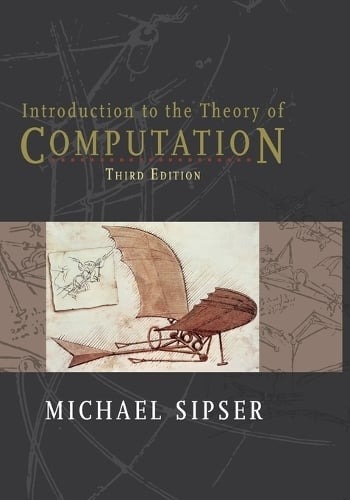
Introduction to the theory of computation
Gain a solid understanding of the fundamental mathematical properties of computer hardware, software, and applications with a blend of practical and philosophical coverage and mathematical treatments, including advanced theorems and proofs.

Introduction to Scientific Visualization
Scientific visualization is recognised as important for understanding data, whether measured, sensed remotely or calculated. Introduction to Scientific Visualization is aimed at readers who are new to the subject, either students taking an advanced option at undergraduate level or postgraduates wishing to visualize some specific data.

Introduction to robotics : Mechanics and control ; 3rd ed.
Includes material from traditional mechanical engineering, control theoretical material and computer science. It includes coverage of rigid-body transformations and forward and inverse positional kinematics

Introduction to robotics : Mechanics and control ; 2nd ed.
Written for senior level or first year graduate level robotics courses, this text includes material from traditional mechanical engineering, control theoretical material and computer science. It includes coverage of rigid-body transformations and forward and inverse positional kinematics

Introduction to Reliable Distributed Programming
Guerraoui and Rodrigues present an introductory description of fundamental reliable distributed programming abstractions as well as algorithms to implement these abstractions. The authors follow an incremental approach by first introducing basic abstractions in simple distributed environments, before moving to more sophisticated abstractions and more challenging environments. Each core chapter is devoted to one specific class of abstractions, covering reliable delivery, shared memory, consensus and various forms of agreement. This textbook comes with a companion set of running examples implemented in Java. These can be used by students to get a better understanding of how reliable distributed programming abstractions can be implemented and used in practice. Combined, the chapters deliver a full course on reliable distributed programming. The book can also be used as a complete reference on the basic elements required to build reliable distributed applications.

Introduction to Programming with Fortran : with coverage of Fortran 90, 95, 2003 and 77
Introduction to Programming with Fortran contains: lots of clear and simple examples highlighting the key language features of the most recent versions of Fortran – Fortran 2003, 95 and 90. practical examples based on ISO TR 15580 and ISO TR 15581 which are widely supported and cover the ISO TR on Enhanced Modules – particularly important to large code suites common problems that occur when programming which are highlighted via clear examples and solutions Introduction to Programming with Fortran is an essential introduction for beginners as well as a concise reference for professionals. Overall the book gives a very effective hands-on coverage of Fortran, valuable to students and practitioners alike.
