



Page 11
Page 11

CASCOM : Intelligent service coordination in the semantic web
A general architecture for service delivery and coordination in intelligent agent-based peer-to-peer (IP2P) environments, that has been developed within the CASCOM research project, is presented in this book.

Business Intelligence for the Real-Time Enterprises ; 1st International Workshop, BIRTE 2006, Seoul, Korea, September 11, 2006, Revised Selected Papers
The book includes different aspects in the lifecycle of business intelligence on very large enterprise-wide operational real-time data sets. In today’s competitive and highly dynamic environment, analyzing data to und- stand how the business is performing, to predict outcomes and trends, and to improve the effectiveness of business processes underlying business operations has become critical. The traditional approach to reporting is not longer adequate; users now - mand easy-to-use intelligent platforms and applications capable of analyzing real-time business data to provide insight and actionable information at the right time. The end goal is to improve the enterprise performance by better and timelier decision making, enabled by the availability of up-to-date, high-quality information.
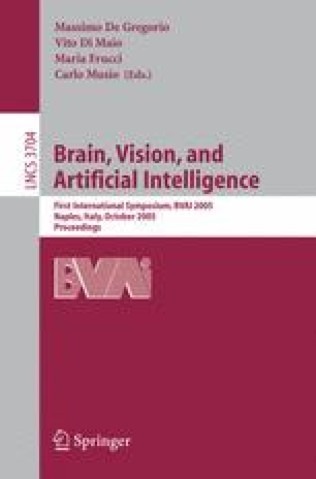
Brain, vision, and artificial intelligence ; 1st International Symposium, BVAI 2005, Naples, Italy, October 19-21, 2005, Proceedings
This book constitutes the refereed proceedings of the First International Symposium on Brain, Vision and Artificial Intelligence, BVAI 2005, held in Naples, Italy in October 2005. The 48 revised papers presented together with 6 invited lectures were carefully reviewed and selected from more than 80 submissions for inclusion in the book. The papers are addressed to the following main topics and sub-topics: brain basics - neuroanatomy and physiology, development, plasticity and learning, synaptic, neuronic and neural network modelling; natural vision - visual neurosciences, mechanisms and model systems, visual perception, visual cognition; artificial vision - shape perception, shape analysis and recognition, shape understanding; artificial inteligence - hybrid intelligent systems, agents, and cognitive models.
Biomimetic neural learning for intelligent robots : Intelligent systems, cognitive robotics, and neuroscience
This book presents research performed as part of the EU project on biomimeticmultimodal learning in a mirror neuron-based robot (MirrorBot) and contribu-tions presented at the International AI-Workshop on NeuroBotics. The over-all aim of the book is to present a broad spectrum of current research intobiomimetic neural learning for intelligent autonomous robots. In this book we show the development of newtechniques using cell assemblies, associative neural networks, and Hebbian-typelearning in order to associate vision, language and motor concepts. We havedeveloped biomimetic multimodal learning and language instruction in a robotto investigate the task of searching for objects. As well as the research performedin this area for the MirrorBot project, the second part of this book incorporatessignificant contributions from other research in the field of biomimetic robotics.This second part of the book concentrates on the progress made in neuroscienceinspired robotic learning approaches (in short: NeuroBotics). We hope that this book stimulates and encourages new research in this in-teresting and dynamic area.

Bio-inspired modeling of cognitive tasks ; 2nd International Work-conference on the interplay between natural and artificial computation, IWINAC 2007, La Manga del Mar Menor, Spain, June 18-21, 2007, Proceedings, Part I
This volume includes all the contributions mainly related with theoretical, conceptual and methodological aspects linking AI and knowledge engineering with neurophysiology, clinics and cognition.

Bayesian networks and Influence diagrams : A guide to construction and analysis
Probabilistic networks, also known as Bayesian networks and influence diagrams, have become one of the most promising technologies in the area of applied artificial intelligence, offering intuitive, efficient, and reliable methods for diagnosis, prediction, decision making, classification, troubleshooting, and data mining under uncertainty. Bayesian Networks and Influence Diagrams: A Guide to Construction and Analysis provides a comprehensive guide for practitioners who wish to understand, construct, and analyze intelligent systems for decision support based on probabilistic networks. Intended primarily for practitioners, this book does not require sophisticated mathematical skills or deep understanding of the underlying theory and methods nor does it discuss alternative technologies for reasoning under uncertainty.

Autonomous intelligent systems : Multi-agents and data mining ; 2nd International workshop, AIS-ADM 2007, St. Petersburg, Russia, June 3-5, 2007, Proceedings
MAS offiers powerful metaphors for information system conceptualization, a range of new techniques, and technologies specifically focused on the design and implementation of lar- scale open distributed intelligent systems. KDD also provides intelligent inf- mation technology with powerful ideas, algorithms, and software means to help cope with the main problem of artificial intelligence, formulated in the we- known question “Where does the knowledge come from?”, thus actually making modern applications intelligent and adaptive. The evident recent trend in both science and industry is to integrate and take advantage of both technologies. The existing experience with combined application of multi-agent technology to design architectures of distributed (- erarchical and peer-to-peer) data mining and KDD systems, as well as the u- lization of data mining and KDD achievements to provide enhanced intelligence of MAS, confirms the fact that both technologies are capable of mutual enri- ment and their integrateduse may result in intelligent information systems with new emergent properties.

Autonomous intelligent systems : Agents and data mining ; International workshop, AIS-ADM 2005
This book constitutes the refereed proceedings of the International Workshop on Autonomous Intelligent Systems: Agents and Data Mining, AIS-ADM 2005, held in St. Petersburg, Russia in June 2005. The 17 revised full papers presented together with 5 invited papers and the abstract of an invited talk were carefully reviewed and selected from 29 submissions. The papers are organized in topical sections on agent-based data mining issues, ontologies and Web mining, and applications and case studies.
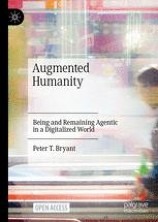
Augmented Humanity : Being and Remaining Agentic in a Digitalized World
This book will examine the implications of digitalization for the understanding of humanity, conceived as a community of intelligent agency. It addresses important topics across a range of social and behavioral theories and identifies a range of novel mechanisms and their social behavioral effects. Across the book, the author highlights the expansion of intelligent processing capability brought about by digitalization and the challenges this exposes for integrating artificial and human capabilities

Attention in Cognitive Systems : Theories and Systems from an Interdisciplinary Viewpoint ; 4th International Workshop on Attention in Cognitive Systems, WAPCV 2007 Hyderabad, India, January 8, 2007 Revised Selected Papers
The embodied nature of sensory-motor intelligence requires a continuous and focused interplay between the control of motor activities and the interpretation of feedback from perceptual modalities. Decision making about the selection of information from the incoming sensory stream – in tune with contextual processing on a current task and an agent’s global objectives – becomes a further challenging issue in attentional control. Attention must operate at interfaces between bottom-up driven world int- pretation and top-down driven information selection, thus acting at the core of arti?cial cognitive systems. These insights have already induced changes in AI-related disciplines, such as the design of behavior-based robot control and the computational modeling of animats. Today, the development of enabling technologiessuch as autonomous robotic systems,miniaturizedmobile–evenwearable–sensors,andambientintelligence systems involves the real-time analysis of enormous quantities of data. These data have to be processed in an intelligent way to provide “on time delivery” of the required relevant information. Knowledge has to be applied about what needs to be attended to, and when, and what to do in a meaningful sequence, in correspondence with visual feedback.

Artificial neural networks : Formal Models and Their Applications – ICANN 2005 ; 15th International Conference, Warsaw, Poland, September 11-15, 2005, Proceedings, Part II
The second volume contains 162 contributions related to Formal Models and their Applications and deals with new neural network models, supervised learning algorithms, ensemble-based learning, unsupervised learning, recurent neural networks, reinforcement learning, bayesian approaches to learning, learning theory, artificial neural networks for system modeling, decision making, optimalization and control, knowledge extraction from neural networks, temporal data analysis, prediction and forecasting, support vector machines and kernel-based methods, soft computing methods for data representation, analysis and processing, data fusion for industrial, medical and environmental applications, non-linear predictive models for speech processing, intelligent multimedia and semantics, applications to natural language processing, various applications, computational intelligence in games, and issues in hardware implementation.

Artificial Intelligent Techniques for Wireless Communication and Networking
Wireless communication and networking based on AI concepts and techniques are explored in this book, specifically focusing on the current research in the field by highlighting empirical results along with theoretical concepts. The possibility of applying AI mechanisms towards security aspects in the communication domain is elaborated; also explored is the application side of integrated technologies that enhance AI-based innovations, insights, intelligent predictions, cost optimization, inventory management, identification processes, classification mechanisms, cooperative spectrum sensing techniques, ad-hoc network architecture, and protocol and simulation-based environments.
Artificial intelligence-based Internet of things systems
Discusses the evolution of future generation technologies through Internet of Things (IoT) in the scope of Artificial Intelligence (AI). The main focus of this volume is to bring all the related technologies in a single platform, so that undergraduate and postgraduate students, researchers, academicians, and industry people can easily understand the AI algorithms, machine learning algorithms, and learning analytics in IoT-enabled technologies. This book uses data and network engineering and intelligent decision support system-by-design principles to design a reliable AI-enabled IoT ecosystem and to implement cyber-physical pervasive infrastructure solutions. This book brings together some of the top IoT-enabled AI experts throughout the world who contribute their knowledge regarding different IoT-based technology aspects. Addresses the complete functional framework workflow in AI-enabled IoT ecosystem; Presents intelligent object identification and object discovery through the IoT ecosystem and its implications to the real world ;Explores security and privacy issues and trustworthy machine learning related to data-intensive technologies in AI-based IoT ecosystems.

Artificial Intelligence. IJCAI 2019 International Workshops ; Macao, China, August 10–12, 2019, Revised Selected Best Papers
This book presents selected papers of 12 Workshops held in conjunction with the 28th International Joint Conference on Artificial Intelligence, IJCAI 2019, in Macao, China, in August 2019.
Artificial intelligence in the design process : The impact on creativity and team collaboration
Discusses how to include artificial intelligence (AI) systems in the early stages of the design process. Today designers need new tools capable of supporting them in dealing with the increasing project's complexity and empowering their performances and capabilities. AI systems appear to be powerful means to enhance designers' creativity. This assumption was tested in a workshop where sixteen participants collaborated with three AI systems throughout the creative phases of research, sketching, and color selection. Results show that designers can access a broader level of variance and inspiration while reducing the risk of fossilization by triggering lateral thinking through AI-generated data. Therefore, AI could significantly impact the creative phases of the design process if applied consciously. Being AI systems intelligent agents, the book treats the Human-AI collaboration as a collaboration between human agents, proposing a set of guidelines helpful to achieving an efficient partnership with the machine.

Artificial Intelligence in Intelligent Systems ; Proceedings of 10th Computer Science On-line Conference 2021, Vol.2
This book constitutes the refereed proceedings of the artificial intelligence in intelligent systems section of the 10th Computer Science Online Conference 2021 (CSOC 2021), held online in April 2021. Artificial intelligence in intelligent systems topics are presented in this book. Modern hybrid and bio-inspired algorithms and their application are discussed in selected papers.
Artificial intelligence in higher education : A practical approach
Highlights the broad field of artificial intelligence applications in education, regarding any type of artificial intelligence that is correlated with education. It discusses learning methodologies, intelligent tutoring systems, intelligent student guidance and assessments, intelligent education chatbots, and artificial tutors and presents the practicality and applicability implications of AI in education. The book offers new and current research along with case studies showing the latest techniques and educational activities. Will find interest with academicians which includes teachers, students of various disciplines, higher education policymakers who believe in transforming the education industry, research scholars who are pursuing their Ph.D. or Post Doc. in the field of Education Technology, Education, and Learning, etc. and those working in the area of Education Technology and Artificial Intelligence such as industry professionals in education management and e-learning companies

Artificial intelligence in education ; 21st International conference, AIED 2020, Ifrane, Morocco, July 6–10, 2020, Proceedings, Part II
This two-volume set LNAI 12163 and 12164 constitutes the refereed proceedings of the 21th International Conference on Artificial Intelligence in Education, AIED 2020, held in Ifrane, Morocco, in July 2020.* The 49 full papers presented together with 66 short, 4 industry & innovation, 4 doctoral consortium, and 4 workshop papers were carefully reviewed and selected from 214 submissions. The conference provides opportunities for the cross-fertilization of approaches, techniques and ideas from the many fields that comprise AIED, including computer science, cognitive and learning sciences, education, game design, psychology, sociology, linguistics as well as many domain-specific areas.

Artificial intelligence in education ; 21st International conference, AIED 2020, Ifrane, Morocco, July 6–10, 2020, Proceedings, Part I
This two-volume set LNAI 12163 and 12164 constitutes the refereed proceedings of the 21th International Conference on Artificial Intelligence in Education, AIED 2020, held in Ifrane, Morocco, in July 2020.* The 49 full papers presented together with 66 short, 4 industry & innovation, 4 doctoral consortium, and 4 workshop papers were carefully reviewed and selected from 214 submissions. The conference provides opportunities for the cross-fertilization of approaches, techniques and ideas from the many fields that comprise AIED, including computer science, cognitive and learning sciences, education, game design, psychology, sociology, linguistics as well as many domain-specific areas.

Artificial intelligence applications and innovations II; IFIP TC12 and WG12.5 ; 2nd IFIP conference on artificial intelligence applications and innovations (AIAI-2005), Sept. 7-9, 2005, Beijing, China
Artificial Intelligence is one of the oldest and most exciting subfields of computing, covnering such areas as intelligent robotics, intelligent planning and scheduling, model-based reasoning, fault diagnosis, natural language processing, maching translation, knowledge representation and reasoning, knowledge-based systems, knowledge engineering, intelligent agents, machine learning, neural nets, genetic algorithms and knowledge management. The papers in this volume comprise the refereed proceedings of the Second International Conference on Artificial Intelligence Applications and Innovations,held in Beijing, China in 2005.
