



Page 1
Page 1

Numerical computation, data analysis and software in mathematics and engineering
Include the aspects of the meshless method, numerical simulation, mathematical models, deep learning and data analysis. Meshless methods, such as the improved element-free Galerkin method, the dimension-splitting, interpolating, moving, least-squares method, the dimension-splitting, generalized, interpolating, element-free Galerkin method and the improved interpolating, complex variable, element-free Galerkin method, are presented. Some complicated problems, such as tge cold roll-forming process, ceramsite compound insulation block, crack propagation and heavy-haul railway tunnel with defects, are numerically analyzed.

Medical Imaging and Informatics ; 2nd International Conference, MIMI 2007, Beijing, China, August 14-16, 2007 Revised Selected Papers
This book constitutes the thoroughly refeered post-conference proceedings of the Second Interational Conference on Medical Imaging and Informatics, MIMI 2007, held in Beijing, China, in August 2007.The 40 revised full papers presented together with 4 keynote talks were carefully reviewed and selected from 110 submissions. The papers are organized in topical sections on medical image segmentation and registration, medical informatics, PET, fMRI, ultrasound and thermal imaging, 3D reconstruction and visualization. The volume is rounded off by 4 papers from 2 workshops on legal, ethical and social issues in medical imaging and informatics, as well as on computer-aided diagnosis (CAD).

Free Convection Film Flows and Heat Transfer
This book presents recent developments in systematic studies of hydrodynamics and heat and mass transfer in laminar free convection, accelerating film boiling and condensation of Newtonian fluids, as well as accelerating film flow of non-Newtonian power-law fluids (FFNF). A novel system of analysis models is provided with a developed velocity component method, instead of traditional Falkner-Skan type transformation, and a system of models for treatment of variable thermophysical properties is presented with an innovative temperature parameter method that makes it easier to similarly treat related governing differential equations for consideration of fluid variable thermophysical properties. A pseudo-similarity method is applied for dealing with thermal boundary layer of FFNF, furthermore, with an induced local Prandtl number, which greatly simplifies the heat-transfer analysis and numerical calculation.

Face Biometrics for Personal Identification : Multi-Sensory Multi-Modal Systems
This book provides an ample coverage of theoretical and experimental state-of-the-art work as well as new trends and directions in the biometrics field. It offers students and software engineers a thorough understanding of how some core low-level building blocks of a multi-biometric system are implemented. While this book covers a range of biometric traits including facial geometry, 3D ear form, fingerprints, vein structure, voice, and gait, its main emphasis is placed on multi-sensory and multi-modal face biometrics algorithms and systems. "Multi-sensory" refers to combining data from two or more biometric sensors, such as synchronized reflectance-based and temperature-based face images. "Multi-modal" biometrics means fusing two or more biometric modalities, like face images and voice timber. The first part addresses new and emerging face biometrics. Emphasis is placed on biometric systems where single sensor and single modality are employed in challenging imaging conditions. The second part on multi-sensory face biometrics deals with the personal identification task in challenging variable illuminations and outdoor operating scenarios by employing visible and thermal sensors. The third part of the book focuses on multi-modal face biometrics by integrating voice, ear, and gait modalities with facial data. The last part presents generic chapters on multi-biometrics fusion methodologies and performance prediction techniques.
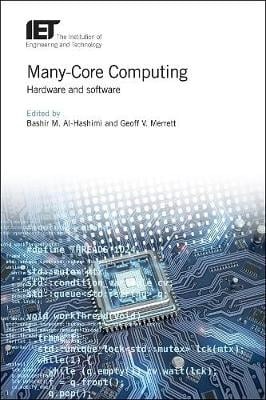
Many-Core Computing : Hardware and software
Provides a timely and coherent account of the recent advances in many-core computing research. Starting with programming models, operating systems and their applications; it presents runtime management techniques, followed by system modelling, verification and testing methods, and architectures and systems. Computing has moved away from a focus on performance-centric serial computation, instead towards energy-efficient parallel computation. This provides continued performance increases without increasing clock frequencies, and overcomes the thermal and power limitations of the dark-silicon era. As the number of parallel cores increases, we transition into the many-core computing era. There is considerable interest in developing methods, tools, architectures and applications to support many-core computing.

Biofuels, Solar and Wind as Renewable Energy Systems : Benefits and Risks
With shortages of fossil energy, especially oil and natural gas, and heavy biomass energy use occurring in both developed and developing countries, a major focus has developed worldwide on renewable energy systems. Renewable energy systems include wind power, biomass, photovoltaics, hydropower, solar thermal, thermal ponds, and biogas. Currently, a heavy focus is on biofuels made from crops, such as corn, sugarcane, and soybeans, for use as renewable energy sources. Wood and crop residues also are being used as fuel. Though it may seem beneficial to use renewable plant materials for biofuel, the use of crop residues and other biomass for biofuels raises many concerns about major environmental problems, including food shortages and serious destruction of vital soil resources.
