



Page 1
Page 1

Neuroscribe = نيوروسكرايب
Neuroscribe is a cutting-edge deep learning framework designed to address the complexities and inefficiencies encountered in existing frameworks like PyTorch and TensorFlow. Aimed at streamlining model development and enhancing performance across diverse hardware environments, NeuroScribe offers a lightweight and flexible solution. The framework features a robust tensor library, an auto-differentiation engine, a comprehensive neural network module, and advanced optimization algorithms. With built-in visualization tools and a user-friendly interface, NeuroScribe simplifies both beginner and advanced workflows. Its cross-platform compatibility, supported by CUDA and Metal Performance Shaders (MPS), ensures optimal performance, and in some scenarios, NeuroScribe demonstrates superior speed compared to leading frameworks. Additionally, NeuroScribe introduces unique libraries and features not found in other frameworks, further enhancing its versatility and appeal. The modular architecture and automatic system detection further enhance its adaptability, making NeuroScribe a versatile and powerful tool for deep learning practitioners.

Essential Renderman
RenderMan has long been associated with top-end film production and is an essential tool for creating many of the effects and images in recent animated films (such as Monsters, Inc., Finding Nemo and The Incredibles). RenderMan is widely available and, with the demand for higher quality images, is now used by computer-based artists at all levels of the graphics industry. Intended to provide a straightforward and easy introduction to the basic techniques involved, this book provides an excellent grounding, enabling readers to confidently move to more advanced texts.
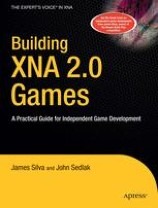
Building XNA 2.0 Games : A Practical Guide for Independent Game Development
Building XNA 2.0 Games: A Practical Guide for Independent Game Development is written by James Silva, who recently won the prestigious Microsoft Dream Build Play game competition with his award–winning game, The Dishwasher: Dead Samurai. Building XNA 2.0 Games: A Practical Guide for Independent Game Development is an in–depth and exclusive look into the entire XNA game development process and includes the creation of a software game masterpiece. James Silva guides you through the process he took to build his award–winning title, from concept to reality. He reveals tips and techniques for creating a polished, high–quality game with very few resources, while bridging the gap between coding and art.
3D Mesh processing and character animation : with examples using OpenGL, OpenMesh and Assimp
Focusses specifically on topics that are important in three-dimensional modelling, surface design and real-time character animation. It provides an in-depth coverage of data structures and popular methods used in geometry processing, keyframe and inverse kinematics animations and shader based processing of mesh objects. It also introduces two powerful and versatile libraries, OpenMesh and Assimp, and demonstrates their usefulness through implementations of a wide range of algorithms in mesh processing and character animation respectively. This Textbook is written for students at an advanced undergraduate or postgraduate level who are interested in the study and development of graphics algorithms for three-dimensional mesh modeling and analysis, and animations of rigged character models.
