



Page 1
Page 1

Evolvable systems : From biology to hardware ; 6th International Conference, ICES 2005, Sitges, Spain, September 12-14, 2005, Proceedings
The flying machines proposed by Leonardo da Vinci in the fifteenth century, the se- reproducing automata theory proposed by John von Neumann in the middle of the twentieth century and the current possibility of designing electronic and mechanical systems using evolutionary principles are all examples of the efforts made by humans to explore the mechanisms present in biological systems that permit them to tackle complex tasks. These initiatives have recently given rise to the emergent field of b- inspired systems and evolvable hardware. The inaugural workshop, Towards Evolvable Hardware, took place in Lausanne in October 1995, followed by the successive events of the International Conference on Evolvable Systems: From Biology to Hardware, held in Tsukuba (Japan) in October 1996, in Lausanne (Switzerland) in September 1998, in Edinburgh (UK) in April 2000, in Tokyo (Japan) in October 2001, and in Trondheim (Norway) in March 2003. Following the success of these past events the sixth international conference was aimed at presenting the latest developments in the field, bringing together researchers who use biologically inspired concepts to implement real systems in artificial intelligence, artificial life, robotics, VLSI design, and related domains. The sixth conference consolidated this biennial event as a reference meeting for the community involved in bio-inspired systems research. All the papers received were reviewed by at least three independent reviewers, thus guaranteeing a high-quality bundle for ICES 2005.

Elevating video content creation with ai assistance = ارتقاء إنشاء محتوى الفيديو بمساعدة الذكاء الاصطناعي
We developed an AI Assistant equipped with features such as description crafting, title generation, keyword extraction, image captioning, clickbait detection, and sentiment analysis.To achieve these functionalities, we proposed a model for generating video descriptions using ResNet50 as a feature extractor and a LSTM network with an attention mechanism as a sequence generator, achieving a BLEU-1 score of 0.907 and a ROUGE-L score of 0.645. For keyword extraction, we utilized Sentence Transformer to identify strategically relevant keywords from the generated descriptions. For title generation, we fine-tuned the BART model, achieving a ROUGE-L score of 0.45. For clickbait detection, we used SVC classifier with linear kernel and TF-IDF vectorization for feature extraction, resulting in 96% accuracy. Our sentiment analysis model using a CNN-LSTM architecture achieved 80% accuracy in analyzing comments on videos. For image captioning, we employed a feature extractor with a CNN layer followed by an LSTM model, achieving a BLEU-1 score of 0.53. Our platform empowers creators by simplifying complex tasks and offering deeper audience engagement insights, making it a powerful tool in the evolving digital content creation.

Computational logic in multi-agent systems ; 8th International Workshop, CLIMA VIII, Porto, Portugal, September 10-11, 2007. Revised Selected and Invited Papers
This book constitutes the thoroughly refereed post-conference proceedings of the 8th International Workshop on Computational Logic for Multi-Agent Systems, CLIMA VIII, held in Porto, Portugal, in September 2007 - co-located with ICLP 2008, the International Conference on Logic Programming.
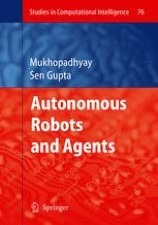
Autonomous Robots and Agents
This book deals with the theoretical and methodological aspects of incorporating intelligence in Autonomous Robots and Agents. Challenges faced in the real world to accomplish complex tasks, which require collaborative efforts, and methods to overcome them, are detailed. Several informative articles deal with navigation, localization and mapping of mobile robots, a problem that engineers and researchers are grappling with all the time.This edited volume is targeted to present the latest state-of-the-art methodologies in Robotics. It is a compilation of the extended versions of the very best papers selected from the many that were presented at the 3rd International Conference on Autonomous Robots and Agents (ICARA 2006) which was held at Palmerston North, New Zealand from 11-14 December, 2006. Scientists and engineers who work with mobile robots will find this book very useful and stimulating.
