



Page 6
Page 6
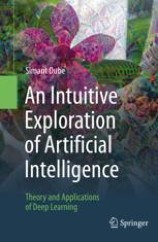
An Intuitive Exploration of Artificial Intelligence : Theory and Applications of Deep Learning
This book develops a conceptual understanding of Artificial Intelligence (AI), Deep Learning and Machine Learning in the truest sense of the word. It is an earnest endeavor to unravel what is happening at the algorithmic level, to grasp how applications are being built and to show the long adventurous road in the future.

An Introduction to Language Processing with Perl and Prolog : An Outline of Theories, Implementation, and Application with Special Consideration of English, French, and German
This book teaches the principles of natural language processing, first covering linguistics issues such as encoding, entropy, and annotation schemes; defining words, tokens and parts of speech; and morphology. It then details the language-processing functions involved, including part-of-speech tagging using rules and stochastic techniques; using Prolog to write phase-structure grammars; parsing techniques and syntactic formalisms; semantics, predicate logic and lexical semantics; and analysis of discourse, and applications in dialog systems. The key feature of the book is the author's hands-on approach throughout, with extensive exercises, sample code in Prolog and Perl, and a detailed introduction to Prolog. The reader is supported with a companion website that contains teaching slides, programs, and additional material.

Algorithmic learning theory ; 19th International Conference, ALT 2008, Budapest, Hungary, October 13-16, 2008. Proceedings
This book constitutes the refereed proceedings of the 19th International Conference on Algorithmic Learning Theory, ALT 2008, held in Budapest, Hungary, in October 2008, co-located with the 11th International Conference on Discovery Science, DS 2008.
AI*IA 2007 : Artificial intelligence and human-oriented computing ; 10th Congress of the Italian Association for Artificial Intelligence, Rome, Italy, September 10-13, 2007, Proceedings
The book is organized in topical sections on knowledge representation and reasoning, multiagent systems, distributed AIai, knowledge engineering, ontologies and the semantic Web, machine learning, natural language processing, information retrieval and extraction, planning and scheduling, AI and applications. Three special tracks depicting progresses in significant application fields that represent increasingly relevant topics contain 18 additional papers on AI and robotics, AI and expressive media, and intelligent access to multimedia information

AI journal submitting = تقديم المقالات بالذكاء الصنعي
Aims to develop a comprehensive platform to support academic writers in preparing their research papers in word file format, adhering to the Damascus University template. The platform leverages advanced artificial intelligence techniques to offer services such as grammatical and spelling correction, plagiarism detection, and citation analysis. It also provides comprehensive evaluation tools for peer reviewers, facilitating accurate and reliable feedback.The platform consists of four main components: • User Interface for Creating and Formatting Papers: Simplifies the entry and automatic formatting of texts according to the Damascus University template. / • Intelligent Language Correction System: Utilizes natural language processing techniques to enhance language quality and clarity. / • Citation Analysis and Plagiarism Detection Tool: Identifies improper citations and provides detailed reports on copied sections. / • Peer Review Support System: Offers advanced evaluation tools and AI-driven analytical reports for reviewers.This platform aims to improve the quality and integrity of academic research, streamline the formatting process, and enhance the efficiency of the peer review process, thereby elevating the level of scientific output at Damascus University.

Advances in XML information retrieval and Evaluation ; 4th International workshop of the initiative for the evaluation of XML retrieval, INEX 2005, Dagstuhl Castle, Germany, November 28-30, 2005. Revised and Selected Papers
Content-oriented XML retrieval has been receiving increasing interest due to the widespread use of eXtensible Markup Language (XML), which is becoming a standard document format on the Web, in digital libraries,and publishing. By exploiting the enriched source of syntactic and semantic information that XML markup provides, XML information retrieval (IR) systems aim to implement a more focused retrieval strategy and return document components, so-called XML elements – instead of complete documents – in response to a user query. This focused retrieval approach is of particular bene?t for collections containing long documents or documents covering a wide variety of topics (e.g., books, user manuals, legal documents, etc.), where users’ e?ort to locate relevant content can be reduced by directing them to the most relevant parts of the documents.

Advances in XML information retrieval ; 3rd International workshop of the Initiative for the evaluation of XML retrieval, INEX 2004, Dagstuhl Castle, Germany, December 6-8, 2004
The ultimate goal of many information access systems (e.g., digital libraries, the Web, intranets) is to provide the right content to their end-users. This content is increasingly a mixture of text, multimedia, and metadata, and is formatted according to the adopted –W3C standard for information repositories, the so-called eXtensible Markup L- guage (XML). Whereas many of today’s information access systems still treat do- ments as single large (text) blocks, XML offers the opportunity to exploit the internal structure of documents in order to allow for more precise access thus providing more specific answers to user requests. Providing effective access to XML-based content is therefore a key issue for the success of these systems. The aim of the INEX campaign (Initiative for the Evaluation of XML Retrieval), which was set up at the beginning of 2002, is to establish infrastructures, XML test suites, and appropriate measurements for evaluating the performance of information retrieval systems that aim at giving effective access to XML content. More precisely, the goal of the INEX initiative is to provide means, in the form of a large XML test collection and appropriate scoring methods, for the evaluation of content-oriented XML retrieval systems.

Advances in natural language processing ; 6th International Conference, GoTAL 2008 Gothenburg, Sweden, August 25-27, 2008 Proceedings
This book constitutes the refereed proceedings of the 6th International Conference on Natural Language Processing, GoTAL 2008, Gothenburg, Sweden, August 2008.
Advances in natural language processing ; 5th International Conference ; 1TAL 2006 Turku, Finland, August 23-25, 2006 Proceedings
This book constitutes the refereed proceedings of the 5th International Conference on Natural Language Processing, FinTAL 2006, held in Turku, Finland in August 2006. The book presents 72 revised full papers together with 1 invited talk and the extended abstracts of 2 invited keynote addresses. The papers address all current issues in computational linguistics and monolingual and multilingual intelligent language processing - theory, methods and applications.

Advances in multimedia information systems ; 11th International workshop, MIS 2005, Sorrento, Italy, September 19-21, 2005, proceedings
This volume collects the proceedings of the 11th International Workshop on Multimedia Information Systems, MIS 2005, in Italy. including Topics Computer Applications Multimedia Information Systems Computer Communication Networks Information Systems Applications (incl. Internet) Natural Language Processing (NLP) Image Processing and Computer Vision

Advances in Multilingual and Multimodal Information Retrieval ; 8th Workshop of the Cross-Language Evaluation Forum, CLEF 2007, Budapest, Hungary, September 19-21, 2007, Revised Selected Papers
This book constitutes the thoroughly refereed proceedings of the 8th Workshop of the Cross-Language Evaluation Forum, CLEF 2007, held in Budapest, Hungary, September 2007.

Advances in intelligent data analysis XIX ; 19th International Symposium on Intelligent Data Analysis, IDA 2021, Porto, Portugal, April 26–28, 2021, Proceedings
Constitutes the proceedings of the 19th International Symposium on Intelligent Data Analysis, IDA 2021, which was planned to take place in Porto, Portugal. Due to the COVID-19 pandemic the conference was held online during April 26-28, 2021. The 35 papers included in this book were carefully reviewed and selected from 113 submissions. The papers were organized in topical sections named: modeling with neural networks; modeling with statistical learning; modeling language and graphs; and modeling special data formats.

Advances in information retrieval ; Vol. 3408 ; 27th European conference on IR research, ECIR 2005, Santiago de Compostela, Spain, March 21-23, 2005, Proceedings
These volume contain the refereed full papers and poster abstracts from 27th European Conference on IR Research, ECIR 2005, Spain, 2005. Including : Topics Information Storage and Retrieval / Artificial Intelligence / Database Management / Information Systems Applications (incl. Internet) / Multimedia Information Systems / Natural Language Processing (NLP)
Advances in Computational Collective Intelligence ; 12th International Conference, ICCCI 2020, Da Nang, Vietnam, November 30 – December 3, 2020, Proceedings
Constitutes refereed proceedings of the 12th International Conference on International Conference on Computational Collective Intelligence, ICCCI 2020, held in Da Nang, Vietnam, in November – December 2020. Due to the the COVID-19 pandemic the conference was held online. The 68 papers were thoroughly reviewed and selected from 314 submissions. The papers are organized according to the following topical sections: data mining and machine learning; deep learning and applications for industry 4.0; recommender systems; computer vision techniques; decision support and control systems; intelligent management information systems; innovations in intelligent systems; intelligent modeling and simulation approaches for games and real world systems; experience enhanced intelligence to IoT; data driven IoT for smart society; applications of collective intelligence; natural language processing; low resource languages processing; computational collective intelligence and natural language processing.

Advances in Artificial Intelligence ; 15th Conference of the Canadian Society for Computational Studies of Intelligence, AI 2002 Calgary, Canada, May 27-29, 2002 Proceedings
The AI conference series is the premier event sponsored by the Canadian - ciety for the Computational Studies of Intelligence / Soci´et´e canadienne pour l’´etude d’intelligence par ordinateur. Attendees enjoy our typically Canadian - mosphere –hospitable and stimulating. The Canadian AI conference showcases the excellent research work done by Canadians, their international colleagues, and others choosing to join us each spring. International participation is always high; this year almost 40% of the submitted papers were from non-Canadian - searchers. We accepted 24 papers and 8 poster papers from 52 full-length papers submitted. We also accepted eight of ten abstracts submitted to the Graduate Student Symposium. All of these accepted papers appear in this volume.

Advances in Artificial Intelligence - IBERAMIA-SBIA 2006 ; 2nd International Joint Conference, 10th Ibero-American Conference on AI, 18th Brazilian AI Symposium, Ribeirao Preto, Brazil, October 23-27, 2006
This decision was a consequence of the successful event organized in 2000, when the First International Joint Conference IBERAMIA/ SBIA 2000 (7th Ibero- American Artifcial Intelligence Conference and 15th Brazilian Artifcial Intel- gence Symposium) occurred in Brazil. Moreover, in 2006 the artifcial intelligence community celebrated the golden anniversary of the 1956 Dartmouth Conference that marked the beginning of artifcial intelligence as a research feld. th SBIA 2006 was the 18 conference of the SBIA conference series, which is the leading Brazilian conference for the presentation of AI research and applications.
Advances in Artificial Intelligence - IBERAMIA 2008 ; 11th Ibero-American Conference on AI, Lisbon, Portugal, October 14-17, 2008. Proceedings
Constitutes the refereed proceedings of the 11th Ibero-American Conference on Artificial Intelligence, IBERAMIA 2008, held in Lisbon, Portugal, in October 2008.

Advancement of Deep Learning and its Applications in Object Detection and Recognition
In just the past five years, deep learning has taken the world by surprise, driving rapid progress in fields as diverse as computer vision, natural language processing, automatic speech recognition, etc. This book presents an introduction to deep learning and various applications of deep learning such as recommendation systems, text recognition, diabetic retinopathy prediction of breast cancer, prediction of epilepsy, sentiment, fake news detection, software defect prediction and protein function prediction.

Accessing Multilingual Information Repositories ; 6th Workshop of the Cross-Language Evaluation Forum, CLEF 2005, Vienna, Austria, 21-23 September, 2005, Revised Selected Papers
The sixth campaign of the Cross Language Evaluation Forum (CLEF) for European languages was held from January to September 2005. CLEF is by now an established international evaluation initiative and 74 groups from all over the world submitted results for one or more of the different evaluation tracks in 2005, compared with 54 groups in 2004. There were eight distinct evaluation tracks, designed to test the performance of a wide range of systems for multilingual information access. Full details regarding the design of the tracks, the methodologies used for evaluation, and the results obtained by the participants can be found in the different sections of these proceedings.

A healthcare professionals training system
The Objective Structured Clinical Examination (OSCE) is a type of examination often used in health sciences. It is designed to test clinical skill performance and competence in a range of skills. It is a practical, real-world approach to learning and assessment. Comprises a circuit of short (5-10 minutes) stations, in which each candidate is examined on a one-to-one basis with one or two impartial examiner(s) and patients who are either real or simulated (actors or electronic patient simulators). Each station has a different examiner; in comparison, the traditional method of clinical examination is when a candidate is assigned to an examiner for the entire examination.
