



Page 6
Page 6

Computational Science - ICCS 2008 ; 8th International Conference, Kraków, Poland, June 23-25, 2008, Proceedings, Part III
The three-volume set LNCS 5101-5103 constitutes the refereed proceedings of the 8th International Conference on Computational Science, ICCS 2008, held in Krakow, Poland in June 2008.

Computational Science - ICCS 2008 ; 8th International Conference, Kraków, Poland, June 23-25, 2008, Proceedings, Part II
The three-volume set LNCS 5101-5103 constitutes the refereed proceedings of the 8th International Conference on Computational Science, ICCS 2008, held in Krakow, Poland in June 2008.

Computational Science - ICCS 2008 ; 8th International Conference, Kraków, Poland, June 23-25, 2008, Proceedings, Part I
The three-volume set LNCS 5101-5103 constitutes the refereed proceedings of the 8th International Conference on Computational Science, ICCS 2008, held in Krakow, Poland in June 2008.

Computational Science – ICCS 2007; 7th International Conference, Beijing China, May 27-30, 2007, Proceedings, Part I
This book contiants sections on efficient data management, parallel monte carlo algorithms, simulation of multiphysics multiscale systems, dynamic data driven application systems, computer graphics and geometric modeling, computer algebra systems, computational chemistry, computational approaches and techniques in bioinformatics, computational finance and business intelligence, geocomputation, high-level parallel programming, networks theory and applications, collective intelligence for semantic and knowledge grid, collaborative and cooperative environments, tools for program development and analysis in CS, intelligent agents in computing systems, CS in software engineering, computational linguistics in HCI, internet computing in science and engineering, workflow systems in e-science, graph theoretic algorithms and applications in cs, teaching CS, high performance data mining, mining text, semi-structured, Web, or multimedia data,

Computational Science – ICCS 2007 ; 7th International Conference, Beijing China, May 27-30, 2007, Proceedings, Part IV
This book covers computational science and related areas, from multiscale physics to wireless networks, and from graph theory to tools for program development.

Computational Science – ICCS 2007 ; 7th International Conference, Beijing China, May 27-30, 2007, Proceedings, Part III
This book covers computational science and related areas, from multiscale physics to wireless networks, and from graph theory to tools for program development.

Computational Science – ICCS 2007 ; 7th International Conference, Beijing China, May 27-30, 2007, Proceedings, Part II
This book covers computational science and related areas, from multiscale physics to wireless networks, and from graph theory to tools for program development.

Computational Science - ICCS 2006 ; Vol. 3992 ; 6th International Conference, Reading, UK, May 28-31, 2006, Proceedings, Part II
The four-volume set LNCS 3991-3994 constitutes the refereed proceedings of the 6th International Conference on Computational Science, ICCS 2006, held in Reading, UK, in May 2006. The papers span the whole range of computational science.
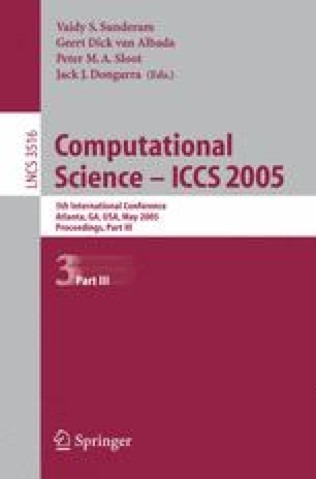
Computational Science -- ICCS 2005 ; Vol. 3516 ; 5th International Conference, Atlanta, GA, USA, May 22-25, 2005, Proceedings, Part III
This book constitutes the refereed proceedings of the Fifth International Conference on Computational Science (ICCS 2005) held in Atlanta, Georgia, USA, 2005, Computational science is rapidly maturing as a mainstream discipline. It is central to an ever-expanding variety of ?elds in which computational methods and tools enable new discoveries with greater accuracy and speed. The primary objectives of this conference were to discuss problems and solutions in allareas,toidentifynewissues,toshapefuturedirectionsofresearch,andtohelp users apply various advanced computational techniques. The event highlighted recent developments in algorithms, computational kernels, next generation c- puting systems, tools, advanced numerical methods, data-driven systems, and emerging application ?elds, such as complex systems, ?nance, bioinformatics, computational aspects of wireless and mobile networks, graphics, and hybrid computation.

Computational Science -- ICCS 2005 ; Vol. 3515 ; 5th International Conference, Atlanta, GA, USA, May 22-25, 2005, Proceedings, Part I
This book constitutes the refereed proceedings of the Fifth International Conference on Computational Science (ICCS 2005) held in Atlanta, Georgia, USA, 2005, Computational science is rapidly maturing as a mainstream discipline. It is central to an ever-expanding variety of ?elds in which computational methods and tools enable new discoveries with greater accuracy and speed. The primary objectives of this conference were to discuss problems and solutions in allareas,toidentifynewissues,toshapefuturedirectionsofresearch,andtohelp users apply various advanced computational techniques. The event highlighted recent developments in algorithms, computational kernels, next generation c- puting systems, tools, advanced numerical methods, data-driven systems, and emerging application ?elds, such as complex systems, ?nance, bioinformatics, computational aspects of wireless and mobile networks, graphics, and hybrid computation.

Computational science -- ICCS 2005 ; Vol. 3514 ; 5th International Conference, Atlanta, GA, USA, May 22-25, 2005, Proceedings, Part I
This book constitutes the refereed proceedings of the Fifth International Conference on Computational Science (ICCS 2005) held in Atlanta, Georgia, USA, 2005, Computational science is rapidly maturing as a mainstream discipline. It is central to an ever-expanding variety of ?elds in which computational methods and tools enable new discoveries with greater accuracy and speed. The primary objectives of this conference were to discuss problems and solutions in allareas,toidentifynewissues,toshapefuturedirectionsofresearch,andtohelp users apply various advanced computational techniques. The event highlighted recent developments in algorithms, computational kernels, next generation c- puting systems, tools, advanced numerical methods, data-driven systems, and emerging application ?elds, such as complex systems, ?nance, bioinformatics, computational aspects of wireless and mobile networks, graphics, and hybrid computation.

Computational Geometry and Graph Theory ; International Conference, KyotoCGGT 2007, Kyoto, Japan, June 11-15, 2007. Revised Selected Papers
This book constitutes the thoroughly refereed post-conference proceedings of the Kyoto Conference on Computational Geometry and Graph Theory, KyotoCGGT 2007, held in Kyoto, Japan, in June 2007.

Computational Geometry : Algorithms and Applications
This introduction to computational geometry focuses on algorithms. Modern insights in computational geometry are used to provide solutions that are both efficient and easy to understand and implement.

Computational Forensic ; 2nd International Workshop, IWCF 2008, Washington, DC, USA, August 7-8, 2008. Proceedings
This book constitutes the refereed proceedings of the Second International Workshop, IWCF 2008, held in Washington, DC, USA, August 2008. The papers are organized in topical sections on trends and challenges; scanner, printer, and prints; human identification; shoeprints; linguistics;decision making and search; speech analysis; signatures and handwriting.

Combinatorial Image Analysis ; 12th International Workshop, IWCIA 2008, Buffalo, NY, USA, April 7-9, 2008. Proceedings
This volume contains the proceedings of the 12th International Workshop on Combinatorial Image Analysis. Coverage includes digital geometry, curves and surfaces, applications of computational geometry, as well as medical imaging and biometrics.

Cognitive Vision ; 4th International Workshop, ICVW 2008, Santorini, Greece, May 12, 2008, Revised Selected Papers
This volume constitutes the post-conference proceedings of the 4th International Cognitive Vision Workshop, ICVW 2008, held in Santorini, Greece, on May 12, 2008.

Code : The Hidden Language of Computer Hardware and Software ; 2nd ed
The classic guide to how computers work, updated with new chapters and interactive graphics Computers are everywhere --- most obviously in our laptops and smartphones, but also our cars, televisions, microwave ovens, alarm clocks, robot vacuum cleaners, and other smart appliances. Have you ever wondered what goes on inside these devices to make our lives easier but occasionally more infuriating? Explores more deeply the bit-by-bit, gate-by-gate construction of the heart of every smart device ― the central processing unit that combines the simplest of basic operations to perform the most complex of feats. Along with new chapters, Petzold created a new website, CodeHiddenLanguage.com, that uses animated interactive graphics to make computers even easier to comprehend.

Machine Learning Techniques for Multimedia : Case Studies on Organization and Retrieval
This book provides a comprehensive coverage of the most important machine learning techniques used and their application in this domain. Arising from the EU MUSCLE network, a program that drew together multidisciplinary teams with expertise in machine learning, pattern recognition, artificial intelligence, and image, video, text and crossmedia processing, the book first introduces the machine learning principles and techniques that are applied in multimedia data processing and analysis. The second part focuses on multimedia data processing applications, with chapters examining specific machine learning issues in domains .

Machine Learning for Multimedia Content Analysis
Challenges in complexity and variability of multimedia data have led to revolutions in machine learning techniques. Multimedia data, such as digital images, audio streams and motion video programs, exhibit richer structures than simple, isolated data items. A number of pixels in a digital image collectively conveys certain visual content to viewers. A TV video program consists of both audio and image streams that unfold the underlying story. To recognize the visual content of a digital image, or to understand the underlying story of a video program, we may need to label sets of pixels or groups of image and audio frames jointly.
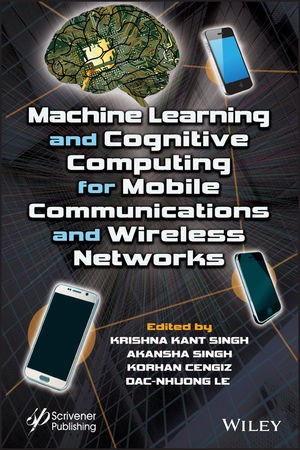
Machine Learning and Cognitive Computing for Mobile Communications and Wireless Networks
Communication and network technology has witnessed recent rapid development and numerous information services and applications have been developed globally. These technologies have high impact on society and the way people are leading their lives. The advancement in technology has undoubtedly improved the quality of service and user experience yet a lot needs to be still done. Some areas that still need improvement include seamless wide-area coverage, high-capacity hot-spots, low-power massive-connections, low-latency and high-reliability and so on. Thus, it is highly desirable to develop smart technologies for communication to improve the overall services and management of wireless communication. Machine learning and cognitive computing have converged to give some groundbreaking solutions for smart machines. With these two technologies coming together, the machines can acquire the ability to reason similar to the human brain. The research area of machine learning and cognitive computing cover many fields like psychology, biology, signal processing, physics, information theory, mathematics, and statistics that can be used effectively for topology management. Therefore, the utilization of machine learning techniques like data analytics and cognitive power will lead to better performance of communication and wireless systems.
