



Page 5
Page 5

Beyond Cartesian Dualism : Encountering affect in the teaching and learning of science.
There is surprisingly little known about affect in science education. Despite periodic forays into monitoring students’ attitudes-toward-science, the effect of affect is too often overlooked. Beyond Cartesian Dualism gathers together contemporary theorizing in this axiomatic area. In fourteen chapters, senior scholars of international standing use their knowledge of the literature and empirical data to model the relationship between cognition and affect in science education. Their revealing discussions are grounded in a broad range of educational contexts including school classrooms, universities, science centres, travelling exhibits and refugee camps, and explore an array of far reaching questions. What is known about science teachers’ and students’ emotions? How do emotions mediate and moderate instruction? How might science education promote psychological

Between Psychology and Philosophy : East-West Themes and Beyond
This book discusses a variety of important but unprecedented ways in which psychology can be useful to philosophy. The early chapters illustrate this theme via comparisons between Chinese and Western philosophy.

Bernoulli potential in superconductors : How the electrostatic field helps to understand superconductivity
The motion of electrons in superconductors seems to defy our imagination based on daily experience with Newtonian mechanics. This book shows that the classical concepts, such as the balance of forces acting on electrons, are useful for understanding superconductivity. The electrostatic field plays a natural part in this balance as it mediates forces between electrons at long distances. Due to its classical interpretation, the theory presented in this book is suitable for introductory courses.
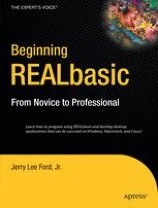
Beginning REALbasic : From novice to professional
REALbasic is an easy-to-learn, powerful, cross-platform programming language, allowing you to write powerful applications that can be distributed across Windows, Mac, and Linux. REALbasic’s success is proven - there are already over 100,000 users, and this number is steadily growing. In a recent promotional effort, 35,000 Visual Basic developers downloaded a free copy of the Windows version of REALbasic, and REAL software has had many requests for decent beginning title on the subject. As far as we know, this is the only up-to-date book planned for the current version, REALbasic 2005, which matches that description. REAL software are enthusiastic about helping us sell the book.

Bearing Witness : Ruth Harrison and British Farm Animal Welfare (1920–2000)
This book is the biography of one of Britain’s foremost animal welfare campaigners and of the world of activism, science, and politics she inhabited. In 1964, Ruth Harrison’s bestseller Animal Machines triggered a gear change in modern animal protection by popularising the term ‘factory farming’ alongside a new way of thinking about animal welfare.

Avalanche Dynamics : Dynamics of Rapid Flows of Dense Granular Avalanches
Avalanches, debris, mudflows and landslides are common and natural phenomena that occur worldwide, predominantly in mountainous regions. With an emphasis on snow avalanches, this book sets out to provide a survey and discussion about the motion of avalanche-like flows from initiation to run out. An important aspect of this book is the formulation and investigation of a simple but appropriate continuum mechanical model for the realistic prediction of geophysical flows of granular material. This will help the practitioners in the field to better understand the physical input and provide them with a tool for their work. Originating from many lectures the authors have given over the years, this instructive volume brings the reader to the forefront of research - an aim also supported by an extensive bibliogrpahy of almost 500 entries.
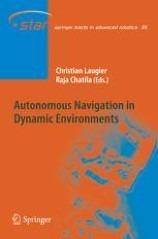
Autonomous Navigation in Dynamic Environments
The purpose of this book is to address the challenging problem of Autonomous Navigation in Dynamic Environments, and to present new ideas and approaches in this newly emerging technical domain. The book surveys the state-of-the-art, discusses in detail various related challenging technical aspects, and addresses upcoming technologies in this field. The aim of the book is to establish a foundation for a broad class of mobile robot mapping and navigation methodologies for indoor, outdoor, and exploratory missions.Three main topics located on the cutting edge of the state of the art are addressed, from both the theoretical and technological point of views: Dynamic world understanding and modelling for safe navigation, Obstacle avoidance and motion planning in dynamic environments, and Human-robot physical interactions. Several models and approaches are proposed for solving problems such as Simultaneous Localization and Mapping (SLAM) in dynamic environments, Mobile obstacle detection and tracking, World state estimation and motion prediction, Safe navigation in dynamic environments, Motion planning in dynamic environments, Robust decision making under uncertainty, and Human-Robot physical interactions.

Audacious Education Purposes : How Governments Transform the Goals of Education Systems
This book offers a comparative study of eight ambitious national reforms that sought to create opportunities for students to gain the necessary breath of skills to thrive in a rapidly changing world.

Attitudes, beliefs, motivation and identity in mathematics education : An overview of the field and future directions
Records the state of the art in research on mathematics-related affect. It discusses the concepts and theories of mathematics-related affect along the lines of three dimensions. The first dimension identifies three broad categories of affect: motivation, emotions, and beliefs. The book contains one chapter on motivation, including discussions on how emotions and beliefs relate to motivation. There are two chapters that focus on beliefs and a chapter on attitude which cross-cuts through all these categories. The second dimension covers a rapidly fluctuating state to a more stable trait. All chapters in the book focus on trait-type affect and the chapter on motivation discusses both these dimensions. The third dimension regards the three main levels of theorizing: physiological (embodied), psychological (individual) and social. All chapters reflect that mathematics-related affect has mainly been studied using psychological

Artifical intelligence for human computing ; ICMI 2006 and IJCAI 2007 International Workshops, Banff, Canada, November 3, 2006 Hyderabad, India, January 6, 2007 Revised Selceted Papers
This book contains the thoroughly refereed post-proceedings of two events discussing AI for Human Computing.It presented a vision of the future of computing technology in which AI, in particular machine learning and agent technology, plays an essential role.

Articulated Motion and Doformable Objects ; 4th International Conference, AMDO 2006, Port d'Andratx, Mallorca, Spain, July 11-14, 2006, Proceedings
The subject of the conference was ongoing research in articulated motionon a sequence of images and sophisticated models for deformable objects. Thegoals of these areas are to understand and interpret the motion of complexobjects that can be found in sequences of images in the real world. The maintopics considered as priority were: geometric and physical deformable models,motion analysis, articulated models and animation, modelling and visualizationof deformable models, deformable models applications, motion analysis applica-tions, single or multiple human motion analysis and synthesis, face modelling,tracking, recovering and recognition models, virtual and augmentedreality, haptics devices, biometrics techniques.

Articulated motion and deformable objects ; 5th International Conference, AMDO 2008, Port d’Andratx, Mallorca, Spain, July 9-11, 2008. Proceedings
This book constitutes the refereed proceedings of the 5th International Conference on Articulated Motion and Deformable Objects, AMDO 2008, held in Port d'Andratx, Mallorca, Spain, in July 2008.

Arabic AI-generated adverts = إعلانات عربية مولدة بالذكاء الاصطناعي
In the ever-evolving landscape of digital marketing, our groundbreaking platform emerges, harnessing the power of artificial intelligence to revolutionize the creation of marketing campaigns. This innovative solution seamlessly combines neural networks, natural language generation, and multimedia processing capabilities to generate comprehensive and personalized marketing assets from a single product image. At its core, the platform leverages deep learning models that analyze the visual characteristics of the uploaded product image and identifies key features and attributes to define the product category, this enables the generation of compelling and persuasive marketing content tailored to the specific product. The platform's multi-faceted approach encompasses three distinct components: text generation, poster creation, and video advertisement production. Utilizing advanced natural language generation techniques, it crafts engaging marketing text that captures the essence and unique selling points of the product. Simultaneously, its image processing capabilities produce visually stunning promotional posters that blend the product image with eye-catching graphics and typography. along with creating captivating video advertisements optimized for social media and online advertising campaigns.

Analysis and Modelling of Faces and Gestures ; 2nd International workshop, AMFG 2005, Beijing, China, October 16, 2005, Proceedings
During the last 30 years, face recognition and related problems such as face detection/tracking and facial expression recognition have attracted researchers from both the engineering and psychology communities. In addition, extensive research has been carried out to study hand and body gestures. The understanding of how humans perceive these important cues has significant scientific value and extensive applications. this one-day workshop (AMFG 2005) provided a focused international forum to bring together well-known researchers and research groups to review the status of recognition, analysis and modeling of faces and gestures, to discuss the challenges that we are facing, and to explore future directions. Overall, 30 papers were selected from 90 submitted manuscripts. The topics of these papers range from feature representation, robust recognition, learning, and 3D modeling to psychology.

Analysis and Modeling of Faces and Gestures ; 3rd International Workshop, AMFG 2007 Rio de Janeiro, Brazil, October 20, 2007 Proceedings
The book covered by these accepted papers include feature representation, 3D face, robust recognition under pose and illumination variations,video-basedface recognition,learning,facial motion analysis, body pose estimation, and sign recognition.

Agent and Multi-Agent Systems : Technologies and Applications ; 2nd KES International Symposium, KES-AMSTA 2008, Incheon, Korea, March 26-28, 2008. Proceedings
The KES-AMSTA Symposium Series is a sub-series of the KES Conference Series. The aim of the symposium was to provide an international forum for scientific research into the technologies and applications of agent and multi-agent systems.

Affective computing and intelligent interaction ; 2nd International Conference, ACII 2007, Lisbon, Portugal, September 12-14, 2007, Proceedings
Organized in topical sections on affective facial expression and recognition, affective body expression and recognition, affective speech processing, affective text and dialogue processing, recognising affect using physiological measures, computational models of emotion and theoretical foundations, affective databases, annotations, tools and languages, affective sound and music processing, affective interactions: systems and applications, as well as evaluating affective systems.

Affective computing and intelligent interaction ; 1st international conference, ACII 2005, Beijing, China, October 22-24, 2005, Proceedings
Traditionally, the machine end of human–machine interaction has been very passive, and certainly has had no means of recognizing or expressing a?ective information. But without the ability to process such information, computers cannot be expected to communicate with humans in a natural way. The ability to recognize and express a?ect is one of the most important features of - man beings. We therefore expect that computers will eventually have to have the ability to process a?ect and to interact with human users in ways that are similar to those in which humans interact with each other. A?ective computing and intelligent interaction is a key emerging technology that focuses on m- iad aspects of the recognition, understanding, and expression of a?ective and emotional states by computers.
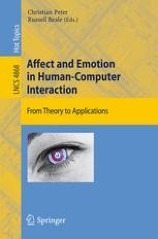
Affect and Emotion in Human-Computer Interaction : From Theory to Applications
The present book provides an account of the latest work on a variety of aspects related to affect and emotion in human-technology interaction. It covers theoretical issues, user experience and design aspects as well as sensing issues, and reports on a number of affective applications that have been developed in recent years.

Advances in visual computing ; Vol. 3804 ; 1st International symposium, ISVC 2005, Lake Tahoe, NV, USA, December 5-7, 2005, Proceedings
Constitutes the refereed proceedings of the introduce the papers of the proceedings of the for the 2005 Int- national Symposium on Visual Computing (ISVC). ISVC provides a common umbrella for the four main areas of visual computing: vision, graphics, visu- ization, and virtual reality.
