



Page 46
Page 46

Control Theory Tutorial : Basic Concepts Illustrated by Software Examples
Introduces the basic principles of control theory in a concise self-study guide. It complements the classic texts by emphasizing the simple conceptual unity of the subject. A novice can quickly see how and why the different parts fit together. The concepts build slowly and naturally one after another, until the reader soon has a view of the whole. Each concept is illustrated by detailed examples and graphics. The full software code for each example is available, providing the basis for experimenting with various assumptions, learning how to write programs for control analysis, and setting the stage for future research projects. The topics focus on robustness, design trade-offs, and optimality. Most of the book develops classical linear theory. The last part of the book considers robustness with respect to nonlinearity and explicitly nonlinear extensions, as well as advanced topics such as adaptive control and model predictive control.

Control Reconfiguration of Dynamical Systems : Linear Approaches and Structural Tests
The book addresses advanced engineering students, developers and researchers that have a specific interest in control reconfiguration. A good understanding of multi-variable dynamic systems is helpful, but the second part is accessible even without this.

Control problems for conservation laws with traffic applications: modeling, analysis, and numerical methods
Conservation and balance laws on networks have been the subject of much research interest given their wide range of applications to real-world processes, particularly traffic flow. This open access monograph is the first to investigate different types of control problems for conservation laws that arise in the modeling of vehicular traffic. Four types of control problems are discussed - boundary, decentralized, distributed, and Lagrangian control - corresponding to, respectively, entrance points and tolls, traffic signals at junctions, variable speed limits, and the use of autonomy and communication. Because conservation laws are strictly connected to Hamilton-Jacobi equations, control of the latter is also considered.

Contributions to Simulation Speed-Up : Rare Event Simulation and Short-Term Dynamic Simulation for Mobile Network Planning
Eugen Lamers explains the principle of simulation speed-up in general, demonstrates the technique RESTART for the simulation of rare events, and addresses its efficiency on distributed systems.

Continuous System Simulation
Continuous System Simulation describes systematically and methodically how mathematical models of dynamic systems, usually described by sets of either ordinary or partial differential equations possibly coupled with algebraic equations, can be simulated on a digital computer.
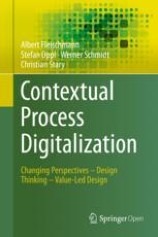
Contextual Process Digitalization: Changing Perspectives – Design Thinking – Value-Led Design
This book presents an overview and step-by-step explanation of process management. It starts with the individual participants’ perspectives on their work in a process and its structuring and harmonization, and then moves on to its specification in a model and how it is embedded in the organizational and IT environment of the company.

Content based social platform optimization “Fashion Platform"
The purpose of this project is to design a platform that concentrates on Fashion in addition to assisting users with gathering an informative feedback, as well as linking local stores to those users. This platform will be delivered as a mobile application that is available to any user who is interested in expressing and sharing his/her prevailing taste in fashion simply by posting photos, interacting with other people’s posts and leaving comments for them. The app will also provide some features in an attempt to push the users to be more enthusiastic and to be more encouraged about trying and continuously using this app. Moreover, this platform will incorporate a Shop section, which will be the actual local stores that are connected to it, so the user can buy an item that he/she is fond of.

Contemporary Cryptology
The aim of this text is to treat selected topics of the subject of contemporary cryptology, structured in five quite independent but related themes: Efficient distributed computation modulo a shared secret / Multiparty computation / Foundations of modern cryptography / Provable security for public key schemes / Efficient and secure public-key cryptosystems.

Construction and Analysis of Safe, Secure, and Interoperable Smart Devices ; Vol. 3956 ; Second International Workshop, CASSIS 2005, Nice, France, March 8-11, 2005, Revised Selected Papers
This book constitutes the refereed post-proceedings of the Second International Workshop on Construction and Analysis of Safe, Secure, and Interoperable Smart Devices, CASSIS 2005. The 9 revised full papers presented were carefully selected during two rounds of reviewing and improvement from about 30 workshop talks. The papers are organized in topical sections on research trends in smart devices, Web services, virtual machine technology, security, validation and formal methods, proof-carrying code, and embedded devices.

Construction and analysis of safe, secure, and interoperable smart devices ; Vol. 3362 : International workshop, CASSIS 2004, Marseille, France, March 10-14, 2004, Revised Selected Papers
History based access control and secure information flow / The spec# programming system / Mastering test generation from smart card software formal models / A mechanism for secure, fine-grained dynamic provisioning of applications on small devices / A type system for checking applet isolation in java card / Verification of safety properties in the presence of transactions / Modelling mobility aspects of security policies / Smart devices for next generation mobile services / A flexible framework for the estimation of coverage metrics in explicit state software model checking / Combining several paradigms for circuit validation and verification / Smart card research perspectives

Constructing Ambient Intelligence ; AmI 2007 Workshops Darmstadt, Germany, November 7-10, 2007 Revised Papers
This book constitutes the refereed proceedings of the workshops of the First European Conference on Ambient Intelligence, AmI 2007, held in Darmstadt, Germany, in November 2007.

Constraint-Based Mining and Inductive Databases ; European Workshop on Inductive Databases and Constraint Based Mining, Hinterzarten, Germany, March 11-13, 2004, Revised Selected Papers
The interconnected ideas of inductive databases and constraint-based mining are appealing and have the potential to radically change the theory and practice of data mining and knowledge discovery.

Constraint solving and language processing
Contains selected and thoroughly revised papers plus contributions from invited speakers presented at the First International Workshop on C- straint Solving and Language Processing, held in Roskilde, Denmark, September 1–3, 2004. Constraint Programming and Constraint Solving, in particular Constraint Logic Programming, appear to be a very promising platform, perhaps the most promising present platform, for bringing forward the state of the art in natural language processing, this due to the naturalness in speci?cation and the direct relation to e?cient implementation. Language, in the present context, may - fer to written and spoken language, formal and semiformal language, and even general input data to multimodal and pervasive systems, which can be handled in very much the same ways using constraint programming. The notion of constraints, with slightly differing meanings, apply in the characterization of linguistic and cognitive phenomena, in formalized linguistic m- els as well as in implementation-oriented frameworks. Programming techniques for constraint solving have been, and still are, in a period with rapid devel- ment of new eficient methods and paradigms from which language processing can prompt. A common metaphor for human language processing is one big c- straint solving process in which the differently specified linguistic and cognitive phases take place in parallel and with mutual cooperation, which ?ts quite well with current constraint programming paradigms.

Constraint satisfaction techniques for agent-based reasoning
Constraint satisfaction problems are significant in the domain of automated reasoning for artificial intelligence. They can be applied to the modeling and solving of a wide range of combinatorial applications such as planning, scheduling and resource sharing in a variety of practical domains such as transportation, production, supply-chains, network management and human resource management. In this book we study new techniques for solving constraint satisfaction problems, with a special focus on solution adaptation applied to agent reasoning.

Constraint handling rules : Current research topics
The Constraint Handling Rules (CHR) language is a declarative concurrent committed-choice constraint logic programming language consisting of guarded rules that transform multisets of relations called constraints until no more change occurs. The aim of this volume was to attract high-quality research papers on these recent advances in Constraint Handling Rules.

Conditionals, Information, and Inference
Conditionals are fascinating and versatile objects of knowledge representation. On the one hand, they may express rules in a very general sense, representing, for example, plausible relationships, physical laws, and social norms. On the other hand, as default rules or general implications, they constitute a basic tool for reasoning, even in the presence of uncertainty. In this sense, conditionals are intimately connected both to information and inference. Due to their non-Boolean nature, however, conditionals are not easily dealt with. They are not simply true or false — rather, a conditional “if A then B” provides a context, A, for B to be plausible (or true) and must not be confused with “A entails B” or with the material implication “not A or B.” This ill- trates how conditionals represent information, understood in its strict sense as reduction of uncertainty. To learn that, in the context A, the proposition B is plausible, may reduce uncertainty about B and hence is information. The ab- ity to predict such conditioned propositions is knowledge and as such (earlier) acquired information. The ?rst work on conditional objects dates back to Boole in the 19th c- tury, and the interest in conditionals was revived in the second half of the 20th century, when the emerging Arti?cial Intelligence made claims for appropriate formaltoolstohandle“generalizedrules.”Sincethen,conditionalshavebeenthe topic of countless publications, each emphasizing their relevance for knowledge representation, plausible reasoning, nonmonotonic inference, and belief revision.

Concurrent Zero-Knowledge : With Additional Background by Oded Goldreich
Zero-knowledge proofs are fascinating and extremely useful constructs. Their fascinating nature is due to their seemingly contradictory de?nition; ze- knowledge proofs are convincing and yet yield nothing beyond the validity of the assertion being proved. Their applicability in the domain of cryptography is vast; they are typically used to force malicious parties to behave according to a predetermined protocol. In addition to their direct applicability in cr- tography, zero-knowledge proofs serve as a good benchmark for the study of variousproblemsregardingcryptographicprotocols(e.g.,“securecomposition of protocols”).

Concurrency, Graphs and Models : Essays Dedicated to Ugo Montanari on the Occasion of His 65th Birthday
The volume consists of seven sections, six of which are dedicated to the main research areas to which Ugo Montanari has contributed: Graph Transformation; Constraint and Logic Programming; Software Engineering; Concurrency; Models of Computation; and Software Verification.

Concurrency Theory : Calculi an Automata for Modelling Untimed and Timed Concurrent Systems
Concurrency Theory is a synthesis of one of the major threads of theoretical computer science research focusing on languages and graphical notations for describing collections of simultaneously evolving components that interact through synchronous communication. The main specification notation focused on in this book is LOTOS. An extensive introduction to this particular process calculus is given, highlighting how the approach differs from competitor techniques, such as CCS and CSP.

CONCUR 2008 - Concurrency Theory ; 19th International Conference, CONCUR 2008, Toronto, Canada, August 19-22, 2008. Proceedings
This book constitutes the refereed proceedings of the 19th International Conference on Concurrency Theory, CONCUR 2008, held in Toronto, Canada, August 19-22, 2008.
