



Page 4
Page 4
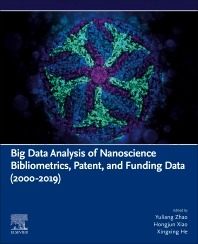
Big data analysis of nanoscience bibliometrics, patent, and funding data (2000-2019)
Presents an evaluation of nanotechnologies outputs (academic outputs and patents) and their impact from 2000-2019. The evaluation uses Elsevier’s Scopus (the largest abstract and citation database of peer-reviewed literature), SciVal (a scientific research analysis platform), Funding Institutional (a funding database), and PatentSight (a patent analysis platform). It covers four key topics regarding nanoscience research, including: 1) An overview of nano-related scholarly output, 2) Nanoscience and its contribution to basic science, 3) Nanoscience and its impact on and collaboration with industry partners, and 4) Key factors that promote the development of nanoscience.
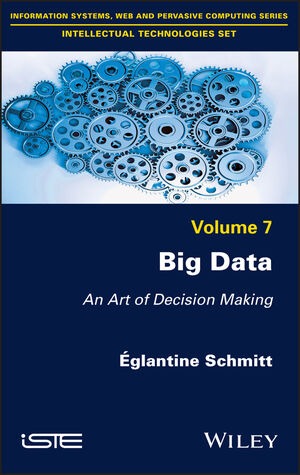
Big Data : An Art of Decision Making
Manipulating and processing masses of digital data is never a purely technical activity. It requires an interpretative and exploratory outlook - already well known in the social sciences and the humanities - to convey intelligible results from data analysis algorithms and create new knowledge. Big Data is based on an inquiry of several years within Proxem, a software publisher specializing in big data processing. The book examines how data scientists explore, interpret and visualize our digital traces to make sense of them, and to produce new knowledge. Grounded in epistemology and science and technology studies, Big Data offers a reflection on data in general, and on how they help us to better understand reality and decide on our daily actions.

Balancing Agility and Formalism in Software Engineering ; 2nd IFIP TC 2 Central and East European Conference on Software Engineering Techniques, CEE-SET 2007, Poznan, Poland, October 10-12, 2007, Revised Selected Papers
This book constitutes the thoroughly refereed post-conference proceedings of the Second IFIP TC 2 Central and East Conference on Software Engineering Techniques, CEE-SET 2007, held in Poznan, Poland, in October 2007.

Artificial intelligence and national security
Analyses the implications of the technical, legal, ethical and privacy challenges as well as challenges for human rights and civil liberties regarding Artificial Intelligence (AI) and National Security. It also offers solutions that can be adopted to mitigate or eradicate these challenges wherever possible. As a general-purpose, dual-use technology, AI can be deployed for both good and evil. The use of AI is increasingly becoming of paramount importance to the governments mission to keep their nations safe. However, the design, development and use of AI for national security poses a wide range of legal, ethical, moral and privacy challenges. This book explores national security uses for Artificial Intelligence (AI) in Western Democracies and its malicious use. This book also investigates the legal, political, ethical, moral, privacy and human rights implications of the national security uses of AI in the aforementioned democracies. It illustrates how AI for national security purposes could threaten most individual fundamental rights, and how the use of AI in digital policing could undermine user human rights and privacy.

Algorithmic Game Theory ; 1st International Symposium, SAGT 2008, Paderborn, Germany, April 30-May 2, 2008. Proceedings
This book constitutes the refereed proceedings of the First International Symposium on Algorithmic Game Theory, SAGT 2008, held in Paderborn, Germany, in April/May 2008.

Agent and Multi-Agent Systems : Technologies and Applications ; 2nd KES International Symposium, KES-AMSTA 2008, Incheon, Korea, March 26-28, 2008. Proceedings
The KES-AMSTA Symposium Series is a sub-series of the KES Conference Series. The aim of the symposium was to provide an international forum for scientific research into the technologies and applications of agent and multi-agent systems.

Advances in knowledge discovery and data mining ; Vol. 3518 ; 9th Pacific-Asia conference, PAKDD 2005, Hanoi, Vietnam, May 18-20, 2005, Proceedings
This book constitutes the refereed proceedings of the 9th Pacific-Asia Conference on Knowledge Discovery and Data Mining, PAKDD 2005, held in Hanoi, Vietnam, in May 2005. Including Topics Artificial Intelligence Database Management Information Storage and Retrieval Probability and Statistics in Computer Science Multimedia Information Systems Computer Appl. in Administrative Data Processing

Advances in information systems ; 3rd International Conference, ADVIS 2004, Izmir, Turkey, October 20-22, 2004. Proceedings
This volume contains the proceedings of the 3rd International Conference on AdvancesinInformationSystems (ADVIS)heldinIzmir,Turkey, 2004. The conference covered many of the topics of the second one: databases and data warehouses, information systems development and management, - formation retrieval, distributed and parallel data processing, and evolutionary algorithms. Besides them some of the hot topics related to information systems were included in the scope of this conference, such as data mining and kno- edge discovery, Web information systems development, information privacy and security, multimedia information systems, and network management.

Advances in Enterprise Engineering I ; 4th International Workshop CIAO! and 4th International Workshop EOMAS, held at CAiSE 2008, Montpellier, France, June 16-17, 2008. Proceedings
This book constitutes the proceedings of the 4th International Workshop on Cooperation and Interoperability, Architecture and Ontology, CIAO!, and the 4th International Workshop on Enterprise and Organizational Modeling and Simulation, EOMAS, held at CAiSE 2008 in Montpellier, France, in June 2008.

Advances in Case-Based Reasoning ; 9th European Conference, ECCBR 2008 , Trier, Germany, September 1-4, 2008. Proceedings
Constitutes the refereed proceedings of the 9th European Conference on Case-Based Reasoning, ECCBR 2008, held in Trier, Germany, in September 2008.
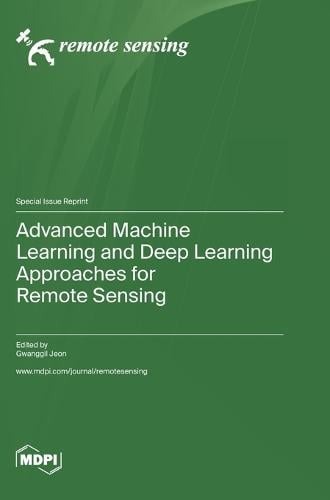
Advanced machine learning and deep learning approaches for remote sensing
Provides research on how technologies such as artificial intelligence-based machine learning and deep learning can be applied to remote sensing. Through this, we can see the process of solving the existing problems of image and image signal processing for remote sensing. These techniques are computationally intensive and require the help of high-performance computing devices. With the development of devices such as GPUs, remote sensing technology, and aerial sensing technology, it is possible to monitor the Earth with high-resolution images and to obtain vast amounts of Earth observation data. The papers published in this reprint describe recent advances in big data processing and artificial intelligence-based technologies for remote sensing technology.

Advanced Data Mining and Applications ; 4th International Conference, ADMA 2008, Chengdu, China, October 8-10, 2008. Proceedings
This book constitutes the refereed proceedings of the 4th International Conference on Advanced Data Mining and Applications, ADMA 2008, held in Chengdu, China, in October 2008.
Adaptive Machine Learning Algorithms with Python : Solve Data Analytics and Machine Learing Problems on Edge Devices
Learn to use adaptive algorithms to solve real-world streaming data problems. This book covers a multitude of data processing challenges, ranging from the simple to the complex. At each step, you will gain insight into real-world use cases, find solutions, explore code used to solve these problems, and create new algorithms for your own use. You will: Apply adaptive algorithms to practical applications and examples / Understand the relevant data representation features and computational models for time-varying multi-dimensional data / Derive adaptive algorithms for mean, median, covariance, eigenvectors (PCA) and generalized eigenvectors with experiments on real data / Speed up your algorithms and put them to use on real-world stationary and non-stationary data / Master the applications of adaptive algorithms on critical edge device computation applications
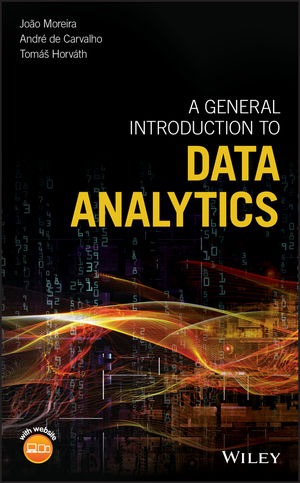
A General introduction to data analytics
A guide to the principles and methods of data analysis that does not require knowledge of statistics or programming. A guide to the reasoning behind data mining techniques. A unique illustrative example that extends throughout all the chapters. Exercises at the end of each chapter and larger projects at the end of each of the text’s two main parts
