



Page 2
Page 2

Elevating video content creation with ai assistance = ارتقاء إنشاء محتوى الفيديو بمساعدة الذكاء الاصطناعي
We developed an AI Assistant equipped with features such as description crafting, title generation, keyword extraction, image captioning, clickbait detection, and sentiment analysis.To achieve these functionalities, we proposed a model for generating video descriptions using ResNet50 as a feature extractor and a LSTM network with an attention mechanism as a sequence generator, achieving a BLEU-1 score of 0.907 and a ROUGE-L score of 0.645. For keyword extraction, we utilized Sentence Transformer to identify strategically relevant keywords from the generated descriptions. For title generation, we fine-tuned the BART model, achieving a ROUGE-L score of 0.45. For clickbait detection, we used SVC classifier with linear kernel and TF-IDF vectorization for feature extraction, resulting in 96% accuracy. Our sentiment analysis model using a CNN-LSTM architecture achieved 80% accuracy in analyzing comments on videos. For image captioning, we employed a feature extractor with a CNN layer followed by an LSTM model, achieving a BLEU-1 score of 0.53. Our platform empowers creators by simplifying complex tasks and offering deeper audience engagement insights, making it a powerful tool in the evolving digital content creation.

Developments in Language Theory ; 11th International Conference, DLT 2007, Turku, Finland, July 3-6, 2007, Proceedings
It addresses all important issues in language theory including grammars, acceptors and transducers for words, trees and graphs; algebraic theories of automata; relationships to cryptography, concurrency, complexity theory and logic; bioinspired computing, and quantum computing.

Deep learning methods for converting speech to text = تقنيات التعلم العميق في تحويل الصوت إلى نص
Aims to design and develop a system capable of extracting audio content from films and audio recordings and converting it into text using deep learning techniques. This is done by analyzing audio patterns, extracting sounds and words from the video, and then converting them into written text. Deep learning, a branch of artificial intelligence, is used to accomplish this task. The study also includes comparing different deep learning techniques to determine their effectiveness in this context.

Cryptology and Network Security ; 6th International Conference, CANS 2007, Singapore, December 8-10, 2007, Proceedings
This book presented signatures, network security, secure keyword search and private information retrieval, public key encryption, intrusion detection, email security, denial of service attacks, and authentication.

Cooperative Information Agents XI ; Matthias Klusch, Koen V. Hindriks, Mike P. Papazoglou, Leon Sterling
In today’s world of ubiquitously connected heterogeneous information systems and computing devices, the intelligent coordination and provision of relevant added-value information at any time, anywhere is of key importance to a va- ety of applications. This challenge is envisioned to be coped with by means of appropriate intelligent and cooperative information agents. An information agent is a computational software entity that has access to one or multiple heterogeneous and geographically dispersed data and infor- tion sources. It pro-actively searches for and maintains information on behalf of its human users, or other agents preferably just in time. In other words, it is managing and overcoming the di?culties associated with information overload in open, pervasive information and service landscapes. Each component of a modern cooperative information system is represented by an appropriate intelligent information agent capable of resolving system and semantic heterogeneities in a given context on demand. Cooperative infor- tion agents are supposed to accomplish both individual and shared joint goals depending on the actual user preferences in line with given or deduced limits of time, budget and resources available.

Computer Processing of Oriental Languages. Beyond the Orient : The Research Challenges Ahead ; 21st International Conference, ICCPOL 2006, Singapore, December 17-19, 2006, Proceedings
This book constitutes the thoroughly refereed proceedings of the 21st International Conference on Computer Processing of Oriental Languages, ICCPOL 2006.The papers are organized in topical sections on information retrieval, document classification, questions and answers, summarization, machine translation, word segmentation, chunking, abbreviation expansion, writing-system issues, parsing, semantics, and lexical resources.

Computer Analysis of Images and Patterns ; 12th International Conference, CAIP 2007, Vienna, Austria, August 27-29, 2007, Proceedings
This volume covers motion detection and tracking, medical imaging, biometrics, color, curves and surfaces beyond two dimensions, reading characters, words and lines, image segmentation, shape, image registration and matching, signal decomposition and invariants, and features and classification.

Computational linguistics and intelligent text processing ; 8th International Conference, CICLing 2007, Mexico City, Mexico, February 18-24, 2007, Proceedings
This book cover all current issues in computational linguistics research and present intelligent text processing applications. The papers are organized in topical sections on: lexical resources, corpus-based knowledge acquisition, morphology and part-of-speech tagging, named entity recognition, temporal expression treatment, word segmentation, sentence splitting, chunking, grammar formalisms and syntax, word sense disambiguation and discrimination and semantics.

Machines, Computations, and Universality ; 5th International Conference, MCU 2007, Orleans, France, September 10-13, 2007, Proceedings
The 18 revised full papers presented together with nine invited papers cover Turing machines, register machines, word processing, cellular automata, tiling of the plane, neural networks, molecular computations, BSS machines, infinite cellular automata, real machines, and quantum computing.

List decoding of error-correcting codes : Winning thesis of the 2002 ACM doctoral dissertation competition
Presents some spectacular new results in the area of decoding algorithms for error-correcting codes. Specifically, it shows how the notion of “list-decoding” can be applied to recover from far more errors, for a wide variety of err- correcting codes, than achievable before. A brief bit of background : error-correcting codes are combinatorial str- tures that show how to represent (or “encode”) information so that it is - silient to a moderate number of errors. Speci?cally, an error-correcting code takes a short binary string, called the message, and shows how to transform it into a longer binary string, called the codeword, so that if a small number of bits of the codewordare ?ipped, the resulting string does not look like any other codeword. The maximum number of errorsthat the code is guaranteed to detect, denoted d, is a central parameter in its design. A basic property of such a code is that if the number of errors that occur is known to be smaller than d/2, the message is determined uniquely. This poses a computational problem, called the decoding problem : compute the message from a corrupted codeword, when the number of errors is less than d/2.

Language and Automata Theory and Applications ; 2nd International Conference, LATA 2008, Tarragona, Spain, March 13-19, 2008. Revised Papers
This book constitutes the refereed proceedings of the Second International Conference on Language and Automata Theory and Applications, LATA 2008, held in Tarragona, Spain, in March 2008.The 40 revised full papers presented were carefully reviewed and selected from 134 submissions. The papers deal with the various issues related to automata theory and formal languages
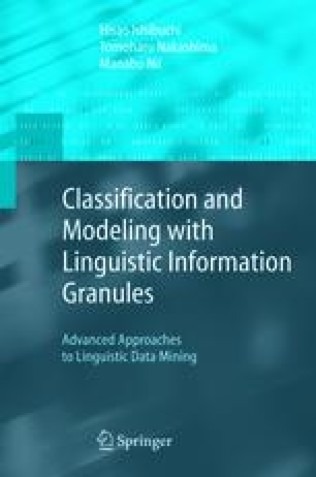
Classification and Modeling with Linguistic Information Granules : Advanced Approaches to Linguistic Data Mining
Many approaches have already been proposed for classification and modeling in the literature. These approaches are usually based on mathematical mod els. Computer systems can easily handle mathematical models even when they are complicated and nonlinear (e.g., neural networks). On the other hand, it is not always easy for human users to intuitively understand mathe matical models even when they are simple and linear. This is because human information processing is based mainly on linguistic knowledge while com puter systems are designed to handle symbolic and numerical information. A large part of our daily communication is based on words. We learn from various media such as books, newspapers, magazines, TV, and the Inter net through words. We also communicate with others through words. While words play a central role in human information processing, linguistic models are not often used in the fields of classification and modeling. If there is no goal other than the maximization of accuracy in classification and modeling, mathematical models may always be preferred to linguistic models. On the other hand, linguistic models may be chosen if emphasis is placed on interpretability.

Building Online Communities with Drupal, phpBB, and WordPress
Content management, blogs, and online forums are among the most significant online trends today, and Drupal, phpBB, and WordPress are three of the most popular open source applications facilitating these trends. Drupal is a full content management system that allows you to create any type of website you desire, from an e-commerce to a community-based site. phpBB enables you to set up a bulletin board or forum. And WordPress is the software of choice for the exploding blog community. All three technologies are based on PHP and MySQL.

Blog Design Solutions
In this book, a team of renowned web designers take you through the ins and outs of putting together great blogs. They waste no time harking on about the philosophy of blogs, or the community behind them. Instead, they get straight to the practical details, showing how to set up a basic blog in some of the world's most popular blogging engines Movable Type, ExpressionEngine, WordPress, and Textpattern. With your blog set up, they then show you how to build great looking, usable layouts for your blog. The last chapter even shows you how to build your very own PHP/MySQL-based blog engine!

Biometric Authentication ; International ECCV 2002 Workshop Copenhagen, Denmark, June 1, 2002 Proceedings
Biometric authentication refers to identifying an individual based on his or her distinguishing physiological and/or behavioral characteristics. It associates an individual with a previously determined identity based on that individual s appearance or behavior. Because many physiological or behavioral characteristics (biometric indicators) are distinctive to each person, biometric identifiers are inherently more reliable and more capable than knowledge-based (e.g., password) and token-based (e.g., a key) techniques in differentiating between an authorized person and a fraudulent impostor. For this reason, more and more organizations are looking to automated identity authentication systems to improve customer satisfaction, security, and operating efficiency as well as to save critical resources.

Beginning PHP and MySQL 5 : From novice to professional
Written for the budding web developer searching for a powerful, low-cost solution for building flexible, dynamic web sites. Essentially three books in one: provides thorough introductions to the PHP language and the MySQL database, and shows you how these two technologies can be effectively integrated to build powerful websites. Provides over 500 code examples, including real-world tasks such as creating an auto-login feature, sending HTML-formatted e-mail, testing password guessability, and uploading files via a web interface. Updated for MySQL 5, includes new chapters introducing triggers, stored procedures, and views.

Automotive Lighting and Human Vision
Visual perception is the most important of the human senses. Lack of visual perception is one of the main causes of accidents. The safety of vehicle traffic depends on how well automotive lighting supports the visual perception of the driver. This book explains the fundamentals of visual perception, like e.g. physiology of eye and brain, as well as those of automotive lighting technology, like e.g. design of headlamps and signal lights. It is an interdiciplinary approach to a fastly evolving field of science and technology, answering questions like "How does information enter our brain when driving a car?" and "What are the benefits and dangers of LED signal lighting?"

Automatic video editor
Searching in a large database of videos is one of the challenges faced by the user today as most of the results are inaccurate or correct. In our project, we worked on developing a system that receives the search word from the user and searches for it among a large number of videos using MSR-VTT dataset and COCO data set based on the elements that we see inside the video. Entered by the user. We have also worked on adding other options that the user can benefit from in modifying the videos, such as entering a black and white video clip and returning the result in color. The user can also enter a low-resolution video clip, and the system improves the accuracy of the video and sends it.
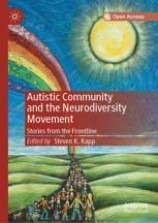
Autistic community and the neurodiversity movement : Stories from the frontline
This book marks the first historical overview of the autism rights branch of the neurodiversity movement, describing the activities and rationales of key leaders in their own words since it organized into a unique community in 1992. Sandwiched by editorial chapters that include critical analysis, the book contains 19 chapters by 21 authors about the forming of the autistic community and neurodiversity movement, progress in their influence on the broader autism community and field, and their possible threshold of the advocacy establishment

An Intuitive Exploration of Artificial Intelligence : Theory and Applications of Deep Learning
This book develops a conceptual understanding of Artificial Intelligence (AI), Deep Learning and Machine Learning in the truest sense of the word. It is an earnest endeavor to unravel what is happening at the algorithmic level, to grasp how applications are being built and to show the long adventurous road in the future.
