



Page 11
Page 11

Databases and information systems ; 14th International Baltic Conference, DB&IS 2020, Tallinn, Estonia, June 16–19, 2020, Proceedings
This book constitutes the refereed proceedings of the 14th International Baltic Conference on Databases and Information Systems, DB&IS 2020, held in Tallinn, Estonia, in June 2020.* The 22 revised papers presented were carefully reviewed and selected from 52 submissions. The papers are centered around topics like architectures and quality of information systems, artificial intelligence in information systems, data and knowledge engineering, enterprise and information systems engineering, security of information systems.

Database and expert systems applications ; 31st International conference, DEXA 2020, Bratislava, Slovakia, September 14–17, 2020, Proceedings, Part I
The double volumes LNCS 12391-12392 constitutes the papers of the 31st International Conference on Database and Expert Systems Applications, DEXA 2020, which will be held online in September 2020. The 38 full papers presented together with 20 short papers plus 1 keynote papers in these volumes were carefully reviewed and selected from a total of 190 submissions.

Data science and analytics ; 5th International conference on recent developments in science, engineering and technology, REDSET 2019, Gurugram, India, November 15–16, 2019, Revised Selected Papers, Part I
This two-volume set (CCIS 1229 and CCIS 1230) constitutes the refereed proceedings of the 5th International Conference on Recent Developments in Science, Engineering and Technology, REDSET 2019, held in Gurugram, India, in November 2019. The 74 revised full papers presented were carefully reviewed and selected from total 353 submissions. The papers are organized in topical sections on data centric programming; next generation computing; social and web analytics; security in data science analytics; big data analytics.

Data science ; 6th International Conference of Pioneering Computer Scientists, Engineers and Educators, ICPCSEE 2020, Taiyuan, China, September 18-21, 2020, Proceedings, Part II
This two volume set (CCIS 1257 and 1258) constitutes the refereed proceedings of the 6th International Conference of Pioneering Computer Scientists, Engineers and Educators, ICPCSEE 2020 held in Taiyuan, China, in September 2020. The 98 papers presented in these two volumes were carefully reviewed and selected from 392 submissions. The papers are organized in topical sections: database, machine learning, network, graphic images, system, natural language processing, security, algorithm, application, and education.

Data Management Technologies and Applications ; 8th International Conference, DATA 2019, Prague, Czech Republic, July 26–28, 2019, Revised Selected Papers
This book constitutes the thoroughly refereed proceedings of the 8th International Conference on Data Management Technologies and Applications, DATA 2019, held in Prague, Czech Republic, in July 2019. The 8 revised full papers were carefully reviewed and selected from 90 submissions. The papers deal with the following topics: decision support systems, data analytics, data and information quality, digital rights management, big data, knowledge management, ontology engineering, digital libraries, mobile databases, object-oriented database systems, and data integrity.
Data Management in Grid and Peer-to-Peer Systems ; 1st International Conference, Globe 2008, Turin, Italy, September 3, 2008. Proceedings
This book constitutes the refereed proceedings of the First International Conference on Data Management in Grid and Peer-to-Peer Systems, Globe 2008, held in Turin, Italy, in September 2008.
Cyber-physical systems of systems : Foundations : A conceptual model and some derivations : The AMADEOS legacy
Technical Systems-of-Systems (SoS) – in the form of networked, independent constituent computing systems temporarily collaborating to achieve a well-defined objective – form the backbone of most of today’s infrastructure. The energy grid, most transportation systems, the global banking industry, the water-supply system, the military equipment, many embedded systems, and a great number more, strongly depend on systems-of-systems. The correct operation and continuous availability of these underlying systems-of-systems are fundamental for the functioning of our modern society.

Cyber Security ; 18th China Annual Conference, CNCERT 2021, Beijing, China, July 20–21, 2021, revised selected papers
This book constitutes the refereed proceedings of the 17th International Annual Conference on Cyber Security, CNCERT 2021, held in Beijing, China, in AJuly 2021. The 14 papers presented were carefully reviewed and selected from 51 submissions. The papers are organized according to the following topical sections: data security; privacy protection; anomaly detection; traffic analysis; social network security; vulnerability detection; text classification.

Cryptology and Network Security ; 19th International Conference, CANS 2020, Vienna, Austria, December 14–16, 2020, Proceedings
This book constitutes the refereed proceedings of the 19th International Conference on Cryptology and Network Security, CANS 2020, held in Vienna, Austria, in December 2020.* The 30 full papers were carefully reviewed and selected from 118 submissions. The papers focus on topics such as cybersecurity; credentials; elliptic curves; payment systems; privacy-enhancing tools; lightweight cryptography; and codes and lattices.

Creating Flash Widgets with Flash CS4 and ActionScript 3.0
Creating Flash Widgets with Flash CS4 and ActionScript 3.0 is an introduction to developing widgets for the Internet using the features of Flash CS4 and ActionScript 3.0. Many social-networking sites, blogs, and personal home pages have adopted the use of widgets and Flash developers can create and distribute their own widgets for others to use. A step-by-step example demonstrates how to design and develop your own Flash widgets and integrate them with XML. In addition, publishing, promoting, and capitalizing on your Flash widgets is discussed.
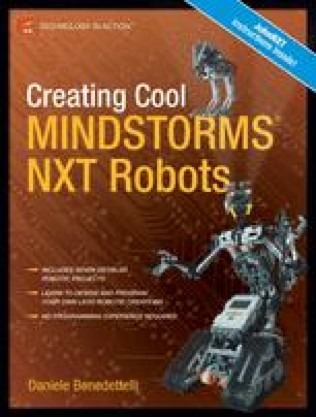
Creating Cool MINDSTORMS® NXT Robots
Build and program MINDSTORM NXT robots with Daniele Benedettelli, one of the world's most respected NXT robot builders. He shows you how to build and program them from scratch, starting with the simplest robots and progressing in difficulty to a total of seven award–winning robots! You can download all the code, along with low–resolution videos that show how your robot works when it's finished. You don't need to be a programmer to develop these cool robots, because all the code is provided, but advanced developers will enjoy seeing the secrets of Benedettelli's code and techniques revealed.
COTS-Based software systems ; 4th International Conference, ICCBSS 2005, Bilbao, Spain, February 7-11, 2005, Proceedings
The theme “Build and Conquer” : software development is an engineering discipline, and not an artistic expression. Once we are ready to “build” our software systems using pieces previously builtin (similar to any other technology manufacturer), we will be able to “conquer” the software engineering process. If we take a look at other engineering disciplines such as car manufacturing, house appliances or aeronautics, we see that the final products are built through the integration of multiprovider commercial components. These components are successfully integrated and constitute an important part of the final product. Most software-related organizations still build software from scratch, omitting thousands of ready-built commercially available software components that could be used very effectively during the development phase. This year ICCBSS moves to Europe for the first time since the first conference took place in Orlando, FL, USA in 2002. The conference scope has enlarged over the years to include the Open Source community and Web Services technologies. so many of the characteristics of COTS are also applied to Open Source and Web Services.

Coordination, organizations, institutions, and norms in agent system III ; COIN 2007 International Workshops COIN@AAMAS 2007, Honolulu, HI, USA, May 14, 2007 COIN@MALLOW 2007, Durham, UK, September 3-4, 2007 Revised Selected Papers
This book constitutes the refereed post-workshop proceedings of the International Workshop on Coordination, Organization, Institutions and Norms in Agent Systems, COIN 2007.

Coordination, organizations, institutions, and norms in agent system ; AAMAS 2005 International Workshops on Agents, Norms, and Institutions for Regulated Multiagent Systems, ANIREM 2005 and on organizations in multi-agent systems, OOOP 2005, Utrecht, The Netherlands, July 25-26, 2005, Revised Selected Papers
This book constitutes the refereed post-proceedings of the International Workshop on Agents, Norms and Institutions for Regulated Multiagent Systems, ANIREM 2005, and the International Workshop on Organizations in Multi-Agent Systems, OOOP 2005, held in Utrecht, The Netherlands, July 2005.

Coordination models and languages ; 23rd IFIP WG 6.1 International Conference, COORDINATION 2021, Held as Part of the 16th International Federated Conference on Distributed Computing Techniques, DisCoTec 2021, Valletta, Malta, June 14–18, 2021, Proceedings
This book constitutes the refereed proceedings of the 23rd IFIP WG 6.1 International Conference on Coordination Models and Language, COORDINATION 2021, held in Valletta, Malta, in June 2021, as part of the 16th International Federated Conference on Distributed Computing Techniques, DisCoTec 2021. The 15 regular papers, 2 short papers, and 1 tutorial paper presented in this book were carefully reviewed and selected from 31 submissions. COORDINATION provides a well-established forum for the growing community of researchers interested in coordination models and languages, architectures, verification and implementation techniques necessary to cope with the complexity induced by the demands of today's software development.

Coordination models and languages ; 22nd IFIP WG 6.1 International Conference, COORDINATION 2020, Held as Part of the 15th International Federated Conference on Distributed Computing Techniques, DisCoTec 2020, Valletta, Malta, June 15–19, 2020, Proceedings
This book constitutes the proceedings of the 22nd International Conference on Coordination Models and Languages, COORDINATION 2020, which was due to be held in Valletta, Malta, in June 2020, as part of the 15th International Federated Conference on Distributed Computing Techniques, DisCoTec 2020. The conference was held virtually due to the COVID-19 pandemic. The 12 full papers and 6 short papers included in this volume were carefully reviewed and selected from 30 submissions. They are presented in this volume together with 2 invited tutorials and 4 tool papers. The papers are organized in the following topical sections: tutorials; coordination languages; message-based communication; communications: types & implementations; service-oriented computing; large-scale decentralized systems; smart contracts; modelling; verification & analysis.

Coordination models and languages ; 10th International Conference, COORDINATION 2008, Oslo, Norway, June 4-6, 2008. Proceedings
This book constitutes the refereed proceedings of the 10th International Conference on Coordination Models and Languages, COORDINATION 2008, held in Oslo, Norway, in June 2008, as one of the federated conferences on Distributed Computing Techniques, DisCoTec 2008.

Cooperative Design, Visualization, and Engineering ; 5th International Conference, CDVE 2008 Calvià, Mallorca, Spain, September 21-25, 2008 Proceedings
This book constitutes the refereed proceedings of the 5th International Conference on Cooperative Design, Visualization, and Engineering, CDVE 2008, held in Calvià, Mallorca, Spain, in September 2008.
Contemporary Empirical Methods in Software Engineering
This book presents contemporary empirical methods in software engineering related to the plurality of research methodologies, human factors, data collection and processing, aggregation and synthesis of evidence, and impact of software engineering research. The individual chapters discuss methods that impact the current evolution of empirical software engineering and form the backbone of future research.

Constructing Correct Software
Central to Formal Methods is the so-called Correctness Theorem which relates a specification to its correct Implementations. This theorem is the goal of traditional program testing and, more recently, of program verification (in which the theorem must be proved). Proofs are difficult, though even with the use of powerful theorem provers. This volume explains and illustrates an alternative method, which allows the construction of (necessarily correct) algorithms from a specification using algebraic transformations and refinement techniques which prevent the introduction of errors. Based on teaching material used extensively at Loughborough University, John Cooke introduces the basics, using simple examples and lots of detailed working (which can often be re-used). Constructing Correct Software will provide invaluable reading for students and practitioners of Computer Science and Software Engineering to whom correctness of software is of prime importance.
