bg_image

An Integrated Scientific Infrastructure to Support Pharmaceutical Education and Research

The Faculty of Pharmacy at the Arab International University houses an advanced set of educational and research laboratories, designed according to modern scientific principles, aiming to support the educational process and enhance students’ practical and research skills. These laboratories constitute a fundamental pillar in preparing scientifically qualified pharmacists, capable of understanding the chemical, biological, clinical, and industrial aspects of medicines.

The faculty provides a comprehensive educational environment that integrates theoretical instruction, practical training, and scientific research, using advanced laboratory equipment and specialized academic staff. This approach aligns with higher education standards in Syria and reinforces the faculty’s standing among pharmacy schools in private universities.

image

Pharmacy Laboratories at the Arab International University


1. Scientific Research Laboratory

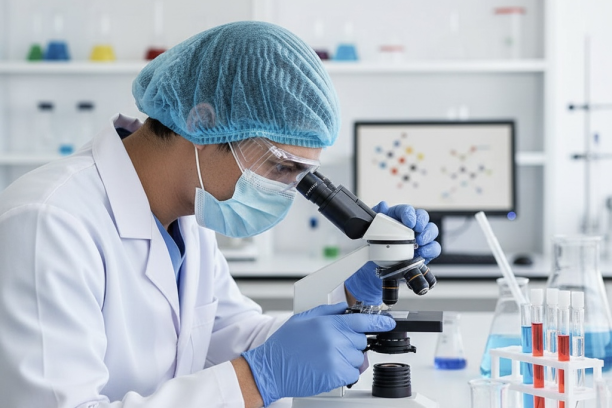
It forms the core framework for supporting pharmaceutical research, enabling students and faculty members to conduct advanced scientific studies and experiments.

2. Molecular Biology Laboratory

An advanced laboratory, the second specialized center in Syria after the University of Damascus, focusing on the study of molecular mechanisms at the cellular and genetic levels, reflecting the scientific excellence of the Faculty of Pharmacy at the Arab International University.

3. Pharmaceutical Chemistry Laboratory

It focuses on the study of drug composition, design, and development, providing a scientific foundation for understanding drug mechanisms and chemical interactions.

4. Pharmaceutics Laboratory

It focuses on the study of dosage forms and their preparation methods, with an emphasis on stability factors and drug release properties.

5. Industrial Pharmacy Laboratory

It is dedicated to training students in the principles of pharmaceutical manufacturing, from production to quality control, in accordance with established standards.

6. Pharmacodynamics Laboratory

A practical laboratory for studying the effects of drugs on biological systems, understanding mechanisms of drug action, and evaluating side effects.

7. Microbiology and Hematology Laboratory

It specializes in the study of microbes and blood, and their roles in diseases, with a focus on diagnostic and therapeutic aspects.

8. Biochemistry and Metabolism Laboratory

It focuses on the study of biochemical and metabolic reactions within the body, serving as a foundation for understanding the effects of drugs on physiological processes.

9. Analytical Chemistry Laboratory

It focuses on the analysis of pharmaceutical substances and the identification of their components, using validated analytical techniques in pharmaceutical sciences.

10. Instrumental Analysis Laboratory

An advanced laboratory for teaching the use of modern analytical instruments to accurately analyze pharmaceutical compounds.

11. Clinical Chemistry Laboratory

It focuses on clinical laboratory analyses and their role in diagnosis and therapeutic monitoring.

12. Applied Pharmacology Laboratory

It specializes in the study of naturally derived drugs and their therapeutic applications in the pharmaceutical field.

13. Biology Laboratory

It provides a scientific foundation for studying cells and living organisms, essential for understanding the biological effects of drugs.

14. Organic and Synthetic Chemistry Laboratory

It focuses on the study of organic compounds and their synthesis methods, serving as a foundation for the development of new drugs.

15. Physical Chemistry and Pharmaceutical Chemistry Laboratory

It focuses on the physical and chemical properties of drugs and their effects on drug absorption and stability.

16. Cosmetics Laboratory

It specializes in teaching the principles of preparation and evaluation of cosmetic products from a scientific and pharmaceutical perspective.

17. Parasitology and Mycology Laboratory

It focuses on the study of pathogenic parasites and fungi, as well as methods for their diagnosis and pharmaceutical control.

18. Toxicology Laboratory

It focuses on the study of toxins and their effects, as well as methods for their detection and therapeutic management.

19. General Chemistry and Drug Control Laboratory

It focuses on the fundamentals of general chemistry and the principles of drug control, ensuring the quality and safety of medications.

20. Animal House

It is used to support scientific research and experiments in accordance with approved ethical and academic standards.

21. Environmental Garden

It provides an educational environment for studying medicinal plants and the natural ecosystem related to pharmaceutical sciences.

22. Virtual Pharmacy

A modern educational platform that enables students to train in pharmacy management and handling prescriptions within an advanced simulated environment.

10 Faculties to Pursue your Passion

Prev
Next
Dentistry
Dentistry
Pharmacy
Pharmacy

ICT Engineering
ICT Engineering
Civil Engineering
Civil Engineering

Business Administration

Law
Law

Architecture
Architecture

Arts
Arts
Human Sciences
Human Sciences
Scientific research & Postgraduate Studies
Help