



الصفحة 1
الصفحة 1

MSCs and Innovative Biomaterials in Dentistry
Presents the modern concepts of mesenchymal stem cells (MSCs) and biomaterials as they pertain to the dental field. The book is organized around three main topics: MSCs biology, advanced biomaterials, and clinical applications. The chapters present basic information on stem cell biology and physiology, modern biomaterials that improve bone tissue regeneration, the biomatrices like platelet-rich fibrin (PRF) used to functionalize the biomaterials surface, the strategic and safe intraoral seats of harvesting, the new sources for MSCs, as well as the future perspectives and new challenges in these exciting fields.

Molecular advances in dental pulp tissue engineering
Recent advances in regenerative medicine and tissue engineering aim to restore the dentin–pulp complex using stem cells, growth factors and tailored scaffolds to achieve biological regeneration within the root canal. This Special Issue highlights scientific advances in pulp regeneration, bridging the gap between research and clinical application.

Microwave-Assisted Synthesis of Heterocycles
This book is Volume I of a new series by Springer entitled Topics in Heterocyclic Chemistry. At present, there are six such monographs in this series, the overall scope of which is to cover "current trends in heterocyclic chemistry". Given the importance of heterocylic natural products and heterocyclic scaffolds in the realm of medicinal chemistry and drug discovery, an up-todate series on this subject is well warranted, and a survey of the recent impact of microwave-assisted synthesis on this venerable field is both timely and needed

Metal Catalyzed Cascade Reactions
Transition metal-catalyzed cascade reactions are an elegant approach to complex molecular scaffolds. Besides their esthetics and increase in structural complexity, they have also become mechanistic challenges for the combination of organometallic elementary steps. As a consequence, cascade reactions have revolutionized synthetic strategies and conceptual thinking. The authors highlight cyclization via carbopalladation and acylpalladation and Heck-pericyclic sequences. They discuss p-allyl palladium-based cascade reactions, Michael-type additions as an entry to transition-metal-promoted cyclizative transformations, and sequential or consecutive palladium-catalyzed processes, and show Pauson-Khand cascades, metal-catalyzed cyclizations of acyclic precursors, as well as cascade and sequential ruthenium-catalyzed transformations. Therefore, the reader finds overview of an exciting and highly dynamic field of a new and innovative methodological concept

Intelligent Tutoring Systems ; 8th International Conference, ITS 2006, Jhongli, Taiwan, June 26-30, 2006 Proceedings
This book constitutes the refereed proceedings of the 8th International Conference on Intelligent Tutoring Systems, ITS 2006, held in Jhongli, Taiwan in June 2006. The 67 revised full papers and 40 poster papers presented together with abstracts of 6 keynote talks were carefully reviewed and selected from over 200 submissions. The papers are organized in topical sections on assessment, authoring tools, bayesian reasoning and decision-theoretic approaches, case-based and analogical reasoning, cognitive models, collaborative learning, elearning and web-based intelligent tutoring systems, error detection and handling, feedback, gaming behavior, learner models, motivation, natural language techniques for intelligent tutoring systems, scaffolding, simulation, as well as tutorial dialogue and narrative.

Instructional Scaffolding in STEM Education : Strategies and Efficacy Evidence
This book uses meta-analysis to synthesize research on scaffolding and scaffolding-related interventions in STEM (science, technology, engineering, and mathematics) education. Specifically, the volume examines the extent to which study quality, assessment type, and scaffolding characteristics (strategy, intended outcome, fading schedule, scaffolding intervention, and paired intervention) influence cognitive student outcomes. It includes detailed descriptions of the theoretical foundations of scaffolding, scaffolding strategies that have been proposed to meet different intended learning outcomes in STEM, and associated efficacy information. Furthermore, the book describes assessment strategies and study designs which can be used to evaluate the influence of scaffolding, and suggests new fields in which scaffolding strategies that have proven efficacious may be used.

Innovative bioceramics in translational medicine II : Surgical applications
Highlights the latest advances in innovative bioceramics applied in the highly interdisciplinary area referred to as “translational medicine”. This volume predominantly written by surgeons in the fields of craniomaxillofacial, orthopedics, and spinal surgery, examines the translation of innovative bioceramics and bioceramics-based composite from the laboratory to a personalized surgical environment for the repair of damaged and diseased bone tissues.
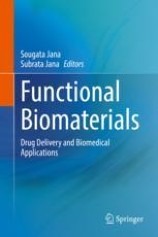
Functional Biomaterials : Drug Delivery and Biomedical Applications
Explores in depth a wide range of functional biomaterials-based systems for drug, gene delivery, and biomedical aspects. The chapters cover newer technologies such as polymeric micelle, pH-responsive biomaterials, stimuli-responsive hydrogels, silk fibroin, inorganic biomaterials, synthetic biomaterials, 3D printed biomaterials, metallic biomaterials, ceramic and hybrid biomaterials. It also describes the theranostic approaches for cancer therapy, the biomaterials-based nanofibers scaffolds in tissue engineering, as well as the strategies applications of metallic biomaterials for the medical and dental prosthetic field.

Engineering of Functional Skeletal Tissues
This volume discusses current knowledge of bone replacement. It is designed to integrate biological and engineering knowledge. The biology of stem cells and cell signals, knowledge needed to make stem cell engineered bone tissue a reality and how to prevent bone allograft infection is discussed. In addition, non-degradable and biodegradable scaffolds, necessary implants to attract bone cells and to build suitable bone replacements follows. Other topics include motion and bone degeneration analysis and how mechanical factors affect bone healing, implants and how they have become a major tool in reparative dentistry and the application of computational modeling to prosthesis design.

Dental implants and bone grafts : materials and biological issues
Provides detailed coverage of biomaterials for dental implants and bone graft, enabling scientists and clinicians to gain a thorough knowledge of advances and applications in this field. As tooth loss and alveolar bony defects are common and pose a significant health problem in dental clinics, this book deals with timely topics, including alveolar bone structures and pathological changes, reviews of indications and advantages of biomaterials for dental implants and bone graft, design and surface modification, biological interaction and biocompatibility of modern dental implants and bone graft, and new frontiers.This book is a highly valuable resource for scientists, clinicians and implantologists interested in biomaterial and regenerative strategies for alveolar bone reconstruction.

Constructing quantum mechanics ; Vol. 1 : The scaffold : 1900‒1923
Covers the key developments in the field in the period between 1900-1923, which provided the scaffold on which modern quantum mechanics was built on.

Collagen : Primer in Structure, Processing and Assembly
This volume of Topics in Current Chemistry is an attempt to update and compile the biochemical, molecular knowledge of the still growing family of collagenous proteins. Its intention is to provide a comprehensive summary of all mechanisms known to be involved in synthesis, processing and deposition of collagen molecules, all of which are apparently shared by any known collagen type as part of a common biosynthetic route. From the intracellular initiation of protein translation to the extracellular deposition of mature molecules into the scaffold of the preformed tissue texture, collagen biosynthesis exhibits a profile of mechanisms absolutely unique when compared to other proteins

Knowledge Cartography : Software Tools and Mapping Techniques
The authors see mapping software as a set of visual tools for reading and writing in a networked age. In an information ocean, the primary challenge is to find meaningful patterns around which we can weave plausible narratives. Maps of concepts, discussions and arguments make the connections between ideas tangible and disputable.With 17 chapters from the leading researchers and practitioners, the reader will find the current state–of-the-art in the field. Part 1 focuses on educational applications in schools and universities, before Part 2 turns to applications in professional communities.

Capital Punishment and the Criminal Corpse in Scotland, 1740–1834
This book provides the most in-depth study of capital punishment in Scotland between the mid-eighteenth and early nineteenth century to date. Based upon an extensive gathering and analysis of previously untapped resources, it takes the reader on a journey from the courtrooms of Scotland to the theatre of the gallows. It introduces them to several of the malefactors who faced the hangman’s noose and explores the traditional hallmarks of the spectacle of the scaffold. It demonstrates that the period between 1740 and 1834 was one of discussion, debate and fundamental change in the use of the death sentence and how it was staged in practice. In addition, the study provides an innovative investigation of the post-mortem punishment of the criminal corpse. It offers the reader an insight into the scene at the foot of the gibbets from which criminal bodies were displayed, and around the dissection tables of Scotland’s main universities where criminal bodies were used as cadavers for anatomical demonstration. In doing so it reveals an intermediate stage in the long-term disappearance of public bodily punishment.

Bone Morphogenetic Proteins : From Local to Systemic Therapeutics
Tissue engineering is gaining interest as it is applied for regeneration of organs to attain their lost function. Although resorbable scaffolds and progenitor cell types are required principles to engineer a functional tissue locally, the inductive signal is a prerequisite to trigger the growth and differentiation of responding cells in space and time. Bone morphogenetic proteins (BMPs), also called growth and differentiation factors (GDFs), originally identified from bone have been successfully used to regenerate the bone in humans. Most recent preclinical data suggests that BMPs have a potential to provide protection against inflammation and fibrosis in acute and chronic injury of parenchymal tissues when applied systemically to sustain the function of kidney and liver. The application of BMPs from a local to systemic utility is a rapidly growing field, gaining interest among researchers and biotech entrepreneurs.

Beyond knowledge : The legacy of competence : Meaningful computer-based learning environments
The edited and peer reviewed volume presents selected papers of the conference "Beyond knowlegde: the legacy of competence" It reflects the current state-of-the-art work of scholars worldwide within the area of learning and instruction with computers. Mainly, areas of computer-based learning environments supporting competence-focused knowledge acquisition but also foundational scientific work are addressed. More specific, contents cover cognitive processes in hypermedia and multimedia learning, social issues in computer-supported collaborative learning, motivation and emotion in Blended Learning and e-Learning.
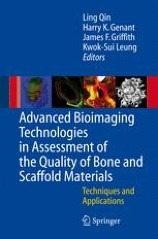
Advanced Bioimaging Technologies in Assessment of the Quality of Bone and Scaffold Materials : Techniques and Applications
This book provides a perspective on the current status of bioimaging technologies developed to assess the quality of musculoskeletal tissue with an emphasis on bone and cartilage. It offers evaluations of scaffold biomaterials developed for enhancing the repair of musculoskeletal tissues. These bioimaging techniques include micro-CT, nano-CT, pQCT/QCT, MRI, and ultrasound, which provide not only 2-D and 3-D images of the related organs or tissues, but also quantifications of the relevant parameters. The advance bioimaging technologies developed for the above applications are also extended by incorporating imaging contrast-enhancement materials.

Adult stem cells : Methods and protocols
Expands on the previous edition with updated chapters covering a broader range of tissues and techniques pertaining to stem cell technologies. The chapters also cover topics such as the generation of iPSC-derived cells unique to the individual human genome addressing the possibility of more personalized clinical applications to an individual with a specific degenerative disease; and the use of nanoparticles such as 3D scaffolds and biomaterials as a means of improving stem cell viability after transplantation in the host tissue. Written in the highly successful Methods in Molecular Biology series format, chapters include introductions to their respective topics, lists of the necessary materials and reagents, step-by-step, readily reproducible laboratory protocols, and tips on troubleshooting and avoiding known pitfalls.

Adipose-derived stem cells : Methods and protocols
Discusses of the latest technology and advancements in the field of human-derived ASC and SVF. The chapters in this book are organized into four parts. Part One focuses on human ASC’s isolation, characterization, and differentiation. Part Two describes the isolation and characterization of ASC and SVF from canine, feline, and murine tissues. Part Three looks at hydrogels, scaffolds, and microphysiological systems, and Part Four talks about the new assays and applications using ASC. Written in the highly successful Methods in Molecular Biology series format, chapters include introductions to their respective topics, lists of the necessary materials and reagents, step-by-step, readily reproducible laboratory protocols, and tips on troubleshooting and avoiding known pitfalls.
3D cell culture : Methods and protocols
Expands on the previous edition with discussions about the latest organoid models developed for many more organs; new hydrogels and devices for 3D culture; and the organoid systems that have been improved by incorporating more components of tissue microenvironments in the in vitro culture. The chapters in this book are organized into five parts and cover topics such as biofabrication, organoids, microfluidic systems, bioprinting, and image analysis. Written in the highly successful Methods in Molecular Biology series format, chapters include introductions to their respective topics, lists of the necessary materials and reagents, step-by-step, readily reproducible laboratory protocols, and tips on troubleshooting and avoiding known pitfalls.
