



الصفحة 1
الصفحة 1

Numerical Methods and Applications ; 6th International Conference, NMA 2006, Borovets, Bulgaria, August 20-24, 2006, Revised Papers
This book constitutes the thoroughly refereed post-proceedings of the 6th International Conference on Numerical Methods and Applications, NMA 2006. The papers are organized in topical sections on numerical methods for hyperbolic problems, robust preconditioning solution methods, Monte Carlo and quasi-Monte Carlo for diverse applications, metaheuristics for optimization problems, uncertain/control systems and reliable numerics, interpolation and quadrature processes, large-scale computations in environmental modelling, and contributed talks.

Nonlinear H2/H-Infinity Constrained Feedback Control : A Practical Design Approach Using Neural Networks
In this book the authors present algorithms for H2 and H-infinity design for nonlinear systems which, unlike earlier theories, provide solution techniques for the core Hamilton–Jacobi equations that yield control systems which can be implemented in real systems; neural networks are used to solve the nonlinear control design equations.
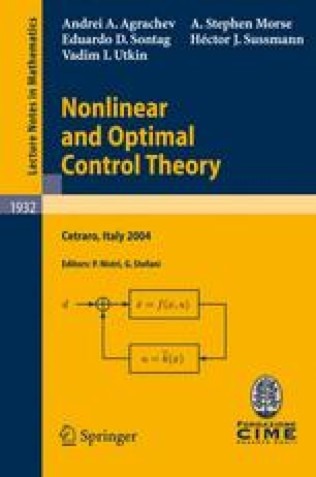
Nonlinear and Optimal Control Theory : Lectures given at the C.I.M.E. Summer School held in Cetraro, Italy June 19–29, 2004
The lectures gathered in this volume present some of the different aspects of Mathematical Control Theory. Adopting the point of view of Geometric Control Theory and of Nonlinear Control Theory, the lectures focus on some aspects of the Optimization and Control of nonlinear, not necessarily smooth, dynamical systems. Specifically, three of the five lectures discuss respectively: logic-based switching control, sliding mode control and the input to the state stability paradigm for the control and stability of nonlinear systems. The remaining two lectures are devoted to Optimal Control: one investigates the connections between Optimal Control Theory, Dynamical Systems and Differential Geometry, while the second presents a very general version, in a non-smooth context, of the Pontryagin Maximum Principle.

Next Generation Design and Verification Methodologies for Distributed Embedded Control Systems ; Proceedings of the GM R&D Workshop, Bangalore, India, January 2007
This volume is the proceedings of the workshop “Next Generation Design and Verification Methodologies for Distributed Embedded Control Systems” organised by General Motors R&D, India Science Lab. The workshop was held on January 5-6 2007 at the NIAS auditorium, IISc campus, Bangalore, India. This workshop is the first of its kind to be organised by an automotive major to bring together the leaders in the field of embedded systems development to present state-of-the-art work, and to discuss future strategies for addressing the increasing complexity of embedded control systems. The workshop consisted of invited talks given by leading experts and researchers from academic and industrial organizations.

Networked Embedded Sensing and Control ; Workshop NESC'05 : University of Notre Dame, USA, October 2005 Proceedings
Recent technological developments in sensing, communications, control and computation have created an emerging class of complex systems hereon called networked embedded systems. These systems can be roughly described as collections of spatially distributed sensors, actuators and controllers whose behaviour is coordinated through wired or wireless communication links. This integration between different technologies and scientific domains presents new and challenging fundamental problems underlying the theoretical foundations for this class of systems. This workshop aims at bringing together researchers working of different aspects of networked embedded systems in order to exchange research experiences and to identify the main scientific challenges in this exciting new area.

Networked Control Systems: Theory and Applications
Networked Control Systems presents the most recent results in stability and robustness analysis as well as new developments related to networked fuzzy and optimal control. Many of the chapters contain details of case-studies, experimental, simulation and/or other application-related work showing how the theories put forward can be implemented in real systems.

Modern Control Systems ; 14th ed.
Written to be equally useful for all engineering disciplines, this text is organized around the concepts of control systems theory in the context of frequency and time domains. It provides coverage of both classical and modern methods of control engineering to give students a strong foundation in basic principles that they can utilize to explore advanced topics in later chapters. Emphasis is placed on real-world complex control systems and practical design applications as well as evolving design strategies like green engineering and human-centered design. Problem solving is strongly emphasized, with an abundance of problems of increasing complexity that help students learn to apply theory to computer-aided design and analysis concepts using MATLAB® and LabVIEW MathScript.

Modern Control Systems ; 13th ed.
Presents the structure of feedback control theory and to provide a sequence of exciting discoveries. The book demonstrates various real-world, global engineering problems while touching on evolving design strategies like green technology. Some of the themes at-hand include climate change, clean water, sustainability, waste management, emissions reduction, and minimizing energy. Throughout the text, students apply theory to the design and analysis of control systems.

Modelling and Control of Dynamical Systems : Numerical Implementation in a Behavioral Framework
This book reviews known topics of the Behavioral Approach and offers new theoretic results with the advantage of including control algorithms implemented numerically in the computer. In addition, issues of numerical analysis are also included. The programs and algorithms are MATLAB based.

Model-based Fault Diagnosis Techniques : Design Schemes, Algorithms, and Tools
The objective of this book is to introduce basic model-based FDI schemes, advanced analysis and design algorithms and the needed mathematical and control theory tools at a level for graduate students and researchers as well as for engineers.
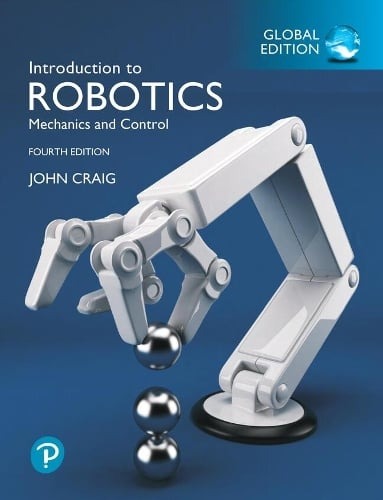
Introduction to robotics : Analysis, control, applications
Offers a guide to the fundamentals of robotics, robot components and subsystems and applications. The author—a noted expert on the topic—covers the mechanics and kinematics of serial and parallel robots, both with the Denavit-Hartenberg approach as well as screw-based mechanics. In addition, the text contains information on microprocessor applications, control systems, vision systems, sensors, and actuators.

Intelligent system algorithms and applications in science and technology
Explores the application of intelligent techniques in various fields of engineering and technology. It addresses diverse topics in such areas as machine learning-based intelligent systems for healthcare, applications of artificial intelligence and the Internet of Things, intelligent data analytics techniques, intelligent network systems and applications, and inequalities and process control systems. The authors explore the full breadth of the field, which encompasses data analysis, image processing, speech processing and recognition, medical science and healthcare monitoring, smart irrigation systems, insurance and banking, robotics and process control, and more.

Informatics in Control, Automation and Robotics I
The present book includes a set of selected papers from the first “International Conference on Informatics in Control Automation and Robotics” (ICINCO 2004), held in Setúbal, Portugal, from 25 to 28 August 2004. The conference was organized in three simultaneous tracks: “Intelligent Control Systems and Optimization”, “Robotics and Automation” and “Systems Modeling, Signal Processing and Control”. The book is based on the same structure.

Hybrid Systems : Computation and Control ; Vol.3927 ; 9th International Workshop, HSCC 2006, Santa Barbara, CA, USA, March 29-31, 2006, Proceedings
The focus is on modeling, analysis, and implementation of dynamic and reactive systems involving both discrete and continuous behaviors. Topics addressed include tools for analysis and verification, control and optimization, modeling, engineering applications, and new directions in language support and implementation.
Hybrid Systems : Computation and Control ; 11th International Workshop, HSCC 2008, St. Louis, MO, USA, April 22-24, 2008. Proceedings
Contains the proceedings ofthe 11th Workshop on Hybrid Systems: Computation and Control (HSCC 2008) held in St. Louis, Missouriduring April 22–24,2008.The annual workshop on hybrid systems focuses on research inbedded ,reactive systems in volving theinterplay between symbolic/switchingand continuous dynamical behaviors. HSCC attracts academic as well as industrial researchers to exchange information on the latest developments of applications and theoretical advancements in the design, analysis, control, optimization, and implementation of hybrid systems, with particular attention to embedded and networked control systems. We would like to thank the Program Committee members and the reviewers for an excellent job of evaluating the submissions and participating in the online Program Committee discussions.

Hybrid Systems : Computation and Control ; Vol. # 3414 ; 8th International Workshop, HSCC 2005, Zurich, Switzerland, March 9-11, 2005, Proceedings
Contains the proceedings of the 8th Workshop on Hybrid S- tems: Computation and Control(HSCC2005)heldinZurich, Switzerlandduring March 9-11, 2005. The annual workshop on hybrid systems attracts researchers from academia and industry interested in modeling, analysis, and implemen- tion of dynamic and reactive systems involving both discrete and continuous - haviors. This year's HSCC was technically co-sponsored by the IEEE Control Systems Society. The program consisted of 3 invited talks and 40 regular papers selected from 91 regular submissions. The program covered topics such as tools for analysis and verification, control and optimization, modeling, engineering applications, and emerging directions in programming language support and implementation. We would like to thank the Program Committee members and reviewers for an excellent job of evaluating the submissions and participating in the online Program Committee discussions.

Holonic and multi-agent systems for manufacturing ; 3rd International Conference on industrial applications of holonic and multi-agent systems, HoloMAS 2007, Regensburg, Germany, September 3-5, 2007, Proceedings
The research of holonic and agent-based systems is developing rapidly, as is the community around this R&D topic. Despite the fact that real-life practical implementations of such systems remain surprisingly rare, the leaders in different branches of industry feel that the holonic and agent-based systems represent the only way to manage and control very complex, highly distributed systems in the future.

Holonic and multi-agent systems for manufacturing ; 2nd International conference on industrial applications of holonic and multi-agent systems, HoloMAS 2005, Copenhagen, Denmark, August 22-24, 2005, Proceedings
The challenge faced in today’s manufacturing and business environments is the question of how to satisfy increasingly stringent customer requirements while managing growing system complexity. For example, customers expect high-quality, customizable, low-cost products that can be delivered quickly. The systems that deliver these expectations are by nature distributed, concurrent, and stochastic, and, as a result, increasingly difficult to manage. Unfortunately, the traditional hierarchical, strictly centralized approach to control used in these domains is characteristically inflexible, fragile, and difficult to maintain. These shortcomings have led to the development of a new class of manufacturing and supply-chain decision-making approaches in recent years. Solutions based on these approaches usually explore a set of highly distributed decision-making units that are capable of autonomous operations while cooperating interactively to resolve larger problems. The units, referred to as agents in classical computer science and software engineering, or holons if physically integrated with the manufacturing hardware, interact by exchanging information. These units are motivated by arriving at local solutions as well as collaborating and sharing resources and goals in solving the overall problem in question collectively.

H-infinity control for nonlinear descriptor systems
The authors present a study of the H-infinity control problem and related topics for descriptor systems, described by a set of nonlinear differential-algebraic equations. They derive necessary and sufficient conditions for the existence of a controller solving the standard nonlinear H-infinity control problem considering both state and output feedback. One such condition for the output feedback control problem to be solvable is obtained in terms of Hamilton–Jacobi inequalities and a weak coupling condition; a parameterization of output feedback controllers solving the problem is also provided. All of these results are then specialized to the linear case. The derivation of state-space formulae for all controllers solving the standard H-infinity control problem for descriptor systems is proposed. Among other important topics covered are balanced realization, reduced-order controller design and mixed H2/H-infinity control.

H-infinity control and estimation of state-multiplicative linear systems
This monograph embodies a comprehensive survey of the relevant literature with basic problems being formulated and solved by applying various techniques including game theory, linear matrix inequalities and Lyapunov parameter-dependent functions.
