



الصفحة 81
الصفحة 81

Algebra and Coalgebra in Computer Science; First International Conference, CALCO 2005, Swansea, UK, September 3-6, 2005, Proceedings
CALCO, the Conference on Algebra and Coal-gebra in Computer Science, was created to bring together researchers and practitio-ners to exchange new results related to foundational aspects, and both traditional and emerging uses of algebras and coalgebras in computer science. CALCO 2005 was the first instance of this new conference. The interest that it generated in the scientific community suggests that it will not be the last. Indeed, it attracted as many as 62 submissions covering a wide range of topics roughly divided into two areas: Algebras and Coalgebras as Mathematical Objects: Automata and languages; categorical semantics; hybrid, probabilistic, and timed systems; inductive and coin-ductive methods; modal logics; relational systems and term rewriting.

AIU projects evaluation platform
The project is a cloud computing system constructed to provide the service of helping students run their practical projects and work together while keeping track of every change in it, and teachers running the projects online and evaluating them. The system provided help doing this mission in real-time dialogue without having any dependencies downloaded on the machine and running it over the internet. The development of the system used a full-stack web framework and a database processing technology. The system has accomplished such services as running the projects online. The tests of the system are running in good conditions. The use of this system will solve the problem of teacher’s project evaluation and running them online.
AI in learning : Designing the future
AI (artificial intelligence) is predicted to radically change teaching and learning in both schools and industry causing radical disruption of work. AI can support well-being initiatives and lifelong learning but educational institutions and companies need to take the changing technology into account. Moving towards AI supported by digital tools requires a dramatic shift in the concept of learning, expertise and the businesses built off of it. Based on the latest research on AI and how it is changing learning and education, this book will focus on the enormous opportunities to expand educational settings with AI for learning in and beyond the traditional classroom. This book also introduces ethical challenges related to learning and education, while connecting human learning and machine learning.
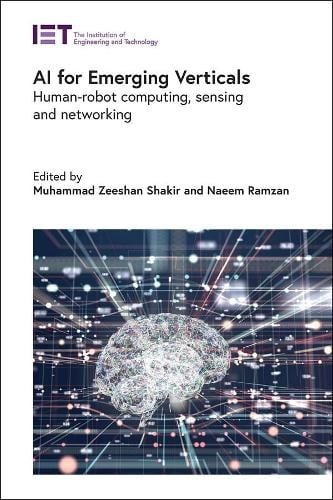
AI For Emerging Verticals : Human-robot computing, sensing and networking
Artificial intelligence (AI) and machine learning (ML) will play a major role. By adopting AI software and services, businesses can create predictive strategies, enhance their capabilities, better interact with customers, and streamline their business processes. Explores novel concepts and cutting-edge research and developments towards designing these fully automated advanced digital systems. Fostered by technological advances in artificial intelligence and machine learning, such systems potentially have a wide range of applications in robotics, human computing, sensing and networking. The chapters focus on models and theoretical approaches to guarantee automation in large multi-scale implementations of AI and ML systems; protocol designs to ensure AI systems meet key requirements for future services such as latency; and optimisation algorithms to leverage the trusted distributed and efficient complex architectures.
AI and UX : Why artificial intelligence needs user experience
Great effort has been put forth to continuously make AI “smarter.” But, will smarter always equal more successful AI? It is not just about getting a product to market, but about getting the product into a user’s hands in a form that will be embraced. This demands examining the product from the perspective of the user. Authors Gavin Lew and Robert Schumacher have written AI and UX to examine just how product managers and designers can best strike this balance. From exploring the history of the parallel journeys of AI and UX, to investigating past product examples and failures, to practical expert knowledge on how to best execute a positive user experience, AI and UX examines all angles of how AI can best be developed within a UX framework.
Agrobacterium : From Biology to Biotechnology
Agrobacterium’ is a comprehensive book on Agrobacterium research, including its history, application, basic biology discoveries, and effects on human society. Although the book largely focuses on providing a detailed review of virtually all molecular events of the genetic transformation process, it also provides coverage of ethical and legal issues relevant to the use of Agrobacterium as a "genetic transformation machine". The result is an all-inclusive text which readers—including scientists and students involved in plant genetic engineering—will find useful as a reference source for all major aspects of the Agrobacterium-mediated genetic transformation of plant and non-plant organisms.

Agitator Design for Gas-Liquid Fermenters and Bioreactors
Agitator Design for Gas-Liquid Fermenters and Bioreactors delivers a concise treatment and explanation of how to design mechanically sound agitation systems that will perform the agitation process function efficiently and economically. The book covers agitator fundamentals, impeller systems, optimum power and air flow at peak mass transfer calculations, optimizing operation for minimum energy per batch, heat transfer surfaces and calculations, shaft seal considerations, mounting methods, mechanical design, and vendor evaluation.
Aging Well : Solutions to the Most Pressing Global Challenges of Aging
Outlines the challenges of supporting the health and wellbeing of older adults around the world and offers examples of solutions designed by stakeholders, healthcare providers, and public, private and nonprofit organizations in the United States. The solutions presented address challenges including: providing person-centered long-term care, making palliative care accessible in all healthcare settings and the home, enabling aging-in-place, financing long-term care, improving care coordination and access to care, delivering hospital-level and emergency care in the home and retirement community settings, merging health and social care, supporting people living with dementia and their caregivers, creating communities and employment opportunities that are accessible and welcoming to those of all ages and abilities, and combating the stigma of aging. The innovative programs of support and care in Aging Well serve as models of excellence that, when put into action, move health spending toward a sustainable path and greatly contribute to the well-being of older adults.
Aging and the Heart : A Post-Genomic View
In this book, the genetic and molecular basis of cardiovascular aging will be discussed. In addition, a comprehensive assessment of the bioenergetic changes that occur in human and animal models of cardiac aging as well as current diagnostic and future therapeutic modalities will be undertaken.

Aggregation functions : A guide for practitioners
Aggregation of information is of primary importance in the construction of knowledge based systems in various domains, ranging from medicine, economics, and engineering to decision-making processes, artificial intelligence, robotics, and machine learning. This book gives a broad introduction into the topic of aggregation functions, and provides a concise account of the properties and the main classes of such functions, including classical means, medians, ordered weighted averaging functions, Choquet and Sugeno integrals, triangular norms, conorms and copulas, uninorms, nullnorms, and symmetric sums. It also presents some state-of-the-art techniques, many graphical illustrations and new interpolatory aggregation functions. A particular attention is paid to identification and construction of aggregation functions from application specific requirements and empirical data. This book provides scientists, IT specialists and system architects with a self-contained easy-to-use guide, as well as examples of computer code and a software package. It will facilitate construction of decision support, expert, recommender, control and many other intelligent systems.
Agent-Based Simulation : From Modeling Methodologies to Real-World Applications; Post Proceedings of the Third International Workshop on Agent-Based Approaches in Economic and Social Complex Systems 2004
Agent-based modeling/simulation is an emerging field that uses bottom-up and experimental analysis in the social sciences. Selected research from that presented at the Third International Workshop on Agent-Based Approaches in Economic and Social Complex Systems 2004, held in May 2004 in Kyoto, Japan, is included in this book. The aim of the workshop was to employ the bottom-up approach to social and economic problems by modeling, simulation, and analysis using a software agent. This research area is an emerging interdisciplinary field among the social sciences and computer science, attracting broad attention because it introduces a simulation-based experimental approach to problems that are becoming increasingly complex in an era of globalization and innovation in information technology. The state-of-the-art research and findings presented in this book will be indispensable tools for anyone involved in this rapidly growing discipline.
Agency and causal explanation in economics
This book provides an exploration of the consequences of the ontological differences between natural and social objects (sometimes described as objects of nature and objects of thought) in the workings of causal and agency relationships.
Ageing : The Paradox of Life : Why We Age
For centuries people have been puzzled by the inevitability of human aging. For most of the second half of the twentieth century aging remained a mystery, or an unsolved biological problem. At the end of the 20th century a remarkable scientific discovery emerged. It was not a single discovery in the usual sense, because it was based on a series of important interconnected insights over quite a long period of time. These insights made it possible for the very first time to understand the biological reasons for aging in animals and man. It can already be said, however, that the many observations and insights that explain aging will not be accepted as established knowledge for a long time.
African Languages and Literatures in the 21st Century
Examines the crucial role still played by African languages in pedagogy and literatures in the 21st century, generating insights into how they effectively serve cultural needs across the African continent and beyond. Boldly positioning African languages as key resources in the 21st century, chapters focus on themes such as language revolt by marginalized groups at grassroots level, the experience of American students learning African languages, female empowerment through the use of African languages in music, film and literary works, and immigration issues. The contributions are written by scholars of language, literature, education and linguistics, and will be of interest to students and scholars in these and related areas.

African Handbook of Climate Change Adaptation
discusses current thinking and presents the main issues and challenges associated with climate change in Africa. It introduces evidences from studies and projects which show how climate change adaptation is being - and may continue to be successfully implemented in African countries. Thanks to its scope and wide range of themes surrounding climate change, the ambition is that will be a lead publication on the topic, which may be regularly updated and hence capture further works.

Affective computing and intelligent interaction ; 1st international conference, ACII 2005, Beijing, China, October 22-24, 2005, Proceedings
Traditionally, the machine end of human–machine interaction has been very passive, and certainly has had no means of recognizing or expressing a?ective information. But without the ability to process such information, computers cannot be expected to communicate with humans in a natural way. The ability to recognize and express a?ect is one of the most important features of - man beings. We therefore expect that computers will eventually have to have the ability to process a?ect and to interact with human users in ways that are similar to those in which humans interact with each other. A?ective computing and intelligent interaction is a key emerging technology that focuses on m- iad aspects of the recognition, understanding, and expression of a?ective and emotional states by computers.
Advancing Energy Policy : Lessons on the integration of Social Sciences and Humanities
Advocates for the Social Sciences and Humanities to be more involved in energy policymaking. It forms part of the European platform for energy-related Social Sciences and Humanities’ activities, and works on the premise that crossing disciplines is essential. All of its contributions are highly interdisciplinary, with each chapter grounded in at least three different Social Sciences and Humanities disciplines. These varying perspectives come together to cover an array of issues relevant to the energy transition, including: energy poverty, justice, political ecology, governance, behaviours, imaginaries, systems approaches, modelling, as well as the particular challenges faced by interdisciplinary work. As a whole, the book presents new ideas for future energy policy, particularly at the European level. It is a valuable resource for energy researchers interested in interdisciplinary and society-relevant perspectives. Those working outside the Social Sciences and Humanities will find this book an accessible way of learning more about how these subjects can constructively contribute to energy policy.
Advances in Radiation Oncology in Lung Cancer
This volume is unique in being devoted solely to the radiation oncology of lung cancer, and will be of great value to all who are involved in the diagnosis and treatment of the disease. Both non-small cell and small cell lung cancer are considered in detail. Current state of the art treatment strategies and novel approaches that promise further improvements in outcome are explained and evaluated, with the aid of high-quality illustrations. Treatment-related toxicity is discussed, and further individual chapters focus on topics such as quality of life studies, prognostic factors and pitfalls in the design and analysis of clinical trials.
Advances in Molecular Oncology
Proceedings of the 2nd Annual IFOM-IEO Meeting on Cancer. This is a new meeting, it has about 200 attendees from Australia, Austria, Belgium, Brazil, Canada, England, France, Germany, Greece, Ireland, Italy, Japan, Netherlands, Spain, Sweden, Switzerland, and the USA. The 2nd IFOM-IEO international meeting on cancer will provide a forum in which the world’s leading cancer researchers and young scientists will discuss the latest advances in molecular oncology. The impact of recent breakthroughs in basic research and of emerging technologies on molecular medicine in cancer will be highlighted.
Advances in Molecular Breeding Toward Drought and Salt Tolerant Crops
Advances in Molecular Breeding toward Drought and Salt Tolerant Crops seeks to integrate the most recent findings about key biological determinants of plant stress tolerance with modern crop improvement strategies. This volume is unique because is provides exceptionally wide coverage of current knowledge and expertise being applied in drought and salt tolerance research, spanning the scientific hierarchy from physiology, biochemistry, development, and genetics, to the newest technologies being used to manipulate drought and salinity associated traits for germplasm improvement. This book will be an invaluable reference for educators and researchers in agronomy and horticulture, crop breeding, molecular genetics, and biotechnology.
