



الصفحة 606
الصفحة 606

A companion to astronomy and astrophysics : Chronology and glossary with data tables
Astronomy and Astrophysics is a comprehensive, fundamental, up-to-date reference book. It is filled with vital information and basic facts for amateur astronomers and professional astrophysicists, and for anyone interested in the Universe, from the Earth and other planets to the stars, galaxies and beyond. Although serious and thorough, the language, and ideas will attract the general reader, as well as students and professionals. Astronomy and Astrophysics consists of two main parts, a Timeline and a Dictionary. The Timeline is a concise history, arranged chronologically, which provides the complete story of cosmic discovery from early Chinese and Greek astronomy to the latest findings of modern astrophysics and robotic spacecraft.

A Common Consolidated Corporate Tax Base for Europe = Eine einheitliche Körperschaftsteuerbemessungsgrundlage für Europa
This book contains the proceedings of the International Tax Conference on the c- th th mon consolidated corporate tax base (CCCTB) that was held in Berlin Three panels of tax experts evaluated the common tax base with respect to structural elements, consolidation, allocation, international aspects and administration.

A Clinician's guide to systemic effects of periodontal diseases
Serves as an ideal, easy-to-use reference for the practicing health professional. It summarizes the latest research on the systemic effects of periodontal diseases, discusses how the results of this research will impact on clinical practice, and aims to help the clinician to answer questions that may be posed by patients, medical colleagues, and the media.

A City in Blue and Green : The Singapore Story
Highlights Singapore’s development into a city in which water and greenery, along with associated environmental, technical, social and political aspects have been harnessed and cultivated into a liveable sustainable way of life. It is also a story about a unique and thoroughgoing approach to large-scale and potentially transferable water sustainability, within largely urbanized circumstances, which can be achieved, along with complementary roles of environmental conservation, ecology, public open-space management and the greening of buildings, together with infrastructural improvements.
A Century of Ideas : Perspectives from Leading Scientists of the 20th Century
Shortly after its inauguration in 1985 the Birla Science Centre, Hyderabad, India, started a series of lectures by Nobel Laureates and other scientists of international renown, usually in Physics and Astronomy, sometimes in Life Sciences and Chemistry. The present collection mostly consists of lectures on frontier topics. The transcript of each lecture is preceded by a short biography of the Nobel Laureate/Scientist in question.
A buyers and users guide to astronomical telescopes & binoculars
Provides an extensive overview of astronomical binoculars and telescopes. It includes detailed up-to-date information on sources, selection and use of virtually every major type, brand, and model of such instruments on today’s market. A Buyer’s & User’s Guide to Astronomical Telescopes and Binoculars is written for amateur astronomers and would-be amateur astronomers. Anyone planning to purchase binoculars or telescopes for astronomy – whether as a first instrument or as an upgrade to the next level – will find this book a treasure-trove of information and advice. But that is just the first part of the book. The second part is crammed with hints and tips on using astronomical telescopes or binoculars – in effect, how to get the best possible results from your purchase.
A Biomass Future for the North American Great Plains : Toward Sustainable Land Use and Mitigation of Greenhouse Warming
The Great Plains of North America is a major global breadbasket but its agriculture is stressed by drought, heat spells, damaging winds, soil erosion and declining ground water resources. This book explores the possibility that the ecology and economy of the Plains region (and similar regions) would benefit from the introduction of perennial biomass crops. Biomass production and processing on the Plains (possibly aided by genetic engineering) would partially restore a perennial vegetative cover and create new employment opportunities. Biomass also offers a means of reducing fossil fuel use, providing fuel to local power plants and a feedstock for production of cellulosic ethanol, a gasoline substitute. Interest in biofuels is growing rapidly in public, political and business circles with rising fossil fuel prices and because of a growing recognition of the need for energy independence in petroleum importing countries.
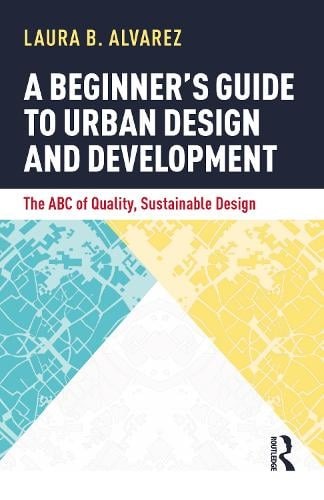
A beginner's guide to urban design and development : the ABC of quality, sustainable design
Provides invaluable guidance to all those with an interest in placemaking and the built environment, from those with no experience to those who have worked for many years in industry, illustrating key principles that will secure higher quality, more sustainable design in accessible, jargon-free language. Explains the design process in a straightforward way, exploring the different roles and highlighting the opportunities and limitations different agencies have to influence design over the various stages of the process. Examples from the UK and worldwide look at how the system operates and how best practice can make a real difference on the ground. Case studies examine situations where quality or sustainability fell short – and how this could have been avoided. This book also showcases a variety of evaluation tools, explaining how they operate, and giving guidance on how to create project-specific tools to drive schemes forward. With community empowerment at its core, the book explains technical language and shares bountiful knowledge to broaden place democracy and make influencing design accessible to many, not just a few.

A Beginner's Guide to Sketching Buildings & Landscapes : Perspective and Proportions for Drawing Architecture, Gardens and More! (With over 500 illustrations)
Provides dozens of examples showing you how to establish accurate perspective guidelines and proportions for your initial pencil sketches, setting your drawings up to succeed right from the start. If a sketch's perspective and proportions are correct, your finished work will look crisp and beautiful. If not, you'll have a frustrating time trying to correct the problems at a later stage--and the finished work will never look quite right. A Beginner's Guide to Sketching Buildings & Landscapes is here to help you avoid those frustrations and set up your composition for a finished piece that will make you proud. The detailed step-by-step lessons in this indispensable guide teach you how to: Establish a composition's point of view correctly / Locate the horizon line, dividing land and sky / Break down complicated scenes into simple component shapes / Create the right relationship between foreground and background / Express 3D imagery using 2-point and 3-point perspective

A basic guide to international business law
Gives students an understanding as well as practical knowledge of legal problems arising in the area of international business, and to equip them with the skills needed to prevent and tackle these problems. All chapters employ the same didactic structure. Introductory case studies, examples, annotated case law, glossaries, diagrams, summaries and exercises are all designed to familiarize students quickly with relevant aspects of international (business) law.
4th Kuala Lumpur International Conference on Biomedical Engineering 2008 ; BIOMED 2008 25–28 June 2008 Kuala Lumpur, Malaysia
The topics covered in the conference proceedings include: Artificial organs, bioengineering education, bionanotechnology, biosignal processing, bioinformatics, biomaterials, biomechanics, biomedical imaging, biomedical instrumentation, bioMEMS, clinical engineering, prosthetics.
40 Puzzles and Problems in Probability and Mathematical Statistics
"40 Puzzles and Problems in Probability and Mathematical Statistics" is intended to teach the reader to think probabilistically by solving challenging, non-standard probability problems. The motivation for this clearly written collection lies in the belief that challenging problems help to develop, and to sharpen, our probabilistic intuition much better than plain-style deductions from abstract concepts. The selected problems fall into two broad categories. Problems related to probability theory come first, followed by problems related to the application of probability to the field of mathematical statistics. All problems seek to convey a non-standard aspect or an approach which is not immediately obvious.
3rd Kuala Lumpur International Conference on Biomedical Engineering 2006 ; Biomed 2006, 11-14 December 2006, Kuala Lumpur, Malaysia
The Kuala Lumpur International Conference on Biomedical Engineering (Biomed 2006) was held from 11 to 14 December 2006 at the Palace of the Golden Horses, Kuala Lumpur, Malaysia. This international conference was jointly organised by the Department of Biomedical Engineering, University of Malaya, Malaysia; Department of Biomedical Engineering, Inje University, Korea; and Malaysian Society of Medical and Biological Engineering. The papers presented at Biomed 2006 cover the following areas: artificial intelligence, biological effects of non-ionising electromagnetic fields, biomaterials, biomechanics, biomedical sensors, biomedical signal analysis, biotechnology, clinical engineering, human performance engineering, imaging, medical informatics, medical instruments and devices, physiological modelling, simulation, and control, prostheses and artificial organs, regulations and organisations, rehabilitation engineering, telemedicine, tissue engineering, and virtual reality in medicine.
3D-Position Tracking and Control for All-Terrain Robots
Rough terrain robotics is a fast evolving field of research and a lot of effort is deployed towards enabling a greater level of autonomy for outdoor vehicles. This book demonstrates how the accuracy of 3D position tracking can be improved by considering rover locomotion in rough terrain as a holistic problem. In this work, a mechanical structure allowing smooth motion across obstacles with limited wheel slip is used. In particular, it enables the use of odometry and inertial sensors to improve the position estimation in rough terrain. A method for computing 3D motion increments based on the wheel encoders and chassis state sensors is developed. The algorithm runs online and can be adapted to any kind of passive wheeled rover. Finally, sensor fusion using 3D-Odometry, inertial sensors and visual motion estimation based on stereovision is presented. The experimental results demonstrate how each sensor contributes to increase the accuracy and robustness of the 3D position estimation.
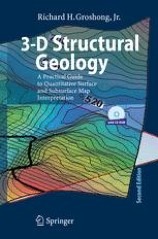
3-D Structural Geology : A Practical Guide to Quantitative Surface and Subsurface Map Interpretation
This book provides an overview of techniques for constructing structural interpretations in 2-D, 2½-D and 3-D environments; for interpolating - tween and extrapolating beyond the control points; and for validating the final int- pretation. The underlying philosophy is that structures are three-dimensional solid bodies and that data from throughout the structure, whether in 2-D or 3-D format, should be integrated into an internally consistent 3-D interpretation. It is assumed that most users of this book will do their work on a computer. C- sequently, the book provides quantitative structural methods and techniques that are designed for use with spreadsheets, mapping software, and three-dimensional c- puter-graphics programs. The book is also intended to provide the background for understanding what interpretive software, for example, a computer contouring p- gram, does automatically. Most techniques are presented in both a traditional format appropriate for paper, pencil, and a pocket calculator, and in quantitative format for use with spreadsheets and computer-graphics or computer-aided-design programs.
3-D Shape Estimation and Image Restoration : Exploiting Defocus and Motion-Blur
Images contain information about the spatial properties of the scene they depict. When coupled with suitable assumptions, images can be used to infer three-dimensional information. This useful volume concentrates on motion blur and defocus, which can be exploited to infer the 3-D structure of a scene—as well as its radiance properties—and which in turn can be used to generate novel images with better quality. 3-D Shape Estimation and Image Restoration presents a coherent framework for the analysis and design of algorithms to estimate 3-D shape from defocused and motion blurred images, and to eliminate defocus and motion blur to yield "restored" images. It provides a collection of algorithms that are optimal with respect to the chosen model and estimation criterion.

3D Segmentation for medical images (OsteoVision) = التقطيع ثلاثي الأبعاد للصور الطبية
With the increasing integration of AI across various sectors, artificial intelligence (AI) is already playing a significant role in the healthcare industry, and its use is expected to grow further. AI systems used in image processing and computer vision algorithms have shown a significant ability to perform many operations such as segmentation, classification, and detection. This project presents the application of computer vision algorithms in the field of medical imaging for diagnostic, therapeutic, and interventional purposes. This thesis explores the use of several computer vision algorithms to address different pathologies, specifically brain tumors (glioma) (see Appendix A) and knee osteoarthritis (OA), as well as tracking the progression of knee osteoarthritis using the Kellgren and Lawrence (KL) grading system, a common method for classifying the severity of OA into five grades. To achieve the desired impact, the project employs various techniques, including 3D segmentation for brain tumors, 2D segmentation for knee joints, and multinomial classification for determining the severity of knee OA injuries. The primary aims of the project are to enhance diagnostic accuracy, assist in creating treatment plans, provide an assistive tool for healthcare providers to make more informed decisions, leverage AI's capabilities to detect abnormalities that might escape the human eye, and streamline workflow. To facilitate these goals, the project incorporates a user-friendly UI, a website, and a Flutter-based mobile application, enabling healthcare providers to efficiently integrate these tools into their practice and improve patient care.
3D Recording and Interpretation for Maritime Archaeology
Includes recording and analysis of maritime archaeology through emerging technologies, including both practical and theoretical contributions. Topics include photogrammetric recording, laser scanning, marine geophysical 3D survey techniques, virtual reality, 3D modelling and reconstruction, data integration and Geographic Information Systems. This convergence of digital technologies such as underwater photography and photogrammetry, 3D sonar, 3D virtual reality, and 3D printing has highlighted a pressing need for these new methodologies to be considered together, both in terms of defining the state-of-the-art and for consideration of future directions.
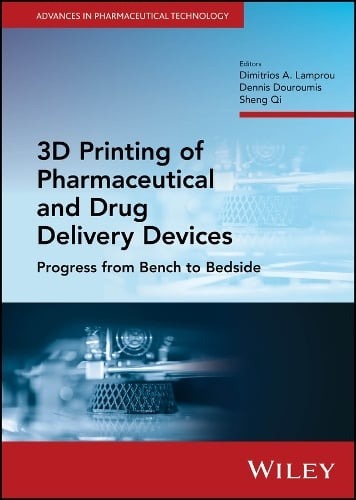
3D printing of pharmaceutical and drug delivery devices progress from bench to bedside
Discover the latest, fast-developing technology to help move towards more cost-effective, small-batch, decentralized manufacturing of personalized systems . 3D printing has revolutionized manufacturing. Its precision and flexibility have enabled the large-scale production of materials and devices too complex for conventional industrial manufacturing. This has been particularly revolutionary in the field of pharmaceutical production, where 3D printing is being integrated into the manufacture of both drugs and drug delivery devices. It has never been more important for industry professionals to understand this form of production.
3D Printing in Oral Health Science : Applications and Future Directions
Equips readers with a sound understanding of contemporary clinical applications in all fields of dentistry and their future directions. In the last few years, the development of 3D printing for medical and dental applications has increased tremendously. Advancements in 3D printing create the possibility of customized products, savings on small-scale productions, ease of sharing and processing of patient image data, and educational up-gradation. Looking at the dental specialties, it is evident that 3D printing has applications in all aspects of oral health science including prosthodontics, oral surgery, periodontics, endodontics, and orthodontics. This book will cover all major fields in dentistry and will help the practitioner in the process of decision-making and apply concepts in clinical or laboratory practice. It is based on current scientific evidence to provide readers with an up-to-date contemporary underst
